She was 10 years old when she told him she would marry him one day. He laughed. Genuinely, warmly, bowed his head, and promptly forgot she existed. She did not forget. Not at 15. Not at 18. Not in 10 years at a school in Bath with his face somewhere in the back of every quiet evening.
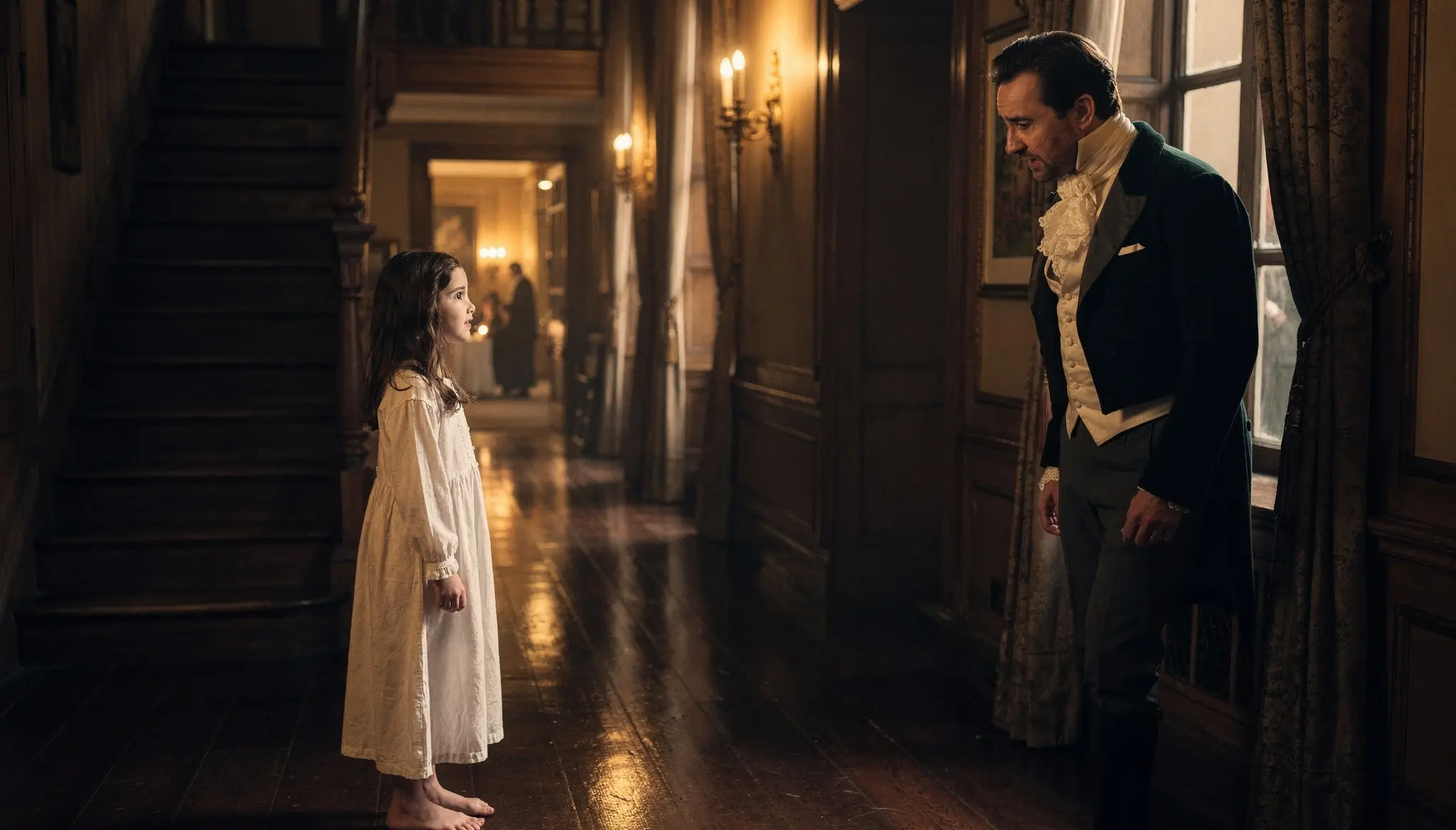
And when she finally returned to London at 20, she had one question she needed answered. Had she spent a decade loving a man or a memory? He was 40. He had told his mother, told his club, told anyone who asked that he was too old to choose a bride, that the season for all of that had passed him by.
What he had not told anyone, because he had not admitted it even to himself, was that no woman had ever made him feel the thing he was supposed to be looking for. Until the night a young woman walked into his library, looked at the bookshelves instead of at him, and something in the back of his mind went very, very quiet.
There are moments in a person’s life so small, so unremarkable at the time, that they pass without ceremony. A door left open, a name spoken by accident, a sentence finished before anyone could think to stop it. The night of October the 17th, 1800, was one of those moments.
It arrived wearing candlelight and the smell of roasted pheasant, folded neatly inside an evening that the world would have no reason to remember. Lady Whitmore’s autumn dinner party was, by all accounts, one of the finer gatherings of the season. The drawing room of Whitmore House on Grosvenor Square had been arranged with the specific intention of impressing people who already had everything, which is always the most difficult audience.
Crystal caught the light of 50 candles. Conversation flowed between courses like a well-trained river, directed, purposeful, never overflowing its banks. Duke Maximilian Royce, the ninth Duke of Ashvale, arrived at half past 7:00 and was immediately surrounded.
This was not vanity on his part. It was simply physics. A man of 30, unmarried, possessed of one of the oldest titles in England, and a fortune that required three separate accountants to manage, creates a gravitational pull in any room he enters. Ladies smiled too broadly. Mothers tilted their chins. Even the gentlemen adjusted their posture, as though proximity to such a man required a certain straightening of the spine.
Maximilian bore it all with the particular kind of patience that comes not from virtue, but from long habit. He had been navigating these rooms since he was 19. He knew every variation of the social performance on offer, every careful laugh, every studied glance from beneath carefully lowered lashes.
He was not cruel about it. He simply noticed, and in noticing had learned to keep a certain distance between himself and the warmth everyone around him seemed so desperate to manufacture. He excused himself from a particularly determined conversation about hunting estates somewhere after the second course and stepped into the corridor for air.