For four years, three months, and some days, Mina Prokop had eaten lunch in the last booth at Tillie's on Larkin Street, and in all that time nobody had ever been sitting in it.
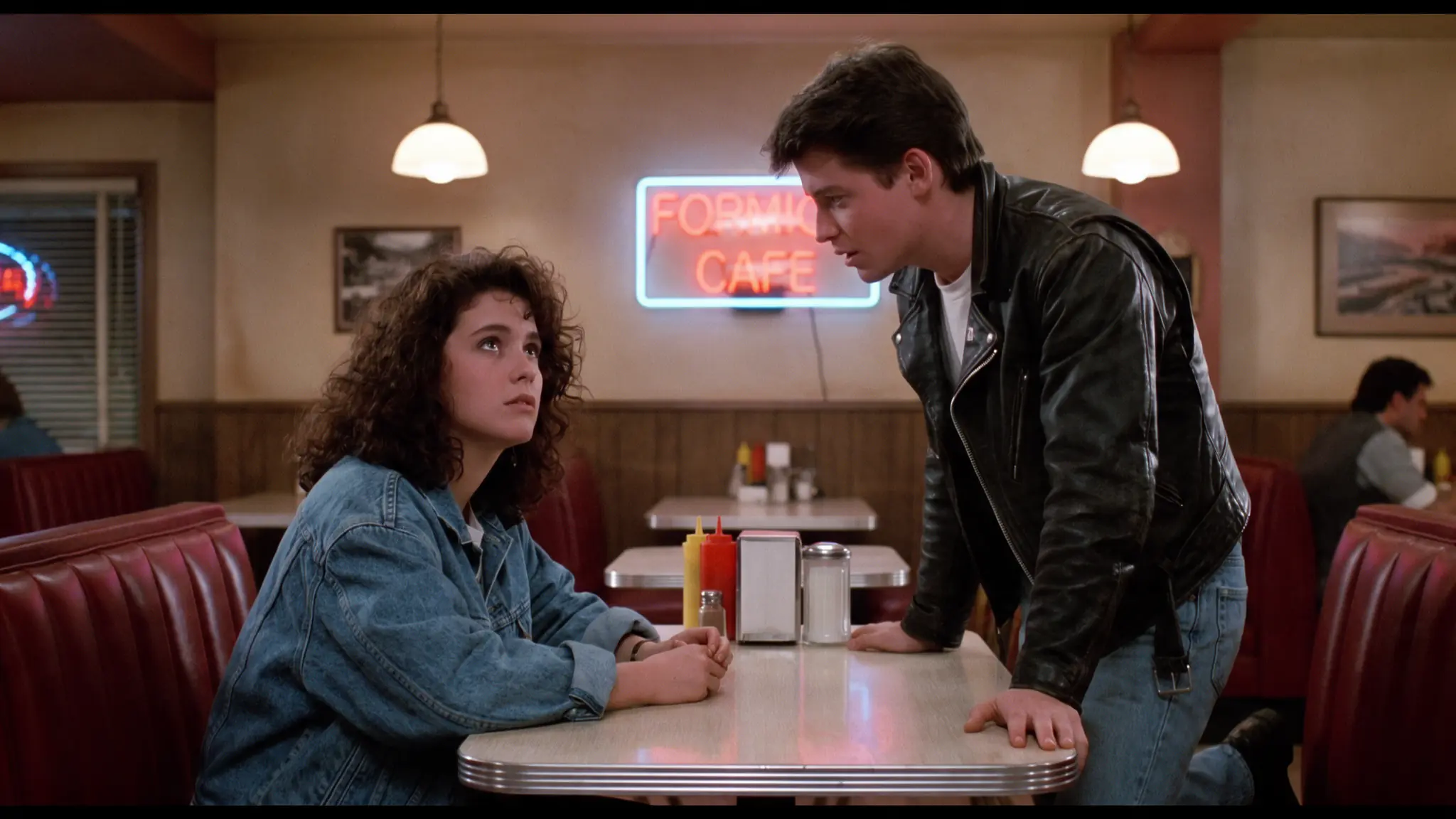
Tillie's was a narrow, nickel-plated lunch counter a block and a half from City Hall, with eleven stools, six booths, a pie case that rotated like a slow planet, and a jukebox in the corner that took quarters and gave back whatever it felt like.
The last booth was the one by the kitchen door, where the swinging door banged the back of your seat every time Hettie came out with a plate, and where the overhead fan had a wobble that sent the paper napkins skating across the table at the end of each revolution.
Nobody wanted that booth. Mina had studied the room the way she studied everything, which was completely, and she had chosen it precisely because it was the worst seat in the house. A thing nobody wants is a thing you get to keep.
So on the second Monday of September, 1988, at ten minutes past twelve, when she came in out of the white noon glare with her heavy gray case in one hand and her sunglasses pushed up into her hair, and saw a man sitting in her booth, she stopped so abruptly that a lawyer from the City Attorney's office walked into the back of her.
"Sorry," the lawyer said.
"No," said Mina, meaning something else entirely.
The man in the booth had his back to the kitchen door and a paperback open flat on the table under one big hand, the spine cracked white in a hundred places. He was somewhere in his middle thirties, with dark hair that needed either a barber or a decision, and the sleeves of a blue work shirt rolled to the elbow over forearms that looked like they did something for a living. There was a cup of coffee at his elbow and a plate of Spiro's meatloaf in front of him, untouched, as though he had ordered it purely to establish a legal claim. The fan wobbled. A napkin slid across the table toward him, and without looking up from the book he put out one finger and stopped it.
Mina stood at the end of the booth with her case. She did not say anything. She was very good at not saying anything; it was, in a sense, her profession. She simply stood there and let the fact of herself accumulate, the way fog accumulates on the Bay, until the man felt it on the back of his neck and looked up.
He had a face that had spent a lot of time outdoors and seemed to have enjoyed most of it. Brown eyes, a nose that had been broken once and set by an optimist. He took in the case, the sunglasses, the navy suit she wore to court because navy was the color of a person who would not be noticed, and the expression on her face, which she had not bothered to arrange.
"Ah," he said. "This is yours."