There is a question many grandmothers quietly ask themselves but rarely say out loud:
“Do I still matter in my grandchildren’s lives?”
The question may come after a phone call that felt rushed, a visit that ended too quickly, or a family gathering where everyone seemed busy. It may come when the grandchildren grow older and no longer run toward the door with the same excitement. It may come when distance, technology, changing schedules, or family tension makes connection more difficult.
A grandmother may begin to wonder whether her role has become optional.
She may tell herself that the parents are doing a good job, the children are busy, and the world is different now. She may hesitate to call because she does not want to interrupt. She may avoid giving advice because she fears being seen as old-fashioned. She may step back little by little, believing that her presence is no longer necessary.
But a grandmother’s influence is not replaceable.
Parents carry the primary responsibility for raising their children, but grandparents offer something different. They provide a longer view of the family. They remember where the parents came from, what shaped them, what they survived, and what mattered before the grandchildren were born.
That knowledge gives children roots.
Grandmothers also carry faith, values, traditions, and memories that may not transfer automatically. A child may know that Grandma attends church, but unless she explains why faith has mattered during grief, hardship, illness, and disappointment, the child may never understand the depth behind the routine.
A child may know that the family celebrates certain holidays, prepares certain meals, or repeats certain sayings. But unless someone explains the meaning, those traditions may slowly become empty habits and eventually disappear.
A grandmother’s role is not to control the family or compete with the parents. It is not to demand access, undermine household rules, or treat grandchildren as second chances to raise children differently.
Her role is to remain lovingly, respectfully, and intentionally involved.
Involvement does not always mean living nearby. It does not require daily visits, constant advice, or expensive gifts. It means showing up in the ways available to you. It means remembering, listening, encouraging, praying, teaching, and staying emotionally dependable.
When a grandmother remains involved, she can become a source of faith, identity, resilience, and legacy.
When she disappears emotionally, whether through distance, discouragement, conflict, or the belief that she no longer matters, grandchildren may lose access to something no one else can offer in quite the same way.
The loss may not be obvious immediately. Children adapt. Families stay busy. Life keeps moving.
But over time, a missing grandparent relationship can leave gaps.
A gap in the stories that explain where the child belongs.
A gap in the faith that might have been modeled through another generation.
A gap in the stability available when the immediate family enters a crisis.
A gap in the values that were never deliberately passed down.
This does not mean every grandparent must be perfect or that every family relationship is safe. Some families have experienced serious harm, and healthy boundaries are sometimes essential. A title alone does not guarantee a positive influence.
But when a grandmother is loving, emotionally healthy, respectful, and willing to participate, her involvement can become one of the quiet strengths in a child’s life.
The question is not whether Grandma can replace the parents.
She cannot, and she should not try.
The question is whether she will offer the part of the family story that only she can carry.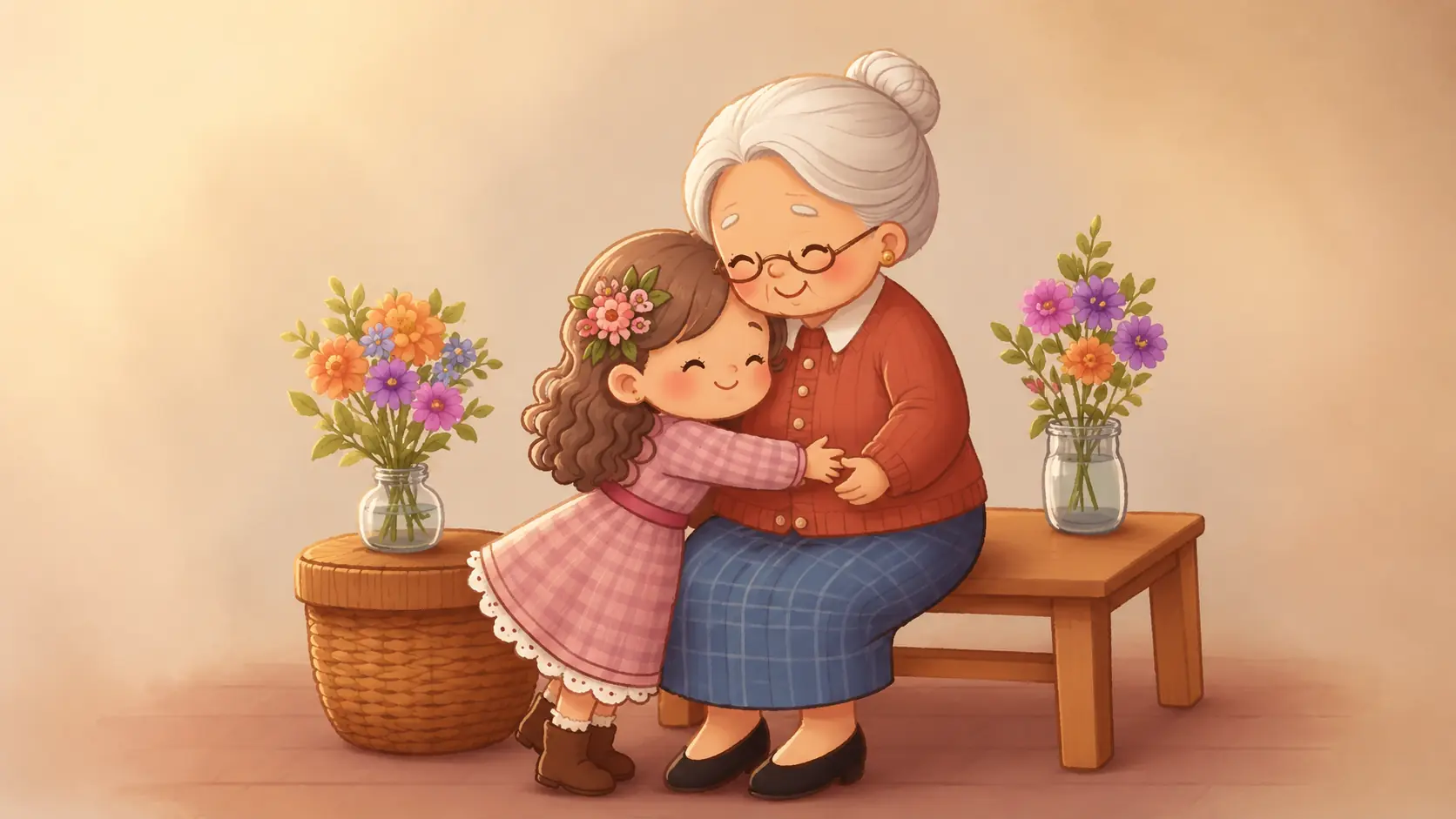
1. Faith: Grandchildren Need More Than a Tradition They Only See on Holidays
Faith rarely transfers through family bloodlines alone.
A grandmother may assume that because the family has always attended church, prayed before meals, celebrated Christmas, or spoken about God, her grandchildren will naturally continue those practices.
But beliefs do not pass from one generation to another automatically.
Children need to see faith lived, explained, questioned, practiced, and connected to real life.
A grandchild may hear that God is good, but Grandma can help them understand what that belief looks like when life is not good. She may be the person who can say, “I prayed when I was afraid,” “My faith carried me when your grandfather died,” or “There were times I did not understand what God was doing, but I chose not to walk away.”
These statements give faith weight.
Without personal stories, faith can sound like a collection of rules, songs, buildings, and family expectations. A child may participate while young because the adults around them require it. When they become old enough to choose for themselves, they may not understand why those practices should continue.
An involved grandmother can help bridge that gap.
She can show that faith is not only about attending a service. It is also about how a person responds to suffering, treats people, forgives, serves, waits, and hopes.
Grandchildren watch what Grandma does when she is disappointed. They notice whether she speaks about kindness but treats people harshly. They notice whether prayer is used only during emergencies or becomes part of daily life.
Children are deeply sensitive to inconsistency.
If faith appears only as a demand placed on them, they may resist it. If they see faith shaping a grandmother into someone patient, honest, compassionate, and steady, they may become curious about its source.
Grandma does not need to deliver sermons every time the grandchildren visit.
In fact, constant correction or pressure can make children feel that love depends on religious performance.
Faith is often passed more effectively through relationship than argument.
A grandmother can pray with a nervous grandchild before a test. She can tell a short story about a time she needed courage. She can connect a Bible lesson to something the child is actually experiencing.
She can say, “I do not have every answer, but I believe God is near us in this.”
That humility matters.
Children and teenagers will eventually ask difficult questions. They may wonder why prayers appear unanswered, why good people suffer, why churches sometimes fail, or whether their family’s beliefs are truly their own.
A frightened grandmother may respond by shutting down the questions.
“Do not talk that way.”
“You just have to believe.”
“Because the Bible says so.”
These responses may come from sincere concern, but they can teach the child that faith cannot survive honest thought.
An involved grandmother can offer a safer response.
“That is a good question.”
“I have wondered about that too.”
“Let us think and pray about it together.”
“I do not know the complete answer, but I will not be afraid of your question.”
This approach allows the child to explore without believing that doubt automatically means rejection.
Faith becomes a relationship that can hold complexity.
A grandmother can also help children understand the family’s spiritual history.
Perhaps previous generations survived war, poverty, migration, illness, discrimination, or grief. Perhaps prayer meetings happened around a kitchen table. Perhaps someone kept a Bible filled with notes during a difficult season.
These stories help a child see that faith was not merely decoration in the family.
It was a source of endurance.
Grandma may possess the old hymnbook, handwritten prayer, or family Bible that connects the present child to people they never met. When she explains the meaning behind these objects, she gives the child a spiritual inheritance.
Without her involvement, those items may eventually become unlabeled possessions in a box.
The story behind them may disappear.
Faith also grows through repeated small moments.
A short prayer before a drive.
A message saying, “I am praying for your interview.”
A conversation about forgiveness after a family conflict.
A reminder to care for someone who is lonely.
These actions make faith practical.
Grandchildren need to know that prayer is not only words spoken in church. Prayer can become a way of carrying people in love. Service is not only a project organized by an institution. It can mean bringing food to a neighbor or calling someone who is grieving.
Grandma can model these habits in a natural way.
The goal is not to force a grandchild into a spiritual identity they have not chosen. Faith offered through fear, guilt, or control may produce outward compliance without an inner foundation.
The goal is to give the child a clear, honest, lived example.
A grandmother can say, “This is what has guided me. This is where I have found hope. I want you to know it, but I also want you to understand it.”
Her faith should create safety, not anxiety.
A child should not fear that Grandma will withdraw love if they struggle, question, or make mistakes. Instead, they should know that her love remains steady while she continues to pray, guide, and speak truth.
This steadiness can become especially important when a grandchild moves away from church or expresses beliefs that differ from the family.
Grandma may feel frightened and heartbroken. She may interpret the change as personal failure.
But panic can push the child farther away.
A more enduring response may be to stay close.
Keep listening.
Keep loving.
Keep living the faith rather than using it as a weapon.
A grandchild who knows Grandma remains emotionally safe may return to spiritual conversations later. A grandchild who feels condemned may hide every question.
The grandmother cannot control the final choices of another person. Even the most involved, loving, faithful grandparent cannot guarantee that a child will believe exactly as she does.
But she can make sure the child receives a meaningful witness rather than a silent assumption.
If Grandma is not involved, the child may know the family had faith without knowing why.
They may inherit the vocabulary but not the story.
They may see the church building but never hear how faith carried someone they love through the hardest night of her life.
They may not understand that the prayers spoken over them began before they were old enough to remember.
Grandma’s involvement cannot make every spiritual decision for a grandchild.
But it can give the child something real to remember when the world becomes uncertain.
One day, long after Grandma is gone, the grandchild may hear her voice in memory:
“God has carried us before.”
“You are never beyond the reach of grace.”
“Tell the truth, love people well, and keep praying.”
Those words may become a path home.
2. Identity: Without Grandma’s Stories, Children Lose Part of the Map That Tells Them Who They Are
Children build identity from many sources.
They learn from parents, teachers, friends, culture, media, community, and personal experience. But family stories provide a special kind of foundation.
They answer questions children may not yet know how to ask:
Where did I come from?
What kind of people are in my family?
What have we survived?
What do we value?
Who was my parent before becoming my parent?
Grandma often holds these answers.
No one else remembers her daughter at three years old in exactly the same way she does.
She remembers the way the little girl carried a blanket through the house, how she cried on the first day of school, which foods she refused to eat, and what made her laugh until she could not breathe.
No one else remembers her son’s childhood from the perspective of the person who raised him. She remembers his fears, early kindness, stubbornness, questions, and dreams.
These stories allow grandchildren to see their parents as whole people.
Children usually experience parents in the present role of authority. Mom is the one who creates the schedule, corrects behavior, and asks whether homework is finished. Dad may be the one who works, sets limits, drives, fixes, or worries.
Grandma can open an earlier chapter.
She can say, “Your mother used to get nervous before every school performance, just like you.”
Suddenly the child’s fear feels less isolating.
She can say, “Your father struggled with reading at first, but he kept practicing.”
The child learns that difficulty does not mean failure.
Family stories create connection through resemblance.
A grandchild who feels unusual may discover that someone else in the family had the same sensitivity, talent, temper, humor, or dream.
Grandma may say, “You remind me of your great-grandfather when you do that,” or “Your love of music comes from a long line of people.”
This gives the child a sense that their traits belong somewhere.
Identity becomes larger than the current moment.
A child who is struggling may believe, “Something is wrong with me.” Family stories can say, “You are part of people who have struggled and continued.”
Grandma may remember seasons the parents do not discuss often.
She can tell how the family began again after losing a job, moved across the country with very little, cared for relatives during illness, or found joy during years when money was scarce.
These stories create a family narrative of endurance.
The story should not pretend the family was perfect.
Every family contains mistakes, failures, conflict, and pain. Grandchildren do not need a polished mythology in which every ancestor was heroic and every decision was wise.
They need honest stories told with maturity.
Grandma can say, “We did not always handle things well, but this is what we learned.”
She can explain that a relative’s addiction, anger, abandonment, or silence caused harm without turning the conversation into gossip.
Honest family history can help children recognize patterns.
They may learn which strengths they want to continue and which wounds they want to heal.
Silence does not always protect children.
Sometimes silence leaves them confused by emotional patterns they can feel but cannot name.
Grandma’s wisdom can give language to the past without burdening the child with adult details beyond their age.
She can share truth gradually and responsibly.
Identity is also shaped by culture and tradition.
Grandma may know the recipes, songs, prayers, sayings, and customs that came from earlier generations. She may know why certain foods are prepared on holidays, why a particular name appears repeatedly in the family, or why someone keeps an object that looks ordinary.
When she invites grandchildren into these traditions, she does more than preserve nostalgia.
She helps them experience belonging.
Cooking a family recipe together allows the child to participate with their senses. They smell what previous generations smelled. They touch the dough, hear the story, and repeat the movement.
A recipe becomes a connection between time periods.
The same is true of songs, crafts, gardens, photographs, and family places.
Grandma can take the child to a neighborhood where the parent grew up. She can point to the school, the old house, the church, or the park.
The child sees that their family existed before they arrived.
This broader perspective can be grounding in a culture that often emphasizes constant reinvention.
Children need freedom to become themselves, but they also benefit from knowing that they did not begin from nothing.
Grandma should never use family identity to control the child.
“You must become this because everyone in our family did.”
“You cannot choose that because it would embarrass us.”
Healthy identity is not a cage.
The family story should give roots strong enough to support growth, not roots that prevent movement.
Grandma can offer inheritance without demanding imitation.
“This is where you come from. You will decide how you carry it forward.”
That message respects both continuity and individuality.
The relationship itself also contributes to identity.
A child who is known deeply by a grandmother receives another reflection of themselves. Grandma may notice qualities overlooked by others.
She may say, “You have always been thoughtful,” or “You notice people who are left out.”
Specific recognition helps children understand their character beyond performance.
School and social life often measure children by grades, talent, appearance, popularity, or achievement. Grandma can remind them that identity includes kindness, perseverance, curiosity, humor, and integrity.
Her voice can counter the narrow messages of the wider world.
This is especially important during adolescence, when identity becomes uncertain.
Teenagers may pull away from family as they explore who they are. Grandma may feel rejected and stop engaging.
But a steady, low-pressure relationship can provide security.
She can remain curious without interrogating.
She can say, “You do not have to be exactly who you were last year. I am interested in who you are becoming.”
That acceptance allows the teenager to grow without feeling that family love depends on staying unchanged.
Grandma can also help grandchildren understand the parent-child relationship during conflict.
A teenager may believe their mother has never understood them. Grandma remembers the mother as a teenager and may offer perspective without betraying either person.
“Your mother worried about many of the same things.”
“She may not always say it well, but she loves you deeply.”
This should never become taking sides or dismissing the grandchild’s feelings. Grandma must listen first.
But her longer perspective can soften the belief that the current conflict defines the entire relationship.
If Grandma is not involved, many family stories may disappear.
The grandchildren may know names without knowing personalities.
They may inherit photographs without understanding who is pictured.
They may repeat traditions without remembering their meaning.
They may know their parent as an adult but never hear how that parent became who they are.
Loss of family history does not always feel painful to a child immediately. Young people often assume the stories will remain available.
Then Grandma dies, and someone finds a box of photographs with no labels.
No one remembers which house is pictured or why a certain letter was saved.
Questions arrive after the person who knew the answers is gone.
Grandma’s involvement protects against that silence.
She does not need to create a perfect family archive. She can begin with one story at a time.
Write names on photographs.
Record a short memory.
Explain one recipe.
Tell the grandchildren what their parent was like at their age.
These simple acts give them a map.
The child may not value every story immediately.
Years later, after becoming a parent, losing someone, or facing a difficult season, they may return to Grandma’s words with new understanding.
Identity grows over time.
The stories Grandma shares today may become meaningful long after she is no longer present to explain them.
3. Resilience: An Involved Grandma Can Become Stability When a Child’s World Changes
Childhood is not always protected from hardship.
Children may experience divorce, death, illness, relocation, family conflict, financial instability, bullying, trauma, or sudden changes that make the world feel unsafe.
During these seasons, resilience does not mean the child remains unaffected.
It means the child has enough support, connection, and stability to begin recovering.
An involved grandmother can become part of that stability.
She may not be able to fix the situation. She cannot erase a divorce, bring back someone who died, or remove every painful memory.
But she can remain predictable when other things become uncertain.
A regular call, familiar meal, consistent phrase, or dependable visit can tell the child, “Not everything has changed.”
This message matters deeply during family disruption.
When parents separate, a child may feel pulled between homes, routines, and emotions. Adults may be overwhelmed by legal, financial, and personal stress.
Grandma can become a safe relationship that does not require the child to choose sides.
To serve this role well, she must resist the temptation to criticize one parent in front of the child. Even when she feels angry or protective, using the grandchild as an audience for adult conflict creates additional instability.
The child should not have to defend a parent, carry secrets, or become a messenger.
Grandma can say, “The adults are handling difficult things. You are loved, and none of this is your fault.”
She can listen without gathering information for another adult.
She can provide calm without pretending the child is not hurting.
During grief, Grandma may be the person willing to keep speaking the name of someone who died.
Children often notice when adults become uncomfortable with their sadness. The child may stop asking questions because every mention makes someone cry or change the subject.
Grandma, who may be grieving too, can create space.
“You can talk about them with me.”
“What do you miss most?”
“It is okay to feel sad and still laugh sometimes.”
These words help the child understand that grief does not need to be hidden.
Resilience grows when emotions are acknowledged rather than punished.
A child who learns that sadness, fear, and anger can be expressed safely is more likely to seek support instead of carrying everything alone.
Grandma’s role is not to remove every difficult feeling.
It is to help the child survive the feeling without believing it will last forever.
She can share age-appropriate stories of her own recovery.
“There was a time I felt very afraid.”
“I did not think things would improve, but slowly they did.”
“I needed help, and asking for it made me stronger.”
These stories normalize struggle without making the conversation about Grandma.
They offer hope grounded in experience.
Grandmothers often have a wider view of time.
Parents in the middle of a crisis may focus on surviving the current day. Grandma may remember other seasons that once felt impossible and eventually changed.
Her perspective can reassure both child and parent.
“This is hard, but this is not the entire story.”
Children need adults who can hold that truth.
Grandma can also strengthen resilience through ordinary expectations.
When a child is struggling, adults sometimes lower every expectation because they feel sorry for them. Compassion is necessary, but children also benefit from gentle structure.
Grandma can offer routines, small responsibilities, and consistent limits.
“Let us eat breakfast.”
“You can help me water the plants.”
“We will take a walk, then rest.”
These activities communicate that life continues and the child remains capable of participating.
Resilience is built not only through emotional conversations but through repeated experiences of competence.
A child who helps prepare food, complete a project, or solve a small problem receives evidence that they can affect the world around them.
Grandma can provide these opportunities without turning everything into a test.
Her home may become a place where the child can slow down, work beside someone, and experience success.
Physical warmth and familiarity also matter.
The smell of a familiar meal, the same blanket, the sound of Grandma’s voice, or a repeated bedtime routine can help calm a stressed nervous system.
Children often find safety in sensory predictability.
Grandma’s house may become associated with steadiness.
Even when she lives far away, she can create predictable rituals through calls, voice recordings, or mailed objects.
A child going through a difficult season may listen to the same recorded story each night. They may keep Grandma’s note near the bed or receive a regular message before therapy, court transitions, or school.
Consistency can cross distance.
Grandma’s involvement also expands the child’s support network.
No single adult can meet every emotional need. Parents may be loving and devoted but exhausted. A child who has another trustworthy adult gains another place to turn.
This does not weaken the parent-child bond.
It strengthens the family system.
A grandmother may notice changes that others miss. She may recognize withdrawal, irritability, or fear because the child behaves differently around her.
If she is concerned, she should communicate respectfully with the parents rather than attempting to diagnose or manage the situation alone.
Her observations can help the family seek support early.
In serious situations, professional help may be necessary. Grandma’s love is valuable, but it is not a replacement for counseling, medical care, or protection.
Her role can include supporting the child’s access to those resources and reducing stigma.
“There is nothing shameful about getting help.”
“Talking to someone can be brave.”
These messages teach resilience as wise support-seeking, not silent endurance.
Grandmothers must also protect their own emotional regulation.
A child in crisis may say frightening, angry, or confusing things. If Grandma panics, becomes dramatic, or makes the child responsible for her reaction, the child may stop sharing.
She needs to listen calmly, ask appropriate questions, and seek adult help when necessary.
Emotional steadiness does not mean emotional coldness.
Grandma can be deeply concerned while still communicating safety.
“I am glad you told me.”
“We are going to get help.”
“You are not alone.”
These phrases can become anchors.
If Grandma is absent, the child may still recover through parents, teachers, counselors, friends, or other relatives. Grandparents are not the only source of resilience.
But an involved grandmother adds another layer of protection.
She represents continuity across generations.
When the immediate household changes, Grandma may remain connected to the child’s history. She can say, “You are still part of this family. We are still here.”
For a child whose world feels broken, that message can be powerful.
Her stability is not based on solving every problem.
It is based on refusing to disappear when the problem becomes difficult.
Children remember who stayed.
They remember the adult who kept calling, kept listening, and did not become uncomfortable with the mess.
A grandchild may not recognize Grandma’s influence during the crisis.
Years later, they may say, “I knew I had somewhere safe to go,” or “She treated me like I was still myself when everything was changing.”
That is resilience supported through relationship.
4. Legacy: Values Do Not Transfer Automatically—They Must Be Lived Close Enough to Be Seen
Many grandmothers hope their values will continue after they are gone.
They want grandchildren to value faith, family, honesty, kindness, responsibility, courage, service, forgiveness, and respect.
But values do not move automatically through generations.
A child does not inherit patience because Grandma was patient.
They do not become generous merely because generosity mattered to the family.
They need to see the value practiced, hear it explained, and experience what it feels like in relationship.
Legacy requires proximity and intentionality.
Proximity does not always mean living close. It means creating enough relational closeness that the child can observe, ask, remember, and participate.
A grandmother who lives nearby but remains emotionally distant may transfer less than a grandmother who lives across the country and calls consistently.
Intentionality means refusing to assume the child will somehow absorb what was never clearly offered.
Grandma must make the invisible visible.
If honesty matters, grandchildren should see her tell the truth when lying would be easier.
If forgiveness matters, they should hear how she worked through resentment without pretending the harm was acceptable.
If service matters, they can join her in bringing food, writing a card, or helping someone.
Values become credible through action.
Children are especially influenced by how adults behave when there is a cost.
Generosity means more when Grandma gives during a season when money is limited.
Kindness means more when she speaks respectfully about someone who has frustrated her.
Faith means more when she continues praying during uncertainty.
Courage means more when she admits fear and still takes the next step.
These examples become moral memory.
Grandma may be tempted to focus on verbal instruction.
“Be kind.”
“Always tell the truth.”
“Family comes first.”
The words matter, but children test them against what they observe.
If Grandma speaks about family loyalty but carries constant bitterness toward relatives, the contradiction becomes the lesson.
If she demands respect while humiliating others, the child learns that respect is based on power rather than dignity.
Legacy is not built by slogans.
It is built by consistency between belief and behavior.
This does not require perfection.
In fact, admitting mistakes can become part of a powerful legacy.
Grandma can say, “I spoke harshly, and I was wrong.”
“I should have listened better.”
“I carried anger too long.”
“I want to handle this differently.”
Accountability teaches grandchildren that values include repair.
They learn that a good person is not someone who never fails. A good person tells the truth about failure and tries to make amends.
This lesson may be more useful than an image of perfection the child can never imitate.
Grandma’s values can also be embedded in rituals.
A weekly meal can teach hospitality.
A prayer list can teach concern for others.
Writing thank-you notes can teach gratitude.
Caring for a garden can teach patience and responsibility.
Visiting a lonely neighbor can teach compassion.
The child learns by participating.
Legacy becomes something they have done, not merely something they have heard.
Grandma should explain why the action matters.
“We bring food because people should not have to carry grief alone.”
“We write a note because gratitude deserves expression.”
“We keep our promises because trust takes a long time to build.”
Meaning turns routine into value.
Generational faith works in the same way.
Church attendance alone may not create faith, but attending with a grandmother who explains, listens, and connects belief to life can leave a deeper impression.
The child may remember sitting beside her, hearing her sing, watching her pray, or seeing her care for someone afterward.
Faith becomes attached to relationship and practice.
Grandma can also pass down values through stories about choices.
She might tell how the family returned money that was not theirs, welcomed someone who had nowhere to go, or remained loyal during a difficult illness.
These stories show values under pressure.
Avoid turning them into speeches about how much better people were in the past. Children often stop listening when every story becomes criticism of their generation.
Share the past as wisdom, not superiority.
“We faced different problems, but this is what helped us.”
That sentence invites connection.
Grandma must also respect that grandchildren will live in a world different from hers.
They may apply family values in new contexts. Their careers, relationships, technology, culture, and challenges may look unfamiliar.
Legacy does not mean copying every custom without change.
It means carrying the heart of the value forward.
A grandchild may express service through a form Grandma never used. They may build community online, support a different kind of organization, or communicate faith through a new medium.
Grandma can remain curious.
“How does this connect to what matters to you?”
This allows legacy to remain alive rather than frozen.
Control often damages the very legacy a grandparent hopes to preserve.
If Grandma insists that love requires exact agreement, grandchildren may associate family values with pressure.
If she allows honest conversation, they may feel free to wrestle with those values and eventually claim them as their own.
Ownership is stronger than forced compliance.
Legacy also includes how Grandma makes the grandchildren feel.
They may forget many instructions, but remember whether her home felt safe, whether mistakes could be admitted, and whether they were loved without having to earn every moment of affection.
Emotional legacy shapes future relationships.
A grandchild who experiences steady love may become more capable of offering it.
A child who sees boundaries without humiliation may learn to hold boundaries respectfully.
A child who receives forgiveness with accountability may learn how to repair relationships.
Grandma is teaching even when she does not realize it.
Her tone, reactions, apologies, and habits become part of the inheritance.
This is why involvement matters.
Values cannot be observed from complete absence.
Stories cannot be received if no one tells them.
Faith cannot be witnessed if it remains private and unexplained.
The family name alone does not carry the legacy.
Relationship carries it.
If Grandma stays distant because she assumes the grandchildren are not interested, the transfer may never happen.
Young people often do not know what questions to ask. They may not realize which stories are at risk of disappearing.
Grandma may need to begin.
“Let me tell you why this mattered to our family.”
“I want you to know what your mother was like when she was young.”
“This is something I learned too late.”
The grandchildren may appear distracted. Keep the stories brief, honest, and connected to their lives.
Legacy is planted gradually.
The result may not become visible for years.
A child may roll their eyes at Grandma’s reminder to write a thank-you note and later teach the same habit to their own children.
A teenager may seem uninterested in a family recipe and request it after moving away.
A young adult may question faith and remember Grandma’s quiet steadiness during a crisis.
The seed can remain dormant before it grows.
Intentional grandparents understand that legacy is not applause received in the present.
It is influence that continues when the person is no longer in the room.
Being Involved Does Not Mean Taking Over
The importance of grandparents can be misunderstood.
Some may hear that grandchildren need faith, identity, resilience, and legacy from Grandma and conclude that she should become another parent.
That is not the goal.
A healthy grandmother supports the parents rather than competing with them.
She respects household rules, asks before making significant decisions, and avoids presenting herself as the wiser alternative.
Comments such as “I would never do it that way,” or “Your parents are too strict,” may create short-term closeness with the child but damage family trust.
Grandchildren should not be placed between generations.
Grandma can be supportive without being silent about serious concerns. If a child is unsafe, action may be necessary.
But ordinary disagreements about food, schedules, discipline, screen time, or routines should be handled respectfully with the parents.
Trust creates access.
When adult children know Grandma will not undermine them, they are more likely to welcome her involvement.
She can ask, “How can I support what you are teaching?”
This question communicates partnership.
Being involved also does not require constant activity.
Grandma does not need to attend every event, call every day, or buy frequent gifts. Involvement should fit health, distance, finances, and family schedules.
Consistency matters more than intensity.
A dependable monthly visit may be more meaningful than a burst of attention followed by silence.
A weekly message may build more trust than an expensive package with no emotional connection.
Grandma can choose sustainable ways to show up.
She also needs a life beyond the grandchildren.
A grandmother whose entire identity depends on access to the children may unintentionally place emotional pressure on the family.
Friendships, faith communities, hobbies, service, rest, and personal purpose allow her to remain a whole person.
This independence can strengthen the relationship.
Grandchildren experience her love as a gift rather than a demand that they fill every empty space.
Healthy involvement says, “You are deeply important to me, but you are not responsible for my entire happiness.”
When Distance Makes Involvement Difficult
Some grandmothers live far from their grandchildren.
They cannot attend weekly church together, sit at the dinner table, or become part of daily routines.
Distance changes the method, but it does not remove the opportunity.
Faith can be shared through short prayers, recorded Bible stories, or messages before important days.
Identity can be passed through mailed photographs, voice recordings, family recipes, and stories told during calls.
Resilience can be supported through consistent check-ins during difficult seasons.
Legacy can be strengthened through small traditions that cross the miles.
Grandma might read the same devotional with an older grandchild, send a handwritten letter each month, or record one family memory at a time.
She can ask specific questions rather than relying on “How are you?”
“What made you proud this week?”
“What was difficult?”
“What are you praying about?”
“What story have you heard about our family that you want to know more about?”
These questions invite substance.
Technology should support connection rather than become the entire relationship. A video call can include an activity: cooking the same recipe, reading a book, drawing, or looking at old photographs together.
Children often connect more naturally when they are doing something rather than being interviewed.
Distance may make Grandma fear that nearby relatives will matter more.
Relationships should not be treated as competitions.
A child can have many loving adults. Grandma’s unique value comes not from being the closest person geographically but from being consistently herself.
Her voice, memories, faith, humor, and love cannot be duplicated.
When Grandchildren Seem Uninterested
Children and teenagers do not always show appreciation in ways adults recognize.
A toddler may leave the video call after two minutes. A school-age child may answer every question with one word. A teenager may appear distracted or fail to respond to a message.
Grandma may feel hurt and conclude that involvement no longer matters.
Developmental stages affect how children connect.
Young children need brief, playful interactions. Teenagers often need lower-pressure contact and respect for privacy.
Adapt without disappearing.
Send the teenager a short message without demanding an immediate reply.
Ask about a specific interest.
Remember an important date.
Avoid turning every conversation into advice.
Connection can remain quiet.
A teenager may not express what Grandma’s consistency means. Years later, they may remember that she never stopped reaching out.
Love offered without emotional pressure creates a safe path back.
Conclusion: Your Grandchildren May Not Know What They Are Losing Until the Stories Are Gone
A grandmother can underestimate her importance because her influence is often quiet.
She may not see immediate results.
The grandchild may not remember every prayer, story, meal, or conversation. They may not understand why Grandma’s involvement matters while they are young.
But faith, identity, resilience, and legacy are built through repeated experiences over time.
Faith is strengthened when a child sees belief lived honestly through joy, doubt, hardship, and service.
Identity is grounded when the child hears the stories that explain who their parents were, where the family came from, and what previous generations survived.
Resilience grows when Grandma remains steady during divorce, grief, trauma, and change, offering a relationship that does not disappear when life becomes difficult.
Legacy continues when values are not merely spoken but practiced, explained, and shared closely enough for the child to experience them.
None of these things transfer automatically.
A family can lose its spiritual history within one generation.
Photographs can remain while every story behind them disappears.
Values can become slogans no one knows how to live.
Children can grow up surrounded by information while lacking a clear sense of belonging.
Grandma’s involvement cannot prevent every struggle.
She cannot guarantee that grandchildren will remain in church, make wise choices, recover quickly, or carry every family tradition forward.
Love does not give one person control over another person’s future.
But Grandma can make sure the grandchildren do not enter that future empty-handed.
She can give them prayers to remember.
Stories that explain their roots.
A safe relationship to return to.
Values they have seen lived rather than merely discussed.
She can tell them, “You belong here.”
“You come from people who survived hard things.”
“You are loved when you succeed and when you struggle.”
“Faith has carried our family, and I want you to know why.”
One day, Grandma’s chair will be empty.
The grandchildren may open a recipe book and recognize her handwriting. They may hear an old hymn and remember standing beside her. They may repeat a story about their parent’s childhood or offer kindness in a way that looks familiar.
In that moment, her involvement will still be present.
Her influence will live in choices, memories, prayers, and the emotional safety she helped create.
Do not step back simply because the grandchildren are growing.
Do not assume the parents can transfer every part of the family story without your help.
Do not wait for the children to ask questions they do not yet know they need to ask.
Show up with humility.
Respect the parents.
Listen more than you lecture.
Tell the stories.
Live the values.
Pray consistently.
Remain steady.
Your grandchildren may not understand today what your involvement is giving them.
Years from now, they may realize that Grandma was not only an older relative who loved them.
She was one of the people who taught them where they came from, what could hold them together, and how to carry the best of the family into the future.