The first thing Raymond Mercer noticed when he stepped out of the car in Staunton, Virginia was not the old brick storefront or the faded sign above it. It was the smell: warm yeast, toasted crust, butter settling into bread.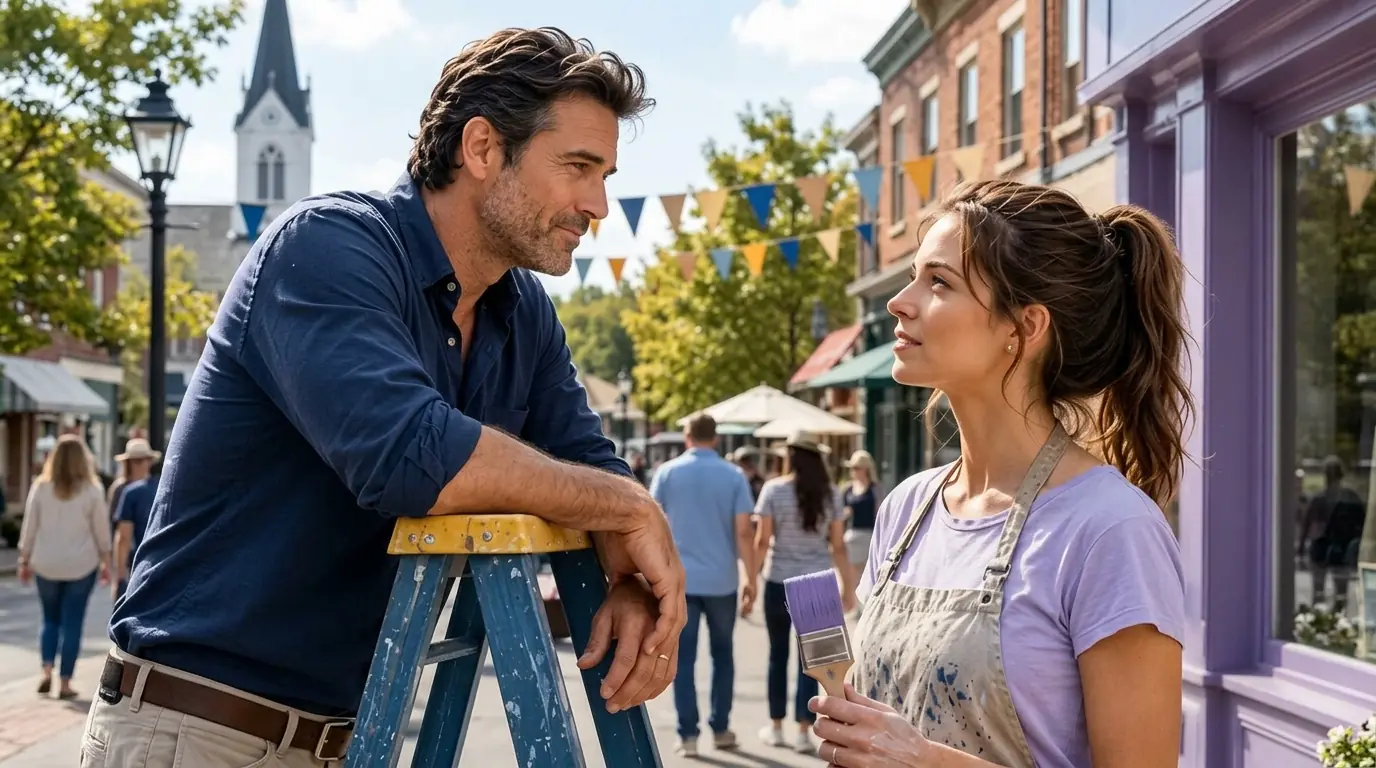
For a few seconds, the years disappeared.
Raymond stood beside the car with one hand on the roof, breathing through a tightness in his throat. He was 53 now, a man whose name appeared in business magazines and whose investments stretched across several states. Yet the smell drifting from a bakery farther down the street made him feel 12 again—skinny and impatient, slipping cinnamon rolls from the counter while old Arthur Fletcher pretended not to notice.
Thirty-five years had passed since Raymond had lived in Staunton. Two years and seven months had passed since Hannah died. He counted the months because grief had turned time into something measurable. Once he had counted quarterly earnings; now he counted mornings without her.
Hannah had been the one who told him to come back. Years earlier, while looking through an old photograph album, she had stopped at a picture of Raymond standing outside Fletcher's bakery.
"One day," she had said, "you'll go back there."
"For what?"
"Not for business. For yourself."
He had laughed. "There was nothing in Staunton," he told her, "except old streets and memories." Hannah had only smiled.
Now she was gone, and Raymond had returned too late for her to see that she had been right. He had purchased Fletcher's bakery from Arthur's grandson after learning it had been closed for years. The price had been insignificant compared with his fortune. The reason had not.
When the rusty lock finally surrendered, Raymond pushed open the door. Dust waited for him like an old tenant. The marble counter was chipped. Shelves leaned against stained walls. A clock above the kitchen had stopped on an afternoon no one remembered.
Raymond walked slowly across the creaking floor. Here, his father had lifted him so he could reach the top shelf. There, his mother had traded recipes with Mrs. Fletcher. Here, long before Raymond learned how much everything cost, he had learned that some things could simply smell good and make a person happy.
He touched the counter and accidentally traced a crooked heart through the dust. Embarrassed, even though no one was watching, he wiped it away.
Then he looked at the walls: gray, tired, empty. Hannah would have known what to do with them. She had understood colors, curtains, pictures, light. Since her death, their large home had remained exactly as she had arranged it. Raymond lived there like a museum guard, protecting a life that had already ended. He refused to let the bakery become another museum.
Outside, three storefronts away, he noticed a woman painting. She stood on a short ladder, working on a mural of wildflowers growing through a field of grain. Her dark hair was tied carelessly behind her head. Her apron looked as though every color she had ever used had left a signature on it. What caught Raymond was her concentration. She painted as though the wall had offended her personally, and she intended to defeat it with beauty.
He watched too long. She turned. Her eyes were red—not dramatically, just enough that Raymond recognized the look of someone who had cried recently and had work to do afterward.
"Beautiful," he said.
She raised an eyebrow.
"The mural?" Raymond added quickly. "I meant the mural."
"That helps."
He almost smiled. She studied his polished shoes, expensive watch, and unfamiliar car. "You're not from around here."
"I was, a long time ago." He pointed toward the bakery. "I bought Fletcher's."
Something changed in her expression. "My mother used to take me there." Then suspicion replaced the memory. "You turning it into one of those places that charges too much for coffee because the cups are tiny?"
"No."
"A luxury restaurant?"
"No."
"Then what?"
Raymond looked back at the old storefront. "I wanted to feel alive again." She waited. "The problem," he admitted, "is that I understand money. I understand companies. I don't understand walls."
She glanced toward her mural. "You want to hire me?"
"If you're willing."
She climbed down and extended a paint-stained hand. "Caroline Hayes."
"Raymond Mercer."
Her grip was firm. He looked at the mural again. "I haven't seen anyone work on something with that much love in a long time." The word escaped before he could reconsider it: love.
Caroline's expression softened for only a second. Raymond knew that look, too. Grief recognized grief before people found the courage to name it.
"Come by tomorrow morning," he said. "Tell me whether the bakery can be saved."
"Don't call me 'ma'am' when I do."
"Why?"
"It makes me feel older than you."
Raymond laughed. The sound surprised him. For the first time in two years and seven months, laughter did not immediately hurt. And as he walked back toward the small inn where he was staying, Raymond found himself thinking something that frightened him more than any business risk ever had: he hoped she would come.
Caroline was waiting outside the bakery the following morning with a cardboard box of brushes balanced against her hip. Raymond unlocked the door and let her enter first.
Her attitude changed the moment she stepped inside. She stopped joking. Morning light streamed through the tall front windows, making the dust glow like floating gold.
"My mother loved this place," she said.
Raymond remained quiet.