"If you win this case, I'll resign as judge." Judge Raymond Whitmore's words hit Maya Williams in front of everyone. The courtroom fell silent. Then whispers spread across the room as people turned to stare at the young black woman standing alone at the plaintiff's table.
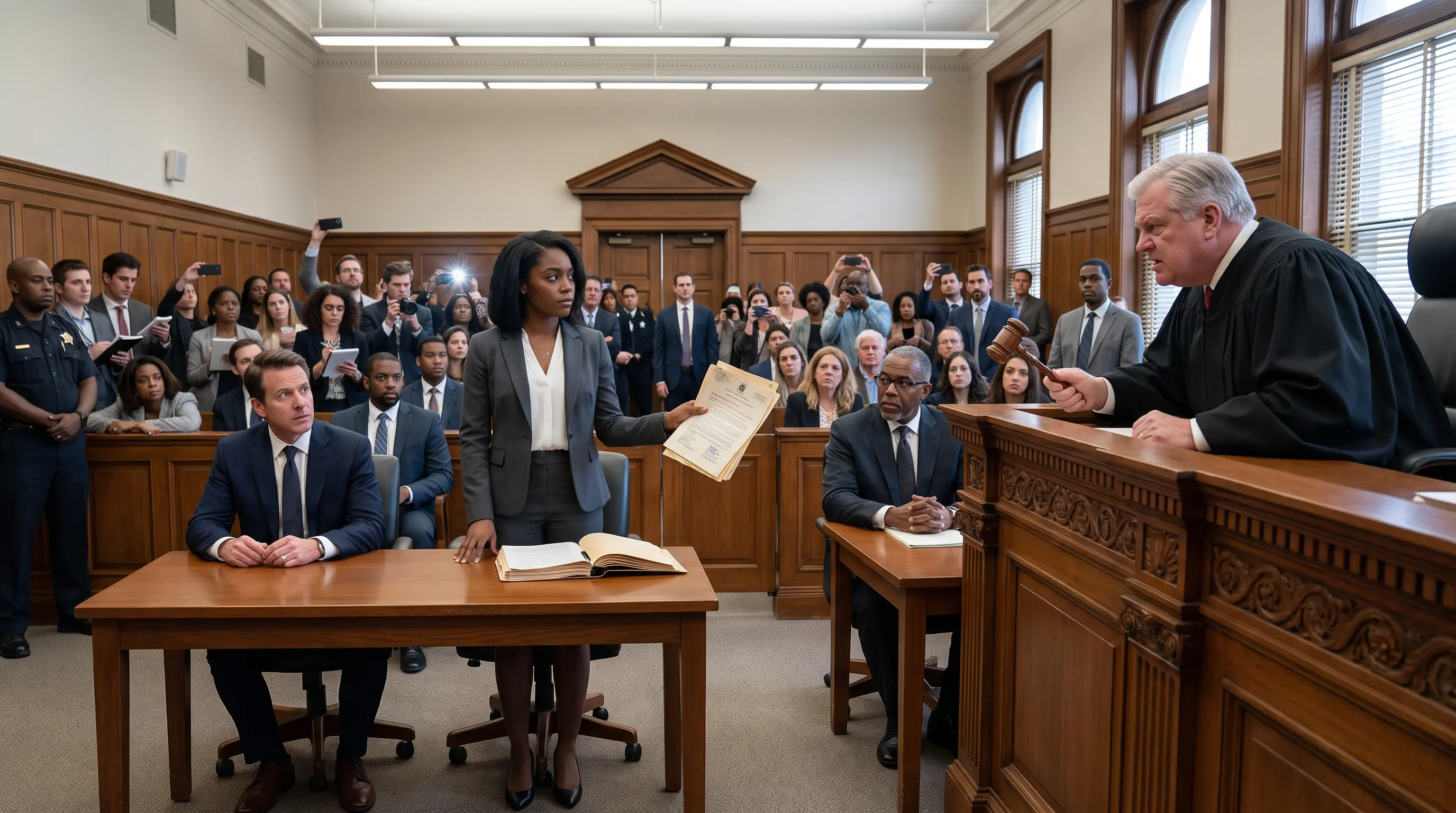
Everyone understood what this was, a public humiliation. Whitmore leaned back in his chair and looked down at her with cold amusement. "If you lose," he added, "you may want to reconsider whether you belong in this profession." A few people laughed.
At the defense table, Daniel Mercer smirked. Maya felt her chest tighten. She could still ask for a continuance. No one would blame her.
She was only here because the lead attorney had collapsed before the hearing and the case had been thrown into her hands at the last second. But if she stepped back now, everything she had worked for might end here. She thought of her mother cleaning office buildings at midnight so Maya could stay in school. She thought of the people in her neighborhood who had collected money for her books, prayed for her success, and told everyone that one day Maya Williams would become the lawyer who fought for people the system ignored.
To them, she was more than a young attorney. She was proof someone from their streets could rise. If she folded now, she would not just fail herself, she would fail all of them. Maya lifted her head.
"No, Your Honor." Whitmore narrowed his eyes. "No what?" "No continuance."
"I'm prepared to proceed." That surprised the room. Whitmore's smile returned. "Very well."
"Then let's begin." Daniel Mercer argued first. He called the wrongful conviction claim baseless. He said the case had been settled years ago.
He argued the plaintiff had no legal grounds to reopen the conviction. When he finished, he sat down looking satisfied. Whitmore turned to Maya. Your turn.
She stood. Her hands trembled. Then she gripped her mother's pen tighter and stepped forward. Your Honor, this case is not about reopening old wounds.
It is about correcting a lie. The room quieted. Leonard Brooks spent 22 years in prison because evidence was hidden from the defense and witness statements were buried. Mercer rose immediately.
Objection. Sit down. Whitmore snapped. Mercer blinked and lowered himself back into his chair.
Maya kept going. The city wants this court to believe justice was served because procedure was followed. But procedure means nothing when truth is deliberately hidden. She lifted a document from her file.
This witness statement was taken 3 days before the original trial. It identifies another suspect by name. It was never disclosed to the defense. That changed the room.
Mercer stood again. Objection. That document is not properly before this court. It was buried.
Maya said firmly, because someone wanted it buried. Whitmore's expression shifted. Only for a second, but Maya saw it. Fear.
He struck the gavel. This court will recess until tomorrow morning pending review of the new evidence. Gasps spread through the room. People stood immediately.
Reporters rushed out the doors. Mercer looked rattled. Whitmore rose from the bench and disappeared into chambers without another word. Maya sat down slowly, her breathing uneven.
Benjamin Hayes approached after the room began to empty. He stopped beside her. You know what just happened? He asked.
Maya shook her head. Benjamin looked toward the judge's empty bench. You scared him. Maya frowned.
The judge? Benjamin nodded. He didn't challenge you because he thought you were weak. Maya stared at him.
Benjamin lowered his voice. He challenged you because powerful men only attack people they fear. Maya looked toward the empty bench, then down at the evidence still in her hand, and for the first time she understood. Judge Raymond Whitmore had not tried to humiliate her because he believed she would lose.
He had tried to humiliate her because he was terrified she might win. Maya did not leave the courthouse with the others. She stayed in the empty conference room beside courtroom 7B, staring at the witness statement spread across the table while the adrenaline from the hearing slowly drained out of her body. Benjamin Hayes closed the door behind him.
"You understand what this means now?" he asked. Maya looked up. "That Whitmore panicked."
"" Benjamin nodded once. "Judges like him do not panic over routine evidence." Maya stared at the document again. "Then why did he?"
"" Benjamin pulled out a chair and sat across from her. "Because that statement should not exist in your file." The words settled heavily between them. Maya frowned.
"What are you saying?" "I'm saying someone buried that evidence 22 years ago." Benjamin said. "And if Whitmore reacted like that the moment he saw it, then there's a good chance he knows exactly why."
"" Maya felt her stomach tighten. "He was involved." Benjamin said nothing. He didn't need to.
Maya leaned back slowly. The possibility had already begun forming in her mind during the hearing, but hearing it spoken aloud made it real. Judge Raymond Whitmore was not just biased. He might be connected to the original wrongful conviction of Leonard Brooks.
Benjamin folded his hands. "If that's true, this stops being a courtroom fight and becomes something much bigger." Maya looked at him. "Then we prove it."
"" Benjamin studied her for a long moment, then nodded. "Good answer." He slid a thick file across the table. Original prosecution archive.
I pulled it from record storage before someone could make it disappear. Maya opened it. Inside were transcripts, police reports, trial notes, internal memos, and prosecutor filings from the original Brooks case. Benjamin stood.
You have until tomorrow morning before Whitmore regains control of that courtroom. If there's something tying him to this, find it tonight. Then he left. Maya spent the next 4 hours going page by page through the file.
At first, it looked like ordinary trial material. Witness statements, police testimony, procedural motions. Then she found it. A suppression order.
Her eyes narrowed. It was dated 6 days before Leonard Brooks's original trial. The signature at the bottom read, Assistant District Attorney Raymond Whitmore. Maya froze.
Her pulse quickened. Whitmore had been one of the prosecutors. He had personally signed the order excluding key defense evidence from trial. She flipped through the next pages faster.
Another memo. Then another. Each bearing his name. Each connecting him more deeply to the case than anyone had disclosed.
Benjamin was right. Whitmore was not simply presiding over this hearing. He was sitting in judgment over a case he had helped build. Maya grabbed the phone and called Benjamin.
He answered immediately. Tell me you found something. I found everything, Maya said. Whitmore prosecuted Brooks.
Silence. Then Benjamin exhaled. God help him.