🚁 Meet the U-Hawk: The Black Hawk That Flies Itself 🤖
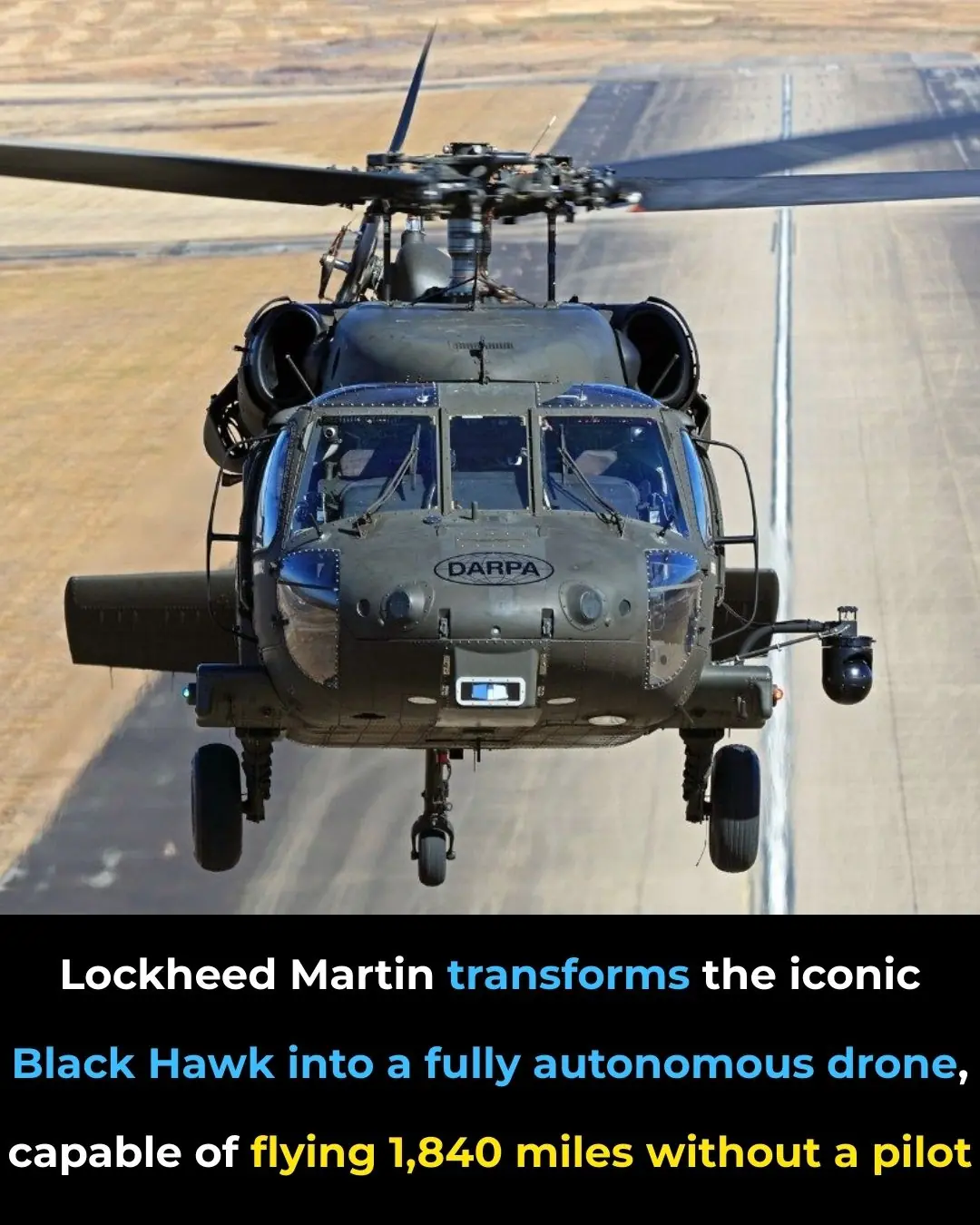
Lockheed Martin’s Sikorsky has transformed an iconic military helicopter into the future of aviation with the introduction of the fully autonomous S-70UAS "U-Hawk." This reimagined version of the UH-60L Black Hawk has set a new benchmark for unmanned aviation, utilizing cutting-edge technology to carry out missions without human intervention.
In just under a year, Sikorsky has achieved a remarkable feat by removing the cockpit and integrating MATRIX-powered autonomy into the U-Hawk. This revolutionary system enables the helicopter to fly itself, handle flight planning, load cargo, and perform a wide range of tasks typically requiring a crew. The U-Hawk also features innovative design changes, such as clamshell cargo doors and a rear loading ramp, both of which contribute to its impressive capabilities.
Key Features and Enhancements:
-
25% More Cargo Space: The absence of a traditional cockpit allows for a significant increase in internal cargo capacity, making the U-Hawk far more efficient for transporting goods, supplies, and equipment.
-
9,000-lb Lift Capacity: The U-Hawk retains the powerful lift capabilities of the Black Hawk, able to carry up to 9,000 pounds, ensuring it can transport large and heavy loads.
-
1,840-mile Range or 14-Hour Endurance: With an extended range of 1,840 miles, the U-Hawk can travel long distances, making it ideal for missions in remote areas. Its 14-hour endurance is a testament to its robust engineering and fuel efficiency.
Perhaps most strikingly, the U-Hawk operates entirely via a tablet. This tablet-based system allows operators to plan, load, and direct the aircraft with just a few taps, making it a game-changer in the field of autonomous aviation. With the ability to manage its own flight path and perform complex tasks, the U-Hawk is setting new standards for what unmanned aerial vehicles (UAVs) can accomplish. The integration of MATRIX technology ensures that the aircraft can operate independently, executing missions that were once considered too complex for autonomous systems.
This leap in technology has significant implications not only for military operations but also for commercial and humanitarian applications. By removing the need for a pilot on board, the U-Hawk minimizes the risk to human life in dangerous environments and allows for more efficient use of resources. Whether it's delivering supplies to disaster zones, supporting military logistics, or conducting reconnaissance missions, the potential applications for the U-Hawk are vast.
The first flight of the U-Hawk is expected in 2026, marking the beginning of a new era in autonomous heavy-lift aviation. With its advanced features, extended range, and self-sufficient capabilities, the U-Hawk is poised to revolutionize the way helicopters are used in both military and civilian sectors. The age of fully autonomous, heavy-lift helicopters is officially here.
Sources:
-
Lockheed Martin Sikorsky. (2025). S-70UAS “U-Hawk” Autonomous Helicopter Overview. Sikorsky.com
-
Aviation Week. (2025). The Future of Autonomous Aircraft: A New Era in Aviation. AviationWeek.com