The 5:52 from Grand Central came around the bend below Marlow Landing the way it always did, headlight first, then the long silver body sliding out from behind the bluff with the river flat and copper-colored beside it. Lila heard it before Nora did. She always heard it first.
"It's coming," she said. "Mama. It's coming."
"I hear it, dear."
Lila was standing on the yellow line, which she was not allowed to do, and Nora put two fingers through the belt loop of her daughter's corduroys and drew her back half a step. Lila didn't notice. She was five and three-quarters, and she was wearing the striped conductor's cap that Daniel had bought her at the Transit Museum gift shop when she was three, a cap so large it had to be folded at the back with a binder clip. Her rain boots had frogs on the toes. It had not rained in nine days.
Every weekday at 5:52, give or take a few minutes, the train stopped at Marlow Landing and let off its handful of commuters: lawyers and nurses and a man who sold commercial carpet, women carrying canvas bags, a teenager with a cello case who had started riding in September. Nora knew most of their faces now. Some of them knew hers. The carpet man had stopped nodding at her around March, not unkindly; he simply couldn't keep doing it, the nod that said I know why you're here, and she understood. She would have stopped too.
For four years Daniel had been one of those faces. He'd come down the steps of the third car, the one that stopped closest to the stairs, with his tie already loosened and his bag over his shoulder, and Lila would launch herself at his knees as if she had been fired from something. He would say, "Somebody's on my platform," and Lila would say, "It's MY platform," and he would dig into his coat pocket and come up with a pocket present. A paper clip bent into a star. A bolt from a job site. A folded receipt shaped into something that was supposed to be a crane. A smooth gray stone from Bryant Park. A sugar packet from a coffee cart with a picture of the Chrysler Building on it. Lila kept them all in a blue butter-cookie tin on her dresser. The pocket tin. There were six hundred and some things in it. Nora had counted once, at two in the morning, the week after the funeral.
Daniel had died on a Tuesday in August, fourteen months ago, at his desk on the nineteenth floor of a building on Park Avenue South. An aneurysm, the doctor had said on the phone, the word arriving in Nora's ear like a small, cold stone. It would have been very fast. He would not have known. She had wanted to ask how they could possibly be sure, but she'd been standing in the parking lot of the county water district office with her truck keys in her hand, and she had found that she couldn't ask anything at all.
The first week, Lila had asked to go meet the train, and Nora had said no. The second week, Lila had gone and stood at the front door at 5:30 with her boots on the wrong feet, and Nora had found her there, and something in her had folded, and they had walked the four blocks down Ferry Street to the station. Lila had watched every passenger come down the stairs. When the last one was gone and the train had pulled out, she'd said, very reasonably, "He missed it."
They had been going ever since.
The counselor at the Willow Room, a soft-voiced woman named Bea Okafor who kept a basket of hand puppets beside her chair, said it was all right. Children made rituals. Rituals held them up while the rest of the understanding caught up. "She knows," Bea had said. "And she doesn't. Both of those are true for a while. You keep telling her the truth, simply, and you let her come to the train. One day the train will mean something else."
Nora had asked how long a while was, and Bea had smiled with real sympathy and not answered.
So now it was October, and the maples along the bluff had gone the color of a struck match, and Lila stood on the platform in her father's joke of a cap with her hands clasped under her chin, and the train came in with its long exhale of brakes.
The doors opened. People came down.
The cello girl. A nurse in purple scrubs. Two men talking about a fantasy football trade. The carpet man, who looked at his shoes. A woman with a baby in a sling.
Lila watched them all with the same grave, judging attention, the way she watched for her name in a picture book. Nora watched Lila. That was the part nobody told you, she thought. You didn't watch the train. You watched your child watch the train.
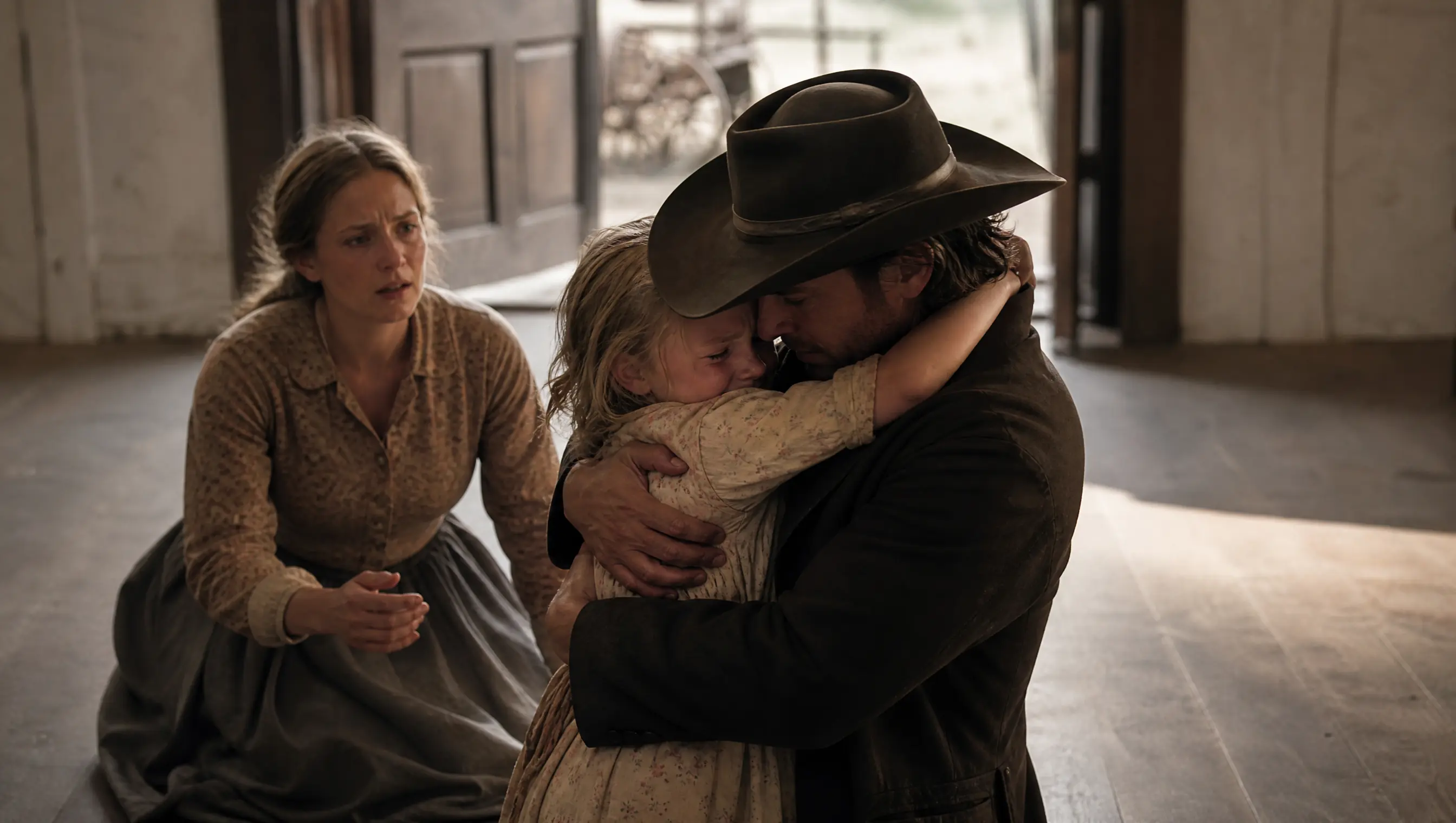
Then Lila made a sound Nora had never heard her make, a high thin note like a kettle just beginning, and the belt loop slid out from between Nora's fingers.
"Papa!"