Arizona does not have spring. It only has sun, pouring down like fire onto the barren rocks.
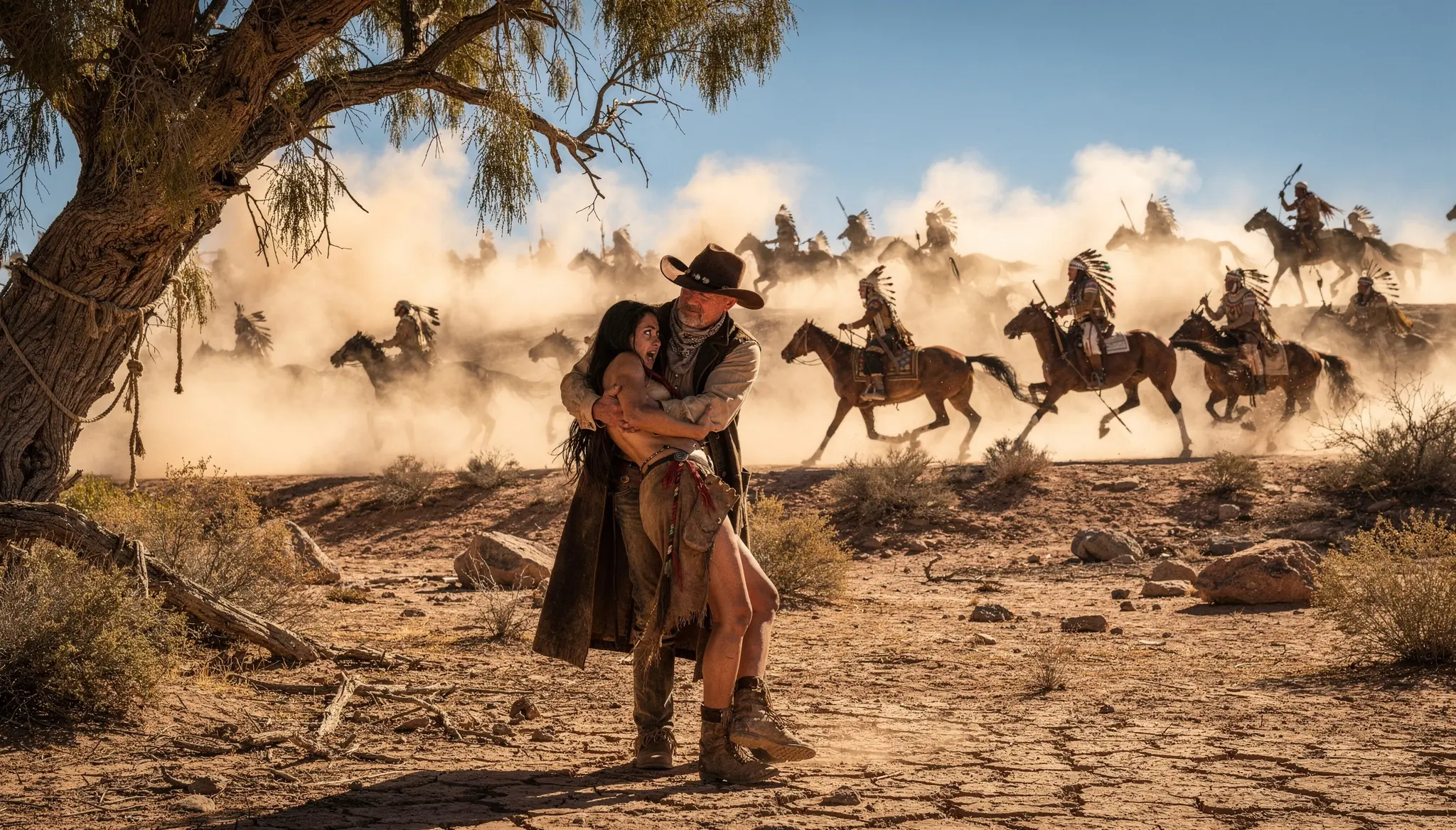
That afternoon, Elias Creed was on his way back from the town of Dustwater when he saw her. She was hanging from a dried cypress tree, her wrists bound behind her back, head bowed, tangled black hair like a bird's nest covering most of her sunburned face. Beneath her feet, the cracked ground looked like a wound that would never heal.
A crude sign swayed above her head, painted in blood-red letters: Thief must die.
There was no one around: no sound of horses, no voices, only the wind. Elias pulled his hat lower and squinted. The last time he saw someone strung up like that was during the war. And even then, at least there had been a reason. But this—just a young Apache girl, maybe eighteen years old, sun-darkened skin, wrists already bleeding from the tight ropes.
He was about to turn his horse away, but then she lifted her head slowly, wearily, and her eyes found his. That look: not begging, not afraid, just a quiet gaze, like embers glowing beneath ashes.
Elias lowered his hand to the old scar at his waist and drew a small knife. "Damn it," he muttered.
With one smooth motion, he cut the rope.
The girl collapsed like a discarded raincoat. He caught her; she was light as a dream no one believes in. Without a word, Elias wrapped her in his cloak. Behind them, the sign still swayed in the wind. But now it was just wood; it held no more judgment.
Elias returned to the ranch before the sun dipped below the horizon, carrying the girl like a man burdened by an unnamed ghost.
The ranch was nothing more than a low wooden shack roofed with old corrugated tin and walled with sand-mixed clay: just enough to block the wind, just enough to keep the loneliness from spilling out. He laid her down on the narrow bed near the fireplace, the one that used to belong to his wife many years ago. She was still unconscious, her cheeks hollow, lips cracked, breathing ragged.
He undid the ropes, careful as someone defusing a mine, then fetched clean water and wiped her bruises—slow and silent, like a ritual. The air was thick with quiet: no groans, only the sound of her breath, thin as ash around her neck.
Elias noticed a necklace made of shell and wood beads, swirling patterns—the symbol of the Chiricahua tribe. As someone who once carried a rifle in war, Elias knew what such little things could mean: a family mark, an oath, or even a sentence of death. He did not touch it; just turned away, placed a pot of water on the stove, and lit the fire.
The smell of burning wood and rusted iron filled the room, something familiar. He tossed a pinch of salt into the watery stew, added some dried beans—the evening meal of a man no longer waiting for anyone.
The girl let out a faint groan, her eyes opening slightly, empty like the sky before a storm. Elias stepped closer, holding out a spoonful of broth.