"You've been sitting here long enough, you stinking old black hag. Get out."
Kyle Whitford grabbed Beatrice Henderson's shoulder, shoved her forward. The lunch crowd at Cornerstone Grill went quiet.
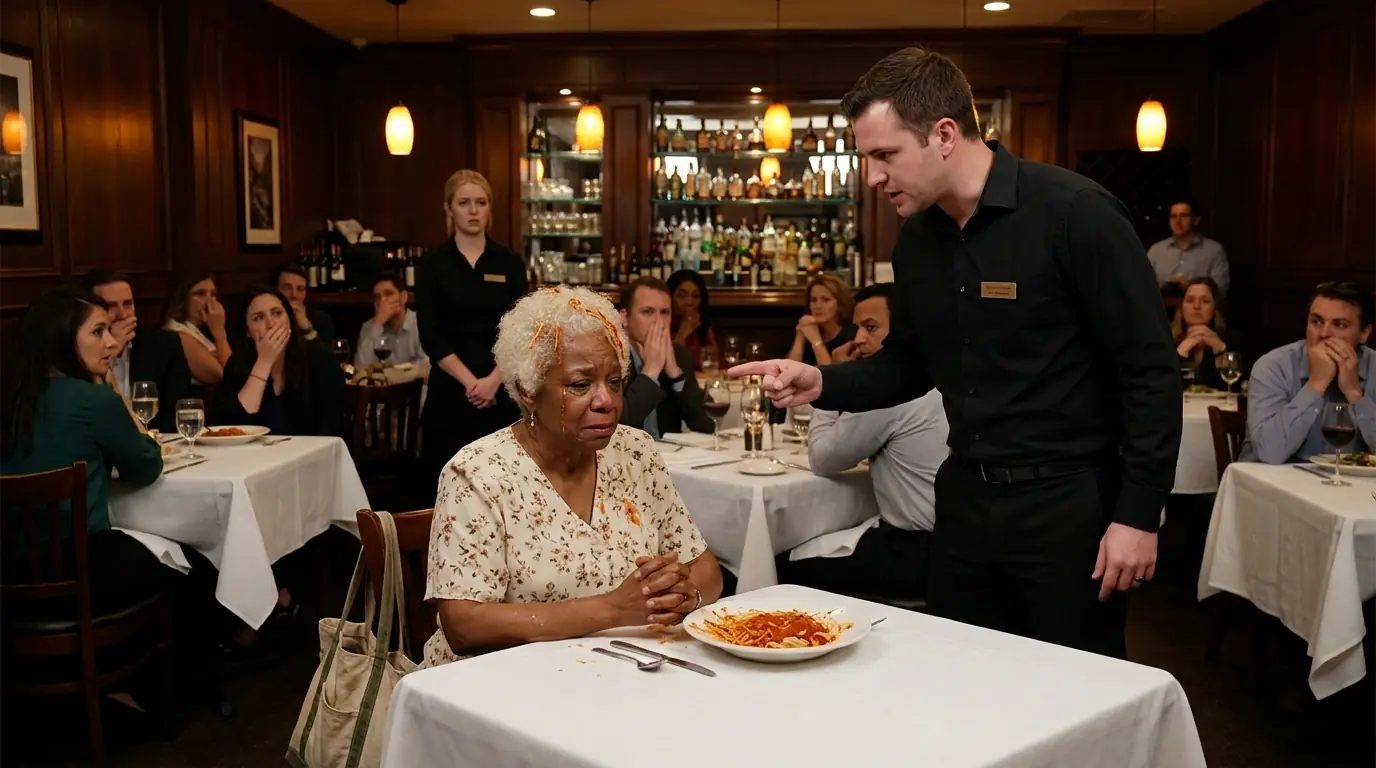
"Sir, I'm waiting for my son. Could you please—"
"You've been here too damn long. Get out before I have security drag you out."
"But sir, he'll be here in 10 minutes. Could I just order—"
"Order?"
Kyle grabbed a leftover plate of pasta from the next table and dumped it on her head. Sauce ran down her white hair, down her face. He tossed the plate on the table.
"There's your meal, old hag. Your kind always ruins everyone's patience."
Beatrice's lips trembled. Her eyes filled. Nobody said a word. A woman nearby covered her mouth, laughing.
But in exactly 10 minutes, Kyle Whitford would give anything to take back every single word.
15 minutes earlier, Beatrice Henderson had been standing outside Cornerstone Grill checking her reflection in the glass door. She smoothed the front of her floral dress. It was her favorite: cotton, soft pink flowers on a cream background. The kind of dress she wore to church on Sundays and to lunch with her son on the rare days he wasn't deployed.
The collar was frayed. She knew that. The hem had been re-stitched twice. She knew that, too. But the dress was clean, pressed with an iron that morning, and it smelled like lavender fabric softener.
She'd taken the bus 45 minutes from her apartment on the east side of town, two transfers, standing the whole way because both times the seats were full and nobody offered one to a 74-year-old woman with bad knees. She didn't mind. She'd stood through worse.
Beatrice pushed through the door. The air conditioning hit her first—cool, sharp, almost aggressive after the August heat. Then the smell: garlic, butter, fresh bread, something expensive simmering in a kitchen she couldn't see.
Cornerstone Grill was the kind of restaurant she would never have chosen for herself. Dark wood paneling, Edison bulbs hanging from exposed beams, wine bottles lined up behind a marble bar like soldiers on parade. The menus were leather-bound, the napkins were cloth.
But Elijah loved this place. Her son had discovered it 3 years ago when he was stationed at the naval base 20 minutes up the highway. He'd called her after his first visit, voice bright like a kid who'd found a secret: "Mama, they make this pasta, you got to try it. Next time I'm home, I'm taking you."
Next time became next year, became next deployment, became a phone call from a country she wasn't allowed to know the name of. They'd been planning this lunch for 4 months. Today was the day.
Beatrice scanned the dining room. It was half full. A couple in matching linen blazers shared an appetizer near the window. Two businessmen with loosened ties talked over steak. A group of college-aged girls took photos of their food before touching it. Everyone was white. Everyone looked like they belonged.
Beatrice chose a two-top near the front window. She wanted Elijah to see her when he pulled up. She set her canvas tote bag strap—knotted where it had broken last month—on the opposite chair and sat down. The leather cushion was cool under her legs. She placed both hands on the white tablecloth and exhaled. She'd made it.
The menu was heavy—leather cover, gold lettering, the kind of weight that told you everything inside cost more than it should. She opened it and squinted. The font was small and cursive, beautiful, but not made for 74-year-old eyes that had left their reading glasses on the kitchen counter. She held it at arm's length, tilted it toward the window, traced one finger along the appetizer list, her lips moving slightly as she worked out the words.
She didn't notice the waitress. A young woman, early 20s, blonde ponytail, black apron, had stopped three steps from the table. She was holding a water pitcher and a notepad, but she wasn't pouring. She was staring. Her eyes moved from the frayed collar to the knotted bag to the old woman squinting at a menu she maybe couldn't read.
The waitress chewed her bottom lip. Then she looked toward the host stand. Kyle Whitford was there. 31 years old, brown hair slicked back with gel, black dress shirt tucked tight into black trousers, silver name tag, manager. A cheap watch on his left wrist that he thought made him look important. He had a way of standing—weight on one hip, arms crossed, chin tilted up—that made the waitresses walk faster and the busboys avoid eye contact.
Nine months he'd been managing Cornerstone Grill. Nine months of numbers going the wrong direction. Two written warnings from the owner. A staff that didn't respect him. A girlfriend who'd left. And a temper that had been building like steam in a pipe with no valve.
He looked up when the waitress caught his eye. She tilted her head toward the corner table, toward Beatrice. Kyle followed her gaze. He saw an old black woman sitting alone, faded dress, broken bag, squinting at the menu like she'd never seen one before. No water ordered, no companion, just sitting there taking up a table during the lunch rush.
His jaw tightened. He put his phone in his back pocket, straightened his name tag, tugged the cuffs of his shirt, and started walking.
Beatrice didn't see him coming. She was still on the appetizer page. She'd figured out the prices were higher than she expected, but she had cash—an envelope in the tote bag with $300, which was more than enough for two meals, drinks, and a good tip. She always tipped well. Her late husband Raymond had been a line cook for 31 years at a diner on 4th Street. She knew what it meant to live on tips. She knew what it meant to stand on your feet for 8 hours and come home with sore hands and $14 in her pocket.
She turned the page to entrees. Behind her, footsteps getting closer. The click of polished shoes on concrete floor. She didn't look up.
"Excuse me."
Beatrice looked up from the menu. Kyle Whitford was standing over her table—not beside it, over it. Hands on his hips, chin up, looking down at her like she was something stuck to the bottom of his shoe.
"Yes, sir?"
"What are you doing here?"