The lecture theatre of the Philosophical Institution in Bedford Square had been built to hold three hundred persons, and on the evening of the fourteenth of March, 1817, it held very nearly four hundred, which is to say that a great many of them were standing, and a great many more were sitting where they ought not.
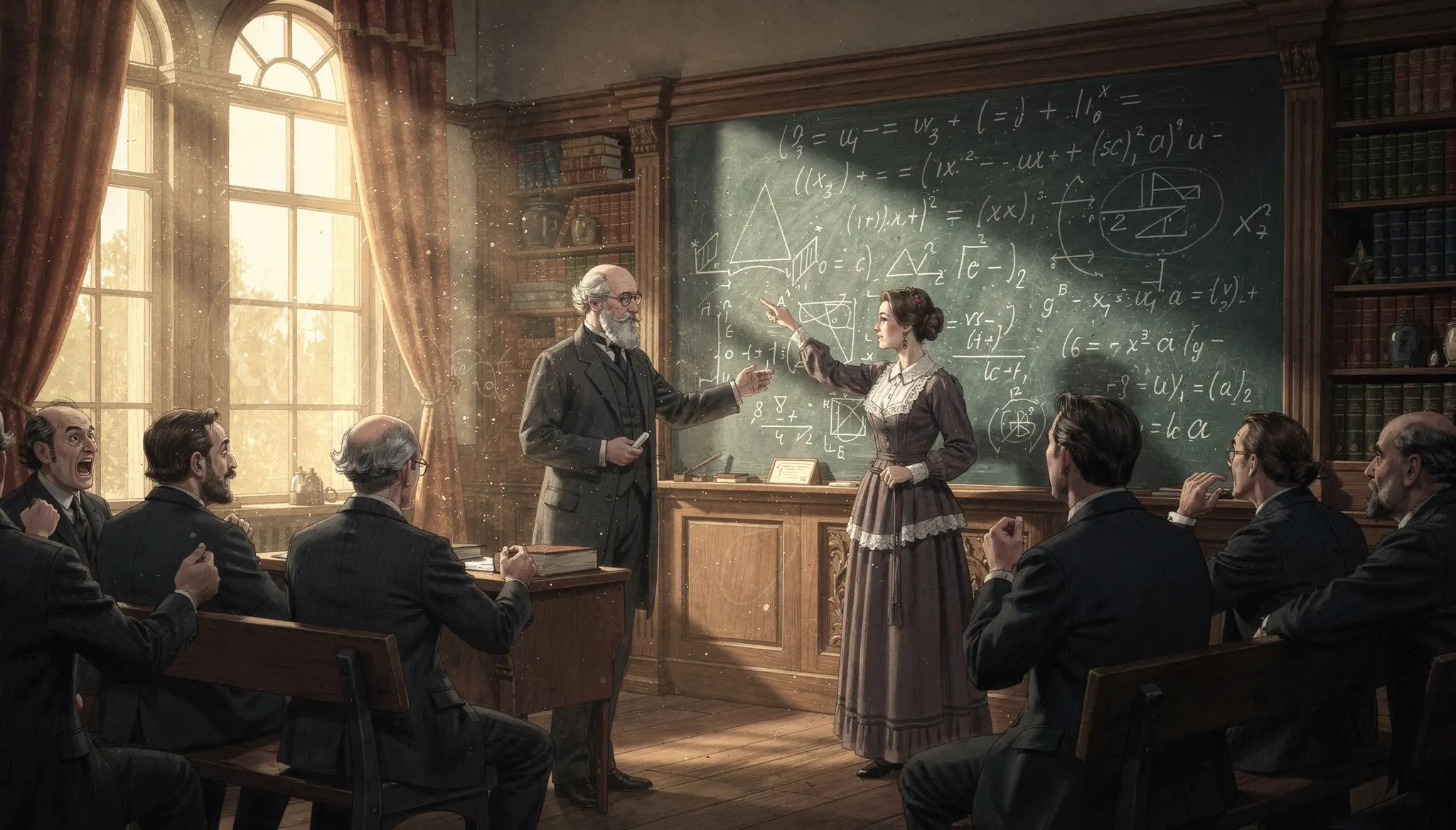
Miss Judith Penrose was sitting where she ought not. She was on the end of the fourth bench, which had been meant for Fellows and their guests, and she had got there because her aunt, Mrs. Honoria Gage, had a cousin who had a husband who was a Fellow, and the husband had been taken with gout at the last possible moment and had sent his ticket round to Lambeth with his compliments.
Mrs. Gage had accepted the ticket as she accepted all gifts of Providence, with gratitude and a new bonnet. Judith had accepted it because the evening's lecture was to be given by Sir Augustus Threlkeld, Fellow of the Royal Society, sometime Fellow of Trinity, author of the Elements of Practical Astronomy in two volumes quarto, and the subject of it was to be his new Tables for Abridging the Reduction of the Lunar Distance, which were said to be with the printer already, and which were said, besides, to be wanted by the Admiralty.
"You will not fidget," said Mrs. Gage, settling her reticule. "You will not take out your pencil. You will look at Sir Augustus as if he were a sermon."
"I always look at sermons as if they were sums, Aunt."
"That," said Mrs. Gage, "is precisely what I mean."
Judith folded her hands in her lap, where her pencil was, inside her glove. She was four-and-twenty, which her aunt considered the last year of hope and Judith considered a perfectly ordinary age. She had a narrow face, a decided chin, grey eyes which were short of sight at a distance and very good indeed at a page, and a habit of tilting her head when she was thinking, which made people believe she was listening to them with particular attention. She wore a pelisse of dark blue that had been turned once and would be turned again, and a straw bonnet with a ribbon her aunt had insisted upon. It was a pretty ribbon. She had forgotten it entirely.
What she had not forgotten was the black board. It stood at the front of the theatre on a great oak easel, a full six feet across, freshly blacked, with a little ledge beneath it on which lay four sticks of chalk and a cloth. Beside it, on a table under a green baize, were a brass sextant, a globe, a lamp, and two very thick quarto volumes. Behind it, hung from the gallery rail, was a chart of the Atlantic, from the Lizard to the Plate, with the tracks of ships ruled across it in red.