My parents told me, "We'll help you take care of it." When I got pregnant at 15, then disowned me the day I gave birth. So, I succeeded on my own. But now it's nine years later, and they just re-entered my life by trying to kidnap my daughter with a false CPS report.
I was 15 when I got pregnant. Except it wasn't on purpose. You see, like every other 15-year-old girl, my boyfriend was toxic. Like, scream at you for interacting with a male teacher, then go through your phone toxic. So, when he caught me going to the hospital to visit my godfather without telling him, he was determined to punish me.
He told me the only way he'd let me get away with it was if I let him pop my cherry with no rubber. He said that would prove that I loved him, and I would have said no. But the anger in his eyes made me too scared of what would happen if I dared to refuse. So, I said yes.
Long story short, I got pregnant and never saw him again. I wish that was an exaggeration, but he blocked me on everything and transferred to a school across the country. I was so freaked out that I told my parents as soon as I found out. "We'll help you take care of it," was the first thing my mom said. Meanwhile, my dad just nodded quietly.
I don't know why I believed them, but I did, and their words were the only reason I didn't get an abortion because no one else wanted to come near me anymore. The entire school was calling me a slut, and they had spread rumors about me trying to baby trap my ex-boyfriend. So, I dropped out. All I had was my parents and everything they gave me until I gave birth.
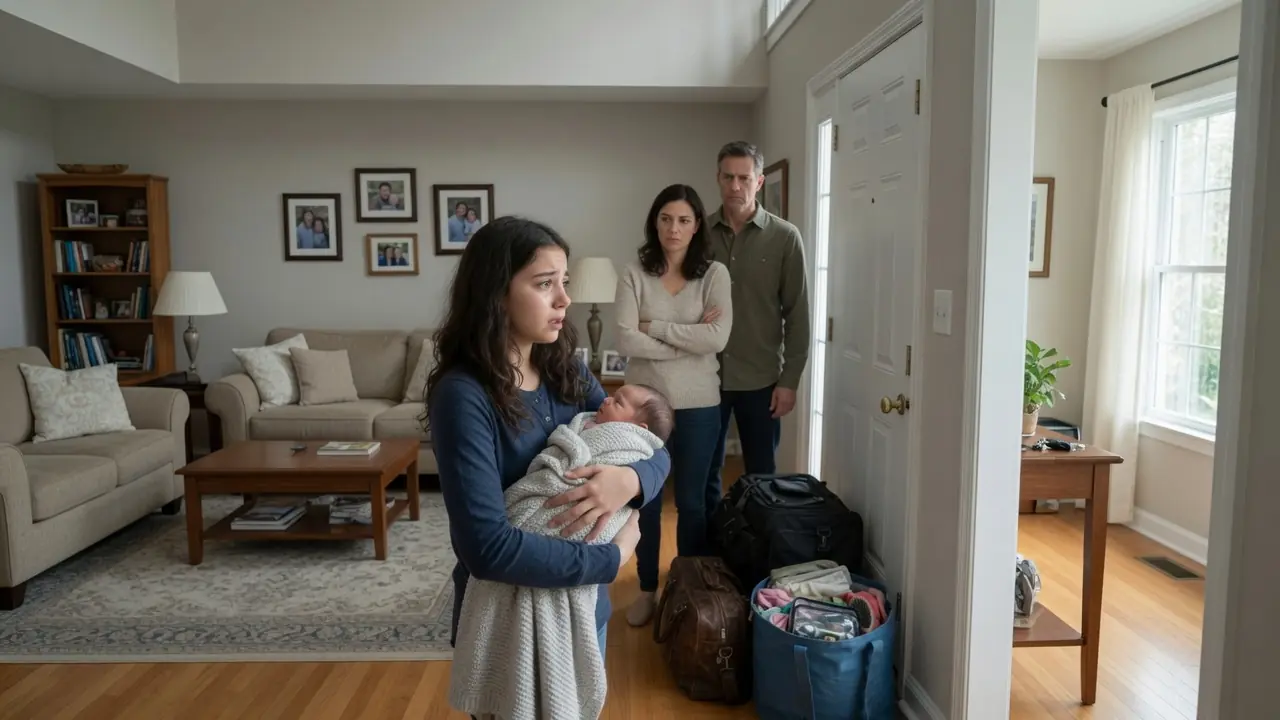
Because instead of coming home to baby Anna's nursery, I came home to all of my stuff packed up into bags. I swear I thought they were pranking me. But then my mom said, "We're not cleaning up the mess you made." I looked over to my dad who stood there with his arms crossed. "But I thought you said..." "We just said that so you wouldn't terminate the pregnancy. But now we're done with you. Consider yourself disowned."
I fell to the floor crying while baby Anna wailed in my arms. I had nowhere to go. And instead of helping me drive somewhere, they retreated to their bedrooms and locked the door. I was shattered. That was my rock bottom. I ended up getting an Uber to my aunt Becky's house, and she took me in.
Well, it was either Aunt Becky's house or the streets. So, I just nodded, ready to accept my new life of modern-day slavery. The next few years of my life were as bad as you'd expect. Every time Anna cried at night, adrenaline would pump through my blood, and sometimes I even had to sit with her in the front garden during winter. And Aunt Becky abused me in every way possible. So much so that it reminded me of my ex-boyfriend.
And I only had one lifeline, a job at a 24-hour diner where the manager, Rosa, let me bring Anna during night shifts. She'd sleep in the break room while I served coffee to truckers and studied for my GED between orders. The day Anna turned four, I finally had enough saved, $1,200, and a promise of a studio apartment from Rosa's cousin. I packed our things while Becky was at work. Not that there was much to pack. Anna's drawings, the teddy bear Rosa gave her, my GED certificate.
That studio apartment was 400 square feet of heaven. On our first night, Anna and I ate McDonald's on the floor, and she said, "Mama, can we be loud here?" When I nodded, she squealed at the top of her lungs, then looked at me with wonder when no one yelled at us. That's when they showed up. I was at pickup helping Anna carry her solar system project to the car when I saw them. My parents standing next to a Mercedes looking like they'd stepped out of a catalog. My dad wore a suit that probably cost more than I made in three months.
Suddenly, my mother was walking toward us. "Hello, sweetheart," she said, but she wasn't looking at me. She was looking at Anna with tears in her eyes. "You must be Anna." I shoved past them and practically ran to the car with Anna holding my hand. And the moment I saw them drive away, too, I knew they'd be back. "Parents who disown you for seven years don't suddenly grow hearts. They grow strategies."
Within a week, expensive toys appeared at Anna's school. Her teacher mentioned generous grandparents had paid for the entire class field trip. Other parents started looking at me differently, whispering about the teen mom whose wealthy parents were trying to help. The legal papers came three months later. Their lawyer had been building a case, documenting my night shifts, my studio apartment, my GED instead of a proper education. I stared at the custody petition in disbelief. They wanted Anna after seven years of nothing. They wanted my daughter.
The custody evaluator showed up during my finals week. Of course, she did. Anna had strep throat and was burning up with fever on the couch while I tried to study for my nursing exam between checking her temperature. The apartment looked like a disaster zone with tissues everywhere, medicine bottles on the counter, and my textbooks scattered across the floor. The evaluator, a woman named Ms. Chen, knocked three times before I could answer.
I opened the door holding Anna's medicine in one hand and a thermometer in the other. She took one look at the chaos and started writing in her notebook. "I'm from child services," she said, showing her badge. "I need to conduct a home evaluation." Anna started crying from the couch calling for me. I rushed over to comfort her while Ms. Chen walked around our tiny apartment, taking photos of everything. The dishes in the sink, the laundry basket overflowing, my study materials covering the kitchen table.
"She's sick," I explained, trying to keep my voice steady. "I was about to take her to the doctor, but I have a final in two hours." "And you're leaving a sick child alone for an exam," Ms. Chen interrupted, pen moving across her clipboard. "No, I was going to call Rosa to watch her. She owns the diner where I work. Anna knows her really well." More writing, more judging looks. Anna threw up right then, all over herself and the couch. I grabbed towels and started cleaning while Ms. Chen documented everything.
The next three hours became a nightmare. I cleaned up Anna, gave her medicine, called my professor to explain I'd missed the exam, and answered Ms. Chen's endless questions. How many hours did I work? Who watched Anna during my night shifts? How was I managing school and parenting? Every answer seemed wrong. My parents' lawyer called the next day. Three lawyers, actually. They worked at some fancy firm downtown and spoke to me like I was still 15.
"Our clients are concerned about Anna's welfare," the lead attorney, Mr. Morrison, said. "A young single mother, working nights, living in substandard housing. They simply want what's best for their granddaughter." "Substandard?" I looked around my apartment. It was small but clean and safe. "Four hundred square feet is hardly adequate for a growing child." "Our clients can provide Anna with her own bedroom, a backyard, the best schools."
I hung up. The first court hearing happened two weeks later. I sat across from my parents for the first time in seven years, watching them pretend to be loving grandparents. My mother wore pearls and dabbed at fake tears while describing how devastated they were to be kept from Anna. My public defender, an overworked woman named Janet, had met me 15 minutes before the hearing. She shuffled through papers while my parents' three lawyers presented photo after photo. Anna's school where they had apparently been volunteering, the expensive playground they donated, the music program they funded.
"Your honor," Mr. Morrison said, "we're simply asking for temporary visitation rights while we assess the child's living situation. My clients have already demonstrated their commitment to Anna's education and well-being." The judge, an older man who kept checking his watch, granted supervised visitation every Saturday, two hours, at a court-approved facility.
The first visit was horrible. I dressed Anna in her nicest outfit, the one Rosa bought her for picture day. My parents showed up with bags of toys, designer clothes, and enough candy to rot every tooth in her head. "Look what grandma brought you," my mother cooed, pulling out an American Girl doll that cost more than my weekly groceries. "Doesn't she look just like you?" Anna, sweet, trusting Anna, lit up at the attention. She'd never had grandparents before. Didn't understand why mama's hands shook as I watched them play.
After three visits, the manipulation started. Little comments Anna would repeat later. "Grandma says her house has a pool." "Grandpa said I could have my own pony if I lived there." "Grandma asked if I get scared when you leave for work at night." I documented everything, but Janet barely glanced at my notes. She was handling 40 other cases, and mine wasn't special, just another custody dispute.
Then they started showing up at Anna's school. I found out from another parent who thought she was being helpful. "Your mom is so sweet. She brought cupcakes for the whole class today, and your dad read during story time. Anna must be so happy to have them in her life." "No, ma'am."
The principal called me in the next week. "We're concerned," she said, sliding a folder across her desk. "Anna's been falling asleep during lessons. Her teacher notes she seems tired most mornings." "She's always been a night owl," I explained. "She has trouble falling asleep early, but she gets enough rest." "Your mother mentioned you work nights. Is Anna home alone?" "No, never. Rosa watches her, or sometimes my neighbor, Mrs. Kim." More notes, more judgment.
"Well, we'll be monitoring the situation." My parents had been documenting every school event I missed. Every time I was five minutes late for pickup because of class, every bake sale I couldn't contribute to because groceries came first. Three months in, Janet quit just like that. A quick email saying she'd taken a job in private practice and someone new would be assigned.
The new lawyer, fresh out of law school, looked terrified when we met. "I've never actually done a custody case," he admitted. "But I'll do my best." My parents' team filed for expanded visitation the next week. They presented my work schedule like evidence of neglect. Photos of Anna asleep at the diner during my shifts. Testimony from the school about her fatigue. A psychologist they'd hired who'd met Anna during visitation and diagnosed attachment concerns.
The guardian ad litem assigned to represent Anna's interests seemed nice at first. Miss Walker met us at the park, pushed Anna on the swings, asked gentle questions. But after visiting my parents' estate, her reports changed. "The grandparents can provide significant advantages," she wrote. "Private schooling, extracurricular opportunities, a stable two-parent household. While the mother clearly loves Anna, love alone doesn't provide optimal circumstances."
I found out later Miss Walker and Mr. Morrison graduated from the same law school, same year. Probably friends. Everything spiraled faster after that. My parents filed motion after motion. Emergency hearings for every scraped knee, every missed dentist appointment, every time Anna mentioned being tired. They twisted everything into evidence of neglect.
The breaking point came during midterms. I'd arranged for Mrs. Kim to pick up Anna from school while I took my pharmacology exam. But when I got out of class, my phone had 20 missed calls. Anna was gone. My parents had shown up at school with a court order saying it was their visitation day. The secretary, confused, let them take her, but it wasn't their day. They'd filed an emergency motion that morning claiming I'd violated the visitation agreement and gotten temporary custody for the weekend.
I drove to their house in a panic, banging on the door, demanding Anna back. They called the police. The officers looked at the court papers, looked at me crying on their doorstep, and said there was nothing they could do. "She's my daughter," I screamed. "They can't just take her." "Ma'am, you need to contact your lawyer," one officer said. "This is a civil matter."
I spent the weekend sick with worry. My baby lawyer filed motions, but couldn't get a hearing until Monday. When I finally got Anna back, she was wearing a designer dress and kept asking when she could see the pony grandpa promised. The next court hearing was brutal. My parents' lawyers presented my erratic behavior at their house, the panic that made me miss my exam, my inability to follow court orders. They asked for primary custody with me getting supervised visitation.
That's when Aunt Becky testified. I hadn't seen her since I'd left her house. She walked in wearing her best dress, sworn in, and proceeded to destroy me. "She couldn't handle the baby," Becky said. "Cried all the time. I had to provide structure because she didn't know what she was doing. There were nights she'd sit outside in the cold with that screaming infant rather than properly soothe her."
"And you witnessed neglect?" Mr. Morrison prompted. "She was just too young. Still is. More focused on herself than that poor child." I wanted to scream that she'd forced me outside, that she'd threatened to kick us out if Anna cried, but Janet's replacement just sat there overwhelmed while Becky painted me as an incompetent child.
Rosa testified the next day. Beautiful, fierce Rosa, who'd been more of a mother to me than anyone. She wore her nicest dress and spoke clear English despite her accent. "That girl is the best mother I ever seen," she said firmly. "She worked hard, studied hard, everything for Anna. That baby never want for nothing."
But Mr. Morrison tore her apart, questioned her immigration status, her education, implied she was enabling child endangerment by letting Anna sleep at the diner. "You're not a child care professional, are you?" he asked. "No, but..." "No teaching credentials, no child development training." "I raised four kids." "That's a no, then. And you allowed a minor to work illegally in your establishment." "She was 18 when..." "But she brought her infant to work before that."
Rosa started crying, frustrated. "You don't understand. She good mother, best mother." The judge looked unmoved. Two weeks before the final hearing, Anna's teacher called me in again, this time with the school counselor present. "Anna's been saying concerning things," the counselor said carefully. "About rewards she'll get if she lives with her grandparents. Trips to Disney World, a pony, her own credit card when she's older."
My heart jumped. Finally, someone else saw it. "We'll need to file a report," the principal added. "This could be considered bribery, manipulation." I waited for that report to show up in court filings. It never did. When I asked the principal, she seemed confused. "We sent it to child services. They said they'd handle it."
The final hearing was set for a Tuesday. My parents filed a reunification plan the week before. Anna would live with them during the week for educational stability. I'd get weekends if I maintained employment and suitable housing. "It's the best we can hope for," my terrified lawyer said. "They have so much evidence." "Evidence they created," I shouted. "They orchestrated all of this." But who would believe me? The young mother who'd been erratic and unstable versus the wealthy grandparents offering every advantage.
The morning of the hearing, I dropped Anna at school like normal. Kissed her goodbye. Told her I loved her. Tried not to cry when she asked if she'd see Grandma's pony soon. I was sitting in the courthouse bathroom trying not to throw up from nerves when Rosa burst in. "Anna not in court?" she asked breathless. "No, she's at school. Why would she come now?" I followed Rosa to the courtroom where Anna stood next to the bailiff, still in her school uniform, backpack on her shoulders. She looked so small, so brave.
"Your honor," Rosa said. "Anna call me. Say she's scared. Don't want to go to grandparents' house after school like they told her. So I pick her up." The judge frowned. "This child shouldn't be here. This is highly irregular." "I want to talk," Anna's voice rang out clear and strong. "Please, I need to tell you something." The courtroom froze. My parents' lawyers jumped up, objecting, but the judge held up his hand.
"Young lady, this isn't appropriate." "They lied," Anna said quickly before anyone could stop her. "Grandma and Grandpa said if I lived with them, I'd get a pony and Disney trips and my own room with a TV, but only if I don't tell anyone they promised. They said mama's too poor to take care of me, right? But that's not true."
Anna, my mother started, reaching for her. Anna stepped back. "You said you'd buy me things if I said I was tired at school. You told me to tell my teacher I fall asleep because mama works nights, but I don't. I just like reading under my blanket with my flashlight." The judge's expression changed. "Did your grandparents tell you to say things that weren't true?"
Anna nodded, tears streaming. "They said it would help me live in a big house. But I don't want a big house. I want my mama. We eat on the floor and she reads to me and helps with homework and she works hard to take care of me. They don't even know my favorite color or that I hate ponies because they smell weird."
"Your honor," Mr. Morrison interrupted. "The child is clearly coached." "I wasn't finished," Anna's hands were fisted at her sides. "You said mama can't take care of me because we don't have money. But she takes care of me every day. She walks me to school even when she only slept three hours. She helps with homework even when she has her own. She makes soup when I'm sick and stays up all night with me. That's taking care of someone."
Rosa stood up beside her. "Your honor, may I speak?" The judge nodded slowly. "I know I'm not supposed to be here," Rosa said, her accent thicker with emotion. "I have my own problems with papers and lawyers, but I see this family every day for eight years. This mama, she never give up. Never. Rich people," she gestured at my parents, "they give up easy. Throw away pregnant daughter like garbage. Now want to buy granddaughter like toy."
"This is highly inappropriate," Morrison protested. "What's inappropriate?" the judge said quietly. "Is what I'm seeing in these files." She held up a stack of papers. "Complaints to the board of nursing. Reports to CPS. Immigration inquiries. All filed within weeks of each other. All from anonymous sources." She looked directly at my parents. "I find it curious that Ms. Martinez's life began falling apart precisely when you decided you wanted custody."
"Correlation isn't causation," Morrison said smoothly. "No, but patterns are revealing." The judge pulled out another file. "I had my clerk do some research. Did you know your law firm has made substantial donations to the campaign funds of three CPS board members?" Morrison's face went carefully blank. "That's public record, your honor. Completely legal."
"Legal? Yes. Ethical?" The judge turned to me. "Miss Martinez, I have concerns about your current situation. However, I have greater concerns about what appears to be systematic manipulation of the legal system." She looked at Anna, who was still standing, chin raised despite tears on her cheeks. "Young lady, you're very brave and very lucky to have a mother who clearly loves you. Please sit down now."
Anna sat but kept her eyes on the judge. "I'm ordering a full investigation into the timeline of these various complaints and reports," the judge continued. "In the meantime, custody remains with Miss Martinez. However," she raised a hand as I started to smile, "there will be conditions." My heart sank. "Monthly check-ins with a social worker, proof of stable child care within 30 days, maintenance of your apartment, and enrollment in parenting classes."
"Your honor," Morrison stood. "Our clients are simply concerned." "Your clients can be concerned from a distance. I'm granting them supervised visitation once per month if they choose to exercise it. And Mr. Morrison, if I find any evidence of continued harassment or manipulation of government agencies, I'll be referring this matter to the state bar. Are we clear?"
Morrison sat down without answering. "Court is adjourned." The gavel came down with finality. I sat frozen for a moment, unable to believe it was over. Then Anna crashed into my arms, sobbing with relief. Rosa wrapped us both in a fierce hug, muttering prayers in Spanish.
My parents stood to leave, but my mother hesitated. For a moment, our eyes met across the courtroom. I saw something flicker there. Regret, shame. But then my father touched her elbow, and they swept out with their lawyers.
Outside the courthouse, Rosa squeezed my hand. "You did it, Miha." "We did it," I corrected, then knelt to Anna's level. "You were so brave in there." "Will I see them at those visits?" Anna asked. "Maybe," I said carefully. "But you don't have to if you don't want to."
Anna shrugged. "Maybe they'll learn to be better. Or maybe they won't come." She paused. "I hope they don't come." That night, we celebrated with pizza from the good place. The one that cost too much but had the garlic knots Anna loved. Our basement apartment felt less like a cave and more like a fortress we defended successfully.
"Mama," Anna said as I tucked her in. "Are you mad I yelled at them?" "Never," I said fiercely. "You stood up for us, for yourself." "Rosa says I get my brave from you." I kissed her forehead. "We get it from each other."
The next morning brought reality. I still needed child care, still had to fix my academic standing, still had bills to pay and classes to attend. But it felt manageable now without the constant threat of losing Anna hanging over everything.
Rosa's nephew, Luis, offered to help with pickup and drop-off. His wife, Maria, ran a home daycare and could take Anna after school for less than I'd been paying. My clinical supervisor agreed to let me make up missed hours over winter break. The parenting classes were actually helpful, not because I needed to learn how to parent—eight years of experience had taught me that—but because I met other young mothers there, fighting their own battles. We formed a support network, trading child care and study sessions.
My parents never showed up for their first supervised visit or the second or the third. The social worker stopped calling to confirm after month four. By spring, I was back on track academically. Anna had adjusted to our new routine, though she still insisted on checking the locks twice before bed. Some wounds take time to heal.
One evening, as I was reviewing dosage calculations and Anna was building a fort out of couch cushions, she looked up suddenly. "Mama, I'm glad they tried to take me." I nearly dropped my textbook. "What?" "Not glad-glad, but like now I know for sure you'll never give me away. Even when it's hard. Even when they tried to make you." I pulled her into my lap, my eyes burning. "Never, baby. Not for all the money in the world."
"I know," she said simply, then wiggled free. "Can you help me with my fort?" I smiled and helped her stack the cushions higher. Outside our tiny window, the world went on. But in our 400 square feet of heaven, we were perfect. Just the way we'd always been. And we would stay that way, together, no matter what came next.