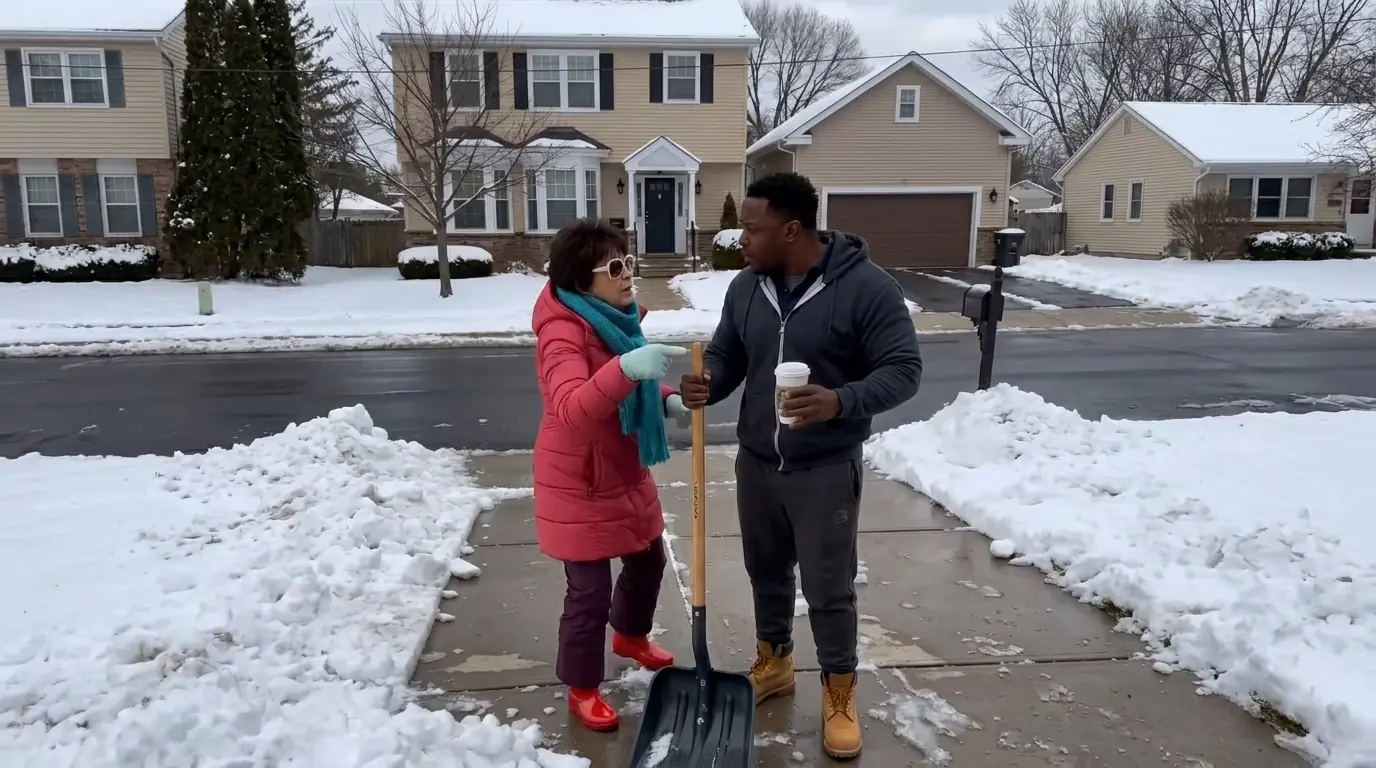
The morning my car disappeared from my own driveway, I stood in eight inches of fresh Connecticut snow holding a cup of coffee and wondering whether I had finally lost my mind. I had parked the car there at eleven the night before after a twelve-hour hospital shift, and there was no broken glass, no tire marks, and no reason anybody should have touched it. My golden retriever, Cooper, stood beside me whining at the empty patch of pavement as though he expected the car to reappear if we waited long enough. Then I remembered the woman across the street.
Her name was Cynthia Rawlins, and less than twenty-four hours earlier she had threatened me because I refused to shovel her driveway.
That sentence sounds ridiculous even now. At the time, it felt considerably less funny because Cynthia was president of the Cedar Ridge Estates Homeowners Association, and she approached that title the way some people approach elected office, complete with printed notices, dramatic emails, and a belief that every resident existed somewhere below her in an invisible chain of command. I had lived in Cedar Ridge for four years and managed to coexist with the HOA until Cynthia became president the previous summer.
My name is Evan Whitmore. I was thirty-nine, unmarried, and working as an emergency-department nurse at a hospital in Bridgeport, which meant my schedule depended less on weekends than on whether people chose inconvenient times to get injured. I bought the townhouse after years of renting because I wanted a small yard for Cooper, a garage, and somewhere I could return after a night shift without hearing the upstairs neighbor exercise at five in the morning.
Cedar Ridge looked exactly like the kind of neighborhood real-estate listings describe as peaceful. There were eighty-two detached townhomes arranged around curving streets, ornamental maples, a small clubhouse, and enough matching black mailboxes to satisfy anyone frightened by visual individuality. The HOA handled snow removal on the private roads, landscaping in common areas, pool maintenance, and the usual collection of rules about fences, paint colors, satellite dishes, and trash cans.
Most of those rules were annoying but understandable. I knew I was buying into an HOA, read the bylaws before closing, and never believed purchasing a home made me exempt from an agreement I voluntarily signed. What changed under Cynthia was not the existence of rules but her insistence that anything she personally preferred could somehow become one.
She started small.
A family on Hawthorne Court received a warning because their Christmas lights were “excessively blue.” Another homeowner was told the potted plants beside her front steps were not arranged symmetrically enough for the neighborhood aesthetic. My friend Noah Patel received a violation notice because his Labrador barked at a delivery driver at 7:18 in the evening, a time Cynthia had decided fell within “community quiet expectations” despite no such provision existing anywhere in the governing documents.
Everyone complained privately.
Almost nobody challenged her directly.
That was how these things usually grew.
The snowstorm arrived on a Friday night in January and dropped a little over nine inches by sunrise. The HOA contractor cleared the private streets but homeowners remained responsible for their own driveways and front walks, something spelled out clearly in our maintenance responsibilities. I woke around five-thirty because Cooper wanted outside and decided I might as well shovel before breakfast.
By six-thirty, my driveway was clear.
My shoulders hurt, my gloves were wet, and the temperature sat somewhere around sixteen degrees. I leaned against my shovel drinking coffee when Cynthia crossed the street wearing white snow boots, a long cream parka, and the expression she normally reserved for people who had committed landscaping crimes.
“Evan Whitmore.”
I looked up.
“Morning, Cynthia.”
“I need you across the street.”
That was not how people usually asked favors.
“For what?”
“My driveway.”
I glanced toward her house.
It had not been touched.
“Okay.”
She waited.
I waited.
Finally she said, “You’re scheduled for leadership support this month.”
I thought perhaps the cold had affected my hearing.
“For what?”
“Leadership support.”
She spoke slowly.
“The volunteer service rotation.”
I laughed because I genuinely assumed she was joking.
She was not.
Cynthia explained that the HOA had adopted a new community-service initiative during the December board meeting. Each month, residents assigned to a rotating list would perform “support tasks” requested by association leadership, including snow removal, minor outdoor assistance, event setup, document delivery, and other duties intended to improve neighborhood operations.
I stared at her.
“You want homeowners doing chores for board members.”
“That’s an intentionally disrespectful way to describe a community participation program.”
“Did homeowners vote on this?”
“The board approved it.”
“Was it added to the bylaws?”
“It doesn’t need to be.”
“Yes, it does if you plan to make it mandatory.”
Her cheeks reddened.
“You were notified.”
“I received an email about a December discussion meeting.”
“And chose not to attend.”
“I was at work.”
“Absence does not exempt you from association decisions.”
“No.”
I set my coffee on the porch rail.
“But an association decision does not automatically create a personal labor obligation.”
Cynthia folded her arms.
“You’re assigned this month.”
“I’m not shoveling your driveway.”
She looked genuinely shocked.
Not irritated.
Shocked.
“Excuse me?”
“I just spent an hour clearing mine after working until almost midnight.”
I pointed toward her garage.
“If you want yours cleared, hire someone or pick up a shovel.”
Her face changed.
“Are you refusing a direct request from your HOA president?”
“Yes.”
“Do you understand there can be consequences?”
“I understand you can enforce valid rules.”
I picked up my coffee again.
“This isn’t one.”
“You should think very carefully.”
“I already did.”
I turned toward my house.
“Have a good morning.”
Behind me, Cynthia shouted that I would regret making an example of association leadership.
I waved without turning around.
Inside, Cooper greeted me like I had returned from war instead of a driveway. I peeled off my wet gloves, fed him, started eggs, and almost convinced myself the interaction had been so absurd it would end there.
My phone rang twenty minutes later.
My older brother, Adam, was calling.
Adam Whitmore had been a Fairfield police officer for fourteen years and had spent most of those years collecting stories about my inability to avoid ridiculous situations. He opened the conversation by asking what I had done to the president of my HOA.
“I said no.”
“To what?”
“Shoveling her driveway.”
Silence.
Then laughter.
A lot of laughter.
I let him finish.
“You done?”
“Not remotely.”
“She created a mandatory service program.”
Adam laughed again.
“You’re serious.”
“Unfortunately.”
He finally composed himself.
“She called the department.”
That stopped me.
“For what?”
“She initially called the non-emergency line saying a homeowner was refusing an HOA directive.”
“Okay.”
“Dispatcher told her that isn’t a police issue.”
“Good.”
“So she called back.”
“Of course.”
“This time she said you behaved aggressively toward community leadership and created a public-safety concern.”
I set down my fork.
“I told her to hire someone.”
“I figured.”
Adam sighed.
“I’m in your sector finishing another report, so Sergeant Davis assigned me to take the complaint because otherwise she apparently intends to keep calling.”
“You shouldn’t handle it.”
“I told him you’re my brother.”
“And?”
“He said take another officer.”
That was better.
Adam arrived with Officer Melissa Grant about ten minutes later.
Cynthia was waiting.
Of course she was.
She rushed down her driveway before the cruiser completely stopped and began talking before Adam closed the door. From my front window I could see her pointing toward my house, then toward her driveway, then making several broad gestures as though describing a hostage negotiation.
I stepped onto the porch.
Melissa approached me while Adam stayed with Cynthia.
“Morning.”
“Morning.”
“You Evan?”
“Yes.”
She glanced toward the shovel beside my garage.
“I’m told there’s a dispute over snow removal.”
“That is the glamorous version.”
Melissa almost smiled.
I explained exactly what happened.
No exaggeration.
No commentary.
Cynthia crossed the street before I finished and interrupted.
“He is omitting the threatening manner in which he spoke to me.”
Melissa looked toward her.
“What did he threaten?”
“He told me I couldn’t tell him what to do.”
“That’s not a threat.”
“He challenged my authority.”
Melissa waited.
Cynthia apparently expected more.
Adam stepped closer.
“Ms. Rawlins, the department does not enforce HOA labor assignments.”
“It is community service.”
“Still not a criminal issue.”
“He violated association rules.”
“Then use the association’s enforcement process.”
“He was insubordinate.”
Adam paused.
“Homeowners are not employees of the board.”
Cynthia stared at him.
“You’re obviously biased because he’s your brother.”
Adam nodded.
“That’s why Officer Grant is here.”
Melissa folded her arms.
“Nothing Mr. Whitmore described constitutes a criminal offense, and nothing you’ve described changes that.”
Cynthia’s face hardened.
“I want your supervisor.”
“You’re welcome to request one.”
“I will.”
Adam sighed.
“Okay.”
She called.
Sergeant Davis arrived twelve minutes later.
He listened.
Asked the same questions.
Reached the same conclusion.
Then he told Cynthia something she liked even less.
“Ma’am, continued misuse of emergency or police resources for a civil dispute can become its own issue.”
She looked offended.
“I am protecting this community.”
“Then handle your HOA procedures through your management company.”
Cynthia pointed toward me.
“You’ll regret this.”
Sergeant Davis’s expression changed.
“Ms. Rawlins.”
She stopped.
“If you’re going to threaten consequences, keep them within lawful HOA processes.”
Her mouth tightened.
Then she walked home.
Adam waited until she was inside.
“Document everything.”
“I already plan to.”
“I’m serious.”
He looked toward her house.
“People who need control usually don’t calm down after public embarrassment.”
I remembered that sentence the next morning when my car was gone.
The first thing I did was call the police.
Not Adam.
The regular non-emergency line.
I reported the Honda missing and gave the plate number.
The dispatcher checked their system.
“No stolen-vehicle report associated with that plate.”
“That’s why I’m calling.”
“Let me check tow records.”
A pause.
“Sir, your vehicle was towed at 5:17 this morning by Harbor County Recovery.”
I stared at the empty driveway.
“From my property?”
“That’s what the entry says.”
“Who authorized it?”
“HOA representative.”
I already knew.
I called the towing company.
A dispatcher named Rick answered.
When I provided the plate, he confirmed they had my Accord.
“Reason listed as obstruction of association access.”
“My car was parked completely inside my driveway.”
“I’m just reading the authorization.”
“Who signed it?”
He paused.
“Cynthia Rawlins.”