My parents expected me to cancel my honeymoon to babysit my younger siblings for free. The text from my mother appeared on my phone screen at 6:23 a.m. while I was standing in the customs line at Heathrow Airport, and the first three words made my knees actually buckle. Emergency family meeting. I watched my wife Lily's face as she read over my shoulder, watched her expression shift from sleepy contentment to concern to something harder. Anger, maybe, or recognition.
We'd been married exactly nineteen hours. We'd spent the last eight months planning this trip to Scotland. The Highlands, the distilleries, the castle hotels we'd saved eleven thousand three hundred dollars to afford. And my mother's next message, arriving before I could even process the first, read, "Your sister McKenzie broke her leg. Someone needs to watch the kids. You need to come home today." Not, "Can you come home?" Not, "Is there any way?" Need. Like I was an employee she could summon at will.
I'd been the oldest of five for my entire twenty-seven years, but I'd been acting as a third parent since I was nine years old. That's when my mother went back to school for her master's degree in educational administration, which meant evening classes four nights a week and weekend study sessions that consumed entire Saturdays. My father managed a sporting goods store, working retail hours that included most weekends and every holiday season. Someone needed to watch my younger siblings, McKenzie, age six at the time, then the twins Jordan and Riley at four, and baby Ainslie who was barely two. That someone became me.
I learned to make macaroni and cheese before I learned to do long division. I changed diapers while my friends were playing Little League. I read bedtime stories and checked for monsters under beds while kids my age were having sleepovers and going to movies. By the time I was twelve, my responsibilities had evolved from basic child care to essentially running the household. I did grocery shopping with a list my mother left on the counter and cash she'd leave in an envelope marked food money. I cooked dinner most nights, nothing fancy, just spaghetti, tacos, chicken nuggets, the kind of meals a kid could manage. I helped with homework, mediated sibling fights, administered Band-Aids and children's Tylenol, remembered which kid was allergic to strawberries and which one needed their sandwich cut into triangles or they'd refuse to eat it.
My parents praised me constantly for being so mature, so responsible, so dependable. Teachers at school called me an old soul. Neighbors said I was wise beyond my years. No one ever asked why a twelve-year-old was doing the work of two adults or why my parents seemed perfectly comfortable outsourcing their parental duties to their child. The pattern continued through middle school and high school with barely a pause. I couldn't join the basketball team because practice ran until 5:30 p.m. and someone needed to get the kids off the school bus at 3:15. I missed homecoming because Ainslie had a dance recital that same night and my parents both had commitments they couldn't break. My mother had a conference in Phoenix. My father had inventory weekend at the store. I attended exactly zero high school parties because leaving the kids alone overnight wasn't an option, and my parents' idea of family time was me babysitting while they went to dinner and a movie.
I got accepted to Berkeley with a partial scholarship, my dream school, and my mother said it was wonderful but impractical. "We need you here," she'd said, stirring her coffee at the kitchen table like she was commenting on the weather. "The kids need you. Berkeley is so far away." So I went to state, lived at home, commuted forty minutes each way, worked part-time at a campus bookstore to save money, and came home every afternoon to make sure the kids had snacks and started their homework. My mother had finished her master's by then and was working as a vice principal at the middle school, but her hours somehow never aligned with what the kids needed. My father was still at the store, still working weekends, still unavailable.
I graduated at twenty-two with a degree in civil engineering and immediately got hired at a mid-sized firm that designed municipal water systems. Good job, decent salary, actual career prospects. I moved into an apartment exactly six miles from my parents' house. Six miles. That's as far as I could psychologically justify going because someone needed to be available for the kids. That's when I met Lily. She was a pediatric occupational therapist at the children's hospital, sharp and funny and incredibly perceptive in ways that made me uncomfortable at first. We'd been dating for three weeks when she asked, casually over Thai food, "So how often do your parents actually parent their own kids?"
The question landed like a punch. I'd been telling her about canceling our dinner plans the night before because my mother needed me to watch the kids while she attended a retirement party. "They parent them," I'd said defensively. "They're just busy. It's easier for me to help out." Lily had given me this long, searching look. "You didn't help out last night. You parented. There's a difference." I didn't have an answer for that. Lily didn't push it at first, but she watched. Watched me cancel plans constantly because my mother would call with some variation of emergency that usually translated to inconvenience. Watched me spend my weekends shuttling kids to soccer games and birthday parties while my parents attended their own social engagements. Watched my phone blow up with texts from my mother at all hours.
We spent months in premarital counseling with Dr. Patricia Langford, a licensed marriage and family therapist with nine years specializing in enmeshment and family systems. Dr. Langford asked questions that made me sweat. When had I last said no to my parents? Never. Did they pay me for child care? No. Had they ever thanked me? Not really. Did I realize this was exploitation? The word hit like cold water. Exploitation. Not helping. Not family support. Exploitation. We set boundaries six months before the wedding. I told my parents I would no longer be available for regular child care, that I'd be happy to help in genuine emergencies, but that Saturday soccer games and forgotten lunch boxes didn't qualify. My mother cried, actual tears, dabbing at her eyes with a tissue like I'd announced I was dying.
"After everything we've done for you," she said, voice trembling, "we raised you, we sacrificed for you, and now you're abandoning your family?" The guilt trip was expertly deployed, calibrated through years of practice, but Dr. Langford had prepared me for this. "You're not abandoning anyone," she'd said in our session. "You're establishing age-appropriate boundaries. You're an adult son getting married, not an unpaid nanny." My father's response was colder, more cutting. "Fine," he said when I explained the new boundaries, "but don't expect us to bend over backward when you need something someday." The implication was clear. Relationships in our family were transactional. I provided free labor, they provided what, exactly? Conditional love? Grudging approval? I tried not to think about it too hard.
The wedding happened in April, small ceremony, ninety guests, at a botanical garden Lily had fallen in love with. My parents attended and smiled for photos and gave a toast about how proud they were. My mother cried during the ceremony again, and I wanted to believe it was genuine emotion about her son getting married, not performance art designed to make me feel guilty. We planned the honeymoon for late August, right after Lily's hospital schedule cleared, and I could take the time off work. Scotland had been Lily's dream destination since she was a kid obsessed with Outlander and medieval history. We'd researched everything, the flights from LAX to London to Edinburgh, the rental car, the tiny hotels in the Highlands, the distillery tours, the castles. We'd saved every penny, cutting out restaurants and entertainment, working overtime, putting birthday money and wedding gifts straight into the trip fund. Total cost, eleven thousand three hundred dollars for two weeks. I told my parents about it seven months in advance. Seven months. I gave them more than half a year to make alternative child care arrangements, to plan around my absence, to acknowledge that I had a life that didn't revolve around their needs.
My mother's response was to nod vaguely and say, "That's nice, honey." Like I'd told her I was thinking about trying a new coffee shop. No questions about the itinerary, no excitement about my first international trip, no acknowledgement that this was important to me, just benign disinterest, which should have been my first warning sign. But I was naive enough to believe that the boundaries we'd set were being respected, that my parents had accepted I was no longer their on-call child care solution. Looking back, I can't believe how stupid I was. They'd spent eighteen years conditioning me to be available, to drop everything, to prioritize their needs over my own. Six months of therapy wasn't going to undo that programming.
The first hint of trouble came three weeks before our departure. My mother called on a Sunday morning while Lily and I were making breakfast. "I need to talk to you about something," she said, using her serious administrator voice. "Your father and I have been invited to a wedding in Portland on September second. We were hoping you could watch the kids that weekend." September second fell directly in the middle of our trip. We'd be in Inverness, scheduled to tour Loch Ness and visit Urquhart Castle. "I can't," I said immediately. "I'll be in Scotland. I told you about this months ago." Long pause. "Well, couldn't you postpone? Just a few days? We really can't miss this wedding. It's your father's cousin's daughter, and it would be rude not to attend." The audacity was breathtaking. They wanted me to postpone, not cancel, postpone, like that was somehow more reasonable, my honeymoon so they could attend a wedding for someone I'd met maybe twice in my entire life.
"Mom, we paid eleven thousand three hundred dollars for this trip. The flights alone were three thousand eight hundred and they're nonrefundable. The hotels are booked and paid for. I'm not postponing my honeymoon." Her voice shifted, taking on that wounded tone that had always made me fold. "I just thought family would come first. I didn't realize we were such an inconvenience now that you're married." There it was, the accusation, the manipulation. Family comes first, which in her language meant, "Your needs don't matter, only ours do." I held firm, which was harder than it should have been. "You'll need to hire a babysitter or find another solution," I said. "Lily and I are going to Scotland as planned." She hung up without saying goodbye.
The silent treatment commenced. No calls, no texts, no responses when I tried to reach out to check on the kids. It lasted five days, then she finally texted. "We found someone, a neighbor's daughter. She's charging us two hundred dollars for the weekend. Hope you enjoy your trip." The passive-aggressive dig about the cost was classic, especially since they routinely spent more than that on their own date nights and weekend getaways. They had money for their social life, but resented paying for child care. The math only worked if my labor was valued at zero.
We departed LAX on August twenty-sixth at 11:45 p.m., an overnight flight to London with a connection to Edinburgh. I told my parents the exact dates, sent them our itinerary, made sure they knew we'd be unreachable at certain times due to travel and spotty cell service in the Highlands. My mother had responded with a terse "fine" via text. My father hadn't responded at all. The silent treatment continued, and honestly, it was a relief. No guilt trips, no last-minute requests, no manufactured emergencies. Lily and I boarded the plane giddy with exhaustion and excitement, curled up in our economy seats, and actually relaxed for the first time in weeks.
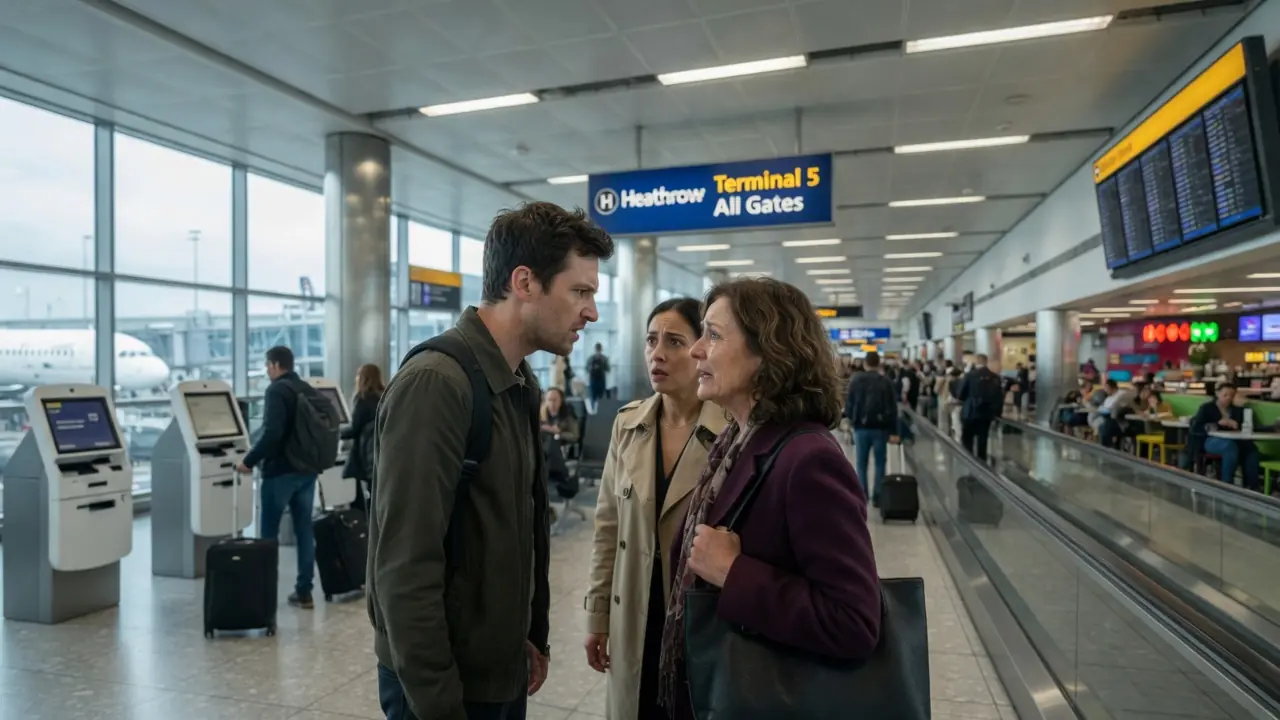
The flight landed at Heathrow at 4:18 p.m. London time on August twenty-seventh. We had a three-hour layover before our connection to Edinburgh. Time to grab terrible airport food and stretch our legs, and try to stay awake despite the jet lag. I turned my phone off airplane mode while we were waiting at the gate, mostly out of habit. It took maybe thirty seconds to connect to the international network, then it started vibrating, and vibrating, and vibrating. The notification sounds were continuous, a digital assault that made other passengers look over with annoyed expressions. My stomach dropped before I even looked at the screen, because I knew. Of course I knew. Twenty-six messages. Fourteen from my mother, seven from my father, three from my sister McKenzie, two from family friends I barely spoke to anymore. All sent in the eight hours we'd been over the Atlantic, all marked urgent, all screaming crisis in that particular way that makes your chest tighten even when you know, logically, that it's probably manufactured drama.
I opened my mother's texts first. They were timestamped starting at 8:14 a.m. Pacific time, which would have been right around when our plane was somewhere over Greenland. "McKenzie broke her leg this morning, fell down the stairs. She's in surgery right now. This is serious." Then, "Where are you? We need you home now." Then, "I can't believe you're not answering during a family emergency." Then, "Your sister could have died and you're unreachable." My hands started shaking. McKenzie was twenty-one now, living at home while she finished her nursing degree at state, still part of the household I'd helped raise. A broken leg was serious, painful, definitely scary. But surgery? That seemed extreme unless it was a compound fracture or multiple breaks.
I wanted to call immediately, but we were still in the terminal, announcements blaring, crowds pushing past. Lily read over my shoulder, her face going pale. "Oh, no," she breathed. "Is she okay?" I didn't know yet. We found a quiet corner near a closed shop. I called my mother. She answered on the first ring. "Finally," she snapped. No hello, no acknowledgement that I'd been on a plane for eight hours with no cell service, just anger. "Where have you been?" Her voice was tight and sharp, but not grief-stricken. Not the voice of someone whose daughter just had emergency surgery. "We were on a plane," I said, trying to keep calm. "What happened? Is McKenzie okay? What kind of surgery?"
My mother sighed, heavy and dramatic. "She fell down the basement stairs this morning taking laundry down. The doctor said she broke her tibia in two places. They had to put a rod in. She's going to be non-weight bearing for at least six weeks, maybe eight." I pulled up the hospital's number on my phone, ready to call and speak to someone directly. "Okay, that's really serious," I said. "I'm so sorry she's going through that. Is she out of surgery? Can I talk to her?" My mother made a frustrated sound. "She's in recovery. Heavily medicated. She's not up for phone calls." Then came the punchline, the real reason for the urgent texts. "We need you to come home. Someone has to watch the kids while we take care of McKenzie. Your father and I can't manage everything alone. You need to cut your trip short and come back today."
There it was. Not, "McKenzie is dying and wants to see you." Not, "We need family support during a medical crisis." But, "Come home and babysit because we have something more important to do." The kids, Jordan and Riley, were nineteen now, twins finishing their sophomore year at state. Ainslie was seventeen, a high school senior. They weren't small children who needed constant supervision. They were practically adults themselves. "Mom, the twins are nineteen," I said. "They're old enough to take care of themselves and help Ainslie. I don't understand why you need me to fly home from Scotland on the first day of my honeymoon to babysit teenagers."
Long, dangerous silence. "I can't believe how selfish you've become. Your sister just had surgery and you're worried about your vacation." There was that word again, our vacation, not honeymoon. Vacation, which made it sound frivolous, optional, something I could abandon without consequence. "This isn't a vacation," I said, hearing my voice rise despite my best efforts. "This is my honeymoon. We saved for months. We paid eleven thousand three hundred dollars for this trip. The flights are non-refundable. We just got here six hours ago. McKenzie is going to be fine. A broken leg is terrible, but it's not life-threatening. And the kids are teenagers, not toddlers. They don't need me there."
My mother's voice went cold. "If you don't come home, don't bother coming back to this family at all. You're choosing a trip over your sister, over your siblings who need you, over this family. And I will make sure everyone knows exactly what kind of person you've become." The threat hung in the air, familiar and ugly. Emotional blackmail had always been her preferred weapon, honed through decades of practice. "I hope McKenzie heals quickly," I said, my voice shaking now. "We'll check in tomorrow, but we're not coming home early. We just got here." I hung up before she could respond.
Lily was staring at me with wide eyes. "She threatened to disown you," she said slowly. "For not canceling our honeymoon to babysit teenagers." Put like that, it sounded insane. It was insane. But it was also exactly the dynamic I'd been trapped in for eighteen years. My needs didn't matter. My boundaries didn't matter. My life didn't matter except as a resource for my parents to exploit. We got on the plane to Edinburgh. The short flight was supposed to be for catching our breath, regrouping, starting our actual honeymoon. Instead, I spent it staring at my phone, watching messages pile up. My father texted, "Your mother is devastated. McKenzie is asking for you. The kids are scared. This is what you chose?"
We landed in Edinburgh at 8:52 p.m. local time. Picked up our rental car, a small Nissan hatchback with right-side steering that made my American brain hurt. Drove forty minutes to our first hotel, a restored Victorian townhouse in the Old Town with uneven floors and a fireplace in our room. It should have been magical, the beginning of everything we'd planned. Instead, I sat on the edge of the bed and called McKenzie's cell phone, needing to hear from her directly that she was okay, that this wasn't the five-alarm emergency my mother had presented. She answered on the fourth ring, her voice muzzy and distant. "Hey," she said. "Mom said you weren't coming home." "I'm in Scotland," I said gently. "On my honeymoon. I'm so sorry about your leg. That sounds incredibly painful. How are you feeling?"
She was quiet for a moment, and I could hear the beep of hospital equipment in the background. "I mean, it sucks. The surgery hurt and the pain meds make me feel weird. But I'm okay. The doctor said it's a clean break. The hardware looks good. I'll be on crutches for a while, but I should heal fine." Relief flooded through me. Clean break. Good prognosis. Not the medical catastrophe my mother had implied. "So why is mom saying this is a family emergency that requires me to fly home?" I asked carefully. McKenzie sighed. "She's freaking out because someone needs to help me get around, and apparently she can't handle that plus managing the household. Which like, Jordan and Riley are adults, and Ainslie is seventeen. I don't know why she acts like they're six years old."
There it was. The truth, simple and infuriating. My mother didn't want to parent. She wanted me to come home and resume my role as unpaid caregiver so she wouldn't have to be inconvenienced by her daughter's injury. "Kenzie, I'm not flying home," I said. "I'm sorry, but I gave them seven months notice about this trip. They had time to make plans. This is my honeymoon." "I know," she said, and she sounded tired. "I told mom that, too. I told her the twins could help me, that I don't need you to fly home from Scotland. But she's on this whole thing about family obligation and how you've changed since you got married. It's exhausting."
We talked for a few more minutes, me reassuring her that I loved her and wanted updates on her recovery, her insisting that I should enjoy my trip and ignore our mother's dramatics. When we hung up, I felt marginally better. My sister wasn't dying. She didn't need me there. This was manufactured crisis, exactly like Dr. Langford had warned me to expect. But the texts kept coming. My mother, my father, extended family members whom my parents had clearly called to recruit as reinforcements. My aunt Diane, "I can't believe you'd abandon your family like this. What's wrong with you?" My uncle Paul, "Your mother is crying. Come home and fix this." Cousins I hadn't spoken to in years suddenly weighing in with their opinions about my selfishness, my cruelty, my complete lack of family values.
The psychological assault was relentless. Dozens of messages a day, all repeating the same themes: bad son, bad brother, selfish husband, family destroyer. Lily watched me spiral. We were supposed to be touring Edinburgh Castle, walking the Royal Mile, drinking whiskey at cozy pubs. Instead, I was glued to my phone, reading accusations and guilt trips, my anxiety building with each notification. On our third day in Scotland, after I'd spent two hours in our hotel room responding to family texts instead of hiking through the Highlands like we'd planned, Lily took my phone out of my hands. "This has to stop," she said firmly. "They're ruining our honeymoon. You're letting them ruin our honeymoon. We need help."
We found Dr. Hannah Griffiths through an online directory, a family systems therapist based in Portland, but offering telehealth sessions. She had sixteen years of experience specializing in emotional abuse, parentification, and toxic family dynamics. We scheduled an emergency video call for that afternoon, sitting in our hotel room overlooking Edinburgh, while Dr. Griffiths listened to me explain eighteen years of exploitation and the current crisis. She didn't interrupt, just took notes and occasionally asked clarifying questions. When I finished, she was quiet for a long moment. "What your parents have done is called parentification," she finally said. "It's a form of emotional abuse where parents inappropriately assign adult responsibilities to their children. You've been exploited since age nine. You've sacrificed your childhood, your adolescence, your early adult life to parent their children. And now they're escalating because you finally set a boundary."
She spoke with clinical detachment, stating facts rather than making judgments. "The emergency they've manufactured, demanding you cancel your honeymoon to care for teenagers who don't need intensive care, is a control tactic. They're testing whether you'll break and revert to old patterns. And the family-wide attack, recruiting relatives to harass you while you're away, is called flying monkeys. It's deliberate abuse." Hearing a licensed professional with credentials call this abuse changed something in my brain. It wasn't just Lily being overprotective or me being too sensitive. This was real, documented, clinical abuse.
Dr. Griffiths gave me homework. Document everything. Every text, every voicemail, every guilt trip. She wanted dates, times, exact wording. "If your parents escalate further," she said, "you may need legal protection. I want you to have evidence." I thought she was being paranoid. I didn't know yet how right she was. We stayed in Edinburgh for four days, then drove north into the Highlands like we'd planned. The scenery was breathtaking, rolling green hills, ancient castles perched on cliffs, lochs that looked like glass. We toured Stirling Castle, drove through Glencoe, stopped at small distilleries where they made single malt whiskey in copper stills. It should have been perfect. But my phone buzzed constantly, sometimes fifty messages a day. My mother's texts evolved from hurt to aggressive to openly threatening. "You're destroying this family. Everyone knows what you've done. There will be consequences for this betrayal."
On September first, five days into our trip, my mother sent a text that made my blood turn to ice. "Since you've abandoned your responsibilities, we're filing a formal complaint with Adult Protective Services. The twins and Ainslie are being neglected because you're not here to care for them properly. Enjoy Scotland while you can." I showed it to Lily, my hands actually shaking. "Can she do that?" I asked. "Can she report me to APS for not babysitting?" Lily, with her years in pediatric medicine and the bureaucratic nightmares that came with it, looked skeptical. "Adult Protective Services is for elderly or disabled adults being abused or neglected. Your siblings are teenagers without custody arrangements. I don't think there's any mechanism for that complaint to stick."
Dr. Griffiths, in an emergency session that evening from our hotel in Inverness, was more direct. "Your mother is bluffing," she said flatly. "She's trying to scare you into coming home, but she's actually creating a paper trail that could backfire spectacularly because she's essentially documenting that she can't parent her own children without her adult son's unpaid labor. That's not going to look good if any agency actually investigates." She was right about the bluff. No one from Adult Protective Services ever called, but the threat had been made, and it sat in my stomach like poison.
Two days later, September third, I got a call from an unknown Oregon number. I answered warily, expecting maybe a telemarketer or wrong number. Instead, a professional male voice said, "Is this Alex Brennan?" I confirmed. "This is Troy Vandermeer from Child Protective Services. I'm calling because we've received a concerning report about minors in your household." My brain stuttered over the words. Minors. Household. "I'm sorry," I managed. "I don't have any minors in my household. I'm on my honeymoon in Scotland. Are you sure you have the right person?"
Troy Vandermeer sounded puzzled. "The report lists you as the primary caregiver for three minor siblings, Jordan, Riley, and Ainslie Brennan. It states that you've suddenly abandoned care without making alternative arrangements, leaving the children in an unsafe situation." The pieces clicked into place with sickening clarity. "My mother filed that report," I said. "And she lied. Jordan and Riley are nineteen years old. They're adults. Ainslie is seventeen, but she's with our parents, who are her actual legal guardians. I'm their twenty-seven-year-old brother. I have no custody, no guardianship, no legal responsibility for any of them. I'm on my honeymoon with my wife."
There was a long pause. "Can you explain your relationship with your siblings and your role in the household?" Troy asked carefully. So I told him everything. The parentification starting at age nine, the eighteen years of unpaid child care, the boundaries I'd set before getting married, the honeymoon we'd planned for months, my mother's demand that I cancel everything to babysit teenagers who didn't need intensive care, the escalating harassment and threats. Troy listened without interrupting, and I could hear him typing notes. When I finished, he said something that changed everything. "Mr. Brennan, I need to be very clear about something. The report we received was filed by your mother. In attempting to make you look neglectful, she's actually made several concerning admissions about her own parenting."
He explained that CPS would be conducting a home evaluation within forty-eight hours. They'd interview the kids, assess living conditions, evaluate whether appropriate care was being provided. "For the record," Troy added, "you're not in any legal trouble. You're an adult sibling with no custody arrangement. Your mother's claim that you abandoned minor children is factually inaccurate. Two are adults, and one is in her legal custody. But her admission that she can't adequately care for her children without your constant presence is deeply concerning."
We hung up. I immediately called Dr. Griffiths again. "CPS is investigating my parents," I said, still trying to process it, "because my mother tried to report me for not babysitting." Dr. Griffiths was quiet, then said something I'll never forget. "Alex, if CPS finds problems, it's because there are problems, not because you failed to hide them, but because your parents have been neglecting their children and using you as cover. You've been so competent for so long that the system never saw what was really happening beneath the surface." She was right. I'd been the Band-Aid over a wound that never healed, and now that I'd finally pulled away, the infection was visible.
CPS conducted their home visit on September fifth. I wasn't there. I was in a small hotel in the Highlands near Loch Ness, trying to enjoy a distillery tour while my stomach churned with anxiety. Troy Vandermeer called me afterward with his findings. "Mr. Brennan, I wanted to update you personally. We conducted an unannounced home visit this morning at 10:15 a.m. We found several areas of concern." He listed them in that careful, clinical way social workers use. The house was disorganized and dirty, dishes stacked in the sink, overflowing laundry, minimal fresh food in the refrigerator. Riley answered the door because both parents were still asleep at 10:15 a.m. on a Thursday. Ainslie had missed three days of school that week with no documented excuse or parent contact.
"We interviewed each minor child individually," Troy continued. "They all stated that you had historically been responsible for most household management, child care, and emotional support. They described feeling confused and overwhelmed by your absence because they didn't know how to handle basic tasks your parents never taught them. The nineteen-year-olds reported being expected to fill your role but having no guidance or support. Your seventeen-year-old sister reported feeling abandoned by both you and your parents." His voice softened slightly. "To be clear, she clarified that she understands you're on your honeymoon and thinks your mother is being ridiculous. But she feels abandoned by your parents, who seem unable or unwilling to engage with parenting now that you're not there to manage everything."
Troy explained that CPS was opening a case. My parents would be required to complete a parenting capacity assessment, attend mandatory family counseling, and demonstrate they could meet their children's basic needs without relying on their adult son. "If they don't comply, or if Ainslie's situation deteriorates once the twins move out, which they've indicated they're planning to do, we'll need to consider alternative placement for her." The weight of it settled over me. My absence had revealed such profound parental inadequacy that the state was intervening. And my mother had caused it herself by trying to weaponize CPS against me.
The calls from my parents stopped after the CPS visit. The silence was eerie, unsettling. But the flying monkeys intensified. Family members I barely knew were calling Lily's workplace, trying to get her fired for corrupting me and destroying our family. Someone posted on my firm's Facebook page calling me an abusive brother who'd abandoned his disabled sister. My mother had apparently launched a full-scale PR campaign, telling everyone who'd listen that I'd refused to help during a medical emergency, that I'd sicked CPS on them out of spite, that I was a monster who valued money and vacations over family. The lies were so pervasive, so confidently told, that some people believed them. Dr. Griffiths had predicted this. "When you stop enabling dysfunction, the dysfunctional people will rewrite history and paint you as the villain," she'd said, "because accepting that they're the problem would require self-reflection and change, which they're incapable of. It's easier to blame you."
I knew she was right intellectually, but reading messages from cousins and aunts calling me evil, seeing my name dragged through social media mud, feeling my reputation shredded by people who didn't know the truth, it hurt in ways I wasn't prepared for. On September eighth, six days before we were scheduled to fly home, I received an email from an attorney named Michael Reeves with Reeves Family Law Group. The subject line said, "Legal Consultation re Brennan Family Harassment Case." He explained that he specialized in family law, particularly cases involving parental alienation, exploitation, and harassment. He'd been referred to me by Dr. Griffiths, who thought I might need legal representation given my parents' escalating behavior.
"I've reviewed the documentation Dr. Griffiths forwarded with your permission," he wrote. "You have an extremely strong case for harassment, defamation, and potentially parental exploitation. I'd like to discuss your options in a complimentary consultation." We had that consultation from a pub in a small Highland village. Lily and I huddled around my phone at a corner table while Michael Reeves laid out our legal options in clear, precise language. "Bottom line," he said, "your parents have no legal claim on your time, money, or labor. You are not responsible for their children. You never were. Any suggestion that you have legal obligations to provide child care is completely baseless." He explained that the defamation, our parents telling people I was abusive, neglectful, cruel, could potentially be actionable if it damaged my professional reputation, though those cases were hard to prove. The harassment campaign through third parties, getting family members to flood my phone and contact my workplace, could support a restraining order.
"I recommend documenting everything, which you're already doing," Michael said. "Every text, every call, every social media post. If you want to pursue a cease and desist letter, I can draft one. It would formally notify your parents that they must stop contacting you directly or through intermediaries, stop making false statements about you, and leave you alone. It’s not legally enforceable like a restraining order, but it creates a paper trail and shows you’re serious. Most people back down when they realize there are actual legal consequences." Lily and I agreed to have the letter drafted. We'd decide whether to send it after we got home and could assess the situation face-to-face. But just having an attorney, having someone with legal expertise in our corner, made me feel less powerless against the onslaught.
We finished our honeymoon. Toured more castles, drank more whiskey, hiked through landscapes so beautiful they didn't seem real. But every moment was shadowed by my phone buzzing with abuse, by the knowledge that my family was imploding while I was an ocean away, by the creeping guilt that maybe I should have just come home. We flew back on September twelfth, landing in LA at 6:33 p.m. after fifteen hours in the air. I turned my phone off airplane mode and braced for the usual avalanche. Instead, there was just one message from a number I didn't recognize. "Hey, it's Jordan. Got a burner phone so Mom can't monitor this. Can we talk, please?"
I called him from baggage claim. He answered immediately, his voice tight and strained. "Are you back?" he asked. "Just landed," I said. "What's going on? Are you okay?" Jordan was quiet for a moment. When he spoke, his voice cracked. "Mom and Dad are telling everyone you called CPS to destroy the family. They're saying you made everything up to punish them. Aunt Diane and Uncle Paul were here yesterday, and it was like this whole intervention thing about what a terrible person you've become." He paused. "Riley and I know that's bullshit. We've been trying to keep things together since you left, and it's been a nightmare. Mom barely functions. Dad works and then zones out in front of the TV. Ainslie is struggling and no one helps her. The CPS lady was here, and honestly, she should have come years ago. But Mom is acting like you somehow orchestrated this."
"I didn't call CPS," I said carefully. "Mom called them herself trying to get me in trouble. But when they investigated, they found real problems. That's not my fault, Jordan. That's on Mom and Dad for not knowing how to parent without me covering for them." He made a sound that might have been a laugh or a sob. "I know. Riley knows. We're not stupid. We've been watching this dysfunction our whole lives. You leaving just made it impossible to ignore anymore, and we're done. Riley and I are moving into an apartment together next month. We've already signed the lease. We can't do this anymore." The relief in his voice was palpable, mixed with guilt and exhaustion. My nineteen-year-old brother sounding like he'd aged a decade in two weeks.
"I'm sorry you got stuck with this," I said, meaning it. "But you're making the right choice. You can't sacrifice your life to parent your parents. They have to figure it out themselves." We talked for twenty more minutes, me and the twin I'd helped raise, who'd I'd taught to ride a bike and helped with math homework and coached through breakups. He told me about the apartment, his plans, his fear of leaving Ainslie behind. I told him Ainslie would be okay, that CPS was monitoring the situation, that sometimes the best thing you can do for someone you love is let the system work.
The next day, Lily and I met with Michael Reeves at his office in downtown Portland. He was older than I'd expected, maybe late fifties, with gray hair and the kind of calm professionalism that probably cost clients a lot of money. We sat in his conference room and reviewed everything, the texts, the voicemails, the social media attacks, the CPS report, the fake emergency, the harassment campaign. Michael took detailed notes, occasionally asking questions. When we finished, he sat back and folded his hands. "This is one of the clearest cases of parental exploitation and subsequent retaliation I've encountered," he said. "You have extensive documentation. Dr. Griffiths's assessment provides expert validation. The CPS investigation corroborates your account. If your parents attempt any legal action against you, which they won't because they'd lose immediately, we can shut it down instantly."
"Can they actually sue me for anything?" I asked, because at this point I didn't know what was possible. Michael shook his head. "They could file a frivolous lawsuit, sure. Anyone can sue anyone, but they have no standing. You have no legal obligation to provide child care for siblings. The concept doesn't exist in law. If anything, you'd have stronger grounds to sue them. Eighteen years of unpaid labor, lost educational opportunities, emotional damages. I don't recommend that route because family litigation is expensive and traumatic, but you'd have a viable case." He slid a document across the table. "This is the cease and desist letter. If you authorize it, I'll have it delivered tomorrow."
The letter was formal and unambiguous. My parents were to cease all direct contact with me or Lily, stop recruiting third parties to contact or harass us, stop making false statements about us to family members or on social media, and cease all attempts to hold me responsible for child care or financial support of my siblings. Failure to comply would result in legal action, including restraining orders and potential defamation suits. It was harsh. It felt necessary. Lily and I signed the authorization. Michael promised to handle delivery and follow-up. "Fair warning," he said as we left. "People like your parents tend to either back down completely or escalate dramatically when served legal papers. There's rarely middle ground. Be prepared for either response."
The cease and desist letter was delivered on September fourteenth at 2:47 p.m., according to the courier's tracking. My mother called seventeen minutes later. I didn't answer. She left a voicemail that was four minutes of hysteria, screaming, crying, accusations so garbled I could only catch fragments. Ungrateful, lawyer, destroying the family, never forgive. My father called next. When I answered, his voice was cold and distant. "So this is what we've come to? You're threatening us with lawyers because we asked for help with your own family?" The reframing was masterful. Demanding I cancel my honeymoon had become asking for help, and eighteen years of exploitation had vanished entirely from the narrative.
"Dad, you didn't ask for help. You demanded I cancel my honeymoon to babysit teenagers. When I said no, Mom faked a medical emergency's severity, weaponized my siblings against me, recruited extended family to harass us, and then accidentally got CPS called on herself. That's not asking for help. That's abuse." Long silence. Then, "If that's your perspective, I don't think we have anything more to discuss." He hung up. That was the last direct contact I had with either parent. The flying monkeys persisted for a few more weeks, but Michael sent cease and desist letters to the most aggressive ones, and the messages gradually stopped. My parents had apparently decided that complete estrangement was preferable to accountability or change.
The CPS case continued for four months. Troy Vandermeer updated me periodically. My parents had completed one parenting assessment. Both scored poorly on measures of emotional availability, child engagement, and understanding of developmental needs. They attended three sessions of mandatory family counseling, then stopped showing up, claiming the therapist was biased and didn't understand their family. The house conditions had improved marginally, mostly because Jordan and Riley had been doing cleaning and cooking before they moved out. Ainslie was back in school consistently, but her grades had dropped, and she'd told her school counselor she felt emotionally neglected at home.
"The issue is that your parents are barely meeting minimum standards," Troy explained in one call. "They're not abusive in ways that would justify immediate removal, but they're profoundly inadequate parents. Your sister essentially parents herself, gets herself to school, makes her own meals, manages her own schedule. Your parents provide a house and financial support, but almost no emotional engagement or practical guidance." He sounded frustrated. "Unfortunately, inadequate parenting isn't usually grounds for removal unless it causes demonstrable harm. But we're monitoring closely, especially now that the twins have moved out and your sister has lost her buffer."
In December, three months after we'd returned from Scotland, Jordan called me with news. "McKenzie is moving out," he said. "She found a job at a hospital in Seattle, and she's transferring to finish her nursing degree up there. She's leaving in January." My first thought was relief that McKenzie was getting out, followed immediately by worry about Ainslie. "What about Ainslie?" I asked. Jordan was quiet. "She's counting down the days until she turns eighteen in March. She's already been accepted to state, and she's planning to live in the dorms. Six months and she's out. She just has to survive until then." Survive. The word hit hard. My baby sister, the two-year-old I'd helped raise, now having to survive in her own parents' house until she could legally escape.
"Is she safe?" I asked. Jordan sighed. "Physically, yeah. But emotionally, Mom and Dad barely talk to her. They're like roommates who ignore her. She eats dinner alone in her room most nights. When CPS came to check on things last month, she told them everything was fine because she's so close to aging out that she doesn't want to risk getting put in foster care. She'd rather be lonely than in the system." It made sense, but it broke my heart. In February, I got a call from Ainslie herself. We hadn't talked much since I'd been back, a few short texts, nothing substantial. But now she called, her voice small and uncertain. "Hey," she said. "I wanted to tell you something before you heard it from someone else. I got into state, full ride academic scholarship. I'm moving into the dorms in August."
Pride flooded through me, mixed with relief. "Ainslie, that's incredible. I'm so proud of you. A full ride is amazing." She laughed, but it sounded sad. "I basically raised myself this year. Did all my college apps alone, wrote my essays alone, figured out financial aid alone. Mom and Dad didn't help with any of it. They didn't even ask." We talked for over an hour, my sister and I, about her plans and her fears and her hope for a future where she didn't have to parent herself. She told me she'd been in therapy through her school counselor, working through the realization that our parents' neglect wasn't normal or acceptable. She said she understood why I'd left, why I'd set boundaries, why I couldn't keep sacrificing my life for their dysfunction.
"I don't blame you," she said quietly. "I'm going to do the same thing once I'm out. I'm going to build my own life, and they can figure out how to function without using their kids as unpaid labor." The CPS case closed in March, right before Ainslie's eighteenth birthday. Troy called to let me know. "We're closing the case since all the children are now adults," he said. "For what it's worth, I want you to know that you didn't cause this situation. Your parents did. You just stopped enabling them to hide their inadequacy. Your siblings are all going to be okay. They're smart, resilient, and getting out. That's the best outcome we could have hoped for." He paused. "And Mr. Brennan, what you did, setting boundaries, protecting your marriage, refusing to sacrifice yourself, that took real courage. Your siblings learned from watching you that it's possible to choose yourself. That's a gift."
My parents still haven't spoken to me. It's been eighteen months since the honeymoon, since the boundary that broke our family. I've seen them three times in that period. Twice at a distance at family events where we stayed on opposite sides of the room, once at the grocery store where my mother literally turned her cart around and left when she saw me. They look older, smaller, diminished somehow. My mother's hair has gone almost completely gray. My father has developed a stoop. They look like ordinary aging people who made catastrophic choices and paid devastating prices. Sometimes I feel sorry for them. Mostly I feel nothing.
McKenzie is thriving in Seattle. Jordan and Riley share an apartment and are doing well at state. Ainslie moved into the dorms in August and calls me regularly with updates about classes, friends, her newfound independence. She told me recently that she barely talks to our parents. They call occasionally, but the conversations are stilted and brief. "They don't know how to relate to me as a person," she said. "They only knew how to relate to me as someone they could use. Now that I'm not available for that, we have nothing." It's sad, but it's also reality.
Lily and I just celebrated our second anniversary. We took a long weekend to Cannon Beach, stayed at a small inn, walked on the shore, ate fresh seafood, and actually relaxed. No emergencies, no guilt trips, no manufactured crises. It was quiet and simple, and exactly what our honeymoon should have been. On our anniversary night, watching the sunset over the Pacific, Lily asked if I regretted how everything had played out. "You lost your parents, essentially," she said softly. "That's not nothing. Do you wish you'd handled it differently?"
I thought about it. Really thought about it. About Jordan's exhausted voice talking about surviving our parents' house, about Ainslie doing her college applications alone, about eighteen years of my life spent parenting children who weren't mine, about the honeymoon my mother tried to steal. "No," I finally said. "I don't regret it. I regret that it was necessary. I regret that my parents chose control and pride over relationship. I regret that my siblings got hurt. But I don't regret protecting our marriage and choosing our life together. Because if I'd given in, if I'd flown home from Scotland and resumed my role, it never would have stopped. They would have owned me forever." Lily squeezed my hand. "I'm proud of you," she said. "I know that might sound condescending, but I mean it. You chose yourself. You chose us, and you gave your siblings permission to do the same."
We sat in silence, watching the sun sink into the ocean, and I felt something I hadn't felt since before the honeymoon. Peace. Real, deep, uncomplicated peace. Not the absence of conflict, but the presence of freedom. Freedom from obligation, from exploitation, from the crushing weight of other people's refusal to grow up. Last week, Ainslie sent me a letter. Not a text or email, but an actual handwritten letter in the mail. "Dear Alex," it began. "I've been thinking a lot about what happened with Mom and Dad and the honeymoon. I was so confused and angry at first, but now I understand. You weren't abandoning us. You were showing us it's possible to have boundaries. Watching you stand up to them, watching you choose your own life even when everyone was calling you selfish, that taught me something I needed to learn. That my worth isn't determined by how useful I am to other people, that I'm allowed to want things for myself. Thank you for that. I hope you and Lily are happy. You deserve happiness after everything you gave up for us. Love, Ainslie."
I called her that evening. We talked about school, her psychology major, her plans to eventually work with kids from dysfunctional families. She sounded light, unburdened, free in ways she never did growing up. At the end of the call, she said, "Hey Alex. I'm really glad you went to Scotland. I'm glad you didn't let them ruin your honeymoon. You deserved that trip. You deserve to choose yourself." My throat tightened. "Thanks, Ainsley. That means a lot." We hung up. I sat in our living room in the house Lily and I bought last year, and I realized that this hour, this quiet evening with my wife, this freedom to build our own life, this absence of constant crisis and manipulation, this was worth every painful consequence.
My parents expected me to cancel my honeymoon to babysit my siblings. When I refused, they tried to destroy me. Manufactured emergencies, weaponized my siblings, recruited flying monkeys, threatened legal action, sicked CPS on themselves by accident. They lost custody of their kids' emotional well-being, lost relationships with all their children except through formal politeness, lost their reputation in our extended family, lost their oldest son permanently. And according to relatives I still talk to, they still blame me for everything, still tell anyone who'll listen that I'm a vindictive monster who destroyed our family out of selfishness. Maybe some people believe them. I don't care anymore. Because I know what really happened, documented in therapy notes and CPS reports and legal files and my siblings' own testimonies. The truth is devastatingly simple. I was never supposed to be their parent. I was supposed to be their son, their brother, their family member with appropriate boundaries and mutual respect. When I finally stopped being their unpaid servant, the dysfunction they'd built on my exploitation collapsed. That's not my failure. That's theirs. And I'm free. Finally, completely, permanently free.