Hi, I'm Maris. And for most of my life, I was the one they forgot to mention. My family once said I was too sensitive, too ambitious, too much. Then they stopped saying anything at all. 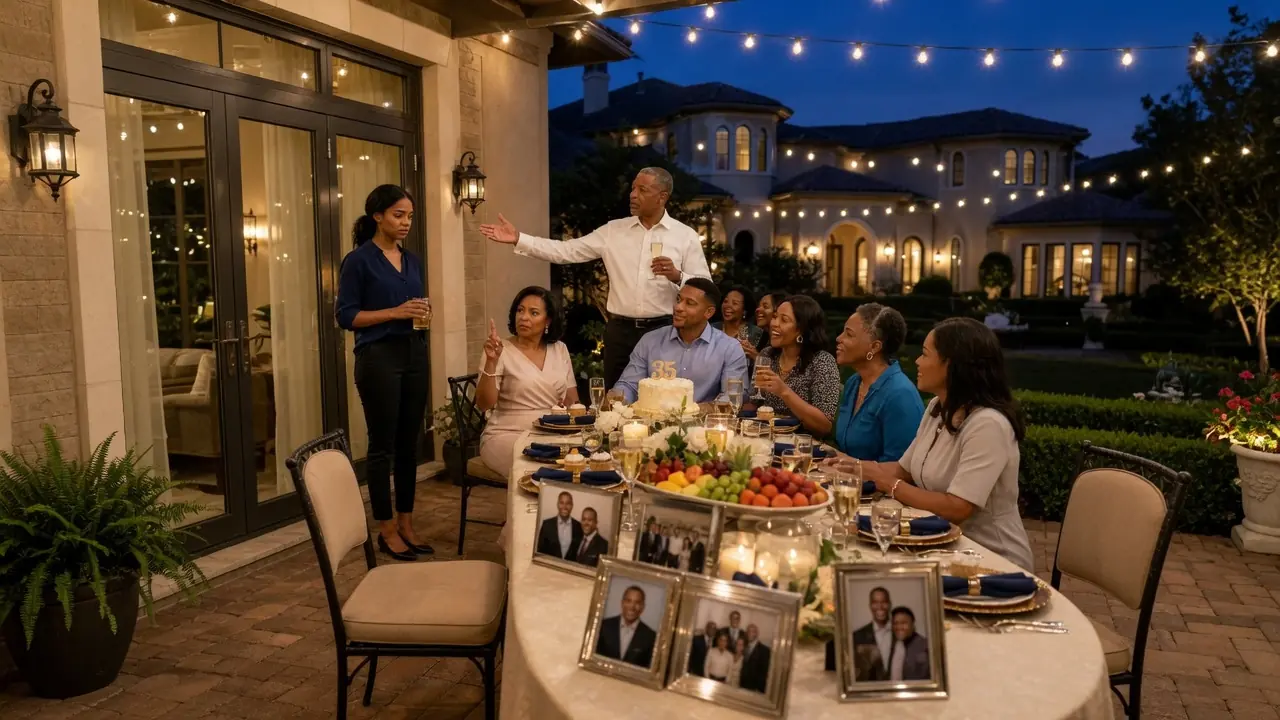
Seven years ago, I left home with a single suitcase, a borrowed jacket, and no goodbye. Not a call, not a text. They didn't even tell me when my brother landed in the ICU. But the day I walked into his hospital room, his nurse looked at me, paused, and asked, "Wait, are you the chief doctor?"
That moment changed everything, but not for the reason you think. Why didn't they ever want me to become more? And what were they trying so hard to hide?
Let me tell you, there's a kind of silence at family parties that doesn't sound like quiet. It sounds like being erased.
I felt it that day as I stood near the patio door, sipping ginger ale from a wine glass I didn't ask for. They always handed me something a little off. Never quite right, never quite mine. The room was full of laughter—cousins with babies, aunts in pastel blazers, and that god-awful fruit tray that somehow showed up at every family function like a bad tradition no one had the guts to end.
It was Silas's birthday, of course. Thirty-five and somehow still boyish enough that my mother insisted on cupcakes. The table in the dining room was dressed like a wedding: candles, folded napkins, and family photos printed in glossy color. All of them included him. I wasn't in a single frame. My seat was next to the window where the sunlight made everything uncomfortable. No one looked my way. I used to think I was imagining that. Now I know better.
When the moment for speeches came, Dad clinked his glass and stood up. Tall, pressed shirt—that "badge in the heart" kind of posture he never lost even after retiring from the force.
"Here's to Silas," he said, looking around the table. "Our pride and joy, our rock. Every family's got one of those, and every family..." he paused, smirked, "...well, every family has a waste, too."
Laughter erupted—real, unfiltered laughter. Even my aunt Gloria, who usually had the social tact of a cactus, chuckled and dabbed her eyes. Silas smiled. He didn't look at me. I tried to laugh, too—a small one, not enough to sound like I agreed, but just enough to pretend it didn't sting. My mother gave me that look: tight lips, a slight head tilt, and eyes that warned, *Don't ruin this.* And so I didn't. I never did.
The funny thing about being called useless, about hearing it phrased as a joke in front of everyone you share blood with, is that it doesn't hit you like a slap. It seeps in. It makes a home. That word *waste* wrapped itself around me like shrink-wrap. I couldn't breathe without tasting it.
I left the party early, saying something vague about work, though no one asked what I actually did anymore. That week, I had published my first co-authored paper in a respected medical journal on health disparities in underserved communities. At the hospital, people congratulated me and sent flowers. Even my supervising resident clapped when I walked in. But at home, they didn't know—and worse, they wouldn't have cared.
I remember my graduation vividly. I bought my own gown off an online clearance rack, tailoring it myself with fabric glue and panic. I crossed the stage entirely alone, my name announced in a voice too bright for the empty row in the audience meant for my family.
That afternoon, while I sat in a Thai place with three fellow interns, I scrolled through Facebook. There was my mother, Delphine, posting like a proud campaign manager: *"So proud of Silas for his latest award. What a son."* In the picture below stood her, Dad, Silas, and even my cousin's baby, all in front of a banner I'd never seen, celebrating something I didn't even know he'd done. My name wasn't mentioned, not even as an afterthought.
People talk about being invisible like it's poetic. Let me tell you, it's clinical. It's cold. It's sitting in a room full of voices and realizing none of them have spoken your name in hours, days, or years. It's like trying to breathe in a house without windows.
I stopped arguing about it years ago. There's no power in demanding to be seen, but there is power in building somewhere else. So, I did. I started saving money quietly, incrementally. I took extra shifts, applied for scholarships I never told them about, and stopped waiting for their permission to exist.
---
The last birthday invitation I ever received from my mother, I didn't throw away. I folded it carefully and slipped it into the back of my journal—the same one where I used to write letters addressed *Dear Home*. I stopped writing that word soon after.
People say silence is golden. In my family, silence was currency, and they spent it on making sure I knew where I stood—or didn't. The last time I stood in front of them, I came holding a suitcase. I thought that would be the last chapter of it all, with no more chances to be erased in real time. But life has its own choreography. Sometimes it dances you back to where you swore you'd never return.
It was just a short clinical rotation: two weeks assisting outpatient cardiology cases in San Antonio, part of a broader hospital partnership program I volunteered for without even checking the location. The irony hit me the moment I walked through those glass doors.
The clinic was sterile and quiet, typical for a Thursday afternoon. I was shadowing Dr. Nguyen that day—routine intake, medication adjustments, and brief consults. We moved room to room, smooth as a practiced rhythm, until we reached Room 5.
The nurse beside her gestured toward me. "Dr. Crane will be assisting."
"That's not my daughter," Delphine said, her eyes locked straight ahead. Her voice was calm, cool, like she was explaining the weather.
The nurse looked confused. I didn't move. My throat didn't tighten, and my chest didn't drop. I simply nodded, took the chart, and confirmed her prescription dose. I explained the side effects as if she were any other patient. She never made eye contact, not once.
After the consult, I washed my hands slowly, as if I could scrub away what had just happened. I skipped lunch and left early, telling the department I had paperwork. I didn't. The walk back to my temporary housing took twenty minutes, but it felt like I aged a decade with every step. Cars passed, music floated from a taco truck, and a boy kicked a soccer ball into a fence. The world didn't stop because she had erased me again. I didn't cry, but the silence inside me had weight.
That evening, I dropped off medication at my aunt's house. She greeted me with her usual cautious warmth—the kind reserved for people you're proud of in private, but not in front of the family. I stepped inside, placed the bag on the counter, and was about to leave when something on the wall caught my eye. It was a framed family portrait, glossy and new. It featured Delphine, Russell, Silas, Gloria, two cousins I barely remembered, and an empty space on the right where an awkward shadow cut across the image. A fern in a ceramic pot now sat in front of that portion, just tall enough to cover where I used to stand.
"I didn't know they printed that one," I said.
My aunt paused. "It was from Silas's fundraiser. They sent it to everyone."
I nodded. She didn't apologize, and she didn't have to. On the way back, I thought about all the things they never invited me to: birthdays, barbecues, even Grandpa's funeral. I had found out through a forwarded message two weeks after it happened. People assume absence is always passive, but sometimes it's carefully engineered.
---
Delphine once told me, "Don't embarrass us in public." I was sixteen. I'd asked a question at church, something about why women couldn't lead the service lines. She didn't answer; she just gripped my wrist under the wooden pew until it went completely numb.
That line, *"Don't embarrass us,"* had been the cornerstone of her parenting. It wasn't about teaching right from wrong; it was about optics, perception, and control. You learn to fill in the blanks. When someone ignores you long enough, your brain builds reasons: *Maybe they're busy. Maybe you overreacted. Maybe they'll come around.* But after a while, you stop waiting. You stop inventing hope.
The next time I stood in front of them, I didn't wait to be introduced. Seven years ago, during one of those unbearable Texas summers, I came home for a brief break between semesters. I'd survived another brutal term at UT Austin and told myself a few quiet days at home wouldn't hurt. I should have known better.
Dinner that night was oddly formal: cloth napkins, roast chicken, iced tea, and crystal glasses no one touched. My mother had even lit the tall candles she usually saved for holidays. I should have taken that as a warning.
After dessert, Delphine smiled and asked, "Can we talk for a minute, honey?"
I followed them into the kitchen. The table was already set with papers fanned out like a job offer. Except this wasn't an opportunity; it was a resignation they wanted me to sign.
"We've been talking," Delphine began, folding her hands like she was delivering Sunday scripture. "You've been working so hard and we worry. Perhaps medical school isn't the right path. It's so competitive, so stressful. There are other careers—respectable ones—that don't take such a toll."
Russell didn't bother softening his tone. "It's not too late to pivot, Maris. There's a two-year certification program at the community college. Medical assistant—good hours, benefits. It's practical and woman-friendly."
I stared at the form in front of me. It had already been filled out, my name printed neatly at the top. A signature line waited at the bottom like a trap disguised as an exit.
"If you choose this route," Delphine said, "we'll cover your rent. You can stay home, save money, and focus."
"And if I don't?" I asked quietly.
Russell didn't blink. "Then we can't support choices we don't believe in. You want to chase a pipe dream, you do it without our roof or our help."
There was no yelling, no slammed fists, just a clean, calculated cut. I didn't argue. I didn't beg. I just stood up, my chair scraping sharply against the tile. I walked to my room and began to pack. Delphine followed after a few minutes, pausing at the doorway like she expected me to reconsider.
"You're really choosing strangers over your own family?"
I didn't answer; I didn't need to. My suitcase was small, but it fit the essentials: two sets of scrubs, worn sneakers, and a small cardboard box I kept under my bed. Inside that box were all the things they never cared to display—old certificates, a first-place ribbon from the state science fair, and newspaper clippings from the time I was recognized for tutoring underserved students in math. I held each item for a moment, then gently returned them to their place. These were the only pieces of me that ever felt earned.
I left the trophies. I left the bedspread Delphine had picked out without asking. I left the framed photo on the nightstand, one from middle school back when they still believed in me. As I walked down the hall, Russell was waiting at the front door. He didn't look angry, just resolute.
"You don't know what you're walking into," he said. "The world doesn't care who you are."
I paused with my hand on the doorknob. "I know," I said. "That's why I'll earn who I become."
The porch light flickered as I stepped into the night. I didn't look back—not because I didn't want to, but because if I did, I might have hesitated, and I couldn't afford that. The cab pulled up just as I reached the sidewalk. I slid into the backseat, placed my box gently on my lap, and closed the door on the only version of me they ever saw: quiet, obedient, and grateful.
---
Even as the miles grew between us, I felt their silence trailing behind like a second shadow I hadn't asked for. They treated it like a phase, like a messy haircut or a poor dating choice I'd outgrow if they just kept the furniture in place and rented a room to someone else while they waited long enough. I was technically still in their house, my name still on the mailbox, my old shoes by the back door. But the way they looked right through me told a different story. I was already gone in their minds—or rather, I was becoming something too inconvenient to keep.
Delphine played her role with smooth calculation. "She's just being dramatic," she'd say to any relative who asked why I wasn't eating or joining in. "Med school stress. She'll come to her senses." The phrase was always delivered with a smile and a gentle handwave, like I was a theater student going through an experimental phase, not a woman preparing to leave behind everything I once called home.
That weekend, they hosted one of those casual family brunches—small on food, but heavy on performance. Folding chairs lined the patio, the coffee was lukewarm, and there was a fruit salad nobody touched. I sat near the edge next to the plastic cooler full of off-brand sodas, holding a paper plate I never filled. No one sat beside me. It was by design.
Silas stood up halfway through and tapped his glass with a fork. "Here's to real work," he said, lifting his mimosa. "Not everyone's built for it. Some people just love the struggle, I guess."
Everyone laughed. Russell snorted. Delphine reached across the table and touched Silas's hand proudly. Not one person turned to look at me, but I felt every glance they didn't give. I didn't respond, didn't even blink. I just stared at the condensation dripping down my cup until the plastic softened from the heat.
Later that day, Delphine cornered me by the kitchen sink as I rinsed my plate, though I hadn't eaten a thing. "Well," she said, like we were finishing a casual chat about recipes, "if you go through with this, don't expect us to be here waiting when it all comes crashing down."
Russell appeared a few moments later and handed me a manila envelope. "We did some research," he said, "just in case this med school thing doesn't work out."
Inside were pamphlets for dental hygienist programs, trade schools, and office administration certificates. He patted my shoulder like he was doing me a massive favor.
Nobody offered me a ride to the bus station, and I didn't ask. The morning I left, I stood at the curb with my suitcase and a borrowed duffel bag. The sky was the kind of pale gray that makes everything look too sharp. As I waited for the transit bus, I thought about how even a departure can feel entirely uneventful when everyone assumes you'll eventually crawl back. But I had no plans to return.
Months later, after I'd finished my first year, I remembered the graduation I never got to share. My program didn't have a cap-and-gown ceremony for year-end benchmarks, so I made one. I printed a card, hand-decorated it with metallic markers from the dollar store, and mailed it to myself. I still keep it. On the inside, I wrote a message *to the girl who refused to shrink*. There was no applause, no bouquet of roses, and no smiling parent behind a camera lens. But it was entirely mine. I learned something essential in that silence: how to make a ceremony out of survival, and how to turn absence into architecture.
Delphine once told me that silence keeps the peace. But that's not what it did in our house. In our house, silence suffocated anything that didn't fit. You weren't allowed to name your pain unless it made them look good. So, I stopped trying to be heard. I chose instead to be undeniable. I wrote in my journal that night, in one of the last entries before I had to sell the leather-bound notebook just to afford basic groceries: *If they never hear me, I'll make the world listen.*
It wasn't anger I carried when I left; it was absolute clarity. And so, with no send-off, I disappeared until life forced me to reappear.
---
The Greyhound station smelled of old coffee, industrial bleach, and collective resignation. I stood near the vending machines, clutching my suitcase and backpack tighter than necessary, pretending to be more confident than I felt. No one was coming to see me off—I knew that. Still, I glanced at the sliding glass doors every few minutes, like some lingering part of me believed someone might change their mind.
I'd sent a text to Silas two days before—not begging, just stating a financial fact: *Tuition's due next Friday. I'm a few hundred short if you could help.*
His response had come back within the hour: *Don't embarrass us again. Be realistic.*
I didn't reply. I didn't cry. I just stared at the message until the words blurred, then hit delete. Not to forget, but to stop giving the text power every time I opened my phone screen.
The bus pulled in fifteen minutes late. As I climbed the steps, the driver barely glanced up—no questions, no welcome. He simply swiped my ticket and gestured toward the back rows. I took a window seat two rows from the end and rested my head against the cold glass.
San Antonio slid by in shades of beige and cracked asphalt—strip malls, liquor stores, and fading murals. I didn't wave goodbye to the skyline; I wasn't entirely sure who I'd be waving to anyway. My earbuds weren't playing anything, just there as a social barrier to make people leave me alone. In the low white-noise hum of the engine, I whispered, "You did this." It wasn't dramatic, just a statement of fact. The farther we drove, the lighter I felt. I wasn't free, but I was entirely untethered.
Hours later, somewhere outside of Abilene, I scrolled through old emails on my cracked screen, trying to stay awake through the vibration. That's when I saw a subject line from six months ago: *Congratulations: Partial Scholarship Offer.*
I had never received that specific notice. I clicked it open and saw there was a typed response already attached to the thread. It read: *Thank you for considering Maris, but she has decided to withdraw her application from the program. We appreciate the opportunity.* It was signed *Delphine Broly*. She hadn't even pretended to be me; she had just used her own name, blunt and final.
My breath caught in my throat—not in shock, but in something far colder: a sharp click of understanding. She hadn't just wanted me to fail on my own; she had actively intervened to ensure I had fewer chances to succeed.
Weeks later, during my advanced rotations, I actually met an administrative representative from that very foundation. She smiled politely. "We were quite surprised we never heard back from your line, Dr. Crane," she said. "We only offer that specific scholarship slot to two students nationwide each year."
I said nothing, just nodded like I hadn't just learned that someone had slammed a door behind my back while I was still across town trying to force it open.
I never confronted Delphine about it—not out of fear, but because I already knew the exact script she would deploy. She'd say it was a mistake, or that she thought she was helping, trying to protect her child from eventual disappointment. It was always about protecting the family name, never about protecting me.
So, I started saving things: screenshots, emails, photos, and financial printouts, tucking the sheets carefully between the pages of my heavy textbooks. I didn't do it because I required material for revenge; I did it because someday, if the truth ever mattered to a single room, I wanted to be able to prove to myself that I wasn't crazy. You cannot heal a psychological wound while someone keeps gaslighting you that the blow was never struck.
Back on the transit bus, the driver turned on the cabin lights for a brief stop. I didn't get off, just watched as a woman in a worn blazer and two noisy teens boarded the bus. They laughed at something one of them whispered. It hit me then how many years it had been since I'd laughed without checking the parameters of the room first.
I reached into my bag and pulled out the little graduation card I'd mailed to myself. *To the girl who refused to shrink*, the ink read. That girl wasn't gone; she was just waiting for me to stop apologizing for taking up space. I stopped asking them to see me. I decided I'd focus on being seen by the right eyes instead.
---
The call arrived at 6:42 a.m. While I was standing barefoot in my kitchen, waiting for the kettle to boil, I saw the contact name flash across the screen: *Rachel*. We hadn't spoken since our final year of medical school, so I almost let it clear to voicemail, but some instinct made me pick up the line.
"Maris? Have you heard?" She didn't drag out the introduction. "It's Silas. Massive cardiac arrest. He's currently in the ICU at Methodist San Antonio."
I froze near the counter. "No... I haven't heard a thing."
That's when the weight of the exclusion landed—like a flat note struck in an empty concert hall. I hadn't heard the news because no one had chosen to tell me. Not Delphine, not Russell, not a single person who shared my bloodline or used to call me their baby girl when they required an extra shift covered.
I opened my messaging applications: nothing. I scrolled through my emails: zero subject lines gesturing to a family emergency. The only digital footprint from Delphine in months had been a forwarded chain email about kidney beans curing migraines. From Russell, there was just silence—predictable, solid silence.
I called the ICU desk directly to verify the data. The nurse on duty was polite but guarded. Yes, Silas Broly had been admitted to the unit. Yes, he was currently stable but under continuous observation. No, hospital policy dictated that only immediate family members were permitted inside the room at the moment.
I thanked her, hung up, and immediately booked the first available flight out of Seattle. I packed one small bag, grabbed my laptop, and scribbled a quick sticky note for my chief resident: *Emergency travel required. Contact Dr. Chen if anything urgent clears the desk.* I didn't tell anyone else. There was no long, emotional goodbye. I just grabbed a wool scarf that still smelled like eucalyptus from last winter and headed to the gate.
On the plane flight, I stared out the window for so long that my eyes stopped registering the clouds. I wasn't thinking about Silas's diagnosis, not really. I was thinking about the last time I had left the San Antonio city limits, and how I never expected to return carrying a name people respected. And yet here I was—no longer a student desperately trying to prove her worth to a kitchen table, but someone who had already executed the work.
During my layover in Denver, I pulled out my wallet—not to check my cash, but to look at a slip of paper I hadn't opened in a while. It was a folded printout, creased and fading at the margins: *Maris, I believe completely in who you are, not where you came from. You belong in this field of medicine. Keep going.* It was signed by Dr. Lucienne, my very first clinical supervisor—the only mentor who had ever pulled me aside in the pavilion and said, "You're not loud, Maris, but you don't need to be. Your work speaks for you."
That message had lived in my wallet for six years. I read those lines during every difficult benchmark—before board exams, after clinical failures, and after family holidays that never included a place setting for me. I refolded the sheet, slid it back into the leather slot, and boarded my connection to Texas.
When I stepped off the jet bridge in San Antonio, the heavy heat hit my face like it always did—immediate, personal, and thick. I rolled my bag behind me through the terminal, walking straight past the crowds waiting at the arrivals barrier. No one was holding a sign with my name on it; no one was waiting to hug me. I took a cab, stated the hospital address to the driver, and didn't flinch as the meter started. When the driver asked if I was visiting someone sick in the units, I simply nodded. That was enough data for him.
As the cab passed my old high school building, I looked out the window and realized I barely recognized the context. The brick architecture was exactly the same; I wasn't.
The medical center came into view slowly, rising from my memory. I paid the fare, stepped onto the pavement, and stood still for a second, watching the automated glass doors slide open for people who weren't me. I held a security badge in my purse that could grant me access to almost any restricted medical wing in Seattle, but here on this concrete, I was still just the girl who had been cropped out of her own family portrait. I didn't know what I would find inside, but fate didn't wait for me to knock this time.
---
I entered the hospital complex through the East Wing corridor—quietly, deliberately, like someone who didn't want to be seen until she chose to reveal her presence. The security badge pinned to my blazer marked me clearly as a visiting consultant from out of state. The typed title underneath—**CHIEF PHYSICIAN – SEATTLE REGION**—wasn't bolded; it didn't need to be.
The floor receptionist barely looked up from her monitor when I requested the room number for Silas Broly. She typed a few keys, nodded, and pointed toward a private cardiac suite on the third floor. I thanked her and walked toward the elevators before she could offer any kind of look—pity, surprise, or curiosity. I'd had a lifetime's fill of all of them.
The waiting area outside his room was completely hushed, dim, and filled with that familiar, sterile clinical tension. Hospitals breathe like second air to me. Russell sat in a vinyl chair with his arms crossed tightly over his chest, looking exactly like he was ready to give orders to someone—anyone—to maintain his illusion of control. Delphine was sitting across from him, scrolling silently on her phone screen. She didn't look up. Neither of them noticed my approach at first, and then a uniform voice pierced the quiet of the corridor.
"Excuse me, are you the new chief doctor arriving from Seattle?"
The nurse was young, her tone highly respectful but loud enough to carry across the tile floor. My name badge hadn't registered with her yet, but my face had from an internal conference bulletin or a hospital network advisory board notification. I froze—not because I lacked the professional composure, but because I wasn't expecting to be called out by my title directly in front of them.
Delphine turned her head sharply. Russell looked up slowly from his posture. Silas, hooked to a network of telemetry monitors inside the glass room, his eyes barely open, shifted his gaze toward the doorway. No one spoke a word, not even the nurse. For a second, the entire room seemed to hiccup—no monitor beeps, no chairs scraping, just the immense weight of a silence heavier than any clinical diagnosis I had ever handed down to a family.
I didn't confirm or deny my title to the room. I simply nodded to the nurse, stepped into the space, and asked quietly, "Has his post-arrest blood pressure stabilized?"
"Yes, Doctor," she answered immediately, her tone entering report mode. "It dropped significantly during the morning shift, but we've adjusted the line medication."
I nodded again, walked straight to Silas's bedside, and glanced once at the digital chart. Everything I needed to know clinically was right there on the screen; the rest of the family data wasn't my concern. I didn't speak a word to him, and I didn't touch his hand. I simply documented a few observations on the monitor notes, stepped back from the bed, and let the nurse continue her rounds.
As I walked back toward the hallway threshold, another voice—softer this time—slipped through the air. "We were actually required to study your health equity policy paper in my advanced class last semester, Doctor."
I turned around slightly. It was the younger nurse from the desk, blushing slightly as if she hadn't meant to articulate the admiration out loud. "I never knew you were originally from this district," she added.
I offered her a small, closed-mouth smile—a gesture meant more for my own grounding than her validation.
Delphine heard the entire interaction. I saw her shoulders go completely rigid, the smartphone lowering slowly from her hand. For once in her life, she didn't have a single line rehearsed for the audience. She didn't know whether to correct the nurse's respect or thank her for the attention. She said absolutely nothing.
I gave the charge nurse my direct contact line, instructed her to call my office if Silas's telemetry status changed, and stated that any further administrative updates could be routed through the attending staff. It was routine, efficient, and entirely professional.
When I turned to walk down the hall toward the exit, no one stopped me. No one said thank you, and no one said they appreciated me flying out. There was just that thick, suffocating silence again—the exact currency they had used for years to drown out anything inconvenient to their brand: truth, talent, and me.
The automated glass doors slid open ahead of me, and I stepped out into the main corridor. Behind me, I heard Russell's voice—low, hesitant, and entirely stripped of his old authority. "You're... you're not staying?"
I didn't respond to the question, and I didn't even flinch. I just kept walking toward the elevators. They didn't follow my boots, but their silence stuck to my heels like wet cement.
---
I didn't expect to find a voicemail from Delphine waiting on my line when I returned to the hotel. Still in my clinical scrubs, I had just slipped off my shoes and turned on the bedside lamp when the alert popped up on my phone screen: her number, one message, thirty-nine seconds long. I sat on the edge of the mattress and pressed play.
"Maris... I know you're incredibly busy," her voice came through the speaker. "I just... I wanted to say I was wrong." The silence that followed that sentence lasted significantly longer than the words themselves. Then, she started to cry—soft, shallow tears that didn't sound like they belonged to deep grief, just a profound social discomfort. "I shouldn't have said the things I did back then. We didn't know you'd... that you'd turn out this way. If you have any time tomorrow morning, maybe we could talk. Just coffee."
I listened to the recording twice. Then I set the device flat on the nightstand without saving the file or deleting it.
The next morning, she selected a small coffee shop near the medical center—one with exposed brick walls, overpriced espresso, and a long string of indoor succulents. She was already seated at a corner table when I arrived, her fingers folded tightly around a paper cup like it was a prop for a scene.
"You look well, Maris," she said, studying my features as if I were a complete stranger wearing a coat she used to own.
I nodded, setting my bag down. "Busy, but well."
She didn't ask a single question about Silas's recovery, or my position in Seattle, or anything real. We danced around neutral, superficial topics for ten minutes until she finally leaned forward across the wood, her tone shifting into that familiar, rehearsed register.
"I just want to thank you for checking on Silas yesterday," she said, her eyes wide. "He wouldn't admit it to the room, but I know he deeply appreciated your presence. And we were wondering..." Here came the real transactional line. "...if there's any chance he could be transferred to your facility in Seattle? I mean, you'd have significantly better resources, a much smoother recovery track, and maybe you could oversee his case a little more closely from your office?"
I blinked once, then took a slow sip of my coffee. "I don't run clinical admissions, Delphine," I said flatly.
"Of course, but with your position, your chief influence... maybe just an internal note, a quick call to the board?"
I set the paper cup down on the table, my face entirely blank. "Thank you for meeting me, Delphine," I said, standing up from the chair.
She looked completely startled, as if she hadn't imagined a version of this script where the daughter got up first and ended the scene. Her mouth opened, then closed again. I walked out of the coffee shop before she could locate her closing line.
Outside on the sidewalk, the air was warmer than I expected. I walked two blocks without any specific direction, letting the noise of the city traffic bleed into the cracks she had left behind. That message wasn't an apology; it was a pure transaction in disguise. They weren't sorry they had spent a lifetime erasing my name from their table; they were only sorry I now held the professional leverage they couldn't control.
Back at the hotel front desk, there was an official letter waiting for me in the message box. It bore no return address, just a formal government seal stamped across the flap. I opened the envelope inside the elevator.
It was a formal inquiry from the state board regarding my role as a sponsoring physician on an emergency medical visa application filed by *Delphine Broly*. She had used my name, my chief title, and my professional position to vouch for a distant cousin I hadn't seen since middle school—executed entirely without my knowledge, and entirely without my consent.
The elevator doors slid open on my floor. I didn't move.
Later that night, sitting at the desk, I typed my reply to the board.
*“To whom it may concern: I do not consent to this application track. I was not informed, nor was I consulted regarding the use of my credentials for this filing. Sincerely, Dr. Maris Crane.”*
I printed the copy, signed it in ink, and mailed the original to the state office. Then I added a duplicate sheet to my personal witness file—a secure folder I'd started years ago. I didn't keep the files for revenge, just for record. There would be no public confrontation, and no dramatic phone call across the state lines—just a firm, invisible line they would never be permitted to cross again. I didn't tell them no; I simply let the heavy door close and never unlocked the deadbolt again.
---
The invitation arrived folded in heavy blue cardstock, the kind designed to look important without feeling too formal. **PACIFIC NORTHWEST HEALTH EQUITY CONFERENCE**, the text read. **THE THEME: HEALING BEYOND THE HOSPITAL.** I stared at the print for a full minute before sliding it into the paperwork stack on my desk. I hadn't spoken at a major conference in nearly a year—not because I lacked the invitations, but because I wasn't interested in listening to executives discuss systemic empathy while pretending they didn't know what real harm looked like up close.
Still, I wrote back and said yes. Maybe it was a matter of timing, or maybe it was the silence that had followed my boots home from San Antonio. Or maybe, deep down, I finally needed to articulate something out loud that wasn't just for me anymore.
The auditorium room was packed to capacity—not stadium-sized, but enough to feel the physical weight of a hundred eyes. I kept my pitch steady and my delivery deliberate. I didn't name specific names, and I didn't drop cities or surnames. I simply stood at the podium and delivered the facts.
"I used to believe that love would naturally manifest as structural support," I told the room. "That the people who raise you will always want the absolute best for your trajectory. Then I learned the hard lesson that some people only love you when you match the exact script they've written for you in their heads."
The entire room went completely still. No coughs, no papers rustling—just pure listening.
"When you start transforming into something they didn't author—when you succeed completely without their permission—it isn't always celebrated. Sometimes, it is deeply resented." I paused, letting the silence breathe across the rows. "But survival is also a kind of success. And I stopped asking to be invited to their table the exact day I realized I could build my own."
The applause started slowly in the center rows, then grew until it filled the air like a promise. Afterward, a young journalist approached me near the steps, her digital recorder ready, asking for a follow-up interview track. I gave her my office email, remained non-committal, and exited down the back stairwell to avoid the crowd.
That night, a new email was waiting in my inbox. The subject line read: *“Thought you should know.”* It was from Dr. Kaminsky, my undergraduate research adviser from years ago; we hadn't spoken in semesters.
*“Funny thing, Maris,”* he wrote. *“I came across a grant archive while reviewing applications for the new research cohort today. One entry caught my eye—an essay on health literacy among first-generation communities. Sounded incredibly familiar. It was submitted under the name Silas Broly. But I remember with absolute certainty that you wrote that exact paper seven years ago and sent it to my desk for feedback. I still hold the original draft file in my archives.”*
I leaned back in my office chair, blinking slowly at the monitor.
Silas. I remembered the interaction clearly now—him hovering near my desk between semesters, asking if I had any conceptual outlines for a public health grant, saying he just needed a general direction for his application. I had shared my concept, the structural outline, and even a few key paragraphs. He had asked to see the completed draft just to analyze the style. He had taken my words, my research, and my specific lived experience, submitted it under his own name, won the funding, and never said a word to me. He passed it off as his own architecture.
I didn't reply to the email right away. I just sat in the dark room and let the data wash over me like cold water over a sunburn. The betrayal didn't even sting; it simply settled into place. It was entirely familiar, entirely expected.
Days later, I delivered another keynote address to a smaller, more dynamic academic circle. Halfway through the speech, I deliberately quoted a line from that stolen essay: "Access is not just about who holds the key to get through the door. It's about who feels safe to speak once they are sitting inside the room."
I didn't explain the context to the audience, and I didn't cite the history; I just let the sentence hang there like incense in a quiet chapel. Only a few people in the wider network would ever recognize the text. One of them might catch the live stream, or maybe someone would text him the quote afterward. Either way, it didn't matter to my baseline, because I held the truth, and now so did the world I had built without a single one of his shortcuts. They spent a lifetime telling the world who I wasn't; now I am showing the world exactly who I've always been.
---
The digital article wasn't my own doing, but my name found its way into the comments section anyway. I hadn't posted my keynote speech from the equity conference, I hadn't linked the video, and I hadn't tweeted a single quote or screenshot of the standing ovation. Still, a national health blog picked up the broadcast—one of those digital magazines that floats between legitimate journalism and viral tracking. They titled the piece: **When Family Doesn't Show Up, She Built Her Own Seat at the Table.**
I scanned the text once, then closed the browser tab, but I couldn't stop the automated comments from stacking up on my feed.
*"This is exactly what resilience looks like."*
*"Every woman entering medicine needs to study this trajectory."*
*"I wonder who she was really referencing in the speech?"*
A few comments got significantly closer to the property lines than they should have: *“Isn't she Silas Broly's sister from San Antonio?”*
That night, as I was preparing a case review for the medical board, a thick envelope landed through my office mail slot. It bore no return address, my name handwritten across the front stock in a sharp, all-caps scroll I hadn't seen in years. I already knew what was inside.
It was a local newspaper clipping from the hometown Gazette. The headline read: **Silas Broly Receives Municipal Community Legacy Award.** There was a wide photograph attached: Silas in a tailored suit, Delphine standing right at his side, both smiling for the lens as if they had never held a single grudge in their lives. Scrolled across the bottom margin in permanent blue ink were four words: *He is still better.*
There was no signature on the paper, but the handwriting was unmistakably Russell's—I would recognize that pointed R and the angry tail on the S anywhere in the country. I didn't cry, and I didn't rage. I folded the news clipping in half and dropped it straight into the recycling bin under my desk.
Around dusk, my phone buzzed on the blotter. An unknown number with a local Texas area code appeared. I hesitated for three seconds before answering the line. "This is Dr. Crane."
"Maris... it's Delphine." Her voice came through, her breath catching instantly. "I... I don't want to fight with you. I just need to ask. If you have any compassion left in your heart, Maris... your brother needs your help."
I said absolutely nothing, letting the line stay clear.
"He's been asking the nurses if you're coming back down," she continued, her voice shaking. "He won't admit it to the room, but I know he deeply misses your presence. We all do, Maris. I know we weren't... we didn't say the right things to you before, but maybe now is the appropriate time to show up for family... for closure."
I waited, letting her fill the empty digital space with anything that might sound like actual regret.
"I'm sorry for how things felt to you back then," she finally muttered. "But you were always so difficult, Maris. You made it incredibly hard for us to know how to help you."
She never once said my name during the entire call. She called me *“you,”* *“my child,”* or *“that girl,”* but never *Maris*. It was as if articulating my name out loud would be an admission of her failure—a complete surrender, hard proof that I existed entirely on my own terms, not within the boundaries she had sketched.
I listened to her breathe through the line, counting the seconds between her sentences. She paused, waiting for a verbal reply. There was none. Eventually, her voice cracked into the receiver. "Maris? Are you still there?"
I didn't hang up the line, but I didn't answer her either. I just set the phone down flat on the kitchen counter with the screen still lit, letting her words turn into distant static in the room. I grabbed my coat, stepped out of the apartment, and walked toward the public park three blocks away.
The sky was doing that soft, brilliant orange fade it does in early autumn, and the air smelled of pine and evening promises. I sat down on a bench near the tennis courts, letting the low hum of the city traffic carry me forward. Kids were laughing in the distance, a dog barked near the path, and somewhere a couple was arguing over their dinner plans. It all sounded significantly more honest than anything that had ever come out of Delphine's kitchen.
Their silence had once crushed my identity, defined my metrics, and shaped the choices I made to mute my own voice. Now, it was just distant background noise in a world that had moved on. Their silence had taught me exactly how to speak.
---
The invitation arrived through a soft-spoken colleague who directed a monthly roundtable for women in medicine. "It's a small gathering, Maris," she had reassured me over email. "Just a private dinner. Real talk, no stage, no microphones—just our actual stories."
After the article went viral and everything else followed down the track, I had been actively ducking visibility; too much public applause made my skin itch. But this wasn't a performance; it was quiet and close. So, I went.
The restaurant was tucked into a beautifully converted craftsman house near Capitol Hill—low ceilings, flickering candlelight, and the smell of roasted rosemary and old wood. As I stepped inside the dining room, coats were already hung, and the laughter was low and familiar.
A woman sitting across the long table stood up slowly when she caught my eye, a wide smile breaking across her face. "Maris?" she said.
It took my brain a second to place the data: it was Eliza, a cousin on my mother's side. We hadn't seen each other in over a decade. She possessed the exact same dark eyes and that unreadable half-smile I remembered from childhood.
"I read your piece online," she said quietly as we sat down next to each other. "I didn't know whether to be proud of your chief position or worried for you."
I tilted my head, my voice calm. "Worried for whom, Eliza?"
She didn't answer that question right away. We moved through the courses like strangers remembering how to be cousins, discussing cities, our careers, and the food. She complimented my necklace, and I asked about her daughter's school track. Then came the shift in her tone.
"You know, Maris," she said softly, leaning closer. "I always knew you were completely different from the rest of them. Not difficult, just far too strong for their rooms."
I didn't reply, letting her words settle.
She stirred her tea, her eyes fixed on the cup. "They never wanted to admit it to the family, but your presence genuinely scared them. Not in a bad way—you just made things move that they desperately wanted to keep still. They were terrified you'd make Silas look small, that you'd completely outgrow their little story. And they never expected you to fight back, because they thought your silence meant you wouldn't."
That data landed harder than anything Delphine had ever orchestrated to my face. I nodded once, accepting the record. Eliza didn't offer an empty apology, because she didn't need to; but what she gave me—this honest, unvarnished truth—was something no one else from that side of the family had ever dared say out loud.
Later that night, I walked home alone through streets slick with a light rain. Eliza's phrase echoed against the steady rhythm of my boots: *Far too strong for them.* I rolled the words over in my mind until the sharp edges lost their sting. It wasn't a formal apology, but it was the closest thing to a confession I would ever get from their circle.
When I reached my apartment, I hung up my coat, brewed a small cup of chamomile tea, and sat on the edge of my bed where my old nameplate rested in a drawer. I hadn't looked at it in a while. **DR. MARIS CRANE.** Simple silver, the one I had custom-made the week I was promoted to chief.
I ran my fingers over the engraving. My name had never sounded like music in their kitchen. But here, etched in solid steel, it didn't require their recognition to carry weight across the country. They could avoid saying it forever; but someone did. Eliza did. And she meant every syllable. I didn't need to rewrite my story; I just needed them to stop stealing the ending.
---
The health summit wasn't about my career path, and that's exactly what I liked most about the venue. I sat near the back row, blending completely into the noise of introductions and the soft rustle of paper programs. My name appeared exactly once, printed discreetly in the acknowledgments section: *Special thanks to Dr. Maris Crane for her critical contribution to early equity policy design.* There were no headshots and no title slides on the screen; I didn't require those metrics anymore.
I watched as younger doctors stepped onto the stage—women with braids and borrowed blazers, their hands shaking slightly as they gripped their index cards. I remembered that exact feeling, and I was glad to feel it now only in memory. They spoke of structural failures, invisible barriers, and personal scars—each one stronger than the last, each one actively building the exact network I had only dreamed was possible when I sat on the outside of their tables.
When my name was eventually called—not to deliver a speech, but to stand for formal recognition from the board—I walked up the steps with a calm that felt entirely earned. I wore my soft gray coat, the one I had custom-tailored years ago, with *Dr. M. Crane* stitched in silver thread right over the heart. I hadn't changed my name, and I hadn't erased the past, but I had completely rebuilt what it meant to carry it. Someone snapped a photograph from the floor. I shook my head gently when the coordinator asked if I wanted a digital copy.
"This moment doesn't need to be captured," I said softly. "Just remembered."
Later, as I made my way through the reception area, a young intern stopped me near the catering tables. She looked about twenty-four, wide-eyed and tentative, holding her plate like a shield.
"I know this is strange, Doctor," she said, her voice shaking slightly. "But I read your paper about family dynamics in healthcare networks, the one in the *Westline Review*. It... it felt like you wrote my exact life on those pages."
I offered her a genuine smile—not a polite, professional mask, but something real. "Then make sure you keep writing yours," I told her.
She blinked, then nodded quickly, as if tucking the sentence into her pocket for later.
That night, after changing into an old sweatshirt and making a cup of tea that went cold before I drank it, I opened my old notebook—the one I hadn't touched in years. It still smelled faintly of leather and raw ambition. I started writing again—not for publication, not to defend myself, and not to explain my metrics to a kitchen table. Just to remember.
*“Forgiveness is overrated,”* I wrote across the clean line. *“I chose clarity. I chose distance. And most of all, I chose peace.”*
The next morning, I took the long way to the clinic, walking slowly through the park near the waterfront. Children were posing for family photographs under a canopy of golden autumn leaves. Parents were fumbled with jackets, yelled out names, and bribed their kids with snacks to sit still for the lens.
I didn't flinch, and I didn't think about the photos I had been cropped from, or the ones they had never breathed a word about taking. I just smiled at the water.
Some stories don't end with grand public gestures or perfect timing. They don't end with open arms at a front door or a returned phone call. Some stories end quietly—not because they lack value, but because they have finally made it completely out of the storm.
They called me a waste. But I built a life that didn't require their permission to matter. Sometimes the peace we are searching for doesn't come from forcing them to hear us; it comes from the quiet realization that we no longer need to be heard by them.
I spent years thinking closure would look like a formal apology, an invitation, or a seat offered back at a table that never had room for me. But the hard truth is, closure isn't something they give you. It is a decision you decide you deserve.
You are not the problem. You were never the problem. I didn't need their applause to prove I had worth—and neither do you.