My roommate’s girlfriend had been living in our apartment for three months rent-free, and somehow, they were now saying I was the one who needed to leave.
I had been living with Brock for over a year. We split everything fifty-fifty. Rent, utilities, internet, basic household expenses. It had been fine until his girlfriend, Sienna, started staying over three months ago.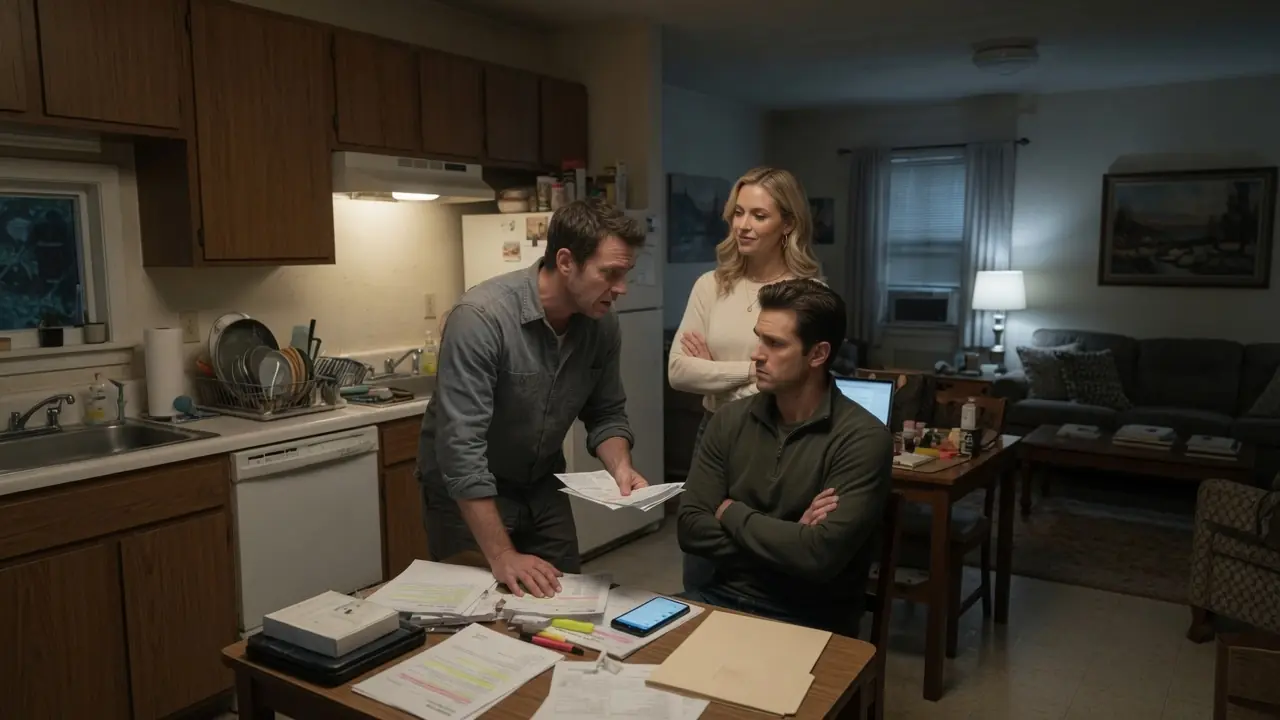
At first, it was one night.
Then a weekend.
Then a few more days.
Then she simply never left.
She was there every single night now. Our utility bills shot up nearly forty percent. The electric bill went from eighty dollars to one hundred forty. There was more cooking, longer showers, and the air conditioning was constantly running because Sienna worked from home.
But I was still splitting everything fifty-fifty with Brock while essentially supporting three people.
I started feeling like a guest in my own apartment.
I had hinted before, but Brock always brushed me off. I was at my breaking point. I could barely afford rent as it was, and now I was covering part of Sienna’s daily life without ever agreeing to it.
Finally, I decided to have a serious conversation.
I pulled together our utility bills and highlighted the increases. I waited until Sienna went to yoga class, then sat Brock down at the kitchen table and laid everything out.
“Look,” I said. “I need to talk about Sienna living here. She’s been here every single day for three months. Our bills have gone up significantly, and I’m paying for a third person.”
Brock actually looked guilty.
“You’re right,” he said. “I didn’t realize it was affecting you this much. That’s not fair to you, man.”
“She needs to either start paying a third of everything, or she needs to stay at her own place more often,” I said, keeping my voice calm.
Brock nodded slowly.
“Yeah, I get it. Let me talk to her this weekend. We’ll figure something out. Maybe she can contribute, or maybe she needs to be at her place more. I appreciate you being cool about this.”
Over the next few days, I noticed Sienna was not around as much. She came by maybe two or three nights instead of every night.
I felt this huge wave of relief wash over me.
Finally.
Finally, this nightmare was getting resolved.
Brock even texted me midweek.
“Had a good conversation with Sienna. We’re working on a solution. Thanks for being patient with us. Really appreciate it.”
He Venmoed me his half of the utilities on time that month. He even added an extra twenty dollars without me asking, like a peace offering.
I stared at my phone thinking, Thank God. We handled this like adults.
For about a week, everything felt normal again.
But that did not last long.
Last Thursday, I came home from work around six in the evening. When I walked through the door, Brock and Sienna were sitting at the kitchen table looking serious.
There was a third person with them.
A man in a full business suit, briefcase open, documents spread across the table.
I gulped before anyone even said a word.
Brock’s face was completely cold and expressionless, not the friendly roommate I had spoken with last week.
“This is our attorney, Harrison,” Brock said flatly, his voice like ice.
Sienna sat there with her arms crossed, not even looking at me.
“I’m sorry, what?” I felt like I could not breathe properly. “Attorney? What’s going on? I thought we worked this out.”
Harrison adjusted his glasses and spoke in a formal, completely detached tone.
“I’ll get straight to the point. Sienna has been residing at this address for over sixty days, which establishes legal tenancy in this state. She has full tenant rights under state law.”
“But she doesn’t pay rent,” I said.
I could hear my voice getting higher and more desperate.
“She’s not even on the lease.”
“Payment is not required for tenancy establishment,” Harrison continued calmly, like he was reading from a script he had memorized. “Duration of stay is what matters legally. Once someone has lived somewhere continuously for sixty days, they’re considered a legal tenant with all associated rights.”
Harrison slid a stack of papers across the table toward me.
I saw my own text messages printed out, highlighted in bright yellow. The conversation where I told Brock that Sienna needed to pay or leave. Other texts where I had complained about her being there constantly.
“We have documentation of your repeated harassment of our client,” Harrison said coldly. “Demanding she leave the premises. Confrontational conversations creating a hostile living environment for a legal tenant.”
“Harassment?” My hands were shaking badly now. “I was just asking for things to be fair. I’m paying half of everything while she lives here completely free.”
“You were demanding a legal tenant vacate without proper cause. That constitutes harassment under tenant protection laws.”
Harrison pushed an official-looking document toward me. It had a gold seal stamped at the top.
“You have thirty days to vacate these premises voluntarily. If you refuse, we will file for formal eviction through the courts.”
“Eviction?” I stared at him. “I’m on the lease. I pay my rent on time every single month.”
My voice cracked with emotion.
“Which is precisely why we’re offering the voluntary option first,” Harrison said without any emotion whatsoever. “An eviction on your record will make it nearly impossible to rent anywhere else.”
I looked directly at Brock.
“This is my home.”
Brock’s voice was ice cold.
“I’m the primary leaseholder. My name is first on the lease. I have full authority.”
“We agreed,” I said, feeling tears starting. “You said we’d figure it out together.”
Brock shrugged.
“I said I’d handle it. I am.”
I had thirty days to leave my own apartment.
I could not afford a lawyer.
I did not understand how this was happening.
I barely slept that night.
I sat on my bed with my laptop open, typing roommate eviction laws and primary leaseholder rights into Google until my eyes burned. Every website I found talked about landlords evicting tenants or tenants suing landlords, but nothing addressed what happened when your roommate was trying to kick you out.
I clicked through page after page of legal jargon that did not apply to my situation. My hands shook so badly I had trouble typing.
The reality kept hitting me in waves.
I might actually be homeless in thirty days.
I had nowhere to go. My savings account had maybe eight hundred dollars. First and last month’s rent anywhere else would cost at least three thousand.
I kept searching, growing more desperate with each useless result.
Around two in the morning, I found a tenant rights forum buried in the search results. Someone had posted about a roommate dispute three years earlier. I scrolled through the responses, and one comment made me stop breathing.
A user named Tenant Advocate 2019 wrote that most lease modifications require all parties’ signatures, not just the primary leaseholder’s.
My heart pounded as I read it again and again.
Maybe Brock did not have the unilateral power he claimed.
Maybe Harrison was lying about everything.
I screenshotted the entire forum thread and saved it in three different places on my phone and laptop. It was the first spark of hope I had felt since Harrison dropped those papers on the table.
I spent another hour searching for information about dual-signature lease requirements, but I could not find anything definitive for my state.
I finally passed out around four in the morning with my laptop still open.
My alarm went off three hours later for work. I felt like I had been hit by a truck. My head throbbed, and my eyes felt like sandpaper.
I called out sick because I genuinely could not function. My supervisor sounded annoyed but approved it.
I spent the entire morning calling every free legal aid clinic in the city.
The first one had a waitlist of six weeks. The second one said my income was slightly too high to qualify for their services. The third one did not handle landlord-tenant disputes. The fourth one was only taking domestic violence cases right now.
I called seventeen different places by noon.
Most of them had similar responses.
Booked solid for weeks.
Income requirements I barely exceeded by a few hundred dollars.
Wrong type of case.
One paralegal at a clinic actually stayed on the phone with me for a few extra minutes. She sounded genuinely sympathetic as she told me, off the record, that tenant-on-tenant evictions were really complicated and I needed a real attorney, not just legal aid.
She gave me three names of attorneys who handled housing disputes.
I called all three immediately.
The first one did not return my voicemail. The second one’s assistant said they were not taking new clients.
The third one was Craig Monahan.
His assistant scheduled me for a consultation the next afternoon.
The consultation fee alone was two hundred dollars.
I checked my bank account three times before confirming the appointment. I could barely afford this, but I could not afford not to try.
I spent the rest of the day gathering every document I could find. My copy of the lease, every utility bill from the past six months, bank statements showing my rent payments, the papers Harrison gave me, and screenshots of my text conversations with Brock.
I put everything in a folder and could not stop checking to make sure it was all there.
The next day, I took a long lunch break and drove to Craig’s office downtown. It was in a nice building that made me feel even more out of place. The waiting room had expensive-looking furniture and legal books lining the walls.
Craig was probably in his fifties, with gray hair and reading glasses. He shook my hand and gestured for me to sit down.
I handed him the folder, and he spread everything across his desk.
He read through my lease first, then the utility bills, then Harrison’s eviction notice.
I sat there sweating through my shirt while he reviewed everything. My entire future hung on whatever he was about to tell me.
After what felt like an hour, but was probably ten minutes, Craig’s face changed.
He looked up at me with something like relief in his eyes. He tapped the lease with his finger.
“Your roommate can’t evict you unilaterally,” he said, “because this lease requires both primary and secondary tenant signatures for any modifications or terminations. Brock would need your agreement or a court order based on legitimate cause.”
I almost cried right there in his office.
The relief was so intense, I felt dizzy.
But then Craig kept talking and explained the bad news.
Even though I had a strong case, I needed to file a formal response to prevent Brock from pursuing eviction through the courts.
His retainer was five thousand dollars upfront.
I felt my face fall before I could stop it.
Five thousand might as well have been fifty thousand, given my current financial situation.
Craig saw my reaction and his voice got gentler. He suggested I could try filing the paperwork myself, but he warned that one mistake could cost me everything.
Courts were very particular about formatting, deadlines, and legal language.
I left his office with a stack of forms and instructions.
I felt simultaneously hopeful and terrified.
I had legal standing to fight this, but I was going up against Brock, who apparently had unlimited access to legal help through Harrison.
I spent my entire lunch break the next day sitting in my car in the work parking lot, filling out court forms.
The legal terminology might as well have been another language. Words like affirmative defense, motion to dismiss, and verified complaint swam in front of my eyes.
I Googled half the terms just to understand what I was supposed to write.
Three days after the attorney ambush, I came home from work around six.
I tried to connect to the Wi-Fi to continue researching my case, and the password did not work. I tried it three more times, thinking I typed it wrong.
Then I realized what had happened.
I found Brock in the kitchen and asked him about the Wi-Fi.
He barely looked up from his phone and shrugged.
“You’re not a permanent resident anymore, so you’re not entitled to household amenities.”
The cruelty was so casual that it took my breath away.
I needed internet to file my legal paperwork and research my case. This was deliberate sabotage.
I grabbed my laptop and documents and drove to the public library. It was open until eight.
The librarian at the desk saw me looking lost and asked if I needed help. I explained that I needed to file court documents online.
She was incredibly kind and patient.
She helped me scan all my documents and showed me how to use the court’s online portal. The website was confusing, but she walked me through each step.
As I hit the submit button, I felt like I had at least done something instead of just waiting to be thrown out.
My phone buzzed a few minutes later with an email from the court clerk.
A hearing date would be set within thirty days.
The next morning at work, my supervisor, Melody, called me into her office.
There was someone from HR sitting there already.
My stomach dropped before anyone even spoke.
Melody’s face was completely neutral as she told me a complaint had been filed against me for stalking and harassing a former tenant of my apartment building. She said there was evidence of threatening messages and unwanted contact.
I was being terminated effective immediately for violating company conduct policies.
I tried to explain that I did not know what they were talking about, that there had to be some mistake, but Melody held up her hand to stop me.
She slid a folder across the desk, and I saw printed screenshots of text messages.
My phone number was at the top of each one.
The messages said things like, “You’ll pay for this.”
And, “I’m not letting this go.”
And, “You think you can just take what’s mine?”
My hands started shaking as I read them because I had never sent any of those messages.
The HR person asked if I recognized my phone number.
I said yes, but I had not sent these messages. Someone had faked them somehow.
Melody’s face showed she did not believe me.
She said the company took harassment seriously, and they could not risk keeping an employee who stalked and threatened people.
I tried to think straight, but my brain felt fuzzy.
I asked who had even filed this complaint, and Melody said she could not share that information due to privacy concerns.
The HR person started talking about my final paycheck and returning my building access card. Everything was moving too fast.
Security showed up at the door within five minutes.
A guard I had seen around for two years walked me back to my desk while people stared. I grabbed my coffee mug, a framed photo, and some pens.
Everything fit in one small cardboard box.
My coworker Jake watched from across the room but did not say anything.
The walk through the office felt like it took forever.
Everyone knew what was happening when security escorted someone out.
I could feel their eyes following me to the elevator.
The parking lot was nearly empty since it was only midmorning. I sat in my car holding the box on my lap. My hands would not stop shaking.
I stared at the office building for maybe twenty minutes, just trying to process what had happened.
Then it clicked.
Sienna.
This had to be Sienna’s work.
She must have doctored those screenshots somehow, made it look like the messages came from my number, and reported me to my company as the stalking victim.
They were not just trying to evict me anymore.
They were destroying my entire life.
My income.
My job history.
My professional reputation.
I started the car, but I did not know where to go.
I could not go back to the apartment.
I drove to a coffee shop and sat in the parking lot, trying to figure out my next move.
I needed Craig’s retainer money more than ever now, but I had just lost my income. My savings account had maybe eight hundred dollars. My credit card was already carrying a balance.
That evening, I was sitting in my car outside a different coffee shop because I could not face going home yet.
I pulled out my phone and called my parents.
My dad, Ashton, answered on the third ring.
I tried to explain everything. The eviction threat, the fake attorney, Harrison, and now losing my job over completely made-up stalking accusations.
My voice kept cracking as I talked. I told him about the fabricated text messages and how Sienna must have created them to get me fired.
I expected my dad to be shocked, concerned, or at least sympathetic. I was barely holding it together while I explained the whole nightmare.
There was a long pause after I finished talking.
Then my dad sighed really heavily and said something that made my stomach drop.
He told me they had been talking to Brock.
I felt cold all over.
My dad explained that Brock had called them a few days ago. Brock presented himself as the reasonable one trying to handle a difficult roommate situation. He told my parents I had been harassing Sienna, refusing to accept that she lived at the apartment now, and making everyone uncomfortable with my aggressive behavior.
My dad said Brock seemed very concerned about the whole situation.
I tried to interrupt, but my dad kept talking.
He said Brock explained how he tried to work things out with me, but I kept escalating and making threats.
My mom, Deline, got on the phone. Her voice had this disappointed tone that cut right through me.
She said they raised me better than to make a woman feel unsafe in her own home. She told me I needed to accept that living situations change and people move in together.
I tried to explain that Sienna did not pay any rent, that the whole eviction thing was a setup, that Harrison was not even a real attorney.
My mom cut me off before I could finish.
She said Brock had shown them the messages I sent threatening him and Sienna. She told me they were not going to support this kind of behavior.
I realized with horror that Brock had sent my parents the same fake screenshots that Sienna used to get me fired.
My own family thought I was the bad guy.
They believed I was some unstable person harassing this poor couple.
My dad got back on the phone and told me they would not provide any financial help until I got my priorities straight and apologized to those kids.
Those kids.
He was calling Brock and Sienna kids like they were innocent victims.
My mom said in the background that she was praying I would come to my senses.
The call ended, and I sat alone in my car outside the coffee shop.
My job was gone.
My apartment was being stolen.
Now my own parents had turned against me.
Every support system I had was gone.
I drove to the public library because I needed internet and could not go back to the apartment where Brock had changed the Wi-Fi password.
I sat at a computer terminal feeling completely numb.
The next week became pure survival mode.
I filed for unemployment online, but the website said it would take weeks to process claims. The form asked why I left my last job, and I had to check the box for terminated. That probably meant I would get denied anyway, since it was not a layoff.
I went to the grocery store and bought the cheapest food I could find.
Ramen.
Noodles.
Peanut butter.
Bread.
I used my credit card because my checking account was almost empty. The card was already carrying a fifteen-hundred-dollar balance, but I did not have a choice.
I needed to eat.
Back at the apartment, Brock and Sienna acted like I was invisible.
They sat on the couch watching TV and did not even look at me when I walked through. I started going through my stuff to see what I could sell.
My gaming console that I had saved up for last year.
My bike that I barely rode anymore.
Some old textbooks.
I listed everything on Facebook Marketplace.
A guy offered me two hundred dollars for the console, and I took it even though I had paid four hundred.
I needed cash right now.
My former coworker Hank Gentry messaged me on Facebook. He had left the company last year to work somewhere else. He saw my posts selling stuff and asked if everything was okay.
I broke down and told him the whole story over Messenger.
The eviction threat.
Losing my job.
My parents cutting me off.
All of it.
Hank did not question whether I was telling the truth. He just asked what I needed.
He told me about a temp agency he worked with that placed people in short-term jobs. They paid daily and did not ask many questions about recent employment gaps. He sent me the contact information and told me to use his name as a reference.
I called them the next morning, and they had me come in that afternoon.
The coordinator asked some basic questions and had me fill out paperwork. She said they could start placing me in assignments right away.
I started working whatever temp jobs they sent me to.
One day, I was in a warehouse loading boxes onto trucks.
The next day, I was stocking shelves at a retail store overnight.
Another day, I was doing data entry in some office building.
The work was exhausting, and the pay was barely above minimum wage. I was making maybe twelve dollars an hour when I used to make twenty-two at my real job.
But it was cash flow when I had nothing else coming in.
I worked twelve-hour shifts when they were available. My body ached constantly.
I came home to the apartment, and Brock and Sienna were having loud conversations in the living room about when the place would finally be peaceful.
They were talking loudly enough for me to hear through my bedroom door.
Sienna laughed about how nice it would be to have the second bedroom as an office.
They were already planning how to use my room once I was gone.
Two weeks after losing my job, I came home from a warehouse shift. There was a man standing outside the apartment door.
He asked if I was me, and I said yes.
He handed me an envelope and said I had been served.
Then he walked away.
I opened the envelope right there in the hallway.
It was a restraining order petition from Brock.
The paperwork said I threatened violence against him and Sienna. It listed the fake text messages as evidence. Then it added new things I had never even done.
It claimed I had been behaving erratically and making verbal threats in the apartment. It said Brock feared for his and Sienna’s safety.
There was a court hearing scheduled in one week.
A judge would decide whether to grant a temporary restraining order.
I read through the papers three times, trying to understand.
If Brock got this restraining order, I would be legally banned from my own apartment. I would not be able to go home. I would not be able to fight the eviction because I would be barred from the premises.
This was his plan.
Create a legal crisis that forced me out before the eviction hearing, where I might actually have a chance.
I stood in the hallway holding those papers, and I could hear Brock and Sienna talking and laughing inside the apartment.
My credit card debt was past eight thousand dollars now.
I was working temp jobs that barely covered food.
I had no family support and no real attorney.
In one week, a judge might ban me from my own home.
I stood there reading through the restraining order papers one more time, and something clicked in my brain about the timing.
The eviction hearing was scheduled for three weeks from now.
If Brock got this restraining order approved next week, I would not be allowed within five hundred feet of the apartment.
I would not be able to gather my documents, meet with any lawyer, or even show up to contest the eviction.
He was not just trying to scare me.
He was trying to lock me out before I could fight back in court.
I folded the papers and shoved them in my pocket.
My credit card statement showed $8,247 in debt.
The temp agency had paid me ninety-six dollars yesterday for an eight-hour warehouse shift.
The math did not work anymore.
I walked down to my car because I could not go back inside that apartment right now. I sat in the driver’s seat and pulled up Craig’s office number on my phone.
His secretary answered, and I asked if I could come in tomorrow morning.
She checked the schedule and said, “Craig has fifteen minutes at nine in the morning.”
I took it.
The next morning, I was waiting outside Craig’s office at 8:45. My hands would not stop shaking.
When he called me back, I sat across from his desk and laid out everything that had happened since our last meeting.
I had lost my job because of fake screenshots. My parents cut me off because they believed Brock’s lies. Now there was a restraining order hearing in six days.
Craig listened without interrupting.
When I finished, I leaned forward in my chair.
I told him I would pay in installments, whatever amount per month he needed. I would sign over part of my wages once I got stable work again. I would do payment plans, anything.
Craig closed the folder in front of him and shook his head slowly.
He explained that his malpractice insurance would not allow him to take cases without the full retainer upfront. It was firm policy, not his personal choice.
But then he leaned back and gave me advice for free.
He said to show up at the restraining order hearing with any evidence I could find that proved those text messages were fake. Phone records, anything that contradicted their timeline.
“Judges take restraining orders seriously,” Craig said, “but they also don’t like being manipulated with false evidence.”
I thanked him and left.
At least I had something to work with now.
I spent the rest of that day calling my phone carrier.
The first customer service person transferred me to technical support. Technical support transferred me to the legal department. The legal department told me I needed to submit a written request.
I submitted the written request through their website.
Two days later, I got an email saying they could provide a call and text log showing the numbers I contacted and the dates and times, but the actual message content required a subpoena from a court or law enforcement.
I called back and explained I needed to prove I did not send certain messages. The representative sounded sympathetic, but said there was nothing they could do without a subpoena.
I asked how to get a subpoena.
She said I needed a lawyer to request one from a judge.
I did not have a lawyer.
I spent another whole day on the phone trying different approaches. I talked to five different representatives. I got transferred to supervisors twice.
Everyone told me the same thing.
Message content needed a subpoena.
I could get the basic log showing I sent texts to Brock’s number on certain dates, but I could not prove what those texts actually said.
The screenshots Brock had could show anything. My basic phone log would not definitively prove they were fake.
I printed out the log anyway because it was all I had.
Three days before the hearing, I was working an overnight stocking shift at a grocery store. I got off at six in the morning and drove back to the apartment.
I sat in my car in the parking lot because I could not deal with going inside yet.
I pulled out all the documents I had been carrying around.
The eviction notice.
The restraining order petition.
The utility bills I originally gathered to show Brock the cost increases.
My phone records.
Everything was spread across my passenger seat and dashboard.
I picked up one of the utility bills and stared at it.
Something looked off, but I could not figure out what.
Then I saw it.
The bill was addressed to Sienna, but the address was not our apartment.
It was a completely different street across town on the south side.
I grabbed my phone and Googled the address.
It was a real place, an apartment complex called Riverside Gardens.
I looked through more papers scattered around my car. There was a credit card statement that must have gotten mixed in with my stuff somehow.
It was also addressed to Sienna at that same south-side address.
My hands started shaking as I pulled up the county property records website on my phone. I typed in Sienna’s full name.
The results showed her registered residence for tax purposes at the Riverside Gardens address, not our apartment.
The address where she was supposedly living for three months and establishing legal tenancy.
I sat there staring at my phone screen as everything started making sense.
I opened a new browser tab and started searching tenant law websites again. Every single legal site said the same thing.
Tenancy was not just about staying somewhere for sixty days. It was about establishing that place as your primary residence, your main home where you lived, received mail, and paid bills.
If someone maintained and paid rent at a different apartment the whole time, they never actually established tenancy at the second place.
They were just a guest.
Harrison’s whole legal argument about Sienna being a legal tenant was based on a lie.
She never lived at our apartment as her primary residence. She was staying over while keeping her real apartment across town.
I spent the entire rest of that day and night researching everything I could find about primary residence requirements. I was still sitting in my car at noon, reading legal websites on my phone.
I drove to the library and used their computers to print out relevant state statutes about tenant rights and primary residence definitions.
By three in the morning, I had a folder full of documentation, and I finally understood what had happened.
Harrison was not just wrong about the law.
He had deliberately lied, knowing Sienna maintained another residence.
The hearing was at nine in the morning.
I had not slept, but I felt more focused than I had in weeks.
I put on the one decent shirt I owned that was not wrinkled. I drove to the courthouse and went through security.
The courtroom was small with maybe twenty seats.
Brock was already there with a different man in a suit, not Harrison this time. A real attorney.
I sat on the opposite side of the room.
When the judge called our case, we both stood.
Brock’s attorney presented the fabricated text messages first. He showed the judge printed screenshots of me supposedly threatening Brock and Sienna.
Then Brock took the stand and testified about my threatening behavior and how scared he and Sienna were.
He was good at looking sincere.
The judge listened and took notes.
When it was my turn, I walked up with my folder. My voice shook at first, but I forced myself to speak clearly.
I presented the utility bill addressed to Sienna at the different address, then the credit card statement, then the property records showing that address as her registered residence.
The judge actually looked up from his notes with interest.
He asked Brock’s attorney to explain why Sienna had active accounts at a different address if she had been living at our apartment.
The attorney was not expecting this.
He shuffled through his papers and started talking about how Sienna was transitioning between residences during that time period.
I interrupted and pointed out that the dates on the utility bill showed she was paying electricity and gas at the other address during the exact same months Harrison claimed she established tenancy at our place.
“You can’t establish tenancy somewhere while actively maintaining and paying for a completely different residence as your primary home,” I said.
The judge looked at Brock’s attorney and asked if he had documentation proving Sienna actually lived at our apartment as her primary residence during those three months.
The attorney admitted he did not have that documentation with him today.
The judge did not dismiss the restraining order petition, but he did not grant it either.
He said he was continuing the hearing for two weeks and ordering both parties to provide additional documentation about Sienna’s actual residence during the relevant time period.
He wanted utility records, lease agreements, mail receipts, anything proving where she actually lived.
I walked out of that courthouse feeling hope for the first time in weeks.
I drove straight to the address on Sienna’s utility bill.
Riverside Gardens was a decent apartment complex with a pool and parking garage. I walked around until I found the building number from her mail.
There was a mailbox directory in the lobby. Sienna’s name was clearly printed next to apartment 2847.
I took photos of everything with my phone.
The building exterior.
The mailbox directory.
The apartment number on the door.
Then I waited outside near the parking garage.
Around six in the evening, a woman in her fifties came out walking a dog. I approached her carefully and asked if she lived in the building.
She said she had been there five years.
I showed her a photo of Sienna on my phone and asked if she knew her.
The woman nodded immediately.
“That’s the girl in 2847 who works from home,” she said. “I’ve seen her coming and going for months.”
I asked if she knew anything else.
The woman mentioned that Sienna had complained a few weeks ago about her boyfriend’s annoying roommate who would not leave them alone.
My stomach twisted, but I thanked her and took down her apartment number in case I needed a witness statement later.
I spent the next two days going back to that complex at different times. I saw Sienna’s car in the parking garage twice. I photographed it with the apartment building visible in the background, showing the date and timestamp.
I talked to two more neighbors who confirmed she lived there. One mentioned seeing her almost every evening.
On the fourth day, I went to the utility company offices in person. I filled out formal request forms for records showing Sienna’s account activity at the Riverside Gardens address.
It cost fifty dollars for expedited processing that I could barely afford, but I paid it with my credit card.
Within a week, I received thick envelopes from the electric company, gas company, and internet provider.
Every single one showed Sienna maintained active accounts at Riverside Gardens throughout the entire three-month period Brock claimed she was establishing tenancy at our apartment.
The bills showed regular usage patterns.
Someone was definitely living there and using utilities the whole time.
She was paying for electricity, gas, and internet at her real apartment while supposedly living at ours.
I gathered every single piece of evidence I had collected over the past week and drove straight to Craig Monahan’s office.
My hands shook as I carried the folder stuffed with utility bills, neighbor statements, photographs, and mail receipts.
The secretary recognized me and waved me back without making me wait.
Craig looked up from his desk as I walked in, probably expecting bad news based on my expression.
I dropped the folder on his desk and just said, “I found something big.”
He opened it and started going through the documents one by one.
His whole attitude changed as he read.
He looked at the utility bills showing Sienna’s active accounts at Riverside Gardens during the exact months Harrison claimed she lived at our apartment. He studied the photographs of her name on the mailbox. He read through the neighbor statements confirming she lived there and worked from home at that address.
Craig leaned back in his chair and let out a low whistle.
“This isn’t just a failed attempt to kick you out anymore,” he said. “This is fraud.”
Harrison had stood in my kitchen presenting himself as a lawyer when he had no license to practice law.
He made false claims about Sienna’s tenant status.
He used made-up evidence to threaten me with illegal removal from my home.
Craig said this could be criminal.
I felt my chest get tight with something that might actually be hope for the first time in weeks.
Craig kept flipping through the documents and shaking his head. He pointed out that Harrison gave me a business card claiming to be an attorney. He presented legal documents with official-looking seals. He made specific claims about tenant law that were completely wrong.
Craig explained that pretending to be a lawyer was a serious crime in our state.
Add in the fraud aspect, the false evidence, and the threats to illegally remove me from my home, and we were looking at potential criminal charges.
He asked if I still had Harrison’s business card.
I pulled it out of my wallet, where I had been keeping it like some kind of terrible reminder.
Craig made a copy of it right there in his office.
Then Craig sat forward, and his voice got really serious.
He said he would take my case on a payment deal where he got paid from whatever we won.
We were not just fighting the removal attempt anymore.
We were going after Brock, Sienna, and Harrison for planning fraud together, trying to illegally kick me out, and Harrison’s fake lawyer act.
Craig explained I had grounds for a lawsuit against all three of them. But first, we needed to report Harrison to the state bar group that licensed attorneys.
Craig said they took fake lawyers very seriously.
He also thought we should talk to the police because this might be more than just a civil case. This could involve criminal charges.
I asked what happened next.
Craig started making a list.
Emergency motion to throw out the removal case based on the fraud.
Formal complaint to the state bar about Harrison with copies of everything.
Police report about the threats and fake legal advice.
Then we would file our own lawsuit going after all three of them for damages.
He estimated we were looking at tens of thousands in potential damages between my lost wages, emotional harm, legal costs, and punitive damages for how bad their behavior was.
I could barely process what he was saying.
An hour ago, I had been drowning in debt and facing homelessness.
Now I had a real lawyer who believed me and wanted to fight back.
Craig started working immediately.
He pulled up legal forms on his computer and began filling them out while asking me questions.
He needed exact dates for everything.
When did Harrison present himself as Brock’s lawyer?
What specific claims did he make about tenant law?
What documents did he show me?
What threats did he make?
I answered everything as clearly as I could remember.
Craig typed fast and kept muttering about how obvious the fraud was.
He printed out the emergency motion to dismiss the removal proceedings, and it was thick, maybe fifteen pages.
He had attached copies of all my evidence about Sienna’s real apartment. The utility bills showing she paid for electricity and internet somewhere else. The neighbor statements. The photographs. Everything that proved she never actually lived with us as her main home.
Craig also prepared the formal complaint to the state bar about Harrison.
He included the business card Harrison gave me, copies of the documents Harrison presented while claiming to be a lawyer, and my statement about what happened during that awful kitchen table meeting.
Craig explained that the bar investigated people practicing law without a license. If they found Harrison guilty, he could face criminal charges.
Craig filed everything electronically right from his office.
I watched him hit submit on the emergency motion, then submit on the bar complaint.
Each click felt like I was finally fighting back instead of just taking hits.
Craig printed copies of everything for my records.
He told me to keep them somewhere safe, and to make digital backups, too.
“This is our evidence,” he said. “We can’t lose it.”
Three days after Craig filed the bar complaint, I got a call from an unknown number.
A woman introduced herself as an investigator with the state bar. She said they had received my complaint about Harrison and wanted to talk to me.
Apparently, Harrison had been on their radar before for practicing law without a license.
This was not his first time doing this.
My complaint, combined with the detailed evidence Craig provided, triggered an immediate investigation.
The investigator asked if I could come to her office to give a statement.
I took time off from my temp job and went to meet her downtown. Her office was small and plain, with filing cabinets everywhere.
She had me sit down and started asking very specific questions.
Did Harrison explicitly say he was Brock’s attorney?
Did he present documents that looked official?
Did he make specific claims about the law?
Did he threaten me with legal action?
I answered yes to everything and explained exactly what happened.
She took notes the whole time and recorded our conversation with my permission.
The investigator told me that pretending to be an attorney was a criminal offense, not just a rule break. She was gathering evidence to refer the case to the district attorney’s office for possible criminal charges.
She explained that what Harrison had done, using fake legal power to threaten and scare someone about their housing, was taken very seriously.
Housing was a protected area under state law.
You could not use fraud and fake legal threats to force someone out of their home.
She thanked me for coming forward and said the investigation would continue.
She also mentioned that if criminal charges were filed, I might need to testify.
I said I was absolutely willing to do that.
Two days after meeting with the bar investigator, my phone rang while I was stocking shelves at a warehouse job.
It was Brock.
I almost did not answer, but something made me pick up.
His voice sounded completely different from the cold, mean tone he used during the lawyer setup.
He was practically begging.
He started talking fast about how Harrison got the legal situation wrong and how Brock did not know Sienna had not actually made our place her main home.
He said Harrison told him that staying somewhere for sixty days automatically made you a legal tenant, and Brock just believed him.
He kept saying he wanted to work something out and avoid this getting out of hand.
His voice actually shook when he talked.
I did not say much. I just let him keep talking.
“Maybe we can figure out a deal where you stay,” Brock said. “And Sienna stays at her place more often. Maybe we can split utilities three ways like you originally asked.”
He sounded desperate in a way I had never heard before.
He mentioned that he had heard about the bar complaint and the investigation.
He said Harrison was his girlfriend’s cousin, and Harrison had promised he knew what he was doing.
Brock tried to make it sound like he was a victim, too, like Harrison had tricked everyone.
But I remembered sitting at that kitchen table with Brock’s ice-cold face while Harrison threatened me.
Brock knew exactly what was happening.
While Brock kept talking and making excuses, I remembered something Craig mentioned during our meeting.
My state allowed one-party consent for recording calls. That meant I could record a phone conversation without telling the other person.
I quickly opened the voice recorder app on my phone and hit record.
Brock was still rambling about how the whole thing had gotten out of control and how he never meant for it to go this far.
I started asking specific questions.
I asked if Harrison was actually a licensed lawyer.
Brock hesitated and then admitted no. Harrison was not actually licensed, but he knew a lot about tenant law from helping his friends before.
I asked if Sienna kept her apartment at Riverside Gardens the whole time.
Another pause.
Brock said yes. She kept that place because her lease was not up yet, but she was planning to move in with us eventually.
I asked if the removal threat was based on Harrison’s understanding of the law.
Brock said yes. Harrison told them that staying somewhere for sixty days created tenant rights, and they could make me leave since Brock was the main person on the lease.
Every answer Brock gave made things worse for him.
He was admitting that Harrison was not a real lawyer. He was confirming Sienna kept her other apartment. He was acknowledging that the whole removal threat was based on Harrison’s fake legal advice.
He tried to claim he did not know the law stuff was wrong, but he had just admitted he knew Harrison was not licensed and knew Sienna lived somewhere else.
His whole defense about being tricked fell apart with his own words.
I kept asking calm questions and letting him talk.
By the time the call ended, I had a twenty-minute recording of Brock admitting every key fact that destroyed his case.
The next morning, I met Craig at his office and played him the recording.
He listened to the whole thing with his eyes getting wider.
When it ended, he actually laughed.
“Brock just handed us the entire case on a recording,” Craig said.
Craig made a copy of the audio file and added it to our evidence folder.
Then he told me we had a meeting scheduled with a detective from the fraud division. The bar investigator had referred my case to the police, and they had assigned someone to look into it.
We drove to the police station together.
The detective was a middle-aged guy with gray hair who looked tired but interested.
When we sat down, Craig did most of the talking at first, explaining the whole situation from the beginning.
The fake lawyer setup.
The threats to kick me out.
The made-up evidence.
The discovery that Sienna never actually lived with us.
Then I played the recording of Brock’s call.
The detective listened carefully and took notes. When it was done, he asked to keep a copy of the recording.
Craig handed over a USB drive with the audio file, plus all our other evidence. The utility bills from Sienna’s real apartment, Harrison’s business card, the documents Harrison gave me, the neighbor statements, everything.
The detective explained that this type of fraud, using fake legal power to threaten and force someone about housing, was taken seriously by his department.
Housing was a protected area under state law.
You could not use lies and fake legal threats to make someone leave their home.
He said he would review everything and present it to the prosecutor’s office. He could not promise what charges might get filed, but based on what he had seen, there was definitely enough for a criminal investigation.
He asked if I was willing to cooperate fully if this went forward.
I told him absolutely yes.
I wanted them held responsible for what they tried to do to me.
The continued restraining order hearing happened the next week.
I walked into the courthouse with Craig, and I felt completely different from the first time.
Last time, I was alone and scared with barely any evidence. This time, I had a real lawyer, a folder full of proof, and a recording that destroyed Brock’s whole story.
Brock showed up with a different lawyer this time, not Harrison, obviously. His new lawyer was a woman in an expensive suit who looked unhappy to be there.
The judge called the case, and Brock’s lawyer immediately stood up and asked to withdraw the request for a restraining order.
But the judge did not let her.
He said he wanted answers about what had been going on with this case. He mentioned that the court had received notice about a bar investigation and a criminal investigation related to the original removal proceedings.
He wanted to know what was happening before he dismissed anything.
Craig stood up and asked permission to present evidence.
The judge nodded.
Craig walked through everything.
He showed the utility bills proving Sienna lived at Riverside Gardens the whole time. He played parts of the recording where Brock admitted Harrison was not a licensed lawyer and admitted Sienna kept her other apartment. He presented the neighbor statements confirming Sienna’s real address.
He explained how Harrison presented himself as an attorney and made false legal claims to threaten me with illegal removal.
The judge’s face grew harder as Craig talked.
Brock’s lawyer tried to interrupt a few times, but the judge told her to wait.
When Craig finished, the judge asked Brock’s lawyer if she had anything to say.
She started talking about how her client was misled by bad legal advice, but the judge cut her off.
He said the recording made it clear Brock knew Harrison was not licensed and knew Sienna lived elsewhere.
The judge denied the restraining order request completely.
Then he made comments about wasting the court’s time with fake claims and said he was referring the matter to the prosecutor’s office as well.
Brock looked pale as we left the courtroom.
His lawyer would not even look at him.
Craig filed our lawsuit the very next day.
I sat in his office while he finalized the paperwork.
We were suing Brock, Sienna, and Harrison together for everything they had done.
The lawsuit listed it all out.
Pain and suffering from the emotional harm they caused.
Lost wages from my job firing based on their made-up text messages.
The costs I paid fighting their fake removal attempt.
Punitive damages for planning fraud together.
The lawsuit was thirty pages long, and it told the whole story in detail.
How Sienna moved in without paying anything.
How I tried to handle it reasonably.
How they responded by setting up the fake lawyer meeting.
How Harrison presented himself as an attorney when he had no license.
How they made false claims about tenant law.
How they created fake text messages that got me fired.
How they destroyed my relationship with my parents by sending them the made-up screenshots.
How they filed a fake restraining order to force me out before I could defend myself.
Craig explained that we were asking for fifty thousand dollars in total damages, but we might get more or less depending on what the jury decided.
The important thing was getting everything on the record in a legal filing.
We were not hiding anymore.
We were going after them in public court documents that anyone could read.
Craig filed the lawsuit electronically and served copies to Brock, Sienna, and Harrison through a professional process server.
Now they all officially knew they were being sued.
Within a week, I got served with papers at my apartment. A process server handed me a thick envelope and had me sign for it.
Inside was a settlement offer from Brock’s lawyer.
I read through it with my hands shaking a little.
They wanted to settle the whole thing before it went to discovery and depositions.
Discovery was where both sides had to hand over all their evidence and answer questions under oath. Depositions were where lawyers questioned people while they were sworn in.
Brock clearly did not want any of that happening.
The offer was for fifteen thousand dollars.
In exchange, I had to agree to move out voluntarily within sixty days and sign a paper saying I would not talk about what happened.
The money would be paid in one lump sum within ten days of signing.
I called Craig immediately and read him the offer over the phone.
He was quiet for a minute and then said we should meet to discuss it.
I drove to his office that same afternoon.
Craig had the settlement offer printed out on his desk. He explained that fifteen thousand was not bad money, especially for someone in my financial situation.
But he thought we could get a lot more if we pushed forward with the lawsuit.
The evidence was strongly in our favor. We had the recording of Brock’s admissions. We had proof Sienna never lived with us. We had documentation of Harrison’s fake lawyer act.
Plus, there was a criminal investigation happening at the same time, which put even more pressure on them to settle.
Craig’s advice was that we could probably get double or triple that amount if we counteroffered and showed we were serious about going to trial.
He also pointed out that making me move out should not be part of any settlement.
I was the one who had been wronged here.
Why should I have to leave my home?
The “not talking” condition was standard in settlements, but Craig thought we could negotiate better terms there, too.
He suggested we reject this offer and send back our own demands.
I trusted Craig’s judgment. He had been right about everything so far.
I told Craig I was rejecting their offer.
I was not covering up what they did to me, and I was definitely not moving out of my own apartment after everything they put me through.
Craig nodded and started typing immediately on his laptop.
He was drafting our counter-demand right there while I watched.
Fifty thousand dollars in damages.
Brock and Sienna move out within thirty days, not me.
Written admissions of the entire fraud scheme that I could show my parents and my former employer.
Absolutely no nondisclosure agreement.
We were not negotiating my silence.
Craig printed out the counter-demand and had me review it before he sent it.
The language was clear and direct.
We were not asking.
We were demanding.
He emailed it to Brock’s attorney that same afternoon.
I left his office feeling like I finally had some power back in this situation.
The next week brought news that changed everything.
Craig called me on a Wednesday morning sounding energized.
The district attorney’s office had just filed criminal charges against Harrison for unauthorized practice of law and fraud.
It was official now.
Harrison was facing actual criminal prosecution for pretending to be an attorney and using that fake authority to threaten me.
The charges included fraud, impersonation of a legal professional, and conspiracy to commit illegal eviction.
Craig explained that this put enormous pressure on Brock and Sienna because they were connected to Harrison’s criminal case.
The news spread through the local legal community fast. Craig heard from other attorneys that Harrison’s case was being talked about as a warning example.
Two days after the criminal charges were filed, I got a call from Hank.
He had seen something online and wanted to give me a heads-up.
Sienna’s employer had found out about the false HR complaint she filed against me. Someone at my former company must have talked to someone at her company. Corporate world connections.
Her employer launched an internal investigation into whether Sienna had fabricated evidence and filed a false harassment complaint to damage someone’s career.
The investigation took less than a week.
Sienna was terminated for serious misconduct and ethics violations.
Hank sent me a screenshot of a post from someone who worked at Sienna’s company talking about the firing.
The irony was not lost on me.
She got me fired with fake evidence, and now she was fired for making fake evidence.
Everything they tried to do to me was coming back on them.
Craig kept me updated on the civil case preparation.
We were scheduled for a court date in six weeks. He was preparing for depositions and discovery.
Brock’s attorney knew we had strong evidence and a criminal case backing up our fraud claims.
The pressure was building on their side.
Two weeks before our court date, Craig called me with news.
Brock’s attorney had sent a revised settlement offer.
I drove to Craig’s office immediately to review it.
The new offer was forty-five thousand dollars.
They would provide written admissions I could share with specific parties, including my parents and my former employer. Brock would move out of the apartment within forty-five days.
The only condition was that I would not speak to media about the case.
No interviews.
No social media posts about the details.
No public statements.
Craig sat back in his chair and looked at me seriously.
He thought I should take this offer.
We had won everything that actually mattered. The money was substantial. The written admissions gave me what I needed to clear my name with my family and my former employer. Brock moving out meant I kept my home.
The media restriction was standard and did not prevent me from telling people in my personal life what happened.
If we went to trial, we might get more money, but we might get less. Trials were unpredictable.
This offer gave me certainty and closure.
I thought about it for maybe five minutes.
Then I told Craig I would accept it.
He started drafting the acceptance and settlement agreement that same afternoon.
The settlement documents arrived a week later.
I read through every single page with Craig.
The written admissions were detailed and unambiguous.
Harrison was not a licensed attorney and had no authority to make legal claims or threaten eviction.
Sienna never established legal tenancy at my apartment because she maintained her primary residence elsewhere and never intended to make my apartment her permanent home.
The text messages used to get me fired were fabricated and doctored to make me appear threatening.
The entire eviction threat was based on fraudulent legal claims made by someone impersonating an attorney.
Brock and Sienna knowingly participated in this scheme.
Every single thing they did to me was admitted in writing and signed by their attorney.
I took the documents to a notary public and got multiple copies notarized.
I made five copies total and stored them in different locations.
One in my apartment.
One in a safe deposit box at my bank.
One with Craig.
One digital scan in my email.
One physical copy I kept in my car.
Nobody was ever taking these away from me.
I wrote a long letter to my parents explaining everything that actually happened.
I attached copies of the settlement documents and the written admissions. I mailed it certified so I would know they received it.
Two days later, my phone rang.
It was my dad.
I could hear something different in his voice immediately.
Guilt.
He apologized for not believing me. He said he was sorry for siding with Brock without hearing my full story. He explained that Brock had been very convincing and seemed so reasonable, but seeing the legal documents and the admissions made it clear that I had been telling the truth the whole time.
My mom got on the phone, and she was crying.
She said she was sorry for abandoning me when I needed them most. She kept saying she should have known better, should have trusted me, should have asked more questions.
I did not tell them it was okay because it was not okay.
What they did hurt me badly.
But I told them I appreciated the apology and I was willing to work on rebuilding trust.
The relationship was not magically fixed.
It was going to take time.
But at least now they knew the truth.
The next week, I called my former employer and requested a meeting with Melody in HR.
They were hesitant at first, but I mentioned that my attorney Craig would be sending them some documents they needed to see.
That got their attention.
The meeting was scheduled for the following Tuesday.
I showed up with Craig and copies of the settlement documents.
We sat in a conference room with Melody and two people from HR.
Craig did most of the talking.
He presented the written admission that the stalking complaint was completely fabricated. He showed them the settlement documents proving that Sienna created false evidence to damage my employment.
Then Craig handed them a letter threatening legal action if they did not correct my termination record.
My firing was based on fraudulent evidence. If they did not fix my personnel file, we would sue for wrongful termination.
The HR representatives looked uncomfortable.
Melody would not make eye contact with me.
They asked for a week to review everything with their legal department.
Five days later, I got a call from HR.
My personnel file had been amended.
Instead of showing I was terminated for cause, it now showed I resigned voluntarily.
They were providing a neutral reference letter that confirmed my dates of employment and said I was eligible for rehire.
It did not admit they were wrong, but it removed the black mark from my record.
I did not want my job back anyway. I had already found better work through the temp agency connections Hank set me up with, but I needed my record cleared for future opportunities.
Three months after the attorney ambush that nearly destroyed my life, I was still living in my apartment.
Brock had moved out two weeks ago.
The place felt like mine again.
I used the settlement money to pay down my credit card debt significantly. I was back to having savings. My family relationship was slowly healing through weekly phone calls. My employment record was cleared.
I learned that some people will exploit any weakness they can find.
But I also learned that fighting back against fraud is possible, even when you feel completely powerless.
The apartment felt peaceful now.
I was sleeping through the night without panic attacks about becoming homeless.
I won.
More importantly, I survived.