The first thing I noticed when I opened my front door was the smell of roasted chicken. The second was the sound of forks tapping against plates.
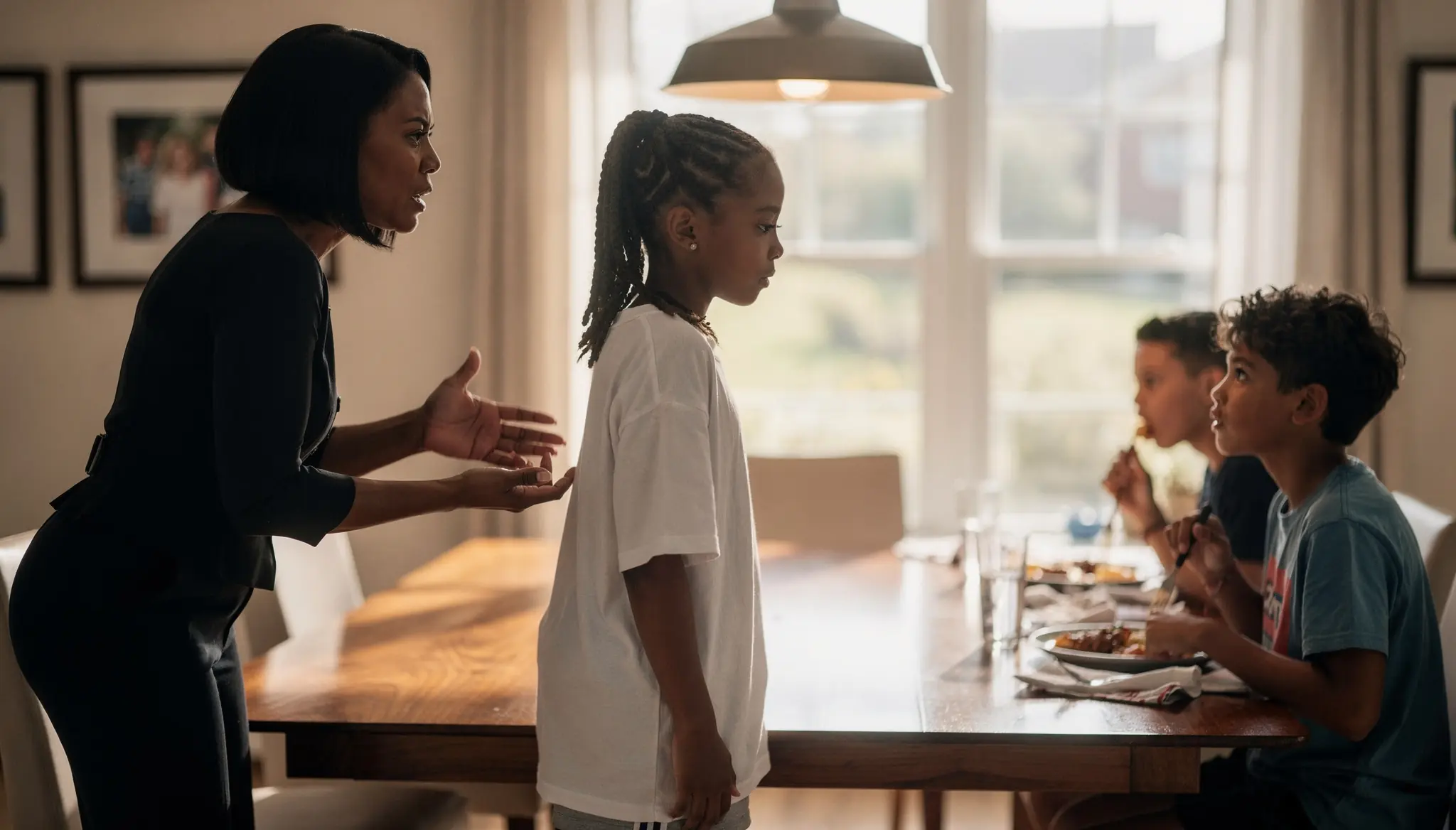
The third was my twelve-year-old daughter standing beside the dining table with both hands pressed against the sides of her white T-shirt, watching two other children eat the meal I had paid for. There was a place set near the end of the table, but nobody had invited her to sit there.
Her eyes were wet. My stepmother, Vivian, stood over her in a fitted black dress, speaking in a low, furious voice. She had not heard me come in. “You already had your dinner in the kitchen,” she said. “Don't embarrass me by pretending you're hungry.” My daughter turned toward the door. I will never forget the way her face changed when she saw me. She looked relieved for half a second. Then she looked frightened, as though my arrival had made her trouble worse.
My name is Elias Harper. I was forty-one that autumn, a project manager for a commercial construction company outside Richmond, Virginia. I worked too much, drove too far, and believed that if I kept the mortgage paid and the refrigerator full, I was doing most of what a father needed to do. It was an easy belief to hold when my wife, Renee, was alive. Renee noticed the little things I missed: how our daughter, Lila, used a cheerful voice when she was trying not to cry; how she pushed peas to the edge of her plate when she was worried; how she sometimes needed someone to sit beside her without asking any questions. Renee died after a sudden illness three years earlier. I learned to braid hair from online videos, pack school lunches before sunrise, and answer questions I never expected a father to hear. I did not learn quickly enough how to recognize a child who had become afraid to ask for ordinary things.
Vivian was my father's second wife. She married him when I was eleven, five years after my mother died. I would never have called her cruel when I was young. Cruelty sounded like shouting and slamming doors. Vivian was quieter. At family dinners, she always served her own children first. When my father traveled, she told me the good snacks were for guests and that I should be grateful for whatever was left. If I complained, she called me sensitive. When I grew older and tried to explain why I disliked staying in that house, my father insisted she had done her best. I believed him because I loved him and because it was easier than reopening a childhood he could no longer change.