Isabella Bennett was only two months old when her family split apart.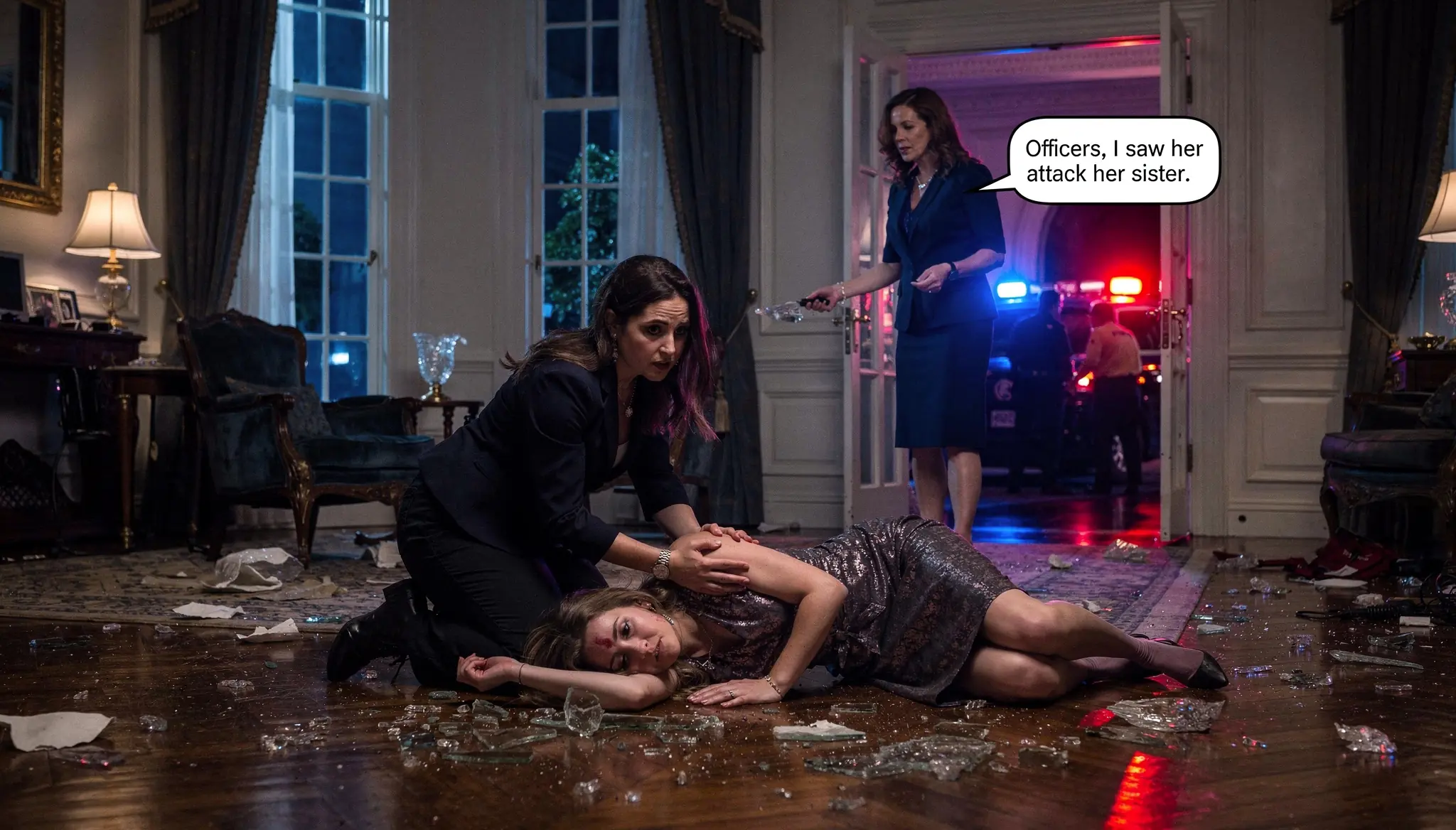
She would never remember the argument that ended her parents’ marriage, but the consequences followed her long before she understood what separation meant. Her father, Richard Bennett, insisted on keeping his firstborn daughter, three-year-old Mirabelle. Isabella’s mother, Anna, was forced to leave with the infant in her arms and little else.
For years, Richard existed in Isabella’s life as little more than a name. Anna never spoke of him with hatred, but there was always a careful distance in her voice, as if even his name could open a wound she had spent years trying to close. When Isabella asked about her sister, however, Anna’s expression softened.
“Mirabelle loved to hold you,” she would say. “Even when you cried, she never wanted to give you back.”
Those stories made Mirabelle feel real. Isabella imagined a girl with her mother’s eyes and her father’s dark hair, waiting somewhere beyond the fields that surrounded their small farm. She pictured Mirabelle reading books, climbing trees, and wondering about the baby sister who had disappeared from her life.
Anna raised Isabella in a modest farmhouse where mornings began with the sound of goats and evenings ended beneath a sky bright with stars. They did not have much money, but Isabella never doubted that she was loved. Anna taught her how to collect eggs without frightening the hens, how to mend a torn sleeve, and how to tell when summer rain was coming by the smell of the wind.
On Isabella’s seventh birthday, that quiet life ended.
She was playing near the goat enclosure, laughing as a young kid tried to chew the ribbon on her dress, when a black sedan rolled up the dirt road. The car looked absurdly polished beside the barn and weathered fence. A tall man stepped out wearing a dark suit that did not belong on a farm.
Anna came out of the house so quickly that the screen door slammed behind her.
Richard Bennett looked at Isabella as if he were inspecting something he had once misplaced.
“I’ve come for my daughter,” he said.
Anna went pale. “You have no right to appear after seven years and take her.”
“She is my daughter too.”
“You did not write. You did not visit. You did not send one birthday card.”
Richard’s face remained cold. “The custody order was never changed. I allowed her to stay with you while she was young. That arrangement is over.”
Isabella understood only fragments. She knew her mother was afraid. She knew the stranger had called her his daughter. She knew that adults sometimes used calm voices when they were angriest.
Anna argued until her voice broke, but Richard had arrived with documents and the confidence of a man accustomed to being obeyed. A local officer came later and confirmed that Anna could not stop him without returning to court. There was no time for that. Richard intended to leave immediately.
Anna packed a small suitcase with several dresses, two sweaters, Isabella’s favorite wooden horse, and a worn book of fairy tales. Her hands shook so badly that she folded the same blouse three times.
When it was time to go, she knelt in front of Isabella and held both of her hands.
“I will always watch over you,” Anna whispered. “No matter where you are, no matter what anyone says, remember that your mother loves you.”
“Why can’t you come?” Isabella asked.
Anna pulled her into a desperate embrace. “Because sometimes grown people build walls before children are old enough to understand them.”
Richard waited beside the car without speaking.
As the sedan carried Isabella away, she pressed her face to the window and watched her mother become smaller at the end of the road. Anna stood alone beneath the gray sky, one hand lifted until the farmhouse disappeared behind the trees.
The Bennett house was larger than any place Isabella had ever seen, but it felt colder than the farm. The floors shone. The curtains were heavy. Every sound seemed to travel too far.
A girl came running down the hallway before Richard had even removed his coat.
“Isabella?”
Mirabelle was ten years old, tall for her age, with soft brown hair and the same gray-green eyes Isabella saw in the mirror. For one breath, the sisters stared at each other. Then Mirabelle wrapped both arms around Isabella and held her so tightly that the wooden horse nearly fell from her hand.
“You’re really here,” Mirabelle said, laughing and crying at once. “I thought I would never see you.”
Isabella began to cry too. She did not know this girl, yet the embrace felt familiar in a way nothing else in the house did.
“Does Mama remember me?” Mirabelle asked when they were alone.
“Every day,” Isabella said. “She says you used to hold me when I cried.”
Mirabelle’s lips trembled. “I did. You were so small.”
From that moment, Mirabelle became Isabella’s shelter.
Richard had remarried a woman named Franca. In front of him, Franca spoke gently, arranged flowers in the dining room, and asked the girls whether they had finished their homework. When Richard left for work, her face changed. The softness vanished first from her eyes, then from her voice.
“You will not embarrass me,” she told Isabella on her first morning in the house. “You will not touch anything that does not belong to you. You will speak when spoken to, and you will remember that this family had rules before you arrived.”
Mirabelle stood quietly beside Isabella. Her fingers brushed her sister’s hand in warning.
Later, in their room, Mirabelle explained everything.
“Walk softly near her bedroom. Don’t ask Father for anything when she is in the room. If she gives you food, eat it even if it is cold. And don’t cry where she can see.”
“Why?”
“Because she likes knowing she made you cry.”
Isabella stared at her sister, horrified by how calmly Mirabelle said it.
At school, the sisters found no relief. Several girls had heard that Isabella had been “sent away” by her mother, and they repeated the story with cruel invention. They called her unwanted. They said Mirabelle’s father had rescued her from a dirty farm. Mirabelle tried to walk away, but Isabella had inherited Anna’s refusal to remain silent.
When one girl shoved Mirabelle and laughed at Isabella’s worn shoes, Isabella pushed back. The fight grew quickly. A second girl grabbed Isabella’s hair. Before Isabella could strike her, Mirabelle stepped between them.
“Leave her alone,” Mirabelle said.
The girls turned on her instead.
By the time a teacher arrived, Mirabelle’s lip was split and bruises were already rising along her arms. Isabella had a scratch across her cheek and blood on one sleeve that was not her own.
Franca listened to their explanation when they returned home. She examined Mirabelle’s face, then smiled without warmth.
“Your father will be very disappointed.”
“We didn’t start it,” Isabella said.
Franca turned toward her. “I did not ask you.”
When Richard came home, Franca told him that Mirabelle and Isabella had attacked other students. She described Mirabelle as the instigator and Isabella as a violent child corrupted by her mother’s lack of discipline.
Mirabelle tried to speak.
“Father, that isn’t what happened.”
Richard did not look at the bruises on her arms. “Franca has no reason to lie.”
“But she wasn’t there.”
“That is enough.”
He punished Mirabelle by taking away her books and confining her to her room for two weeks. Isabella protested until Richard ordered her away too.
That night, the sisters lay beneath the same blanket while rain tapped against the windows.
“No one listens,” Isabella whispered.
“I listen,” Mirabelle said.
Mirabelle took her hand. “Then we believe each other.”
They promised that no matter what happened, no matter who turned against them, they would always protect one another.
For several years, that promise was the strongest thing in Isabella’s life.
Franca gave birth to a son named Samuel, and Richard’s attention shifted completely. He carried the baby through the house with pride, calling him his heir and his only son. As Samuel grew, Richard attended every school event, praised every ordinary achievement, and forgave every act of cruelty as childish mischief.
Mirabelle and Isabella became nearly invisible.
Samuel learned early that rules did not apply to him. At first, his behavior appeared merely destructive. He broke Mirabelle’s music box and blamed Isabella. He cut pages from schoolbooks. He trapped insects in jars and watched them struggle.
Then the neighborhood animals began disappearing.
Isabella found a squirrel behind the tool shed one afternoon. It had been killed, and Samuel crouched beside it with a thin stick in his hand. He was eight years old. There was no fear in his face, no shock, no regret.
“What did you do?” Isabella asked.
Samuel smiled. “It stopped moving.”
She ran for Mirabelle.
Franca arrived before Richard and ordered the dead animal removed. When Isabella tried to explain, Franca slapped her hard enough to turn her head.
“You will not accuse my son of something so disgusting.”
A neighbor’s cat vanished several weeks later. It was found dead near the edge of the Bennett property. Richard dismissed the incident as coincidence. Franca said Isabella was trying to make Samuel look dangerous because she resented him.
Mirabelle never left Isabella alone with him after that.
“Stay near me,” she would say whenever Samuel entered a room.
Mirabelle remained gentle despite everything. She still read novels, sketched flowers in the margins of her notebooks, and spoke about becoming a teacher. Isabella hardened. She learned to hide money, listen outside doors, and notice which floorboards creaked. She stopped expecting fairness from adults.
The gun appeared when Isabella was eighteen.
Richard kept several firearms locked in a cabinet. Samuel had watched him open it enough times to learn the code. On a warm afternoon, Isabella entered the upstairs sitting room and found Samuel holding one of the pistols.
He was fifteen by then, broad-shouldered and taller than she was. His eyes had the same empty amusement she remembered from the squirrel behind the shed.
“Put that down,” Isabella said.
“You always act like you’re better than me.”
“I said put it down.”
Samuel raised the gun.
For one frozen second, Isabella could not move. Then Mirabelle came through the doorway.
She saw the weapon. She saw where it was pointed. She did not hesitate.
Mirabelle stepped in front of Isabella just as the gun fired.
The sound seemed to tear the room apart.
Mirabelle collapsed against her sister. Isabella caught her and sank to the floor, pressing trembling hands against the wound while Samuel stood several feet away, still holding the pistol.
“Call someone!” Isabella screamed.
Samuel did not move.
Mirabelle’s breath came shallow and broken. Her eyes found Isabella’s.
“Run,” she whispered.
“No. I’m not leaving you.”
“Run, Bella.”
Those were her final words.
Franca arrived moments later. She looked at Samuel, then at Isabella kneeling beside Mirabelle with blood on her hands. Isabella expected her to scream for an ambulance. Instead, Franca crossed the room and took the gun from her son.
“What have you done?” Isabella cried.
Franca wiped the handle with the edge of her blouse.
Then she placed the weapon near Isabella.
By the time Richard and the police entered the room, Franca had already built the first version of the lie.
She said Isabella had been jealous of Mirabelle. She said the sisters had argued. She said Samuel had heard the gunshot and arrived afterward. Samuel repeated every detail his mother gave him.
Richard looked at Isabella with horror, not doubt.
“I didn’t do it,” she said. “Samuel shot her. Mirabelle stepped in front of me.”
Franca began to cry. “She is trying to blame a child.”
Samuel lowered his head and played the frightened younger brother.
No one asked why Franca had wiped the gun. No one examined the history of Samuel’s violence. No one searched for the small camera Richard had installed months earlier near the hallway after a burglary scare, because Franca told the officers it had never worked.
Isabella was arrested before Mirabelle’s body had been removed from the house.
At eighteen, she entered the criminal justice system with no money, no independent family, and no adult willing to defend her. The court appointed an overworked public defender who met her only briefly before the first hearing.
“You were in the house,” he said. “Your prints may be on the weapon.”
“Because my father taught all of us to shoot years ago. I didn’t fire it.”
“Your stepmother and brother say otherwise.”
“They are lying.”
He rubbed his forehead and pushed a stack of papers toward her. “The prosecution is offering a reduced sentence if you accept responsibility.”
“I won’t confess to killing my sister.”
“Then you need to understand the risk.”
He explained little. He asked few questions about Samuel. He did not send an investigator to the neighborhood to ask about the dead animals. He did not locate Anna. He did not challenge the inconsistencies in Franca’s statement.
At trial, the prosecutor transformed Isabella’s grief into evidence against her. When she cried, he called it guilt. When she became angry, he called it violence. When she stared at the floor because she could not bear to look at the photograph of Mirabelle, he told the jury she lacked remorse.
“Were you present in the house?” he asked.
“Yes.”
“Did you have access to the firearm?”
“I knew where the cabinet was.”
“Did you touch your sister after she was shot?”
“I tried to save her.”
“So your hands were covered in her blood.”
“Yes, because she died in my arms.”
The prosecutor paused, allowing the words to settle over the courtroom.
Isabella looked toward the gallery. Richard sat beside Franca and Samuel. Her father did not meet her eyes.
Anna was not there. Isabella did not know whether anyone had told her about the trial.
The jury found Isabella guilty.
The sentence was shorter than it might have been because of her age and the defense’s argument that the shooting had occurred during an emotional confrontation. To Isabella, the number scarcely mattered. Any day in prison for Mirabelle’s murder was an unbearable theft.
She spent five years behind bars.
Prison taught her to count time without believing in it. She counted meals, head checks, showers, and letters that never arrived. She learned which women wanted to talk and which wanted to test weakness. She learned to sleep lightly and keep her back against a wall.
At night, Mirabelle returned to her.
Sometimes Isabella dreamed they were children again beneath the blanket, promising to believe each other. Sometimes she dreamed of the sitting room and heard the gunshot before she saw Samuel raise the weapon. Always, Mirabelle’s final word followed her into waking darkness.
Run.
But there was nowhere to run inside a locked cell.
Isabella survived by drawing. She sketched on scraps of paper, envelopes, and the blank backs of prison forms. She drew Mirabelle’s hands, the goat enclosure at Anna’s farm, the outline of a woman standing at the end of a dirt road. She rarely drew faces. Faces carried too much truth.
When her release date finally came, a guard handed her a plastic bag containing several worn clothes, three pencils, a small sketchbook, and one photograph she had kept hidden for years.
The prison gate opened.
Isabella stepped outside at twenty-three years old.
No one was waiting.
The air beyond the gate felt too open.
For five years, every movement had been measured by walls, schedules, and permission. Now there was no guard telling Isabella where to stand, no bell announcing the next hour, no one waiting to explain where she should go. Freedom arrived without direction.
She walked because standing still made her feel visible. The road from the prison led toward a bus stop, but the small release payment in her pocket would not carry her far. She rode into the city and got off near a district she did not know, surrounded by glass buildings and traffic that moved too quickly.
By late afternoon, hunger made her dizzy. She had eaten only a piece of toast before leaving. She found a public park and sat on a bench beneath a bare-limbed tree, clutching the plastic bag against her chest.
People passed without looking at her. That invisibility was almost comforting.
As evening settled, a white van pulled to the curb. Volunteers unfolded tables and began handing out sandwiches, fruit, bottled water, and blankets. Isabella watched from a distance until a woman in a blue jacket waved her over.
“You don’t need to explain anything,” the woman said. “Just come eat.”
Isabella accepted a sandwich and sat at the end of a long bench. She ate slowly, saving half by instinct. Nearby, a man in an expensive dark coat argued with someone on the phone.
He looked out of place among the folding tables. His shoes were polished, his watch probably cost more than the van, and his voice carried the clipped authority of someone accustomed to being answered immediately. Yet his tie was loose, his movements unsteady, and his words had begun to blur.
“Daniel, stop sending cars,” he said into the phone. “I said I’m not going home.”
He ended the call and nearly dropped the device.
One of the volunteers recognized him. Isabella heard the whispered name Ethan Hale. Even she knew it. Hale Dominion appeared on buildings, transportation networks, and news reports about billion-dollar acquisitions. Ethan was the young executive journalists described as brilliant, severe, and impossible to surprise.
At that moment, he seemed incapable of finding the curb.
He sat heavily on a nearby bench and closed his eyes. A group of men noticed his wallet when it slipped partly from his coat. Isabella saw the look they exchanged.
She stood and moved beside him.
“He’s with me,” she said.
The men laughed. “That so?”
“Yes.”
Perhaps it was the flatness in her voice. Perhaps prison had taught her how to hold eye contact without blinking. The men moved on.
Ethan opened one eye. “Do I know you?”
“No.”
“Then why are you guarding me?”
“Because you’re too drunk to guard yourself.”
He gave a short, humorless laugh. “Honest.”
“Someone should be.”
Daniel, Ethan’s assistant, called again. This time Isabella answered. She explained where they were but refused to leave Ethan alone until the car arrived. Daniel sounded both alarmed and relieved.
The delay stretched longer than expected because traffic had been blocked by an accident. Ethan’s head tipped back against the bench. His breathing changed. For several minutes, he slept.
When he woke, confusion crossed his face.
“How long?” he asked.
“Maybe twenty minutes.”
“I slept?”
“You were unconscious.”
“No.” He looked at her with sudden intensity. “I know the difference.”
Isabella shifted away. “Your car is coming.”
He studied her face as though trying to memorize it. “What’s your name?”
She almost told him. Then the prison instinct returned. Names could be used. Names could be searched.
“You don’t need it.”
When the black car finally arrived, Daniel hurried out and supported Ethan. Isabella stepped back into the crowd before either man could stop her.
By morning, Ethan remembered little of the park except the strange calm that had settled over him while the unknown woman sat nearby. For years, sleep had been a battle. He could close his eyes, but the moment his body relaxed, memories returned.
His mother had struggled with addiction throughout his childhood. On the worst nights, she had called him into her room because her hands shook too violently to prepare the substances she used. Ethan had been eight the first time she pressed equipment into his fingers and told him to help. He had not understood what he was doing, only that refusing made her scream.
After she died, people told him it was not his fault. The words never reached the part of him that still remembered holding the needle.
Doctors offered sedatives. Ethan refused them. He associated sleep medicine with locked doors, slurred voices, and the terrible stillness of his mother’s body on the morning she did not wake.
He built a business instead. Work demanded wakefulness, and wakefulness felt safe.
Yet on a public bench beside a stranger, he had slept without dreaming.
Daniel searched shelters and outreach centers, but Isabella had disappeared.
After leaving the park, she spent two nights in a women’s shelter before finding a place at Harbor Light Community Center. The center offered transitional rooms in exchange for work when possible. Isabella cleaned kitchens, organized donated clothes, and helped prepare food deliveries.
Her room was barely larger than her prison cell, but the door locked from the inside. That difference mattered.
She placed her three pencils in a cup beside the bed and hid the photograph beneath the thin mattress. It showed her and Mirabelle as children. Mirabelle stood behind her with both hands resting on Isabella’s shoulders. Franca had taken the photograph during one of the rare days she pretended the household was happy.
Isabella could not throw it away. She also could not bear to look at it for long.
The work at Harbor Light gave structure to her days. She learned the names of regular visitors, helped elderly residents carry groceries, and quietly redirected children away from arguments. The staff knew she had been incarcerated but did not demand details.
Sarah Quinn worked beside her in the kitchen several mornings a week. She was quick-witted, restless, and able to turn almost any mistake into a joke. Sarah had spent years moving between relatives, shelters, and unstable jobs. She understood what it meant to live as if every room were temporary.
“You fold towels like they offended you,” Sarah observed.
“They never stay folded.”
“Neither do people. We keep trying.”
Isabella almost smiled.
Harbor Light was partially funded by the Hale Foundation. Several weeks after Isabella began working there, the center prepared for a regional conference on homelessness, reentry programs, and mental health services. Isabella did not want to attend, but the director insisted that staff members helping with the event should be present.
She wore a donated navy dress and stood near the back of the conference hall, holding a clipboard.
Ethan Hale entered with Daniel and two foundation officers.
He recognized her immediately.
For a moment, Isabella considered leaving through the service door. Ethan crossed the room before she could move.
“It was you,” he said.
She glanced around. “I don’t know what you mean.”
“The park.”
Daniel looked between them. “This is the woman?”
Isabella tightened her grip on the clipboard. “You found your way home. That was the goal.”
Ethan’s expression shifted, not quite amusement and not quite relief. “I looked for you.”
“You shouldn’t have.”
“You gave no name.”
“I had reasons.”
The conference began before he could press further. Throughout the afternoon, Ethan watched Isabella move between tables, helping guests, answering questions, and disappearing whenever attention turned toward her. She seemed both fiercely capable and prepared to flee at the smallest change in tone.
Afterward, he asked the center director about her. The director refused to share private details but confirmed that Isabella needed stable housing.
Ethan made an offer that sounded unreasonable even to him.
He invited Isabella to live at his estate under a formal private agreement. She would have her own room and no financial obligation. In return, she would be present in the house during the evenings while he attempted to establish a normal sleep routine.
Isabella stared at him across a small office at Harbor Light.
“You want to hire me to exist in your house?”
“When you were nearby, I slept.”
“You were drunk.”
“I have been drunk before. It did not help.”
“That doesn’t make this less strange.”
“No.” Ethan folded his hands. “But it makes it honest.”
She distrusted every part of the proposal. A rich man wanted control over where she lived. A contract would define her presence. The arrangement resembled too many systems in which one person held all the power.
“I continue working here,” she said.
Ethan did not hesitate. “Agreed.”
“I keep my own money.”
“Of course.”
“My room locks. You do not enter without permission.”
“Agreed.”
“If I leave, you don’t send anyone after me.”
His pause lasted only a second, but she noticed it.
“Agreed,” he said.
Naomi Grant, a lawyer who sometimes volunteered at Harbor Light, reviewed the contract for Isabella. She removed several clauses that gave Ethan’s household staff too much authority and added a provision guaranteeing three months of housing assistance if the agreement ended unexpectedly.
“You are allowed to protect yourself,” Naomi told her. “A contract is not gratitude. Read every page.”
Isabella did.
She moved into Ethan’s estate with one plastic bag, a secondhand suitcase from Sarah, three pencils, her sketchbook, and the hidden photograph.
The house stood behind iron gates and rows of old trees. It contained more bedrooms than Harbor Light had transitional rooms. Isabella’s suite included a sitting area, private bathroom, and windows overlooking a garden.
She stood in the center of the carpet, unable to put down her suitcase.
Ethan watched from the doorway. “Is something wrong?”
“It’s too much.”
“It’s a room.”
“No. A room is four walls and a door. This is a place someone can take away.”
He did not know how to answer.
The first weeks were uneasy. Ethan remained formal at breakfast and distant during the day. At night, he expected Isabella to sit in the library or adjoining lounge while he tried to sleep in his room. Sometimes he slept for an hour. Sometimes not at all.
When exhausted, he became controlling. He asked why she had returned late from Harbor Light. He wanted to know who had driven her. Once, when she left a note instead of speaking to him directly, he ordered a security guard to confirm her location.
Isabella discovered it and confronted him.
“You agreed not to send people after me.”
“I ensured you were safe.”
“You checked whether I obeyed you.”
“That is not what happened.”
“It is exactly what happened.”
She packed her suitcase that night.
Ethan found her near the front door. “Where will you go?”
“That is not your decision.”
He looked at the small suitcase and understood, perhaps for the first time, that she had been ready to lose everything since the day she arrived.
“I was wrong,” he said.
Isabella waited.
“I confused knowing where you were with protecting you. I violated the agreement.”
The apology did not erase what he had done, but it stopped her long enough to listen.
Ethan dismissed the guard from any duty involving her and instructed the household that Isabella’s schedule was private unless she chose to share it. He did not ask her to unpack. He simply moved away from the door.
She stayed.
Trust grew through smaller moments after that. Ethan learned she disliked people standing behind her. He stopped approaching silently. He noticed that she saved food in napkins and asked the kitchen to keep snacks available in her room without commenting on why.
Isabella discovered that Ethan knew the staff members’ families and remembered their children’s names. He ate at inexpensive diners without complaint and tipped quietly. Daniel spoke to him with the irritated loyalty of a brother rather than the fear of an employee.
One evening, Isabella misplaced a drawing of Mirabelle.
She searched every drawer, emptied her bag, and checked the hallway three times. By midnight, panic had swallowed reason. The sketch was not valuable, but it was one of the few images in which she had managed to draw Mirabelle’s face.
Ethan found her sitting on the floor beside the bed, crying so hard she could barely breathe.
He did not touch her. He sat several feet away.
“Tell me what is missing.”
“A drawing.”
“Where did you last see it?”
“In the library.”
They searched together. Ethan woke Daniel, checked with the cleaning staff, and reviewed the household’s paper recycling before Isabella finally found the sketch inside a book she had been reading.
She pressed it against her chest.
“I’m sorry,” she whispered. “I made everyone search for nothing.”
“It was not nothing.”
“It’s paper.”
“It mattered to you.”
No adult had ever treated the things she loved as sufficient reason for care.
Several days later, boxes appeared in her room. They contained clothes in her size, art paper, charcoal pencils, and a proper case for her sketches. Isabella immediately went to Ethan’s office.
“I can’t accept this.”
“You need clothes.”
“I have clothes.”
“You have four shirts.”
“That is enough.”
Ethan leaned back. “Then consider them part of the housing agreement.”
“They are not in the contract.”
For once, he smiled. “You really did read every page.”
She kept only what she needed and asked that the rest be donated to Harbor Light. Ethan agreed.
He began taking her to ordinary restaurants instead of private clubs. At a small diner, the owner greeted him by name and brought coffee before he ordered. Isabella watched him loosen in the familiar space.
“You come here often,” she said.
“My mother brought me when she was sober.”
The answer opened a door neither of them closed.
Ethan told her about the nights his mother called him into her bedroom. He described the fear, the equipment placed in his hands, and the shame that followed him long after her death. He said he had built Hale Dominion because numbers behaved predictably and companies could be controlled.
“People call me disciplined,” he said. “Mostly, I am afraid to stop moving.”
“You were a child,” Isabella replied.
“I helped her.”
“You were a child being forced by an adult.”
“I could have refused.”
“At eight?”
He looked away.
Isabella understood that guilt could become a prison without bars. “What happened to your mother was not a choice you made for her.”
Ethan’s jaw tightened. “You say that as though you believe it.”
“I have had five years to learn what happens when people assign guilt to the easiest person.”
He did not ask for details that night. He waited until she chose to speak.
Isabella told him about Mirabelle in fragments. She described the separation, Franca’s cruelty, Samuel’s violence, and the gunshot. Her voice remained steady until she repeated Mirabelle’s final word.
Run.
Ethan did not tell her to forget the past. He did not promise that money could fix it. He said only, “I believe you.”
The words struck harder than comfort should have.
Isabella turned away and covered her face.
For years, she had imagined hearing those words in a courtroom, from her father, from a juror, from anyone who might have saved her. Now they came in a quiet diner after midnight from a man who had known her only weeks.
She cried until the coffee went cold.
Ethan stayed.
The next morning, neither of them mentioned the conversation directly.
Ethan went to work before sunrise. Isabella returned to Harbor Light and spent the day packing boxes for a prison outreach visit scheduled later that week. The irony did not register at first. She read labels, counted toiletries, and stacked food containers until Sarah asked whether she had heard the destination.
“North River Correctional,” Sarah said. “You okay?”
The name made Isabella’s hands go still.
North River was where she had spent the first eighteen months of her sentence before being transferred to a smaller facility. She remembered the intake corridor, the smell of disinfectant, and the metal bench where she had waited in shackles while officers discussed lunch.
“I don’t have to go,” she said.
“No. You don’t.”
Isabella looked at the boxes. Some contained soap, paper, and envelopes. Others held food for families waiting through long visitation lines. She thought of the women who had shared their pencils with her and the one counselor who had slipped extra drawing paper beneath her door.
“I’m going,” she decided.
Sarah did not praise her courage. She simply said, “Then I’m staying beside you.”
The prison gates triggered memories before Isabella passed through them. Her breath shortened as security doors closed behind the volunteers. An officer asked her to remove her belt, and for one terrible second she forgot that she was free to leave.
Sarah touched her elbow. “Look at me.”
Isabella focused on her friend’s face.
“You’re here with Harbor Light,” Sarah said. “You have a visitor badge. We walk out together.”
Inside, Isabella helped distribute meal packs to women leaving a family-visitation room. Several avoided eye contact. One young woman held a child’s crayon drawing with both hands as though it were fragile glass.
Isabella recognized the way she folded it before placing it in her pocket.
When the outreach team reached the education wing, a prison instructor displayed GED workbooks and explained how few incarcerated women had completed high school. Isabella stood near the doorway, staring at a practice test.
She had left school before graduating. Her trial, conviction, and sentence had swallowed the years when other students received diplomas.
On the drive home, she asked Sarah whether Harbor Light knew of free GED classes.
Sarah grinned. “The library has them on Tuesdays and Thursdays. I checked two months ago.”
“For yourself?”
“For both of us, apparently.”
The following Tuesday, Isabella entered the public library with a notebook and the uncomfortable feeling that everyone could see how far behind she was. The instructor gave her an assessment test. Mathematics returned slowly. Reading came more easily. Science terms felt like a foreign language.
She stayed until the library closed.
Education gave her a future measured in more than survival. She began waking early to study before work. She covered the desk in her room with flash cards and drew diagrams in the margins of her notes. When anxiety made words blur, she sketched until her breathing steadied.
Ethan found her asleep over a workbook one night. He turned off the desk lamp but did not move her papers. The next morning, a secondhand laptop appeared beside them.
Isabella carried it to his office.
“This is too expensive.”
“It is refurbished.”
“It is still expensive.”
“You need access to practice exams.”
“I can use the library.”
“The library closes.”
She narrowed her eyes. “Are you going to call everything part of the housing agreement?”
“No.” He considered. “This is part of my selfish desire to see you pass.”
Against her will, she laughed.
It was the first time Ethan heard the sound without tension beneath it.
Their arrangement began changing in ways neither had defined. Isabella still sat in the library some evenings while Ethan attempted to sleep, but he no longer treated her presence like medicine. They talked first. Sometimes they played chess, although Ethan hated losing and Isabella learned to exploit his impatience.
On nights when he woke from nightmares, she did not rush into his room. She waited outside the open doorway and asked whether he wanted company. The choice mattered to him as much as the company.
He started sleeping four hours at a time.
Isabella’s own nightmares did not vanish. She sometimes woke with Mirabelle’s name in her mouth, certain she had heard a gunshot. Ethan never entered without permission. He would sit in the hallway, back against the wall, until she opened the door.
“You don’t have to stay there,” she told him once.
“I know.”
“Then why do you?”
“Because you should not have to ask twice for someone to remain.”
The tenderness frightened her more than his earlier control had. Control was familiar. Tenderness created something that could be lost.
Ethan’s public life remained distant from the quiet man she encountered at home. In business reports, he was described as ruthless. At Harbor Light, he listened to staff members without interrupting and remembered which programs needed funding. Daniel teased him about his terrible handwriting. Kitchen workers at the estate saved him the burned edges of lasagna because he preferred them.
Isabella began seeing the divisions inside him: the executive who expected obedience, the frightened boy who distrusted sleep, and the man trying to learn how care differed from possession.
He saw her divisions too. She could confront an angry stranger without hesitation, then freeze when someone raised a hand too quickly. She could advocate fiercely for a shelter resident, yet apologize for taking a second helping at dinner. She wanted independence but had no idea how to imagine a life beyond the next safe week.
One Saturday, Ethan asked her to accompany him to a shopping district. She assumed he intended to buy more clothes and refused.
“We are not shopping for you,” he said.
“Then why do you need me?”
“Daniel says I choose gifts like an accountant.”
Daniel, standing behind him, nodded. “He once gave a twelve-year-old corporate bonds.”
“They appreciated in value.”
“She wanted roller skates.”
Isabella helped Ethan choose birthday gifts for several employees’ children. He listened when she rejected expensive items that looked impressive but would be difficult to use. Afterward, they ate at a food stall and watched people cross the plaza.
Ethan noticed a charcoal portrait displayed in the window of an art store.
“You could do that,” he said.
“I used to draw faces.”
“You still do.”
“Not often.”
“Why?”
She watched a family pass, a little girl between her parents. “Faces change after people are gone. You start wondering whether you remembered them correctly.”
Ethan took no photograph of her sadness. He did not turn it into a lesson. He simply walked beside her into the art store and waited while she touched paper she would not buy.
He purchased nothing until they were outside. Then he handed her a small package containing one charcoal pencil.
“One,” he said before she could object. “Not a wardrobe. Not a debt.”
She accepted it.
That evening, Isabella drew Ethan asleep in the library chair. She captured the tension that remained between his brows even at rest and the exhaustion around his eyes. When he discovered the sketch, he stared at it for a long time.
“You made me look human,” he said.
“You are human.”
“Public opinion is divided.”
She smiled.
He reached toward her face, then stopped. “May I?”
The question unsettled her because so few people had ever asked permission before touching her.
She nodded.
Ethan brushed a strand of hair away from her cheek. His fingers lingered only a moment. Isabella’s heart began to race, but she did not step back.
Their first kiss happened several weeks later in the estate kitchen after midnight. Ethan had returned from a difficult meeting. Isabella was studying fractions at the counter while eating toast.
He sat across from her and complained that his board believed patience meant waiting seven minutes before interrupting someone.
“You interrupted me three times during that sentence,” she said.
“I was adding context.”
“You were proving their point.”
He laughed, and the sound softened the room.
Isabella looked at him too long. Ethan’s expression changed.
“May I kiss you?” he asked.
She had never been kissed. Prison had taken the years when other people learned romance through awkward dates and ordinary mistakes. Every warning she had ever learned rose at once.
Yet Ethan waited.
“Yes,” she whispered.
The kiss was gentle and brief. He did not trap her against the counter or assume permission extended beyond what she had given. When he moved away, Isabella pressed her fingers to her lips.
“Was that all right?” he asked.
“I don’t know.”
Concern replaced the warmth in his face. “Do you want me to leave?”
“No.” She let out a nervous laugh. “I mean I don’t know what it is supposed to feel like.”
Ethan’s eyes widened slightly. “That was your first kiss.”
She became defensive. “Five years in prison did not provide many opportunities.”
“I am not judging you.”
“Everyone says that before they do.”
He stood but kept distance between them. “Then I will say only this: nothing has to happen again unless you ask.”
Isabella lay awake afterward, not because she regretted the kiss but because she did not. Happiness felt dangerously close to trust.
The next morning, she reviewed the living agreement. The contract suddenly seemed less like protection and more like a threat. Ethan owned the house, paid the staff, and controlled the world around her. If the relationship ended, he could return to his life while she returned to uncertainty.
She raised the concern directly.
“What happens when you can sleep without me?”
Ethan looked up from his desk. “You think that is why I kissed you.”
“I think you found me because I helped you sleep.”
“That is how I found you.”
“It may also be why you believe you care.”
He did not offer an immediate denial. Isabella respected that more than reassurance.
“I cannot prove what I will feel years from now,” he said. “But I can change the structure that gives me power over your housing.”
He asked Naomi to revise the agreement. The new version provided Isabella with an independent apartment owned by the foundation, available whenever she chose. Ethan could not revoke it. She was no longer required to spend evenings at the estate, and the sleep provision disappeared entirely.
“If you stay,” he told her, “I want it to be because you choose to.”
Isabella signed the revised agreement, then continued living at the estate.
Sarah became the first person Isabella told about the kiss.
They were chopping vegetables at Harbor Light when Isabella said, “Ethan kissed me.”
Sarah dropped a carrot.
“The billionaire?”
“There is only one Ethan in my life.”
“That is not an answer. Billionaires are a separate category of danger.”
“He asked first.”
Sarah examined her face. “Did you want him to?”
“Yes.”
“Then I reserve judgment until he behaves stupidly.”
“He has already done that.”
“Good. Realistic expectations.”
Their friendship deepened through routines. Sarah studied for the GED with Isabella, although she preferred cooking to textbooks. She had begun working evenings in the kitchen of a small Italian restaurant and dreamed of owning a place where anyone could afford a hot meal.
“I don’t need white tablecloths,” Sarah said. “I want a big kitchen, six tables, and soup that tastes better the next day.”
Isabella sketched a logo for her imaginary restaurant. Sarah taped it above her bed.
They became family by choice, not declaration. Sarah knew when Isabella needed silence. Isabella knew when Sarah joked because she was afraid. Neither demanded perfect healing from the other.
The past returned on an ordinary afternoon.
Isabella was carrying donated coats into a neighborhood community hall when she saw a flower shop across the street. The front window overflowed with pale roses and winter greenery. A woman stepped outside to adjust a display.
Franca.
Time collapsed.
Franca’s hair was shorter and threaded with gray, but her posture had not changed. She wore a cream coat and spoke cheerfully to a customer. Gold letters on the window read FRANCA’S GARDEN.
It was the shop she had once described at the Bennett dinner table, the life she said she would build when Richard stopped wasting money on “other people’s daughters.”
Isabella stood motionless on the sidewalk.
Franca had a business. A polished window. Customers who smiled at her. Mirabelle was dead. Isabella had lost five years in prison. Yet Franca was arranging roses as if the world had never asked her to answer for anything.
Sarah found Isabella behind the community hall, sitting on the ground with her back against the brick wall.
“She is here,” Isabella said.
“Who?”
“My stepmother.”
Sarah crouched in front of her. “The one who lied?”
“The one who put the gun beside me.”
The memory came in fragments: Franca wiping the handle, Samuel’s empty stare, Richard refusing to look at her. Isabella’s hands shook.
“I thought prison was the punishment,” she said. “But I’m still carrying it, and she got everything she wanted.”
Sarah sat beside her. “Seeing her alive and comfortable does not mean she won.”
“It looks like winning.”
“Then we do not let the story stop at what it looks like.”
Isabella wanted to cross the street and confront Franca. She also feared that one look from the woman would turn her back into the powerless girl in the Bennett house.
She left without entering the shop.
That evening, she did not return to Ethan’s estate. She stayed at Harbor Light, claiming she had work. Ethan learned from Daniel that she had canceled dinner and called once. Isabella did not answer.
He arrived at the center after closing but remained outside until Sarah asked Isabella whether she wanted to see him.
“He didn’t come in,” Sarah said. “He says this is your space.”
Isabella found Ethan beside his car, coat open in the cold.
“I saw Franca,” she said before he could speak.
He knew the name.
“Did she see you?”
“No.”
“What do you need?”
The question nearly broke her. Everyone else had always decided what she needed.
“I don’t know.”
“Then I can wait while you decide.”
They sat in the car without leaving the curb. Isabella told him about Franca’s shop and the rage of seeing a beautiful life built on the ruins of Mirabelle’s death.
“I wanted to destroy the window,” she admitted.
“That would be understandable.”
“It would also make me look exactly like the person they said I was.”
“Anger does not make their story true.”
“Sometimes I’m afraid it does.”
Ethan turned toward her. “They convicted you. They do not get to define every feeling you have afterward.”
She looked at him through tears. “Why did you really make the agreement?”
He exhaled. “Because I was afraid.”
“Of not sleeping?”
“Of losing you before I understood why finding you mattered.”
He admitted that he had searched shelters after the night in the park. When he recognized her at the conference, he had created the contract because contracts were the only way he knew to make uncertain things remain.
“That was controlling,” he said. “Even if I told myself it was protection.”
“Do you still need me to sleep?”
“Yes.” He did not soften the truth. “But that is not the same as needing you to stay. I am learning the difference.”
“And what am I to you?”
His voice became quiet. “The woman I love.”
Isabella stared at him.
“I do not expect you to answer,” he continued. “I do not expect love to erase what I did wrong. But I will not pretend this is a medical arrangement. You are my woman in the sense that I choose you, not in the sense that I own you.”
The phrase should have frightened her. Instead, the care with which he corrected himself made something inside her loosen.
“I don’t know how to be someone’s woman,” she said.
“Neither do I.”
“That is not reassuring.”
“It is honest.”
She leaned across the space between them and kissed him first.
Several weeks later, Ethan suggested leaving the city for a few days. Isabella resisted until he promised there would be no business meetings, photographers, or formal events. Sarah encouraged her to go.
“You have studied every night for two months,” Sarah said. “The multiplication tables will survive without you.”
They traveled to a mountain lodge owned by one of Ethan’s companies but closed to guests for renovation. Snow remained along the higher trails, while the valley below had begun turning green.
Isabella had never stayed anywhere simply for rest. On the first morning, she woke before dawn and began folding clothes because stillness made her anxious. Ethan found her organizing a drawer she did not need.
“You can leave it messy,” he said.
“I can’t.”
“Then organize it. But not because you think someone will inspect it.”
They walked beneath tall pines and ate lunch beside a lake. Ethan carried the bag without making a performance of it. Isabella drew the mountains while he read reports he had promised not to bring, then surrendered the documents when she raised one eyebrow.
At night, they shared one room. Ethan offered to sleep on the sofa. Isabella told him he could use the bed, but she established boundaries clearly. He accepted each one without negotiation.
Their closeness grew through conversation more than touch. Isabella told him she wanted to study art after completing the GED, although she feared being too old to begin. Ethan told her twenty-three was not old. She reminded him that he spoke like a man who had owned companies at twenty-three.
“I was miserable at twenty-three,” he said. “Do not use me as a schedule.”
He asked whether she wanted to reopen Mirabelle’s case.
The question hung between them.
“I want my name cleared,” Isabella said. “I want everyone to know she died saving me. I want Samuel to say what he did.”
“Then why haven’t you begun?”
“Because wanting justice and surviving another courtroom are not the same thing.”
Ethan nodded. “You do not have to begin until you choose.”
“I’m afraid evidence is gone.”
“Some may be.”
“I’m afraid my father will still choose Franca.”
“He may.”
“I’m afraid Samuel will hurt someone else.”
That possibility had never left her. Samuel was now an adult. If he had felt no remorse at fifteen, she could not assume time had made him safer.
Ethan did not promise an easy victory. “Naomi can review the trial record without filing anything. Only review. You decide what comes next.”
Isabella considered it, but she did not agree yet.
Her life had reached no courtroom reversal. Franca remained free. Samuel had not confessed. Richard had not faced the cost of abandoning his daughters, and Anna had not reappeared to explain why she had been absent when Isabella needed her most.
Mirabelle’s name remained attached to a conviction built on a lie.
Yet Isabella was no longer standing outside a prison gate with a plastic bag and nowhere to go.
She had a room whose door locked from the inside, an independent housing agreement, work that mattered, and a GED examination date marked on her calendar. She had Sarah’s imagined restaurant logo tucked into her sketchbook and Naomi’s number saved beneath the words LEGAL HELP, NOT EMERGENCY.
She had Ethan beside her, not as a rescuer capable of purchasing a new past, but as a flawed man learning to stay without controlling the shape of her recovery.
The second night at the lodge, a storm moved across the mountains and cut the electricity for several minutes. The sudden darkness brought Isabella upright in bed before she understood where she was. A maintenance lock clicked somewhere in the hall as the backup system engaged, and the sound became the closing door of a prison cell in her mind.
She crossed the room too quickly, struck her shoulder against a chair, and reached for the handle. It did not open on the first attempt because she was turning the lock in the wrong direction. Panic rose so sharply that she could no longer hear Ethan speaking.
He did not grab her. He stepped back, switched on the light from his phone, and placed it on the floor so she could see both his hands.
“The door opens inward,” he said. “You are not locked in.”
Isabella forced herself to look at the handle. She turned it correctly, opened the door, and stood in the hallway while cold air moved through the lodge. No guard shouted. No alarm sounded. Nothing prevented her from walking all the way outside.
Ethan remained in the room.
“You could have stopped me,” she said when her breathing steadied.
“I could have frightened you more.”
“What if I had gone out into the storm?”
“Then I would have asked whether you wanted a coat.”
She let out a broken laugh that became a sob. Ethan waited until she returned on her own. Only then, when she held out her hand, did he take it.
They sat on the floor beside the open door until the lights returned. Isabella told him about prison lockdowns, the hours when officers offered no explanation, and the terror of knowing that any emergency could become another punishment. She admitted that sometimes safety itself felt suspicious because it always seemed to depend on someone else choosing not to take it away.
Ethan listened without trying to compare her experience to his own. When she finished, he said, “Then we keep the door open tonight.”
They did.
The next day, Isabella received a call from Sarah, who had burned an entire tray of bread at the Italian restaurant and blamed the oven with such conviction that Isabella laughed before she remembered she was supposed to be sympathetic. Sarah also reported that their GED instructor had returned the latest practice tests.
“You passed every section,” Sarah said. “Not elegantly in mathematics, but passing is passing.”
“What did you get?”
“We are discussing your triumph, not my private dispute with algebra.”
“Sarah.”
“I passed reading.”
“And the others?”
“The numbers remain hostile.”
Isabella promised to help when she returned. Sarah lowered her voice and asked whether the trip felt safe. She did not ask whether it was romantic. She asked the question that mattered.
“Yes,” Isabella answered after thinking. “Not because nothing goes wrong. Because when something does, I can say stop.”
“That sounds different.”
“It is.”
After the call, Isabella took her sketchbook to the edge of the lake. For years, she had drawn Mirabelle only from memory, repeating the same expression from the photograph. This time, she tried to draw her sister moving. She sketched Mirabelle running through tall grass, hair lifted by the wind, one hand reaching behind as though asking Isabella to follow.
The picture was imperfect. The proportions were wrong, and the face still resisted her. Yet the drawing did not contain the sitting room, the gun, or the moment of death. It contained a life Mirabelle had possessed before violence reduced her to evidence in a criminal case.
Ethan approached loudly enough for Isabella to hear him.
“May I see?”
She turned the sketchbook toward him.
“Is that your sister?”
“Yes.”
“She looks free.”
“She should have been.”
Ethan sat beside her. “What did she want?”
“To teach. To have a house with yellow curtains. To see our mother again.” Isabella traced the edge of the page. “The trial made her death about me. Franca made it about protecting Samuel. No one talked about what Mirabelle wanted.”
“You can.”
“I don’t want to use her as a reason people should feel sorry for me.”
“Then tell the truth about her because she deserves to be known.”
Isabella closed the sketchbook. She was not ready to speak publicly or petition a court. But she began imagining a future in which Mirabelle’s name belonged to more than a case number. Perhaps she could create a portfolio of drawings. Perhaps she could write down the stories Anna had told about Mirabelle as a child. Remembering did not have to mean returning only to the moment of loss.
That evening, Ethan cooked dinner badly. The lodge staff had left ingredients in the kitchen, and he insisted he could follow a recipe. He confused tablespoons with teaspoons, burned the sauce, and attempted to hide the evidence by opening every window.
Isabella leaned against the counter laughing while smoke drifted toward the ceiling.
“You run a multinational company,” she said.
“Delegation is a leadership skill.”
“You cannot delegate pasta to an empty building.”
“I have learned that.”
They ate sandwiches instead. Nothing about the meal was elegant, and no part of it required Isabella to perform gratitude. Ethan did not look offended when she took the last piece of bread.
Later, he asked whether she regretted agreeing to the trip.
“No.”
“Do you regret the agreement that brought you to my house?”
Isabella considered the question carefully. “I regret that I needed it. I don’t regret what we changed it into.”
He accepted the distinction.
She also understood something about her own fear. She had believed dependence and love were the same trap because both required another person. But dependence became dangerous when choice disappeared. Love, if it was real, had to leave the door unlocked.
On the final morning in the mountains, Isabella stood on the balcony wrapped in a blanket. Mist moved through the valley, revealing and hiding the trees in slow waves.
Ethan came outside carrying two cups of coffee.
“Could you sleep?” she asked.
“For five hours.”
“Without me sitting in a chair.”
“You were in the room.”
“That still counts.”
“It counts differently now.”
He handed her a cup.
Isabella looked toward the pale line of sunrise. The future still contained a murder case, a false conviction, a dangerous brother, a stepmother who had built a life on deception, and a father who had repeatedly chosen comfort over his daughters. Love had not resolved any of those things.
But hope did not require resolution before it could begin.
“I think I want Naomi to read the file,” she said.
Ethan did not celebrate or reach for his phone. “All right.”
“Only read it.”
“Only read it.”
“And I decide when anyone investigates.”
“You decide.”
She searched his face for impatience and found none.
Below them, sunlight reached the first ridge.
Isabella thought of Mirabelle stepping between her and the gun. For years, the memory had ended with the shot. Now another detail returned: the certainty in Mirabelle’s movement, the promise they had made as children, and the love that had refused to stand aside.
Mirabelle had told her to run because she wanted Isabella to live.
Living could not mean remaining forever at the edge of the same moment.
Isabella placed her hand in Ethan’s. She was not officially innocent in the eyes of the law. Franca and Samuel had not been punished. The truth had not yet entered a new courtroom.
That battle remained ahead.
For now, Isabella stood in the mountain light with a future she had chosen to approach rather than flee. She did not know whether justice would come quickly, slowly, or at all. She knew only that Mirabelle’s story was not finished, and neither was hers.