Months later, on a soft evening at the end of summer, Lydia Everdale would sit in that same stone porch and laugh about it.
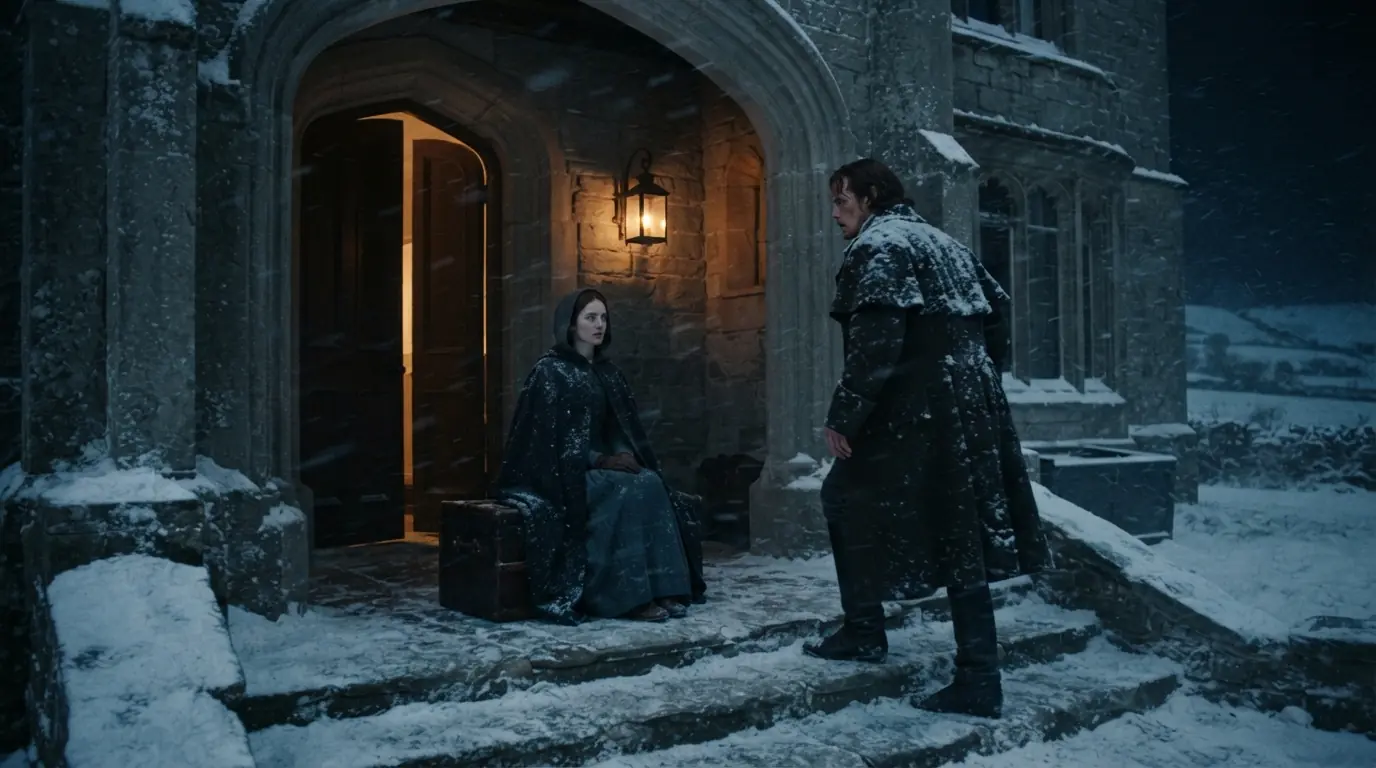 On the night she arrived, she did not laugh. She sat on her trunk in the cold with her hands folded in her lap because folded hands do not shake where anyone can see them.It had begun pleasantly enough. That was the worst of it. The carrier's cart had set her down at the gates of Larch Hall a little before dark with the snow coming slow and heavy off the fells. A man servant had carried her trunk up the long drive and into the porch. The great door had opened. Warm light had spilled out over the steps.A lady in deep black had come across the hall to meet her, slender and pale with fair hair drawn back so tightly that it seemed to pull at the corners of her eyes. She had smiled. She had held out her hand for the paper Lydia carried. And Lydia, who had been practicing her first words for days on the road, had given it to her without a word.The lady unfolded it. It was a small square of newsprint, soft from handling, cut from a York paper. She did not read it to herself. She turned toward the foot of the stairs where the housekeeper stood with two maids and a footman. Then she read it aloud in a clear and gentle voice, the way a vicar's wife reads a notice at the church door."A gentleman of the north, of good name and a sound house in the dales, wishes to marry. He asks no fortune. He asks for a woman who is not afraid of snow and who would rather be useful than admired. She need not write. She may come. Yarrowdale, at Latrigg Hall."She lowered the paper and let the silence sit. "His Grace placed this two years ago," she said to the servants, still in that gentle voice. "London laughed at it for a whole season. No lady of any family would put her name to an answer, and no lady did. And now at last we have a reply."She turned the smile on Lydia. "You came on the carrier's cart, I think, with a single trunk.""Yes," Lydia said."How brave of you." The lady folded the cutting and handed it back between two fingers as though it were damp. "His Grace is up on the fell. There are sheep buried on the top road, and he will not leave them to the shepherds. I cannot say when he will come in. Until he does, I keep this house, and I do not air a bedroom for every woman who reads a newspaper." She glanced at the footman. "Put the young person's trunk back in the porch. There is no sense carrying it up the stairs and down again. She will be going back down the dale in the morning."