The piano came to us on the Saturday after Thanksgiving, 1986, in the back of a borrowed Chevy pickup with a blue tarp bungeed over it like a body.
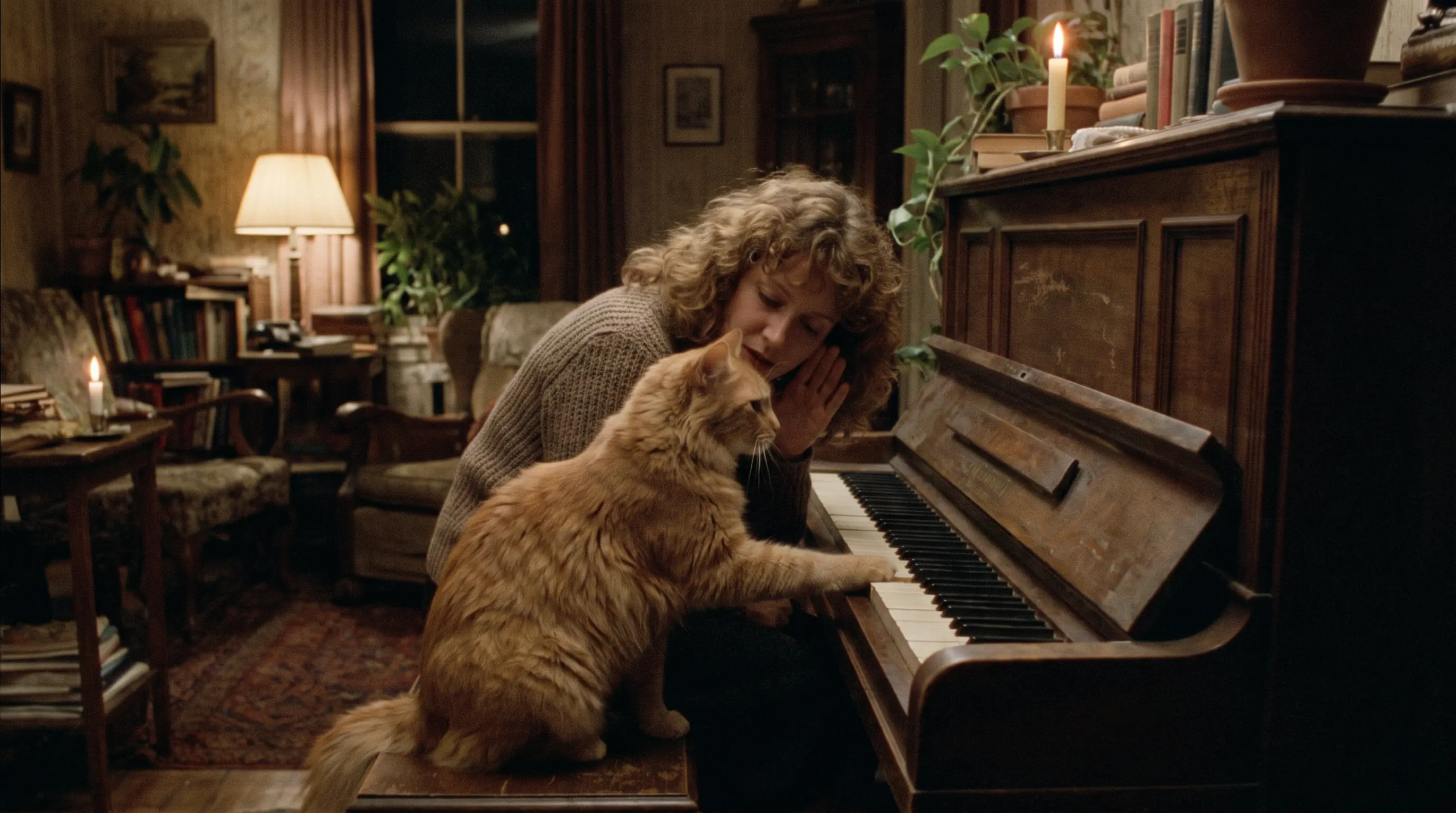
I watched from the front window with my forehead against the cold glass while my father and his friend Gus Pellegrino backed the truck up our driveway on Wolf Street. The snow had come early that year in Erie, the way it always threatened to, and the tarp had a crust of it along the top that slid off in a sheet when Gus yanked the cord loose. Underneath was my grandmother's upright, dark as a church pew, with two brass candle holders folded against its front like the arms of someone asleep.
"Libby, get the door," my father called. "And keep your brother out of the way."
My brother Sam was eight and believed that any large object could be improved by climbing it. I got the storm door propped with a brick and held Sam by the hood of his parka while the men tipped the piano down a pair of planks. It made a sound on the way down, a long hollow groan from somewhere in its belly, as if every string inside had been brushed at once by a sleeve.
"She's complaining," Gus said, grinning, his breath coming out in clouds. "Old girl doesn't like to travel."
"Nobody in that family liked to travel," my father said, and then glanced at the house, at the kitchen window where my mother was standing, and didn't say anything else.
My mother had not wanted the piano. I knew this the way you know things at twelve, from pieces. From the phone call with the lawyer in Oil City that she took in the hallway with the cord stretched all the way into the coat closet and the door pulled shut on it. From the way she'd said, at dinner, "We don't have the room, Ray," and my father had said, "We'll make the room," and she had put her fork down very carefully, the way she did when she was deciding not to have a fight in front of us. From the fact that she had driven down to Oil City alone to clear out Grandma June's house and had come back two days later with only three cardboard boxes and a cat.
The cat was Oliver.
He was orange, the color of a penny left in the sun, with white socks on his front feet and a white bib, and he was eleven years old, which my father said was seventy-something in people years. He had lived with my grandmother since he was a kitten. When my mother brought him in from the station wagon, he was crouched at the back of a cardboard carrier with holes punched in it, and he did not come out for three days. He lived under my parents' bed and ate only at night, and in the mornings the bowl of Little Friskies by the radiator would be empty and there would be no other sign of him at all.
Now the men walked the piano up the front steps in small, grunting heaves, Gus going backwards, my father pushing, and across the threshold, and the whole house seemed to shift to make room for it, the way a pond shifts when you drop a stone in.
"Where?" my father said.