I.
By half past ten on the fourteenth of October, 1819, the church of St Guthlac at Sallowby was fuller than it had been for any Easter in living memory, and not one person in it had come to pray.
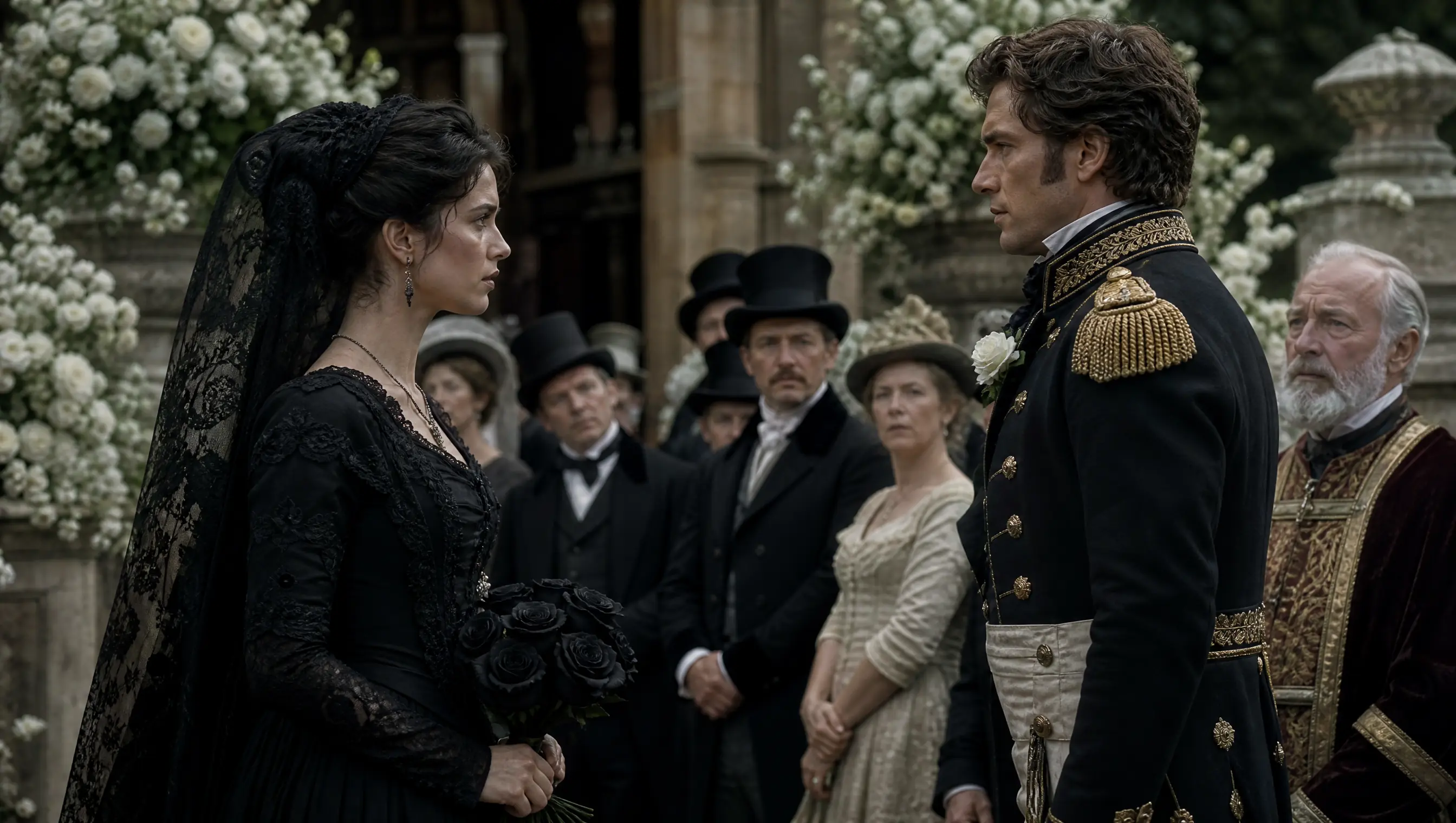
They had come to see an old man make a fool of himself. They sat in their pews in good coats and better bonnets, the gentry of three parishes and the Huntingdon attorneys' wives and a scattering of people who had driven over from Peterborough on the strength of a paragraph in the Stamford Mercury, and they whispered behind their prayer books about the Duke of Ellerholt, who was seventy-six years of age and had buried a wife and a son, and who was this morning to marry his secretary.
Captain Ivo Ferrand, late of the Royal Engineers, stood in the north aisle with his back against a pillar and his hat in his hand and wished, with a steadiness that had kept him alive through two sieges, that he had not come.
He had ridden down from Edinburgh in five days on hired horses because a letter from his cousin Cordelia had said, in her careful, frightened hand, that Uncle Aubrey was not himself, that a young woman had got the management of him, that there was to be a wedding in a month and Sir Digby said nothing could be done. Ivo had not seen his great-uncle in eleven years. The last words between them had been spoken in the library at Ellerholt Park when Ivo was twenty-three and had just come down from Woolwich with his commission in the Royal Engineers, and the old Duke had said that a Ferrand did not dig ditches for the Ordnance like a navvy, and Ivo had said that a Ferrand might at least dig something, since the family had sat on its own drains for two hundred years and let them silt. After that there had been nothing. Not a letter in the Peninsula, not a letter when the news came of Badajoz. Ivo had built roads in the Highlands for five years and taught himself not to want one.
And then last night, in that same library, under the same dim portrait of the first Duke in his full-bottomed wig, he had stood before the old man again.
Aubrey Ferrand had been sitting by the fire in a quilted gown with his feet wrapped in a shawl, and he had looked so small that for a moment Ivo had forgotten every speech he had composed on the road. Then the old man had looked up and said, "You have got broad. They feed you on oats up there, I suppose," and the speeches had come back.
He did not like to remember what he had said. He remembered the word dotage, and the word adventuress, and the old man laughing—a thin, wet laugh that ended in coughing. He remembered a young woman in grey rising from the writing table in the corner, where he had not noticed her, and crossing to the Duke with a glass of water, and looking at Ivo over the old man's head with an expression of such cool, entire contempt that he had felt it on his skin like weather.
"Miss Quarrie," the Duke had said, when he could speak. "My great-nephew. He has come to save me from you. Ivo, this is Miss Rosamund Quarrie, who keeps my accounts and my conscience and will shortly keep my name. Come to the church tomorrow and see it done. You may as well. You have come a long way to be rude."
Ivo had not slept. At five he had given up the attempt, dressed in the dark at the Ferrand Arms, and walked out along the Lode bank onto the fen, where the mist lay so thick on the black water of the drains that he could not see his own boots. He had come back at ten to find the inn yard full of carriages and the landlord gone to the church, and he had followed the crowd because there seemed nothing else to do.