The certificate was in the front pocket of Josie's backpack, folded once so it wouldn't crease across her name. She had folded it in the hallway outside Mrs. Albright's room, standing against the lockers while the other kids streamed past, and she had made the fold carefully, matching the corners the way her grandfather matched the corners of a road map. Then she had zipped the pocket and checked it twice on the bus, pressing the flat shape through the canvas with two fingers to make sure it was still there.
HONOR ROLL, it said, in blue letters with a gold seal in the corner that wasn't really gold, just shiny paper. FIRST QUARTER. JOSEPHINE A. REYES. Mrs. Albright had signed it in purple ink, because Mrs. Albright signed everything in purple ink, and underneath the principal had signed it in black, small and fast, like someone who had signed four hundred of them that afternoon. Which he probably had. Josie didn't care. Her name was on it, typed, spelled right, the A for Ann in the middle where hardly anyone ever remembered to put it.
She had been on the honor roll before. Twice last year, once the year before that. The first time, in third grade, she had run the whole way from the bus stop with the paper flapping in her hand, and she had burst into the kitchen and held it up, and her mother had been on the phone with the insurance company about the car. Her mother had looked at the paper, and nodded, and pointed at the counter, meaning put it there, and Josie had put it there, and later it had gone under the mail, and later still it had gone wherever the mail went. The second time, she had put it on her mother's pillow. In the morning it was on the dresser, face down. The third time, she had not shown anyone. She had put it in the shoebox under her bed with the birthday cards from her father that had stopped coming when she was seven.
This time was different, she told herself, because this time Grandpa Walt lived with them.
He had come in June, after his hip, after the house on Linden Street was sold and the moving truck brought half of his furniture and none of the rest. He slept in what used to be the sewing room. He did not say much. But in August, when Josie had read the whole of Treasure Island in three days, he had asked her what happened to the parrot, and when she told him, he had listened all the way to the end of the answer without looking at the television. Nobody else in the house listened to the end of her answers. She had been saving that for weeks, the feeling of it, like a smooth stone in her pocket.
So tonight she would show him. Not her mother first. Him. At dinner, when they were all sitting down, so it would be said out loud at the table, in front of everyone, and it would be a real thing that happened.
That was the plan. She had held it all the way home.
***
The kitchen smelled like hot oil when she came in. Her mother stood at the stove with her back to the door, in the maroon shirt she wore to the dental office, the sleeves rolled to the elbow, turning chicken with a pair of tongs. The radio on the windowsill was on low. Benji was at the table already, on his knees on the chair, drawing a truck with a crayon that was almost the same color as the paper.
"Hi, Mama," Josie said.
Her mother said, "Shoes," without turning around.
Josie went back and took off her shoes and lined them up on the mat beside Benji's, which were not lined up, so she lined them up too. When she came back her mother was laying the chicken out on paper towels, piece by piece, the skin crackling and golden. It was the good chicken, the kind her mother made from the recipe card in the tin, buttermilk and pepper and something red that Josie had never been told the name of. It was Benji's favorite. It was also Josie's favorite, though she had stopped saying so around the time she stopped running home from the bus.
"Can I help?" Josie said.
"You can set the table."
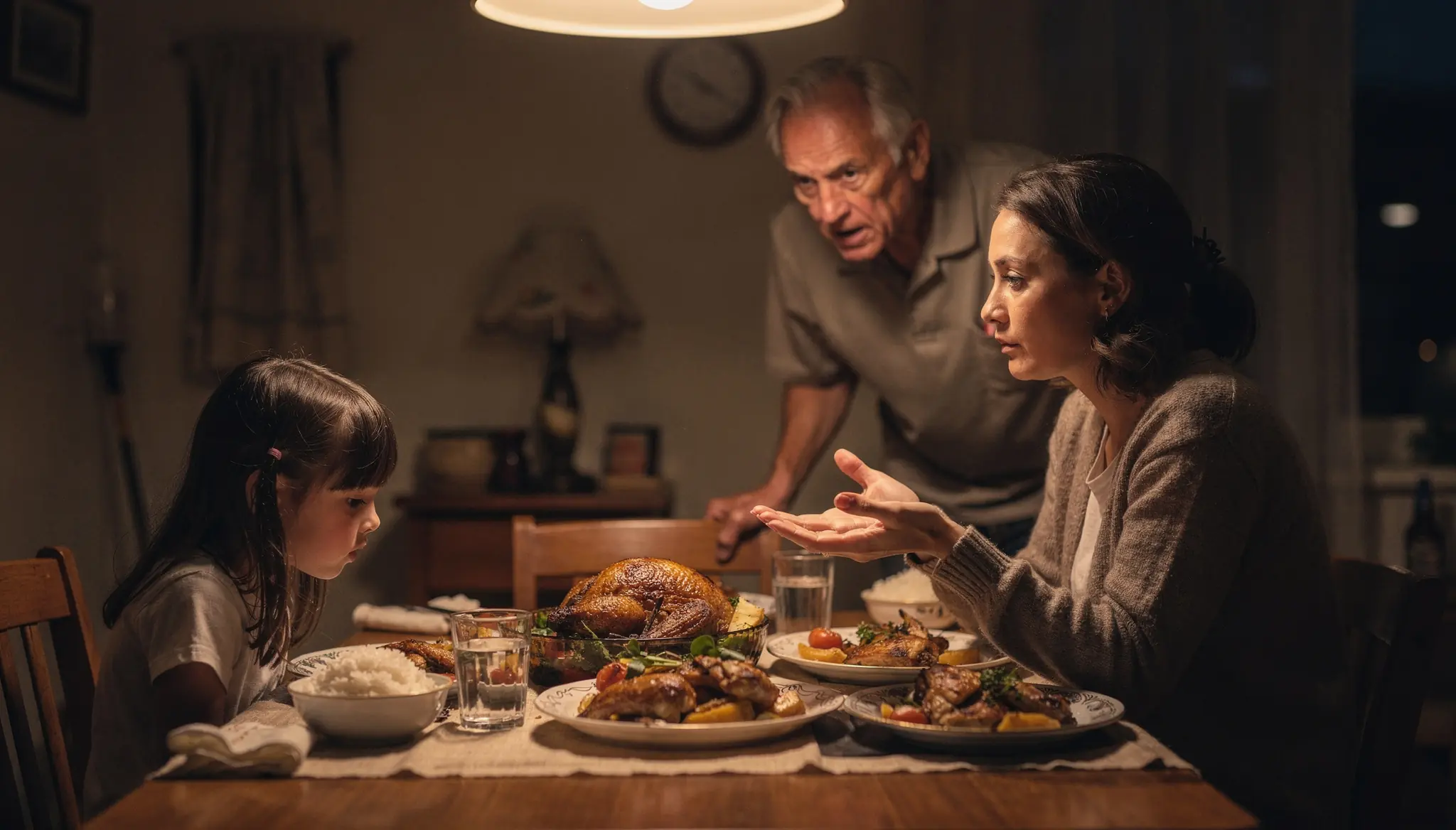
She set the table. Four plates, the white ones with the thin blue line around the edge that had been her grandmother's, which her mother only used because the other ones had chipped. Four forks, four knives, four glasses of water. She folded the paper napkins into triangles. She put Grandpa Walt's at the end where he always sat, with the sugar bowl near him because he put sugar in his iced tea even in October. She did all of it perfectly.