Pay attention to Heather Maples, 22 years old, walking up the stairs to her apartment in Murfreesboro, Tennessee on the night of August 6th, 2015. She has less than 3 minutes left to live because a 23-year-old man named Brandon Bowling, someone she considered a friend, is watching from the shadows below with intentions so sinister that even seasoned detectives will later struggle to wrap their minds around them. On this night, Heather believes she is stepping into the greatest chapter of her life. College acceptance, independence, a future that is finally, gloriously within reach.
On this night, Brandon Bowling has already made a decision that no rational human being can fully comprehend. He intends to take everything from her. Every dream, every possibility, everything she has worked for, everything she has survived, everything she has planned, all of it. This is the story of 72 crucial hours that shattered a family, a community, and the faith of everyone who believed the world was fundamentally just, and how one impossibly clear fingerprint changed everything.
August 7th, 2015. The Cove Apartments, Murfreesboro, Tennessee. Kelsey Price opens the leasing office and starts her morning. Heather is not there.
Nobody is worried. Heather sleeps in. Heather runs late. That has been the standing joke since the day Kelsey got her the job in the office of the same complex where they both live.
9:15, Kelsey calls her cell, no answer, calls again, nothing. The two of them had a plan for exactly this because it kept happening. Knock on the door. If knocking fails, walk in because Heather routinely left it unlocked.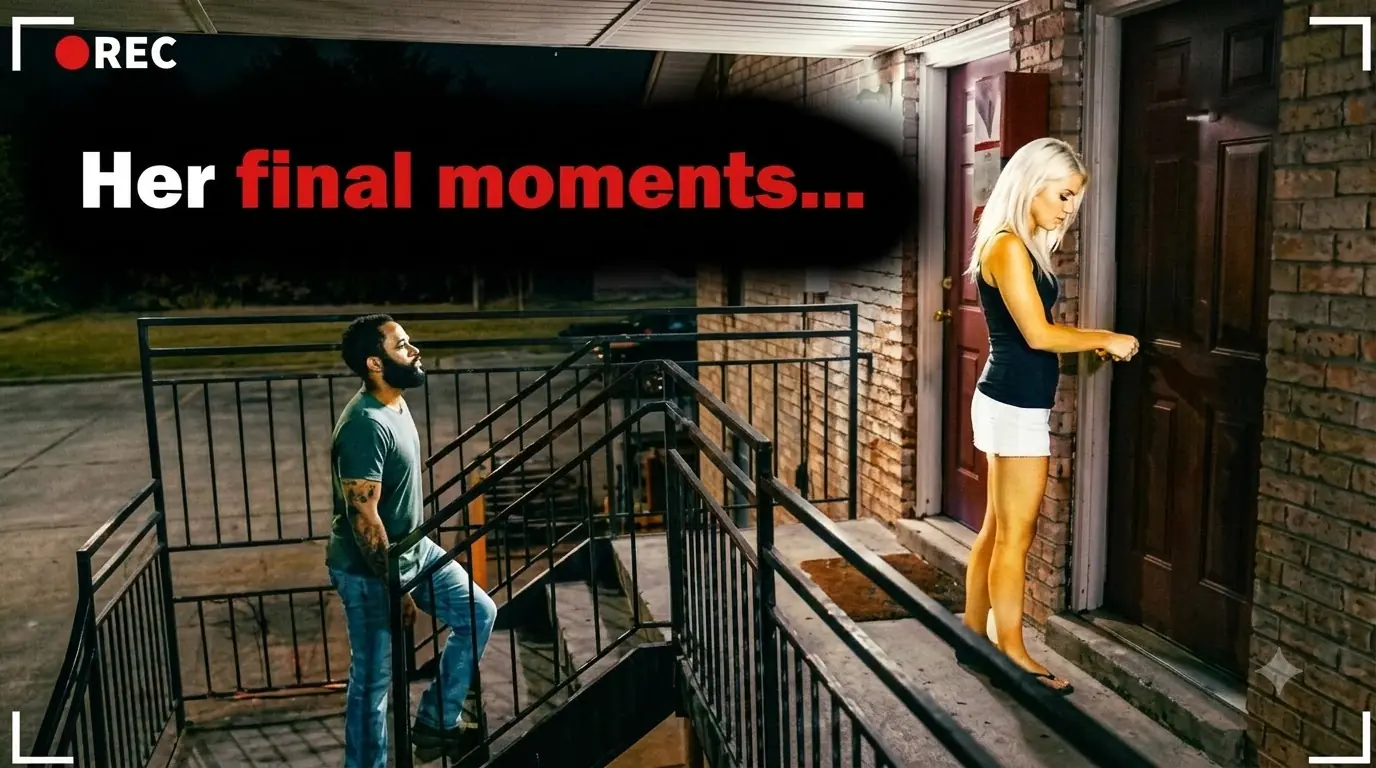
Wake her up. Best friend duty. Kelsey walks over. The distance is nothing.
Steps from the office to Heather's building, up the stairs, second floor. A red door. Knock. Wait.
No answer. Knock again. Wait. She opens it.
The first feeling is relief. Heather is asleep on the bed, face down, sprawled, legs slightly dangling off the right side. Kelsey calls her name, Heather. Heather.
Her eyes move while she calls. Pillows gone from the bed, thrown or shoved out of the way. A top, nothing on the bottom. Kelsey reads it the way anyone would read a friend at 22 on a Friday morning.
Big night, came home, fell into bed. So, she reaches out and taps the right foot, which is when everything stops. The foot is cold. Not the cold of a girl who kicked off her blanket in August.
A cold with nothing behind it at all. Kelsey jumps back, and just like that, the whole room rearranges itself in front of her, and she sees what all that concentration on waking her friend had kept her from seeing. The blood. She cannot breathe.
Kelsey stands outside the apartment she has walked into a hundred times and waits for them. And the thing about that wait is that she already knows. She has stopped hoping for an accident, a seizure, a heart that stopped in the night. She has seen the blood now.
This was not a death. This was done to her. Detective Tony Massey is among the first through that door. His colleague on the case carries the victim's surname, Maples.
A coincidence neither man ever got used to saying out loud. Both would later describe the scene as the worst of their careers, and they were not reaching for a phrase. Guide your eye through it the way they did. The lamp is on.
In August, in Tennessee, at 9:00 in the morning, that room does not need a lamp. The light says night. The blinds are drawn and undamaged. The room is a mess, and the mess means nothing.
Moving boxes still unpacked near the kitchen, a toaster oven in a plastic bin by the door, pots and pans on the kitchen floor, bowls for an animal, heels and sandals scattered, chargers, cords, laundry overflowing. A 22-year-old living alone for the first time in her life, 3 weeks from starting college. Now, the bed. Restraint here, because she deserves it.
Trauma to her head, blood in her blond hair, and blood on the wall behind the mattress. The direction of that spatter tells the investigators something specific and terrible. Someone struck her, pulled the arm back, and struck her again. The condition of her body makes the rest of it plain long before any laboratory confirms a word of it.
She was beaten, assaulted, and she fought. Her left hand is still closed around the bedsheet. A hair tie sits on her wrist. She came home, took her hair down, slid it onto her arm the way she had a thousand nights before.
The forensic team works the room inch by inch while she is still lying there, because the room is the only witness they have. Then she is lifted and covered, and carried down the same stairs she climbed at half past two that morning, and driven to the coroner's office. And the apartment goes quiet with a dozen people still in it. Massey stays.
Massey keeps coming back to the door. The front door shows no damage. No window forced. No lock broken.
Nothing about this apartment was broken into, which leaves one sentence in every detective's mouth in that room. She opened the door for him, or he already had a way in. The break comes off the sheet itself, and it comes fast. To the right of where Heather was lying, on cream-colored fabric, sits a fingerprint in blood.
Bright red against the pale cotton, slightly smeared, which tells them the hand was moving when it pressed down. Still wet when they find it, which tells them when. Ridge detail almost perfect. Massey put it plainly to anyone who asked afterward.
Dip a finger in ink and try to roll a print that clean onto paper on purpose, and you would fail. This one arrived by accident in the middle of the worst thing one person can do to another. Investigators believed the bloody print had been left by the person who killed her. So, they lift it, and they process it, and they run it through the national database that same day.
And every person on that case lets themselves believe the thing detectives are trained not to believe. That it is over already. That the machine will hand them a name before dinner. No hits, nothing.
The print belongs to a man who has never been arrested. The autopsy lands next, and it does not soften. Manner of death, homicide. Cause of death, strangulation and blunt force trauma to the head.
Swabs taken. The forensic team had already recovered strands of hair at the scene that did not match hers. Biological evidence was also recovered from her body and elsewhere in the room. All of it goes to the lab.
All of it takes time. And time is the one thing an 8-day-old trail does not give you. Which leaves the phone. Heather's cell is right there in the apartment.
And in 2015, a locked phone in a Tennessee homicide is a wall. Her secrets are in it. Her last night is in it. Her killer might be in it under a contact name in a text sent at 2:00 in the morning.
And the passcode died with her. Nobody writes down phone numbers anymore. No address book sits in that apartment. No directory.
No list of friends taped inside a cabinet. The device holding everything is four digits away, and the four digits are gone. So, the investigation goes backward to the oldest method there is. Find out who she was.
Find out who she let in.
Before any of that, someone has to call her mother. Kelsey volunteers. She will not let a stranger in a uniform be the one. Not for Jennifer.
Not for this. She asks Jennifer if she is sitting down. And no mother has ever heard that question and expected good news. She says Heather is gone.
Jennifer, confused, asks where Heather is because Heather is supposed to be at work today. Kelsey says it without a cushion this time. Heather is dead. Jennifer screams that somebody has killed her daughter.
She had seen her less than a week earlier. Heather bought her own ticket and flew home to Texas for a weekend on a whim. And at the end of it, Jennifer drove her to a friend's house and hugged her and kissed her and told her she loved her and drove away with no reason on earth to look back.
Then, Kelsey sits down with detectives and they want the part of her friend's life that nobody puts on Facebook. They start with the ex-boyfriend, Chaz. The friend from Texas who called out of the blue and told her Murfreesboro was a great little college town, who gave her the spare bedroom, who became more than a roommate inside a few months. The relationship was tumultuous.
Kelsey tells them there were allegations of physical altercations, that Heather confided in her about his anger, that he had put hands on her. Phone calls came that frightened Kelsey badly enough that she thought about driving over to intervene. She never had to. What she did instead was help Heather get a restraining order against him.
And that order was a message with no ambiguity in it. Stay away. Jennifer confirms every word of it. Her daughter called her crying and Jennifer told her to come home to Texas and Heather said no.
She had goals. She was not giving them up over a man. Four months into the living arrangement, they were done. Chaz took his things and moved out of town and Heather kept the apartment.
A man with a documented temper, a restraining order in his history, and a reason to feel discarded. Chaz becomes the first real lead in this case and detectives start hunting him, which is when a stranger ducks under the crime scene tape and walks straight at the apartment. The officers do not stop him and that is deliberate. The person who did it comes back more often than you would think.
They cannot help it. So, they let him come and they watch. He is distraught. He gives his name, Michael, and says he was a close friend of Heather's.
Then he puts his hand in his pocket, which is not a thing you do in front of police at a homicide scene, and pulls out a set of keys and dangles them. Heather's keys. Including the key to that red door. He is detained inside the minute and driven to the police department.
At the station, detectives asked Michael how he knew Heather and how they had met. He said they met at a bar. Asked whether they had ever been sexually intimate, he denied it and described their physical contact as no more than a hug. Michael is cooperative to the point of eagerness.
Kelsey, interviewed separately, says he seemed nice, that he had a girlfriend, and that like most men within 50 ft of Heather, he was into her. Then Michael hands them the night itself. He was with her. Dinner at Old Chicago, the two of them, and afterward he goes home and she goes out to a bar with friends.
Ordinary, right up until his phone rings. Michael told detectives, "She called me at 11:40." When they confirmed the time, he said Heather told him she needed him to come to the bar because people were hitting on her and she was upset. He replied, "Okay, I'll be there." He gets in the Jeep and drives out to Gentleman Jim's at midnight for a friend who is scared. At the bar, he finds the man who will not leave her alone, a man named Octavio, and tells him to back off.
Then he offers to take her home, and she says she is hungry first. Michael remembered her order in detail: biscuits and gravy, two eggs, and sausage. After she finished eating, he said, he drove her to her apartment and walked her in before leaving. Listen to what he did there.
He recited another person's breakfast order. Item by item from the middle of the night. Days later. Under interrogation.
Most people cannot recall their own. A man remembers a menu like that because he was paying close attention, or because he was building a timeline he wanted investigators to believe. The diner has cameras. The bar has cameras.
Investigators pull all of it. And the security footage does match his account. Minute for minute. And it also shows a hand on her lower back.
And a lean in that does not look like a hug to anyone who watches it twice. He also explains the door. She wore a dress that night with no pockets. So she handed him her keys.
And he forgot to give them back. That is why the apartment was unlocked when Kelsey walked in. And yet the door still locked from the inside. She could have turned that lock herself before she fell asleep.
She did not. His prints go on file. His DNA goes to the lab. Neither one matches the print on the sheet or anything found on Heather.
Chaz comes in around the same time and the interview goes nowhere good for a detective. He admits the relationship was toxic. He denies any part in her death. He says he has not been to her apartment in months.
And the uncomfortable fact is that he was back in town on the night she died. So they take his alibi apart hour by hour. And it holds. He could not have been in that area at that time.
By then the case is 9 days old. The last man to see her alive is cleared. The violent ex is cleared. The phone is still locked.
And a bloody thumbprint belonging to nobody on Earth is sitting in a database that has never heard of him. With the leads gone. Detectives go back to the one person who knew everything. And the tone in the room has changed.
Kelsey feels it immediately. The questions are sharper now, more personal, and she can hear what sits underneath them. She found the body. She had a key in her hand, a reason to be there, and no witness to anything.
Her best friend has been dead for a week, and a police department is circling her. And the worst part is that she cannot let herself get angry, because angry looks like guilty. She answers all of it anyway. The work has a name, victimology.
Investigators need an accurate picture of who a victim was, who she drank with, who she slept with, where she went, and who watched her go, because a murder like this one grows out of a life, not out of nowhere. Not blame, blueprint. So, Kelsey gives them her friend, honestly, which is its own form of love. After the breakup, Heather was free, and Heather enjoyed it.
She went out, she met people. Men were never in short supply, because she never walked into a room she did not light up. Kelsey called her a boy magnet, and said they were always there, always looking, always wanting something from her. Then Kelsey writes them a list, every man Heather had been around recently, name after name.
Kelsey has one more thing, and it has been sitting in her hand for a week.
Rewind to the night. Kelsey is asleep. She gets up in the dark to use the bathroom, checks her phone the way everyone does, and a Snapchat from Heather is sitting on the screen. A picture of Heather with a man.
They look happy. They look fine. Kelsey glances at it, thinks nothing of it, and goes back to bed. The man in the picture is Octavio, the same man Michael drove out to the bar to peel off her.
That Snapchat is the last message Kelsey ever got from her best friend. Asked what she knew about Octavio, Kelsey said, "I don't know a whole lot about him. He seems like a very nice guy. He's funny." Asked why Heather would send her a picture of the two of them, Kelsey said she thought Heather considered Octavio a good friend.
Which is why she was blindsided at that bar and why she called somebody to come get her instead of handling a stranger. Because a stranger you expect.
Then, almost as an afterthought, a detective asks Kelsey whether she happens to know the passcode to Heather's phone. They have asked everyone. They asked her mother. Nobody knew.
Kelsey knows it. The wall comes down. Nine days of guessing and a locked phone opens on a best friend's memory and the entire last night of Heather Maples pours out in her own words. The texts confirm Michael's timeline exactly.
Dinner, the bar, the drive, the diner, the drop-off around 2:30 in the morning. Then, after Michael pulls away, Heather picks up her phone and texts someone else. Octavio, come over. Hours before Kelsey found her, he is in an interview room by the next day and he does not know she is dead.
Detectives make a decision right there. Do not tell him. Watch what a man says about a girl when he thinks she is still alive to contradict him. Octavio told detectives that when he hung out with Heather, they drank some tequila and went to Gentleman Jim's for a while.
Asked who Heather was, he answered, "A friend of mine." Every detail he gives them lines up with a photograph they already have on a dead woman's phone. He is not guessing. He was there. The question is what happened after.
Detectives asked whether Heather had invited him back after she got home. Octavio denied returning to the apartment. He said Heather texted him around 2:30, but he claimed he was already asleep and did not see the message until morning. Unprovable and exactly what a guilty man would say.
So, Massey stops being polite and he does the thing that is legal in an American interrogation room and still turns your stomach a little when you hear it. He tells him they have evidence they do not have. Massey then pressed harder, telling Octavio that witnesses and records put him at the apartment and that Heather had texted him to come back. Octavio denied returning.
Massey then told him Heather had been sexually assaulted and was dead. Octavio reacted, "What? No way." Massey claimed that DNA from the scene would identify the person responsible, and Octavio immediately asked how it could come back to him. Listen to the sound he makes.
That is how Octavio learns his friend has been murdered from a detective using her death as a crowbar. And whatever else that reaction is, it is not rehearsed. He gives them his DNA. He gives them his prints.
He tells them to check everything. And the truth turns out to be a small, ugly one that clears him completely. He was not asleep that night. He was with another woman.
All of it confirmed. He never answered Heather's text. He never went back to that apartment. The one man she invited over is the one man who did not come.
Dead end. 10 days now. So, they take Kelsey's list of names and work down it in alphabetical order, which is what a real investigation looks like when the leads are gone. Grinding, unglamorous.
Next on the list is a first name and nothing else. Brandon. No surname. Kelsey met him once at a bar with his roommate and never learned more than that.
Still, they dig through every note on the case. Hundreds of pages from a dozen investigators and technicians. And Brandon keeps surfacing. His name circled on one report, on another, circled twice.
Nobody can say why he mattered, only that somebody, somewhere in those first 10 days, thought he did. Nothing puts him with her that night. No photograph, no text, nothing. And then, late at night, the crime lab calls Detective Massey while he is putting on his coat to go home.
The Tennessee Bureau of Investigation has matched the bloody fingerprint from the sheet. A right thumbprint. It belongs to a man named Brandon Bowling, and his ridges were sitting in that federal system all along, uploaded years ago when a company fingerprinted him for a job.
Eight days since Kelsey opened that red door. Now they have a last name. They find him working, driving deliveries for the local Jimmy John's. Detectives park in the lot and wait for the car to come back.
When he steps out, they walk up and tell him plainly that they are working the homicide of Heather Maples and ask if he would come down and talk. He says yes. Massey plays the first part soft. Give a man room.
Let him explain the thumbprint before he knows a thumbprint exists. Asked how he knew Heather, Bowling said, "We met at Jim's," about three or four months earlier. The same bar she called Michael from. His account matches Kelsey's down to the timeframe and he stays calm giving it.
Bowling admitted he had been to Heather's apartment before. Asked whether they had ever been sexually intimate, he said they had hooked up the first night they met. Asked when he had last been at her apartment, he placed it in July. That thumbprint was wet when investigators found it on the morning of August 7th.
Massey told him, "You know you were there. You know what happened. So now you need to tell me so that I can understand." Bowling answered, "I don't know I was there. I don't know I was there.
That's the thing." Massey then confronted him with the bloody fingerprint on the bed. Bowling struggled to explain it and insisted there had to be another explanation. Watch him instead of listening to him. Before the print, he sits up.
He is loose. After it, his shoulders go down and his hands find his hat and stay there. Then hear the words he chose because they are the whole case. Not I wasn't there.
I don't know I was there. Three times. A man does not build a sentence like that unless he needs a door left open. Massey told him, "Look at me, young man, because this is important.
They can put you to death. Do you understand?" Bowling answered, "Yes, sir." Massey told him this was the most important conversation of his life and that the bloody fingerprint showed his hand had been in contact with Heather's blood. "So tell me what happened," he said. He does not tell them what happened.
He does not tell anyone that night or ever. What he does is hand over a DNA sample the way an innocent man would and wait to be sent home. And while he waits, detectives file a request with a judge for the contents of his phone. They do not send him home.
Brandon Richmond Bowling is arrested that night and charged with first-degree murder. And a detective picks up the phone and calls Texas to tell Jennifer Hunter they believe they have the man who killed her daughter. Nothing about that call gives her anything back. Even so, it is the only thing anyone can offer a mother at that point.
And Massey makes it as soon as the paperwork allows. Jennifer has one question, and it is the same one she will still be asking years later. Why?
The lab answers everything except that. Bowling's DNA came back as a match across all 16 swabbed areas collected in the investigation. His hair was at the scene, and his thumbprint was in her blood. The charge was not an overreach, and the warning in that interrogation room was not theater.
Tennessee is a capital state. When Massey leaned across the table and told a young man in a Jimmy John's uniform that they could put him to death, he was describing the actual ceiling on a first-degree murder conviction in that courthouse, and Bowling understood him and said nothing anyway.
Meanwhile, the phone request goes to a judge. What detectives wanted from it was mechanical and modest. Confirm his movements, pull his calls, read his texts from the night of August 6th into the morning of the 7th. Build a timeline they could take to a grand jury.
Nobody in that department was prepared for what came back. By the time the DNA results land, the DNA has stopped mattering because the court granted the phone. What investigators found on Brandon Bowling's phone is the reason this case never left them. He had kept video recordings, not merely of the aftermath, but of the assaults themselves.
Months of it. Going back before that August. Filmed in that apartment. The recordings included earlier nights when Heather was not conscious enough to consent or resist.
The record did not establish exactly how she became incapacitated; it only showed the result. Twice. On two separate earlier occasions. Saved and kept and available to him whenever he wanted them.
Which means the friendly guy from Gentleman Jim's, the one Kelsey barely remembered, the one whose name nobody could attach a surname to, had been doing this to her for months and she never knew. Understand what those files were for. A man does not film that and keep it for evidence. He kept the files for himself, preserving other people's worst moments on his phone.
And she was not the only woman in that phone. Then investigators found the final file from the night of August 7th. Bowling had recorded the crime. Heather is alive when the recording starts.
That is as far as this goes, because she is a person and not a spectacle. And because the detectives who watched it said it was the worst thing they ever saw in their careers and something they can never unsee. What matters from it is one fact, and the fact is hers, not his. She fought.
This time she was awake and she fought him and that is why this night ended differently than the others. He wanted something, she said no. And a man who had never once been told no by her, because he had made sure she could not, could not tolerate the word.
At the bond hearing his mother, Patricia Ann Bowling, takes the stand to speak to her son's character. And what she gives the court is an ordinary life. Adopted at 10 weeks old, raised by their family, played football, marched in the school band, started working in 10th grade, fast food, then Best Buy, Amazon, Kroger, Transamerica, and finally the sandwich shop where detectives found him. A good student, a working kid, all of it true and none of it touching the question of what he did after his shifts ended.
His attorneys asked the court to set bond at $50,000. The judge sets it at $1 million.
In February of 2018, 2 and 1/2 years after Kelsey opened that door, the case reaches court. The prosecution walks in holding a bloody thumbprint, 16 DNA matches, and the defendant's own footage of the crime. No trial strategy survives that. No jury hears those facts and hesitates.
Brandon Bowling pleads guilty to the murder of Heather Maples. He received 40 years in prison with no possibility of parole. A plea buys certainty and it costs a family the truth. No trial, no witnesses called, no cross-examination, no defense theory to knock down, and no moment where the man in the chair has to stand up and account for a single thing he did in that apartment.
On the day the plea is signed, Jennifer Hunter stands up in a Tennessee courtroom to read her victim impact statement, and she knows what it is. The last time she will ever be allowed to speak for her daughter. Every mother in that position gets one turn at the microphone and no chance to revise it. She had every right to burn the room down.
Jennifer said, "I should be afraid of Brandon Bowling for killing my daughter. From that day forward, I learned, 'Don't worry about anything. Pray about everything.'" Nobody in that courtroom had dry eyes, and nobody had expected that sentence. And the man it was addressed to had no answer for it.
Then Jennifer walks out into the hallway, and Patricia Ann Bowling is standing there. The mother of the murdered girl crosses to the mother of the man who murdered her, and puts her arms around her, and holds on. She said afterward that she could see the woman was heartbroken, and that they had both lost a child that day, and that she wanted her to know somebody understood exactly what that felt like. Two mothers in a courthouse corridor, one of them had to be that generous.
She chose to be.
Brandon Bowling never explained himself. Not in the interview room with Massey across the table, not at the bond hearing, not at the plea, not once in the years since. He filmed everything and said nothing. The why went to prison with him, and it is not coming back.
So, take what is left, which is her. Kelsey Price still has the last ordinary thing they did together. They got out of work around 5:00. They walked home, two friends who lived a hundred steps from their office, going the same way they always went, talking about nothing that mattered.
That was the last walk. She said Heather was contagiously, beautifully incredible, and that she is in her heart and in her head all day, all the time.
Heather Nicole Maples was 22. She raised her little brother when she was in seventh grade and taught him to talk and walk. She moved to a state where she knew one person, worked in a leasing office, and got herself accepted to college on her own, and she called her mother so excited she could not finish the sentence. That acceptance letter was 3 weeks old.
The door she left unlocked was not a mistake she made. It was a habit she had, in a building where she worked, in a life she was safe in, and the fault does not move one inch away from the man with the phone in his hand. Still, the thing that opened that door was not luck. It was proximity.
He was in her contacts. He was at her bar. He had been in her apartment before, more than once, and she never knew what he had already done to her there. The bloody thumbprint on that cream sheet is the only reason his name is known.
One finger, one accident, in a room he thought he had controlled completely. Somewhere in a file in Murfreesboro sits a photograph of a bed and a hair tie on a wrist. She took her hair down and came home. She should have woken up.