The December wind swept through London with bitter determination, rattling the windows of the Everly townhouse in Mayfair and matching the chill that had settled permanently in Lady Sophia Eve’s chest. She stood before her bedchamber mirror while her lady’s maid adjusted the elegant emerald gown that had once been her favorite. Now the sight of it only reminded her of the last time she had worn it, the night she discovered Lord Edmund Hartley, her betrothed, locked in a passionate embrace with her dearest friend Lydia Peton in the conservatory at Lady Ashworth’s ball.
Three months had passed since that devastating evening. Three months since her world had crumbled. Three months since she became the subject of pitying whispers and barely concealed gossip throughout London society.
“You look beautiful, my lady,” her maid, Mary, said softly, fastening a pearl necklace around Sophia’s throat. Sophia barely heard her. Her reflection showed a woman of three and twenty, with auburn hair arranged in fashionable curls, gray eyes that had once sparkled with joy, now dulled by betrayal, and features that society had always deemed handsome. But she felt hollow, as though the treachery had carved out something essential from within her.
“Lady Sophia,” her father’s voice called from the hallway. “The carriage is ready. We must not be late to the Westbrook dinner party.” Sophia closed her eyes briefly, gathering her composure. “Tonight would be another trial, another evening of facing the town’s curious stares, of maintaining her dignity while Edmund and Lydia flaunted their impending nuptials.”
Their wedding was scheduled for January, and the entire season had become an endless celebration of their union. The union built on the ruins of Sophia’s trust. She descended the grand staircase of the Everly townhouse, where her father, Richard Everly, Earl of Ashford, waited with evident concern in his weathered features. He had aged in these past months, the scandal affecting him nearly as much as it had affected his daughter.
“My dear girl,” he said gently, offering his arm, “you need not attend if you are not ready. No one would fault you.”
“I will not hide, Father,” Sophia interrupted, her voice steady despite the tremor in her hands. “I have done nothing wrong. Let them stare. Let them whisper. I will hold my head high.” Pride was all she had left. She would not surrender it.
The Westbrook residence blazed with candlelight, the sounds of string instruments and polite conversation drifting through the winter air as the Everlys arrived. Sophia felt the familiar tightening in her chest as they entered, immediately drawing the attention of dozens of guests. And there, near the grand fireplace, stood Edmund and Lydia.
Edmund was as handsome as ever, golden-haired, blue-eyed, with the confident bearing of a man who had never known genuine consequence for his actions. Lydia clung to his arm, radiant in pink silk, her dark curls framing a face that had once been as dear to Sophia as her sister’s. Their eyes met across the room. Lydia had the grace to look away first, a faint blush coloring her cheeks. Edmund merely smiled, that same charming smile that had once made Sophia’s heart race, before turning to whisper something in Lydia’s ear that made her laugh. The sound was like broken glass against Sophia’s nerves.
“Come,” her father murmured, guiding her toward a quieter corner of the drawing room. “Let us find Lady Peton. She has been asking after you.” But Sophia barely heard him. Her attention had been captured by a figure standing apart from the crowd, partially obscured by shadows near the terrace doors.
A man, tall, broad-shouldered, with dark hair that fell slightly too long to be fashionable, and a face that seemed carved from highland granite. He wore his formal attire with the air of someone deeply uncomfortable in such clothing, and his dark eyes surveyed the room with what appeared to be profound displeasure.
“Who is that?” Sophia found herself asking. Her father followed her gaze. “Ah, that is William Deau, Duke of King’s Coat. Scottish, though his title comes through his English mother’s line. He inherited extensive estates in both England and Scotland. Rarely comes to London. Prefers his lands in the Highlands from what I understand. I believe Lord Westbrook is his cousin, which would explain his presence tonight.”
Sophia studied the man with unexpected curiosity. There was something in his bearing, a deep weariness, a profound isolation that resonated with her own fractured spirit. He looked as though he wished to be anywhere but here, surrounded by the artificial gaiety of London society.
As if sensing her scrutiny, the Duke’s gaze suddenly shifted, meeting hers across the crowded room. For a moment the world seemed to still. His dark eyes held depths of pain that mirrored her own. A recognition passed between them, silent and profound. Here was someone else who understood what it meant to suffer, to be wounded by life’s cruelties.
Then someone moved between them, breaking the connection, and the Duke turned away, slipping through the terrace doors into the December night. Sophia found herself following before she could question the impulse.
The terrace was bitterly cold, her breath forming clouds in the frigid air. The Duke stood at the stone balustrade, staring out over the frost-covered gardens, his powerful frame tense beneath his dark coat.
“Your Grace,” Sophia said softly, approaching with careful steps. “Forgive the intrusion, but you seemed in need of rescue from the festivities.” He turned slowly, his dark eyes assessing her with unexpected intelligence. “As did you, Lady Sophia Everly?” she supplied, executing a small curtsy. “The Earl of Ashford’s daughter.”
Recognition flickered across his stern features. “Ah, you are the young woman who… forgive me, I do not follow society gossip with any dedication, but even I have heard whispers of Lord Hartley’s infamous betrayal.” Sophia stiffened, prepared to feel the usual sting of humiliation. But there was no pity in the Duke’s expression, only a grim understanding.
“And you are the Duke who lost his wife three years ago,” she said quietly, surprising herself with her boldness. “Childbirth, I believe.” His jaw tightened, a muscle working beneath the sharp line of his cheekbone. “You are well informed.”
“I am merely observant of those who share my disposition toward these gatherings.”
She moved to stand beside him at the balustrade, gazing out at the moonlit gardens. “We both wear our scars, Your Grace, though yours are perhaps less visible to the casual observer.” A long silence stretched between them, broken only by the distant sound of music from within and the whisper of wind through barren trees.
“Margaret was nineteen when she died,” the Duke said finally, his voice rough as gravel. “We had been married less than a year. The babe died with her, a son.” He paused, his hands gripping the stone balustrade with white-knuckled force. “I have spent three years attempting to outrun that grief. It follows me still.”
Sophia felt tears prick her eyes, not for herself, but for this stranger’s devastating loss. Her own heartbreak seemed suddenly small in comparison. “I am deeply sorry, Your Grace,” she whispered. “No words can diminish such pain.”
“No,” he agreed. “They cannot. Just as no words can restore your faith in those you trusted.”
He turned to look at her directly, his dark eyes surprisingly gentle. “How do you bear it? Seeing them together, celebrating their happiness built upon your suffering.”
“I bear it because I must,” Sophia said simply. “Because the alternative is to hide, to let their betrayal define the rest of my days. I refuse to grant them that power.”
Something that might have been respect flickered across the Duke’s stern features. “You have courage, Lady Sophia, more than most.”
“Not courage, Your Grace. Merely stubbornness,” she offered him a small sad smile, “and perhaps a deep well of anger that I have not yet learned to drain.”
To her surprise, the Duke’s mouth curved into the ghost of a smile, the first she had seen from him. It transformed his face, softening the harsh lines and revealing a glimmer of the man he might have been before tragedy had claimed him. “Stubbornness is a virtue often undervalued,” he said, “particularly in circumstances such as yours.”
They stood together in companionable silence, two wounded souls finding unexpected solace in each other’s presence. The cold bit through Sophia’s gown, but she found she did not wish to return to the warmth and false cheer within.
“They will marry in January,” Sophia said softly, surprising herself by speaking the words aloud. “And I must endure an entire season of celebrations, Christmas parties, Yuletide balls, New Year festivities, watching them parade their happiness before all of London. Sometimes I wonder if I have the strength to survive it.”
The Duke was quiet for a long moment, his gaze distant. Then he turned to her with an expression of sudden determination. “What if you did not have to face it alone?” he asked quietly.
Sophia blinked. “I beg your pardon.”
“What if,” the Duke continued slowly, as though working through the thought as he spoke, “you had someone by your side, someone who could provide a distraction from their triumph, someone who might make them question whether they truly broke you at all.”
Understanding dawned slowly. “Your Grace, are you suggesting a pretense?”
He said firmly, “Nothing more. You need protection from their cruelty and the ton’s pity. I need…” He paused, his expression darkening. “I need a reason to remain in England rather than fleeing back to the Highlands as every instinct demands. My cousin Westbrook has been insisting I re-engage with society, and I find myself lacking the will to resist his determined interference.”
Sophia’s heart began to race with a mixture of trepidation and unexpected excitement. “You propose we feign an attachment? A courtship?”
“The Duke clarified, “Public enough to silence the gossips, convincing enough to demonstrate that you have moved beyond Hartley’s betrayal. We would attend the season’s festivities together, present a united front, and then,” he shrugged, “when the holidays conclude, we part ways with our dignity intact and our solitude restored.”
It was audacious, improper, potentially scandalous if discovered. It was also the most intriguing proposition Sophia had received in months.
“What would you gain from such an arrangement?” she asked carefully. The Duke’s expression grew distant. “The same as you, Lady Sophia. A shield against unwanted attention. A respite from well-meaning relations who insist I should remarry, should rejoin society, should cease mourning and embrace life once more.” His voice hardened. “I have no intention of remarrying. But if they believe I am courting you, it might grant me the peace I seek.”
Sophia considered the proposal, her mind racing through implications and possibilities. The thought of facing Edmund and Lydia with a duke, a powerful, wealthy, titled duke at her side, was undeniably appealing. To show them she was not broken, not pining away in lonely misery.
“And when the arrangement concludes,” she asked, “what shall we tell society?”
“That we discovered we were not well suited after all,” the Duke said with a slight shrug. “It happens frequently enough. No scandal, no shame. Simply two people who found they preferred solitude to companionship.”
It was logical, practical, safe. And yet something in Sophia hesitated. “Why me, Your Grace? Surely there are other ladies who might serve your purpose better.”
The Duke met her gaze squarely. “Because when I look at you, Lady Sophia, I see someone who understands loss. Someone who would not expect more than I can give. Someone who might comprehend that some wounds never truly heal. We merely learn to carry them with greater grace.”
“Very well,” she heard herself say, the decision crystallizing with surprising clarity. “I accept your proposal, Your Grace. Let us be each other’s armor against the world’s cruelties, at least until the new year dawns.”
The Duke extended his hand, his expression solemn. “Then we have an agreement, Lady Sophia.” She placed her hand in his, feeling the warmth and strength of his grip even through their gloves. Something passed between them, a silent pact, an understanding deeper than words.
“We should establish some parameters,” Sophia said, suddenly aware of the intimacy of their clasped hands. “Rules for our arrangement.”
“Indeed,” the Duke agreed, though he did not immediately release her hand. “First, complete honesty between us. If this is to work, we must trust each other, at least in private.”
“Agreed,” Sophia said.
“Second, discretion. We must be convincing in public, but maintain proper boundaries in private. I will not risk my reputation, even for such a scheme.”
“Naturally,” the Duke said. “Third, either party may end the arrangement at any time for any reason, with no questions asked and no recriminations.”
Sophia nodded slowly. “And fourth, when this concludes, we part as friends. I would not wish to create animosity where we found unexpected understanding.”
“Friends,” the Duke repeated as though testing the word. Then he smiled. A real smile this time, reaching his dark eyes and transforming his entire countenance. “I have not had a true friend in years, Lady Sophia. I find the prospect unexpectedly appealing.”
“Nor have I, Your Grace,” Sophia admitted. “It seems we may benefit from this arrangement in ways we did not anticipate.”
A burst of laughter from within the house reminded them both of where they were. The Duke glanced toward the terrace doors, his expression hardening once more into its usual stern mask. “Shall we return?” he asked. “And perhaps make our first public appearance as… what shall we call it? A budding courtship?”
Sophia felt a flutter of nervous excitement. “I suppose we shall need to concoct a story of how this attraction developed.”
“On the contrary,” the Duke said, a hint of mischief entering his dark eyes. “We shall tell them the truth, or a version of it. That we met tonight, found unexpected common ground, and discovered we enjoyed each other’s company. Society will construct the romance themselves. They always do. We need only provide the foundation.”
He offered his arm, and Sophia took it, feeling the solid strength beneath the fine wool of his coat. Together they stepped back into the warmth and light of the Westbrook drawing room.
The effect was immediate. Conversations faltered, heads turned, eyes widened with surprise and speculation as Lady Sophia Everly, the jilted, heartbroken Lady Sophia, entered on the arm of the reclusive Duke of King’s Coat, her hand resting comfortably on his sleeve, her expression serene rather than devastated.
Sophia felt dozens of gazes upon them, but kept her attention fixed on the Duke beside her, who guided her through the crowd with calm assurance. From the corner of her eye, she saw Edmund’s head snap around, his expression one of utter shock. Lydia’s mouth had fallen open in a most unladylike manner. The sight sent a warm glow of satisfaction through Sophia’s chest.
“Lady Peton,” the Duke said smoothly as they approached an elegant older woman. “How delightful to see you again. May I introduce Lady Sophia Everly? Lady Sophia, the Dowager Countess of Peton has been attempting to marry me off to every eligible young woman in London for the past three years. I believe she will be greatly relieved to discover I have found someone suitable all on my own.”
Lady Peton’s shrewd eyes darted between them, missing nothing. “Your Grace, what a surprise. And Lady Sophia, my dear, you look positively radiant this evening. Quite recovered from recent disappointments, I see.”
“One discovers that disappointments often lead to unexpected opportunities, Lady Peton,” Sophia replied with a gracious smile. “His Grace and I have found we have much in common.”
“Indeed,” Lady Peton’s eyebrows rose. “How fortuitous. And how quickly these things develop in the winter season.”
“When the connection is genuine, timing becomes irrelevant,” the Duke said, his deep voice carrying just enough conviction to sound sincere. His hand covered Sophia’s where it rested on his arm, a gesture of possession that did not go unnoticed by their wrapped audience. Sophia felt her heart skip at the contact, surprised by how natural it felt.
They spent the remainder of the evening together, the Duke never straying far from Sophia’s side. He fetched her refreshments, engaged her in quiet conversation, and generally played the part of an attentive suitor with surprising skill. And Sophia found, to her amazement, that she was not merely performing. She genuinely enjoyed his company.
He was intelligent, well-read, and possessed a dry wit that caught her off guard repeatedly. When she made a sardonic comment about Lady Ashworth’s outrageous feathered headdress, the Duke’s eyes lit with amusement, and he responded with an equally cutting observation about Lord Peton’s unfortunate choice of waistcoat. They fell into easy banter, trading quiet jests that had Sophia pressing her hand to her mouth to stifle laughter. It had been months since she had laughed. The sensation was both foreign and wonderful.
“You are quite good at this,” Sophia murmured as they stood together near the punch bowl, watching the crowd with shared amusement.
“At what?” the Duke asked, his attention seemingly focused on Lord Hartley, who kept glancing their way with barely concealed agitation.
“Pretending?” Sophia clarified. “You play the devoted suitor with remarkable conviction.”
The Duke’s gaze shifted to her, his dark eyes unreadable. “Perhaps it requires less pretense than you imagine, Lady Sophia. I find your company genuinely agreeable, far more so than I anticipated when I fled to that terrace earlier this evening.”
Warmth flooded Sophia’s cheeks. “I thank you, Your Grace. I confess I feel the same.”
“William,” he said quietly. “If we are to be friends, you should call me William, at least in private.”
“Then you must call me Sophia,” she replied, a smile tugging at her lips. “In private, of course.”
“Of course,” William agreed, his own mouth quirking slightly. “Sophia.” The way he said her name, low and intimate, sent an unexpected shiver down her spine. For a moment she forgot this was pretense, forgot this was merely a convenient arrangement. In that moment, with William looking at her as though she were the only person in the room, Sophia felt something stir in her carefully guarded heart. Something dangerous. Something that felt perilously close to hope.
“Lady Sophia.” The cold voice shattered the moment. Sophia turned to find Edmund standing before them, his handsome face tight with displeasure. Lydia hovered behind him, her expression uncertain.
“Lord Hartley,” Sophia said coolly, her hand tightening reflexively on William’s arm. “How unexpected. I was under the impression you were otherwise engaged this evening.”
Edmund’s blue eyes flicked to William with barely concealed hostility. “I wished to ensure you were well. It has been some time since we last spoke.”
“I am perfectly well, as you can plainly see,” Sophia replied, her voice steady despite the painful memories Edmund’s presence evoked. “In fact, I have never been better.”
“So it would seem,” Edmund said, his tone sharp. “Your Grace, I was not aware you were acquainted with Lady Sophia.”
William’s expression remained impassive, but Sophia felt the tension in the arm beneath her hand. “We met this evening and discovered a remarkable compatibility of temperament and interest. I find Lady Sophia’s company refreshingly honest, a quality I value greatly.” The implied criticism was subtle, but unmistakable. Edmund’s jaw tightened.
“How fortunate,” Lydia ventured, her voice small. “Sophia, I am glad to see you happy. Truly, I—”
“I do not,” Sophia interrupted quietly, her gray eyes meeting Lydia’s with cold clarity, “require your false concern. You made your choices. Kindly do not pretend they were made with my welfare in mind.”
Lydia paled, tears springing to her eyes. Edmund moved protectively closer to her, his expression hardening. “There is no need for cruelty, Sophia,” he said stiffly. “We all must move forward with our lives.”
“Indeed, we must,” Sophia agreed. “And I have done precisely that. Now, if you will excuse us, His Grace promised to show me Lord Westbrook’s conservatory. I understand it contains several rare specimens from the Orient.”
Without waiting for a response, she allowed William to guide her away, her head held high and her heart pounding wildly in her chest. It was only when they reached the relative privacy of the corridor that she realized she was trembling.
“Breathe,” William said softly, his hand covering hers where it clutched his arm. “You did beautifully, Sophia. He is rattled, which was precisely our intention.”
“I wanted to strike him,” Sophia admitted, shocked by the violence of her own emotions. “I wanted to hurt him as he hurt me. What does that make me?”
“Human,” William replied simply. “You are entitled to your anger. But you demonstrated something far more powerful than violence. You showed him you have moved beyond his reach. That is a victory, Sophia.”
She looked up at him, struck by the understanding in his dark eyes. “Thank you,” she whispered, “for standing with me. For seeing me as more than a victim of scandal. For treating me as though I still have value.”
William’s expression softened, and for a moment his stern mask slipped entirely. “You have tremendous value, Sophia. Any man who failed to recognize that is a fool unworthy of your tears.”
The sincerity in his voice stole Sophia’s breath. She found herself drowning in the depths of his gaze, acutely aware of their proximity in the dimly lit corridor, of the warmth of his hand still covering hers, of the subtle scent of sandalwood and winter air that clung to him.
“William,” she breathed, not knowing what she intended to say. But the moment shattered as voices approached, other guests seeking refuge from the crowded drawing room. William stepped back smoothly, his expression resuming its usual guarded composure, though something lingered in his eyes that made Sophia’s pulse quicken.
“Come,” he said quietly. “Let us actually visit this conservatory. I find I am in desperate need of something living and green after the suffocating atmosphere of that ballroom.”
Sophia nodded, allowing him to lead her deeper into the house, away from Edmund and Lydia and the curious stares of society. And as they walked together through the quiet corridors, she reflected on the strange turn her evening had taken. She had arrived broken, dreading the ordeal ahead. She was leaving with an unlikely ally, a convenient arrangement, and something she had thought lost forever. The faint, fragile possibility that her heart might someday heal.
It was not love. It was not even romance. But it was a beginning.
The morning after the Westbrook dinner party, Sophia woke to find London transformed by snow. White drifts covered the city’s usual grime, muffling sounds and softening harsh edges. From her bedchamber window, she watched snowflakes dance through the gray December air, her mind returning repeatedly to the previous evening’s unexpected developments.
William Deau, Duke of King’s Coat. Their arrangement. The look in his eyes when he told her she had value. She pressed her fingers to her lips, recalling the almost overwhelming moment in the corridor when she had been certain, absolutely certain, that he might kiss her. And more troubling still, she had wanted him to.
This would not do. The arrangement was practical, nothing more. She could not afford to mistake convenience for genuine affection. Not again. Not after Edmund.
“My lady,” Mary entered with a curtsy, carrying a silver salver. “A message has arrived from the Duke of King’s Coat.” Sophia’s heart performed an entirely inappropriate leap. She took the sealed letter with hands that trembled only slightly, breaking the wax seal to reveal strong, angular handwriting.
Lady Sophia,
I trust you weathered last evening’s ordeal without lasting damage to your composure. I confess I found our alliance far more agreeable than anticipated. If you are amenable, I would call upon you this afternoon at three o’clock. We should discuss the particulars of our arrangement and establish a schedule for the remaining holiday festivities. Also, I believe we should be seen together in public with some regularity to lend credibility to our courtship. If this does not suit, please send word and I shall adjust accordingly.
Yours in conspiracy,
W.
Sophia found herself smiling at the closing. “Yours in conspiracy.” There was something charming about his formal tone coupled with wry humor.
“Mary, please send a reply that the Duke will be most welcome at three o’clock,” Sophia instructed, “and inform Cook that we shall need refreshments suitable for receiving a gentleman of such elevated rank.”
Mary’s eyes widened with barely suppressed excitement. “Yes, my lady. Oh, my lady, is it true what they’re saying? That the Duke has developed a particular interest in you?”
“Society says many things, Mary,” Sophia replied diplomatically. Not all of them bear repeating. But the maid’s enthusiasm was infectious, and Sophia found her spirits lifting as she prepared for the Duke’s visit.
She selected a day dress of deep blue wool that brought out the gray of her eyes and allowed Mary to arrange her auburn hair in a softer style than she had worn in recent months. If this was to be an effective pretense, she must look the part of a woman being courted by a powerful duke.
Her father intercepted her as she descended the stairs shortly before three o’clock. “Sophia, my dear,” the Earl of Ashford said carefully, “I understand the Duke of King’s Coat will be calling this afternoon.”
“Yes, Father,” Sophia replied. “We formed an acquaintance at the Westbrook gathering.”
Her father’s expression was troubled. “I would not see you hurt again, daughter. The Duke is a complicated man with a tragic history. If his intentions are not honorable…”
“His intentions are perfectly clear, Father,” Sophia interrupted gently. “We enjoy each other’s company and have agreed to spend time together during the holiday season. Nothing more should be read into it at present.”
The earl studied her face with a father’s keen perception. “Yet something has changed. You seem lighter today, more yourself than you have been in months.” Sophia felt tears prick her eyes at his observation. “Perhaps I have simply remembered that I am more than one man’s betrayal, Father. The Duke has helped me recall that.”
Before her father could respond, the door knocker sounded. Sophia’s pulse quickened as their butler, Henderson, moved to answer it.
William entered with a gust of cold air and swirling snow, his dark greatcoat dusted with white, his cheeks ruddy from the December wind. He was even more imposing in daylight, tall and broad-shouldered, with the powerful build of a man accustomed to physical labor rather than the soft living of most peers. His dark eyes found Sophia immediately, and something warm kindled in their depths.
“Lady Sophia,” he said, bowing. “Lord Ashford. Thank you for receiving me on such short notice.”
“Your Grace,” Sophia’s father replied, his tone measured but not unfriendly. “You are welcome in our home, though I confess surprise at the rapidity of your acquaintance with my daughter.”
William’s expression remained respectfully neutral. “I understand your concern, my lord. However, I assure you my interest in Lady Sophia’s company is entirely respectful and sincere. She is a woman of remarkable character, a quality I find myself valuing more with each passing year.”
The Earl’s expression softened slightly. “Indeed. Well, I shall leave you young people to your visit. Henderson will serve tea in the drawing room. The door, naturally, will remain open.”
“Naturally,” William agreed with appropriate gravity.
Once settled in the drawing room, the door decorously ajar and Henderson stationed in watchful proximity, William’s stern demeanor eased somewhat. He accepted a cup of tea from Sophia, their fingers brushing briefly during the exchange.
“I have been thinking about our arrangement,” William said without preamble. “We must attend several key events together to establish our courtship as genuine. The Ashworth Christmas ball is in three days, Lady Peton’s Yuletide soirée the following week, and of course, the Westbrook New Year’s Eve celebration.”
“Edmund and Lydia will be at all of those events,” Sophia said quietly, her hands tightening around her teacup.
“Precisely why we must attend together,” William replied. “United, we are strong. Separately,” he shrugged, “separately, we are merely two lonely souls whom society can pity or dismiss as they choose.”
Sophia studied him over the rim of her cup. “You speak of loneliness with such certainty? Do you never wish for genuine companionship, William? For connection beyond mere convenience?”
William’s dark eyes clouded. “I had love once, Sophia. It was beautiful and brief and ended in such devastation that I have no desire to risk it again. Margaret’s death nearly destroyed me. I will not willingly place myself in a position to suffer such loss a second time.”
The raw honesty in his words made Sophia’s chest ache. “So you have chosen isolation instead.”
“I have chosen survival,” William corrected gently. “There is a difference.”
“Is there?” Sophia challenged. “Or are we simply existing rather than living, protecting ourselves so thoroughly that we experience nothing at all?”
William set down his teacup with careful precision. “You ask difficult questions, Sophia.”
“We agreed to honesty between us,” she reminded him. “I will not pretend to understand the depth of your loss, William. But I do understand fear. I understand building walls so high that nothing, good or ill, can reach you.” She leaned forward slightly, holding his gaze. “But what if our arrangement could be more than mere pretense? What if we used this time to remember how to feel again? To laugh? To enjoy life’s simple pleasures? Not romance,” she added quickly, seeing alarm flicker across his features, “but friendship. True friendship.”
William was silent for a long moment, his expression unreadable. Then slowly he smiled, that rare, genuine smile that transformed his entire countenance. “You are a dangerous woman, Sophia Everly,” he said softly. “Very well. Let us attempt this experiment. Friendship without pretense. Companionship without expectation.”
“Can such a thing exist between a man and a woman?”
“I suppose we shall discover the answer together,” Sophia replied, returning his smile.
Over the next hour, they discussed the logistics of their arrangement: which events to attend, how to manage inquiries from curious society members, what to do if either became uncomfortable with the situation. But gradually their conversation drifted to other topics. Books they had read. Places they had traveled. Sophia’s love of sketching. William’s passion for improving his Highland estate’s farming methods.
“You actually discuss crop rotation with your tenants?” Sophia asked, surprised and charmed by this glimpse of the Duke as a landowner who cared about practical matters.
“Why would I not?” William replied. “They are the ones working the land. Their insights are invaluable. Besides,” he added with a hint of mischief, “I find agricultural discussions infinitely more interesting than the usual society prattle about fashion and gossip.”
Sophia laughed, a genuine, delighted sound. “You would have scandalized Lady Ashworth last night with such talk. She believes gentlemen should confine themselves to politics, hunting, and nothing more intellectually demanding than commenting on the weather.”
“Lady Ashworth,” William said dryly, “appears to believe many foolish things. I noticed she served claret that was barely palatable and insisted on discussing her daughter’s musical abilities for a quarter hour without pause. The girl cannot carry a tune in a basket.”
Sophia pressed her hand to her mouth, but laughter escaped anyway. “William, that is terribly unkind.”
“But accurate,” he countered, his eyes dancing with amusement. “I value honesty, remember? Miss Ashworth would be better served developing her skills at watercolors, which I understand are quite accomplished, rather than torturing innocent ears with her pianoforte.”
“You are incorrigible,” Sophia said, still giggling.
“And you,” William replied, his gaze warm, “have a lovely laugh. You should employ it more often.”
The compliment, delivered with such straightforward sincerity, made Sophia’s cheeks flush with pleasure.
Henderson appeared in the doorway, clearing his throat meaningfully. “Begging your pardon, my lady, Your Grace, but it has been nearly two hours. The Earl thought perhaps…”
“Of course,” William said smoothly, rising to his feet. “I have overstayed proper visiting hours. My apologies.”
But as Sophia walked him to the entrance hall, she found herself reluctant to see him leave. The afternoon had passed with surprising speed, and she had enjoyed every moment.
“The Ashworth ball is in three days,” William reminded her as he shrugged into his greatcoat. “Shall I call for you at eight?”
“That would be perfect,” Sophia agreed.
William hesitated at the door, his hand on the latch. “Sophia, I enjoyed this afternoon immensely. More than I have enjoyed any social occasion in years. Thank you.”
“As did I,” Sophia replied softly. “Perhaps this arrangement will benefit us both in ways we did not anticipate.”
William’s dark eyes searched her face, and for a breathless moment Sophia thought he might say something more. But then he simply bowed, stepped out into the snowy afternoon, and was gone.
Sophia leaned against the closed door, her heart racing in a way that had nothing to do with pretense and everything to do with the warmth she had seen in William Deau’s eyes. This was dangerous. This was foolish. This was beginning to feel far too real.
The Ashworth Christmas ball three days later was the most elaborate event of the season. The ballroom dripped with evergreen garlands and winter roses, hundreds of candles casting a golden glow over the assembled cream of London society. An orchestra played from the gallery while servants circulated with champagne and delicate refreshments.
Sophia arrived on William’s arm, wearing a gown of silver silk that shimmered like moonlight with each movement. She had taken particular care with her appearance tonight, and the approval in William’s eyes when he first saw her had sent a thrill of pleasure through her entire being.
“You are stunning,” he had murmured, handing her into his carriage. “Every man in that ballroom will envy me tonight, and every woman will be speculating about your intentions.”
Sophia had replied, though her heart sang at the compliment.
Now, as they entered the glittering ballroom, Sophia felt the familiar weight of society’s attention. But with William’s solid presence beside her, his hand warm beneath hers where it rested on his arm, she found she could bear the scrutiny with grace.
“Lady Sophia! Your Grace!” Lady Ashworth descended upon them like a ship under full sail, her ostrich plumes bobbing alarmingly. “What a delightful surprise! We had heard rumors, of course, but to see you together… How absolutely wonderful!”
“Lady Ashworth,” William said with impeccable courtesy. “Your ball is magnificent as always. You have outdone yourself with the decorations.” Lady Ashworth preened under the praise. “You are too kind, Your Grace. And Lady Sophia, my dear, you look positively radiant. Such a change from recent months. I dare say love agrees with you.”
Sophia felt her cheeks warm but managed a gracious smile. “You are very kind, Lady Ashworth.”
As they moved deeper into the ballroom, William leaned close to whisper, “Did you notice Lady Ashworth’s necklace? I believe those emeralds are paste. The coloring is entirely wrong.”
Sophia bit her lip to suppress a smile. “William, you are terrible.”
“But accurate,” he countered, echoing their earlier conversation. “I spent considerable time studying gemstones when selecting pieces for Margaret. I know quality when I see it.”
Before Sophia could respond, the orchestra struck up a waltz. William turned to her with a slight bow. “May I have the honor, Lady Sophia?”
Sophia’s breath caught. The waltz was still considered rather scandalous, intimate, daring, with the gentleman actually holding his partner close. To dance it together would make a bold statement about the nature of their relationship.
“I would be delighted, Your Grace,” she said, placing her hand in his.
William led her onto the floor with confident grace, his hand settling at her waist while his other hand clasped hers. As the music began, he swept her into the dance with surprising skill.
“You waltz beautifully,” Sophia said, breathless from both the movement and the proximity. “I would not have expected that a Scottish duke who prefers solitude would know how to dance.”
William’s amusement colored his tone. “My mother was English aristocracy. She insisted I master all the social graces, despite my preference for the outdoors and physical pursuits. I have not danced in three years, but apparently the body remembers.”
They moved together in perfect synchronization, William’s strength guiding her effortlessly through the turns and sweeps of the waltz. Sophia found herself acutely aware of every point of contact. His hand at her waist, burning through the silk of her gown. His hand clasping hers, strong and warm. The mere inches separating their bodies as they spun across the floor.
“Everyone is watching us,” Sophia murmured, catching sight of the wrapped faces surrounding them.
“Let them watch,” William replied, his dark eyes locked on her face. “Let them see that you have moved beyond Hartley’s reach. Let them see that you are desired by someone who actually deserves you.”
The intensity in his gaze made Sophia’s heart stutter. For a moment the pretense fell away entirely, and she found herself drowning in the depths of William’s eyes, wishing desperately that his words were more than performance.
“William,” she breathed, not knowing what she wanted to say.
The waltz ended, but William did not immediately release her. They stood together in the center of the floor, the crowd’s chatter seeming distant and unimportant. Then William blinked as though breaking from a trance and stepped back with appropriate formality.
“Thank you for the dance, Lady Sophia,” he said, his voice slightly rough.
“The pleasure was mine, Your Grace,” Sophia replied, struggling to regain her composure.
As William escorted her from the floor, Sophia caught sight of Edmund and Lydia standing near the refreshment table. Edmund’s expression was thunderous, his jaw clenched as he watched them pass. Lydia simply looked sad, her eyes following Sophia with something that might have been regret.
Sophia felt a surge of satisfaction. Let them watch. Let them see what they had lost. But the satisfaction was fleeting, replaced by a far more troubling realization. She was no longer thinking about Edmund at all. Her every thought was consumed by the Duke at her side, by the way his eyes warmed when he looked at her, by the strength of his hand at her waist during their waltz.
This was supposed to be pretense. When had it started to feel like something more?
The evening progressed in a blur of dances, conversations, and stolen moments of private laughter with William. He was attentive without being suffocating, charming without being false, and his dry wit kept Sophia entertained throughout the evening.
“Lord Peton’s cravat is tied so elaborately he can scarcely turn his head,” William observed during one dance. “I believe he mistakes discomfort for fashion.”
“Lady Hartwell’s turban appears to be constructed entirely of dead birds,” Sophia countered, entering into the game. “I count at least three species.”
“Four actually,” William corrected with mock seriousness. “That blue feather is from a jay. Quite out of season.”
Sophia dissolved into laughter, earning curious glances from nearby couples. She did not care. For the first time in months, she felt genuinely happy.
Later, as they stood together on the Ashworths’ terrace, the same terrace where their arrangement had begun, Sophia found the courage to voice the thought that had been troubling her all evening.
“William, I must confess something,” she said quietly, gazing out at the snow-covered gardens. “This no longer feels entirely like pretense to me. And that frightens me.”
William was silent for a long moment. When he spoke, his voice was carefully controlled. “Nor to me, Sophia. Which is precisely why we must be careful. We agreed this would end when the holidays conclude. We agreed there would be no expectations, no complications.”
“But what if—”
“No,” William interrupted gently but firmly. “Sophia, I cannot offer you what you deserve. I cannot offer you love, marriage, a future. My heart died with Margaret. What remains is insufficient for what you need.”
Sophia turned to face him, her gray eyes searching his shadowed features. “What if I do not need grand declarations or promises? What if I simply need this companionship, this understanding? Someone who sees me as more than society’s scandal.”
“That is not enough,” William said, his voice rough with emotion he was clearly struggling to contain. “Not for a woman like you. You deserve everything, Sophia. You deserve a man who can love you without reservation, who can build a life with you, who can give you the family and happiness you were meant to have. I am not that man.”
“You do not know that,” Sophia argued, feeling tears burn behind her eyes. “You are punishing yourself for surviving, William. You are so afraid of experiencing loss again that you refuse to experience anything at all.”
“Perhaps,” William acknowledged, “but that is my choice to make. And you? You must not mistake our friendship for something more. That way lies only heartbreak for us both.”
Sophia wanted to argue, wanted to insist that what she felt was real and worth pursuing. But the pain in William’s eyes stopped her. He was not rejecting her. He was protecting them both from inevitable suffering. Or so he believed.
“Very well,” Sophia said softly. “I will abide by our arrangement. Friendship only. No expectations.”
But even as she spoke the words, Sophia knew she was lying. It was already too late. Somewhere between their first conversation on the Westbrook terrace and tonight’s magical waltz, she had done the most foolish thing imaginable. She had begun falling for William Deau. And from the tormented look in his eyes as he gazed at her in the moonlight, Sophia suspected he was fighting the same losing battle.
The week following the Ashworth ball passed in a whirlwind of social engagements, each carefully orchestrated to maintain the illusion of William and Sophia’s blossoming courtship. But increasingly the line between performance and reality blurred until Sophia could no longer distinguish where one ended and the other began.
They attended Lady Peton’s Yuletide soirée together, where William charmed Sophia’s father with discussions of estate management and agricultural innovations. They went to the theater, sitting close in the Duke’s private box while performing the waltz of courtship for society’s benefit, his hand covering hers on the armrest, his head bent close to whisper commentary on the melodramatic production that had Sophia stifling giggles.
“That actress is portraying anguish as though she has merely misplaced her favorite bonnet,” William murmured during a particularly overwrought scene. “I have seen more convincing emotion from my stable master when discussing horseshoe placement.”
“Hush,” Sophia whispered, her shoulders shaking with suppressed laughter. “You will get us expelled for disrespecting the arts.”
“The arts,” William replied dryly, “should be grateful I am not demanding a refund.”
But it was the private moments Sophia treasured most. The afternoons when William called at the Everly townhouse and they simply talked for hours, ranging across every conceivable topic. He shared stories of his Scottish estates, the wild beauty of the Highlands, the ancient castle that had belonged to his family for generations, the tenants who had become like family to him. Sophia spoke of her childhood dreams, her love of literature and art, her frustrations with society’s limited expectations for women of her station.
“I wish to study at university,” she confessed one snowy afternoon as they sat together in her father’s library. “Can you imagine? I wanted to read philosophy, study history, debate ideas with brilliant minds. Instead, I was taught watercolors, pianoforte, and how to manage a household.”
William looked up from the book he had been perusing, his dark eyes thoughtful. “There is no shame in wishing for more, Sophia. Intelligence confined becomes intelligence wasted. You would have made a formidable scholar.”
“Impossible for a woman,” Sophia said with a bitter laugh. “Society has no use for educated females beyond the ballroom and nursery.”
“Then society is foolish,” William declared. “I have always believed that artificial constraints on half the population’s potential benefit no one. My mother ran our English estates with greater efficiency than most men I have known. Margaret had a gift for languages. She taught herself French, Italian, and passable Latin simply because she wished to read original texts.” His expression grew distant. “I encouraged her studies, much to my father’s horror. He believed women should confine themselves to decorative pursuits.”
“You loved her very much,” Sophia said softly.
“Yes,” William agreed, his voice barely above a whisper. “I did. Which is why I know I cannot…” He trailed off, shaking his head. “Forgive me. This conversation has taken a melancholy turn.”
But Sophia would not let him retreat. She leaned forward, her gray eyes earnest. “William, I understand your fear. Truly, I do. But love is not betrayal. Margaret’s death was tragedy, not abandonment. She did not choose to leave you.”
“No,” William said roughly. “But the pain of losing her was the same regardless of intention. I swore I would never place myself in such a position again.”
“You swore to survive rather than live,” Sophia interrupted gently. “But surviving is not enough, William. Not for you. Not for anyone.”
William rose abruptly, pacing to the window where he stood with his back to her, his broad shoulders tense. “You ask too much, Sophia.”
“I ask nothing,” Sophia replied, though her heart ached at the torment in his voice. “I merely observe what I see. A good man punishing himself for daring to survive tragedy. A lonely man who deserves companionship but refuses to accept it.”
William turned, his dark eyes blazing with sudden emotion. “And what of you, Sophia? You speak of my fears, but what of your own? You hide behind our arrangement as surely as I do. You use me as armor against Hartley’s betrayal, as proof to society that you have recovered. But have you truly healed, or are you simply avoiding the hard work of learning to trust again?”
The words struck home with painful accuracy. Sophia rose to her feet, her hands clenched at her sides. “That is unfair,” she said, though she knew he was right.
“Is it?” William challenged, moving closer. “You speak of wanting more, of wishing for genuine connection. But the moment I suggest this arrangement might be developing into something deeper, you retreat. You hide behind practicality and remind me of our agreement. You are as afraid as I am, Sophia. You simply disguise it better.”
They stood facing each other in the quiet library, tension crackling between them like summer lightning. Sophia’s breath came quickly, her pulse racing as William’s gaze bore into hers with uncomfortable insight.
“Perhaps we are both cowards,” she whispered finally. “Perhaps we are both so wounded that we can only circle each other warily, never quite daring to bridge the distance.”
“Perhaps,” William agreed, his voice rough. “Or perhaps we are wise enough to recognize that some risks are too great, some pain too devastating to risk experiencing twice.”
“And what of happiness?” Sophia asked, feeling tears prick her eyes. “What of joy, companionship, love? Are we to deny ourselves all of that out of fear?”
William’s expression softened, and he reached out slowly, his hand cupping her cheek with infinite gentleness. “Sophia,” he murmured, his thumb brushing away a tear she had not realized had fallen. “Sweet, brave Sophia. I wish I could be the man you deserve. I wish I could offer you everything you should have. But I am broken in ways I cannot explain, damaged beyond repair. The best I can offer is friendship, and even that comes with reservations and limitations.”
Sophia leaned into his touch, her eyes closing as she savored the warmth of his palm against her skin. “What if friendship is enough?” she whispered. “What if I asked for nothing more?”
“You would be lying,” William said softly. “To me and to yourself.”
Before Sophia could respond, they heard footsteps approaching. William stepped back quickly, his hand falling away, his expression resuming its usual guarded reserve. By the time Henderson appeared in the doorway, they were standing at a perfectly respectable distance, the charged atmosphere between them invisible to casual observation.
“Begging your pardon, my lady, Your Grace,” Henderson said. “But Lord Ashford requests Lady Sophia’s presence in his study.”
“Of course,” Sophia replied, her voice admirably steady despite the emotional turmoil roiling within her. “William, forgive me. We can continue our discussion another time.”
“There is nothing to forgive,” William said formally. “I should take my leave in any case. Good afternoon, Lady Sophia.”
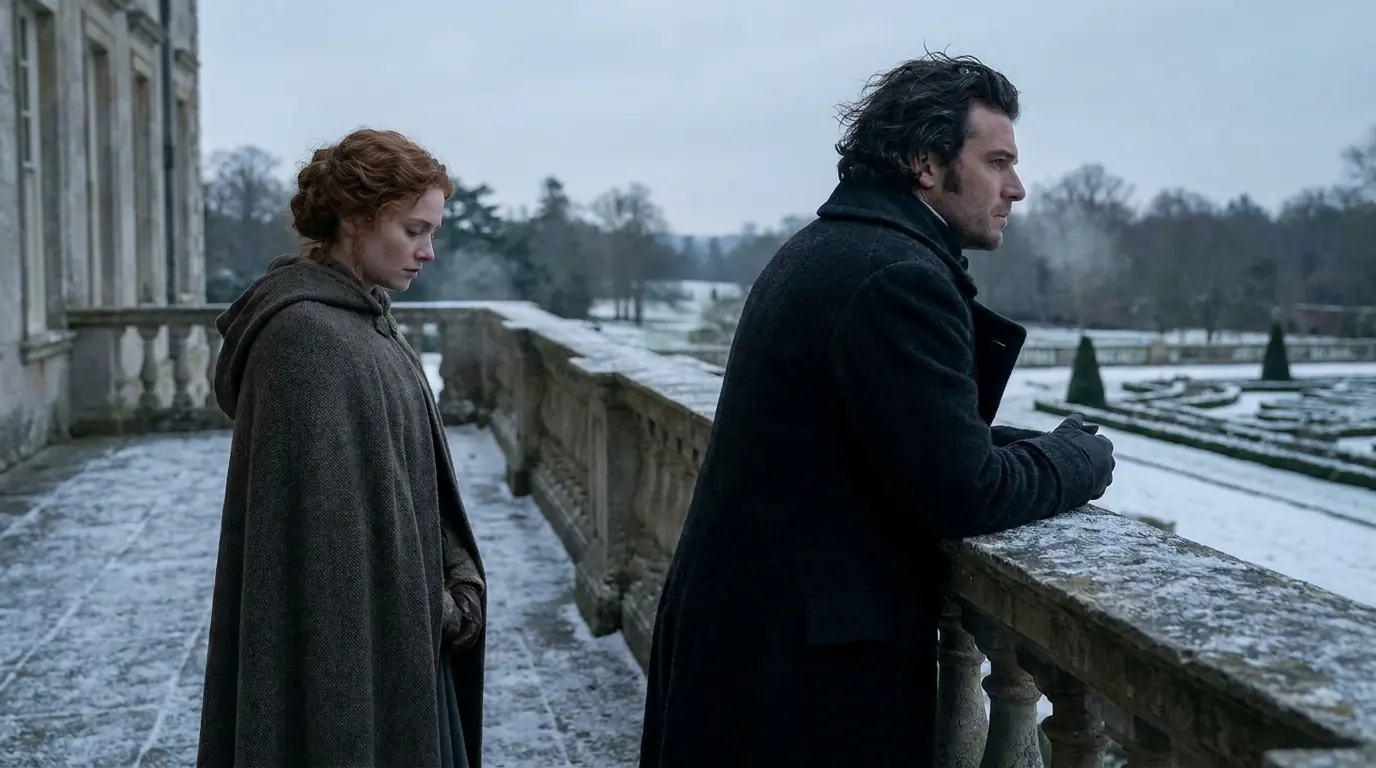
He bowed with perfect courtesy and departed, leaving Sophia standing alone in the library, her fingers pressed to the cheek he had touched, her heart in utter chaos.
She was in love with him. The realization crashed over her with the force of a winter storm. She was completely, irrevocably in love with William Deau. With his quiet strength, his unexpected humor, his fierce intelligence, and yes, even his deep wounds that mirrored her own. She loved him for seeing her as more than society’s scandal. She loved him for challenging her, for making her laugh, for showing her that joy was still possible even after betrayal.
And he had just told her, as clearly as words could convey, that he could never love her in return.
Sophia pressed her hand to her mouth, stifling a sob. How had she been so foolish? How had she allowed herself to fall for a man who had explicitly warned her his heart was beyond reach?
But even as despair threatened to overwhelm her, a small voice of defiance whispered in her mind. William had touched her face with trembling tenderness. He had looked at her as though she were something precious. He had called her brave and sweet and deserving. Those were not the actions of a man incapable of feeling. Those were the actions of a man fighting desperately against feelings he could not control.
Perhaps, Sophia thought, straightening her spine and drying her tears, the question was not whether William could love again. The question was whether he would allow himself to love again, and whether Sophia had the courage to fight for him.
Christmas Eve arrived in a flurry of snow and festive preparation. The Everly townhouse bustled with activity as servants hung evergreen garlands and holly, polished silver until it gleamed, and prepared for the intimate family dinner they would host that evening.
Sophia moved through the preparations in a daze, her thoughts consumed by William. They had seen each other several times since their confrontation in the library, but something had shifted between them. The easy camaraderie had grown strained, weighted by unspoken emotions and careful distance.
William was withdrawing. Sophia could feel it with every polite greeting, every formal bow, every conversation that remained firmly in safe territory. He was preparing to end their arrangement, to return to his Highland isolation when the new year dawned.
The thought was unbearable.
“Sophia, darling,” her mother, Lady Katherine Everly, called from the drawing room. “Come look at the kissing bough. Is it not lovely?”
Sophia dutifully admired the traditional decoration, a sphere of evergreen branches adorned with ribbons, dried fruit, and the requisite sprig of mistletoe. In better times, she might have found it charming. Now it merely reminded her of what she could not have.
“It is beautiful, Mother,” she said, forcing a smile.
Lady Katherine studied her daughter with a mother’s keen perception. “You are unhappy, dearest. Is it Lord Hartley? I know seeing him with Miss Peton must be difficult, but—”
“It is not Edmund,” Sophia interrupted gently. “I confess I have scarcely thought of him in weeks.”
“Then it is the Duke,” Lady Katherine said knowingly. “Oh, my dear girl, you have fallen in love with him.”
Sophia felt tears spring to her eyes. She had not confided in anyone, had carefully maintained the pretense that her relationship with William was merely a convenient arrangement. But mothers, it seemed, saw what others missed.
“I have been such a fool,” Sophia whispered. “He told me from the beginning that his heart was beyond reach. He warned me not to mistake friendship for more, and I… I fell in love with him anyway.”
Lady Katherine drew her daughter into a warm embrace. “Love is not foolish, Sophia. Love is the bravest thing we do. But tell me, does he care for you in return?”
“I do not know,” Sophia admitted against her mother’s shoulder. “Sometimes I am certain he does. The way he looks at me, the way he touches my hand or offers his arm. But he is so guarded, so determined not to feel anything that might cause him pain.”
“He lost his wife,” Lady Katherine said gently. “That is a wound that runs deep.”
“I know,” Sophia said. “And I understand his fear. Truly, I do. But Mother, he is condemning himself to a half-life. He is so afraid of experiencing loss that he refuses to experience anything at all. How do I reach a man who has built walls so high even he cannot see over them?”
Lady Katherine pulled back, cupping Sophia’s face between her hands. “You show him that love is worth the risk. You demonstrate through your actions that joy, even temporary joy, is preferable to the safety of numbness. And if he still cannot accept what you offer…” She paused, her eyes sad. “Then you must let him go, my darling. You cannot force someone to heal before they are ready.”
Sophia nodded, though the thought of letting William go felt like tearing out her own heart.
That evening, as snow fell softly outside and candles cast a warm glow throughout the Everly home, there came an unexpected knock at the door. Henderson answered, returning moments later with surprise evident in his usually impassive features.
“My lady, His Grace the Duke of King’s Coat requests an audience. On Christmas Eve,” Henderson added, as though the timing itself were remarkable.
Sophia’s heart leaped. “Show him in immediately.”
William entered the drawing room with snowflakes dusting his dark greatcoat and an expression of such tortured emotion that Sophia’s breath caught. He held a small wrapped package which he clutched as though it were both precious and dangerous.
“William,” Sophia breathed, rising to her feet. “I did not expect—”
“Forgive the intrusion,” William interrupted, his voice rough. “I know it is Christmas Eve, that you have family obligations, but I… I could not let another day pass without…”
He stopped, seeming to struggle for words. Sophia’s parents had discreetly withdrawn, leaving them alone, a breach of propriety that spoke to the seriousness of the moment.
“Without what?” Sophia prompted softly, moving closer.
William set the package on a side table, his hands shaking slightly. “Without admitting the truth. To you and to myself.” He met her gaze, his dark eyes filled with anguish and something else. Something that made Sophia’s heart soar.
“I have been lying, Sophia. To you. To everyone. But most of all to myself.”
“About what?” Sophia whispered, though she thought she knew.
“About this being merely an arrangement,” William said, his voice cracking. “About my heart being beyond repair. About not wanting…” He took a shuddering breath. “About not wanting you with every fiber of my being.”
Sophia felt tears spill down her cheeks. “William—”
“Let me finish,” he pleaded. “I have rehearsed this speech a hundred times, and if I stop now, I may never find the courage again.”
He moved closer, his hands reaching for hers, gripping them as though she were his anchor in a storm. “I have spent three years convincing myself that I died with Margaret, that my capacity for love was buried in that cold grave. But then you appeared. Brilliant, wounded, brave Sophia. And you reminded me what it feels like to be alive.”
“I love you, Sophia,” he said, unable to contain the words any longer. “I love you, William. I think I have loved you since that first night on the terrace when you looked at me and saw not a scandal, but a person worthy of respect.”
William closed his eyes, a single tear tracking down his stern face. “I do not deserve your love. I am damaged, Sophia. I am broken in ways that may never fully heal. I still wake in the night haunted by memories of loss. I still fear that loving you will invite disaster. But I am more terrified of living the rest of my life without you than I am of any pain the future might bring.”
He released one of her hands to cup her face, his touch achingly gentle. “I love you, Sophia Everly. I love your courage and your intelligence and your terrible jokes about Lord Pemberton’s cravats. I love the way you laugh without reservation and argue without fear. I love that you see my wounds and do not flinch from them. I love you, and I am asking, begging, for the chance to be the man you deserve.”
Sophia’s heart was so full she thought it might burst. “You already are, William. You already are.”
And then, finally, he kissed her.
It was gentle at first, tentative, as though he feared she might dissolve like morning mist. But when Sophia responded, her hands sliding up to circle his neck, her lips parting beneath his, the kiss deepened into something profound and transformative. It was a promise and a confession, a claiming and a surrender. It was everything Sophia had dreamed of and more. Passionate yet tender. Desperate yet reverent.
When they finally broke apart, both breathing heavily, William rested his forehead against hers. “Marry me,” he whispered. “Not as an arrangement. Not as pretense. But truly be my wife, Sophia. Share my life, my homes, my future. Let me spend the rest of my days proving that you made the right choice in loving such a broken man.”
“You are not broken,” Sophia said fiercely, her hands framing his face. “You are healing. And yes, William Deau, I will marry you. I will be your wife and your partner and your friend. I will share your joys and your sorrows, your triumphs and your fears. I will love you until my last breath.”
William kissed her again, deeper this time, with all the pent-up longing and desperate hope of a man who had thought himself beyond redemption.
When they finally drew apart, he retrieved the small package from the side table with trembling hands. “This belonged to my mother,” he said, unwrapping it to reveal a delicate ring, a sapphire surrounded by diamonds that caught the candlelight like captured stars. “She gave it to me before she died and made me promise to give it to the woman I loved. I thought I would never use it again after Margaret. But it belongs to you now, Sophia, if you will accept it.”
“It is beautiful,” Sophia breathed as William slipped it onto her finger where it fit perfectly. “I am honored to wear it.”
“The honor is mine,” William replied, raising her hand to press a kiss to her palm. “To have your love, to have your trust after all you have suffered. It is a gift beyond measure.”
They stood together in the soft glow of candlelight, holding each other as snow fell outside and Christmas Eve wove its magic around them. For the first time in years, William felt hope stirring in his chest where only grief had dwelt. And Sophia, looking up into the dark eyes of the man she loved, knew that some risks were worth taking, some wounds could heal, and some love stories began in the most unexpected ways.
“We should tell my parents,” Sophia said eventually, though she was reluctant to leave the warmth of William’s embrace.
“In a moment,” William murmured, pulling her close again. “For now, let me simply hold you and marvel at the fact that you have agreed to be mine.”
“I was already yours,” Sophia replied softly. “I think I have been since that first night.”
“As I have been yours,” William confessed, “though I was too stubborn and frightened to admit it.”
They shared another kiss, this one tender and full of promise. And when they finally emerged from the drawing room to share their news with Sophia’s delighted parents, they did so hand in hand, united not by convenience or pretense, but by the most powerful force in existence. Love that dared to bloom even in winter’s coldest depths.
The announcement of Lady Sophia Everly’s engagement to William Deau, Duke of King’s Coat, sent shock waves through London society. Within hours of the news becoming public on Christmas Day, the Everly townhouse was inundated with callers, letters, and floral arrangements. Some visitors came bearing genuine congratulations. Others arrived propelled by curiosity and the irresistible lure of gossip.
Sophia faced it all with William at her side and newfound confidence in her heart. She no longer cared what society thought or whispered. She had found something infinitely more valuable than their approval. She had found love with a man who saw her, truly saw her, and loved her, not despite her wounds, but perhaps partly because of them.
“Lady Hartwell has called three times,” Mary reported on Boxing Day morning, her eyes wide with excitement. “She is desperate to know all the details, my lady. Shall I admit her?”
“Absolutely not,” Sophia replied cheerfully. “Lady Hartwell is the worst gossip in London. Whatever I tell her will be repeated with embellishments within the hour. Send her my regards and inform her I am otherwise engaged.”
“With the Duke?” Mary asked with barely suppressed glee.
“With wedding preparations,” Sophia corrected, though she could not suppress her smile. “His Grace and I are to be married in three weeks’ time. There is much to arrange.”
Three weeks. William had insisted on a brief engagement, declaring that having finally acknowledged his feelings, he saw no reason to delay their union. Sophia’s father had raised initial objections about the unseemly haste, but Lady Katherine had taken her husband aside for a private conversation, after which the earl had reluctantly agreed.
“If the Duke makes Sophia happy, and if she loves him, then I shall not stand in their way,” he had declared. “Heaven knows the girl has suffered enough disappointment. Let her have her happiness.”
Now, as Sophia sat in the morning room reviewing fabric samples for her wedding gown, she heard William’s familiar footsteps in the hallway. Her heart performed its now-customary leap at his approach.
“Good morning, my love,” William said, entering with a kiss to her temple that made Mary giggle and excuse herself hastily. “I trust you slept well.”
“I did not sleep at all,” Sophia admitted. “I kept replaying our conversation, our kiss, touching my ring to ensure I had not dreamed the entire evening.”
William settled beside her on the settee, taking her hand in his. The sapphire caught the morning light, sending azure sparks dancing across the walls. “It was not a dream,” he assured her softly, “though I confess to similar disbelief. I keep expecting to wake and find myself back in the Highlands, alone with my grief and regrets.”
“No more regrets,” Sophia said firmly, squeezing his hand. “We have wasted enough time on fear and self-protection. From this day forward, we face life together.”
“Together,” William agreed, his dark eyes warm with love. “I find I quite like the sound of that word.”
They spent a pleasant hour discussing wedding arrangements: where the ceremony would take place (St. George’s in Hanover Square), who would be invited (a small gathering, to William’s relief and Sophia’s agreement), and where they would spend their honeymoon.
“I thought we might travel to my Scottish estates,” William suggested. “The castle is ancient and drafty, but the Highlands in winter have a wild beauty that I would love to share with you. If you are amenable, of course, we could return to England in spring.”
“I would love to see your home,” Sophia said warmly. “All of your homes, in time. I want to know every part of your life, William. Your lands, your tenants, your work.”
William’s expression softened with something approaching wonder. “Margaret never wished to visit Scotland. She found the weather too harsh, the accommodations too primitive. I do not blame her,” he added quickly. “She was raised in elegance and comfort. The Highlands can be unforgiving to those unaccustomed to their severity.”
“Then I shall prove more adaptable than elegant,” Sophia declared. “I am not afraid of harsh weather or primitive conditions. I am only afraid of not truly knowing the man I love.”
“You know me better than anyone,” William said quietly. “You have seen my darkest moments, my deepest fears, and you have not retreated. That is a gift beyond price, Sophia.”
Their tender moment was interrupted by Henderson’s discreet cough from the doorway. “Begging your pardon, my lady, Your Grace,” the butler said, “but Lord Edmund Hartley has called and insists on seeing Lady Sophia. He says it is a matter of great urgency.”
Sophia felt William tense beside her, his hand tightening protectively over hers. She met his gaze and saw the question there. Did she wish to see her former betrothed?
“Show him in,” Sophia said calmly. “Let us hear what Lord Hartley considers urgent.”
Edmund entered the morning room with the uneasy air of a man venturing onto hostile territory. He was impeccably dressed as always, his golden hair artfully arranged, but his blue eyes held shadows that had not been there months ago. He stopped short upon seeing William, his expression tightening with evident displeasure.
“Your Grace,” Edmund said stiffly, “I had hoped to speak with Lady Sophia privately.”
“Whatever you wish to say to Lady Sophia may be said in my presence,” William replied with quiet authority. “As her betrothed, I have every right to remain.”
Edmund’s jaw clenched at the word “betrothed,” but he turned his attention to Sophia. “Is it true, then? You are to marry the Duke?”
“I am,” Sophia confirmed, her voice steady. “The wedding is in three weeks. But I cannot imagine why this concerns you, Edmund. You made your choices quite clear months ago.”
“Did I?” Edmund asked, his tone bitter. “Or did circumstances force my hand in ways you never understood?”
William rose to his feet, his imposing presence filling the room. “If you have come to cause Lady Sophia distress, Hartley, I suggest you leave immediately.”
“I have come to apologize,” Edmund said, the words seeming to cost him considerable effort, “and to explain, if she will permit it.”
Sophia studied her former betrothed with detached curiosity. There was a time when Edmund’s presence would have devastated her, when any word from him would have sent her emotions into chaos. Now she felt only mild interest and the faint echo of old pain.
“Very well,” she said. “I will hear you out. But be quick about it. The Duke and I have wedding arrangements to finalize.”
Edmund flinched at the reminder but pressed forward. “My father’s estate was in dire financial straits,” he began, his words coming in a rush. “Debts I knew nothing about until after we became engaged. Lydia’s father offered to settle those debts in exchange for…” He paused, color flooding his face. “In exchange for an alliance between our families, through marriage.”
“So you broke our engagement for money,” Sophia said flatly. “How noble.”
“It was not like that,” Edmund protested. “My father threatened to disinherit me if I refused. He said the entire estate would be lost, that our tenants would be thrown from their homes. I thought… I thought I was making a sacrifice for the greater good.”
“By betraying the woman who loved you,” William interjected coldly. “By humiliating her before all of society. Forgive me if I failed to see the nobility in such actions.”
“I know,” Edmund said, his shoulders slumping. “I know I handled it badly. I should have been honest with Sophia from the start. Instead, I behaved like a coward. I allowed my feelings for Lydia, which I had been fighting for months, to become an excuse for the inexcusable.”
“You loved Lydia,” Sophia said softly. Not as a question, but as a statement of fact.
Edmund nodded miserably. “I did. I do. But I also cared for you, Sophia. I never wanted to hurt you. I simply… I was weak and selfish, and I have regretted it every day since.”
Sophia felt an unexpected wave of compassion for the broken man before her. Edmund was not a villain. He was simply human. Flawed and fallible like everyone else. He had made terrible choices, but he was clearly suffering the consequences.
“Why are you telling me this now?” she asked gently.
“Because you deserve to know the truth,” Edmund replied. “And because…” He glanced at William, then back to Sophia. “Because seeing you with the Duke, seeing you happy and loved as you deserve to be, I realized what I destroyed. Not just your trust, but something precious that can never be recovered. I wanted you to know that I recognize what I lost and that I am truly, deeply sorry.”
Silence fell over the morning room. Sophia could feel William’s tension beside her, his protective instincts clearly warring with respect for her autonomy. She reached for his hand, grounding herself in his steady presence before responding.
“I forgive you, Edmund,” she said quietly. The words surprised her even as she spoke them, but she realized they were true. “Not because what you did was acceptable, but because holding on to anger and resentment serves no purpose. You made choices that caused me tremendous pain. But those choices also led me here. To William. To a love I never imagined possible. Perhaps everything happened as it was meant to.”
Edmund’s eyes glistened with unshed tears. “You are far more generous than I deserve, Sophia. The Duke is a fortunate man.”
“Yes,” William agreed without hesitation. “I am more fortunate than I ever thought to be again.”
Edmund moved toward the door, then paused. “I hope you will both be very happy. Truly. You deserve it.”
After he departed, Sophia remained silent for a long moment, processing the unexpected encounter. William pulled her gently into his arms, his chin resting atop her head.
“Are you well?” he asked softly. “That cannot have been easy.”
“I am more than well,” Sophia replied, her voice filled with wonder. “I realized something just now, William. I feel free. For months, Edmund’s betrayal has been a weight I carried, a wound that would not heal. But today, facing him, I felt only pity and a strange sort of gratitude. His choices freed me to find you.”
“Then perhaps I should thank him,” William said dryly, “though I still maintain he is a fool and a coward.”
Sophia laughed, the sound bright and joyful. “He is both those things. But he is also human, and therefore capable of both error and growth. I hope he and Lydia find happiness together. They certainly caused enough upheaval in pursuit of it.”
“You are remarkable,” William murmured, tightening his embrace. “Your capacity for forgiveness, for seeing the best in people even after they have wronged you. It humbles me, Sophia.”
“We all make mistakes,” Sophia said simply. “I would rather choose compassion than bitterness. Life is too short for anything else.”
The Westbrook New Year’s Eve ball arrived with all the grandeur and spectacle expected of the season’s final great event. The ballroom was draped in silver and gold, hundreds of candles creating a magical atmosphere as London’s elite gathered to bid farewell to 1804 and welcome 1805.
Sophia arrived on William’s arm, wearing a gown of midnight-blue silk that made her gray eyes luminous. She wore the King’s Coat sapphire proudly, drawing admiring and envious glances in equal measure. But she cared nothing for the attention. Her every thought was focused on the man beside her. Her betrothed. Her love. Her future.
“This shall be our last performance,” William murmured as they entered the ballroom. “After tonight, we need never attend another society gathering if you do not wish it.”
“I do not mind them so much anymore,” Sophia replied, surprising herself with the truth of it. “When I have you beside me, even Lady Ashworth’s ostrich plumes become bearable.”
William’s laugh, a genuine, unguarded sound of pure joy, turned several heads. The reclusive Duke was laughing in public. The ton would gossip about it for weeks.
They danced the first waltz together, moving in perfect harmony as they had at the Ashworth ball. But this time there was no pretense, no careful distance. William held Sophia close, his dark eyes locked on her face with open adoration that made her heart soar.
“I love you,” he whispered as they turned across the floor. “I shall never tire of saying those words.”
“And I shall never tire of hearing them,” Sophia replied, her smile radiant. “Though I confess I prefer hearing them in private, where I can properly demonstrate my response.”
William’s eyes darkened with desire and promise. “Soon, my love. In three weeks you will be my wife, and I shall spend every day showing you how deeply I cherish you.”
The evening progressed in a blur of music, conversation, and celebration. Sophia noticed Edmund and Lydia across the room. They appeared to be arguing in heated whispers, but she felt no satisfaction in their evident discord. She simply felt indifferent. That chapter of her life had closed completely.
As midnight approached, guests gathered in the ballroom, champagne in hand, counting down the final seconds of the old year. Sophia stood wrapped in William’s arms, her back against his broad chest, his hands clasped over hers.
“Ten… nine… eight…”
“This time last year, I thought I would never feel happiness again,” William murmured in her ear. “I was convinced my life had ended with Margaret’s death.”
“Seven… six… five…”
“And I thought Edmund’s betrayal had destroyed my capacity for trust,” Sophia replied softly.
“Four… three… two…”
“We were both wrong,” William said. “We were not destroyed. We were simply waiting.”
“One… Happy New Year!”
As the ballroom erupted in cheers and celebration and the orchestra struck up “Auld Lang Syne,” William turned Sophia in his arms and kissed her with a passion that drew whistles and applause from the crowd. Sophia kissed him back without restraint, no longer caring about propriety or appearances. This was her love. Her future. Her everything.
When they finally broke apart, both breathless and grinning, Sophia noticed that Edmund and Lydia had departed. In fact, she realized with some surprise, she could not recall exactly when they had left. They simply did not matter anymore.
“Come,” William said, taking her hand. “Let us slip away from this crush. I wish to begin the new year with you alone.”
They made their way to the terrace. The very terrace where their arrangement had begun weeks ago. But everything had changed since that cold December night. The pretense had become truth. The convenient alliance had blossomed into love. Two wounded souls had found healing in each other’s arms.
The terrace was empty, the other guests preferring the warmth indoors. Snow drifted lazily from the dark sky, settling on the stone balustrade and dusting their hair with white. London spread before them, its chimneys smoking, its windows glowing with candlelight.
“This is where it began,” Sophia said softly. “Where you proposed our arrangement.”
“The best decision I ever made,” William replied, pulling her close. “Even when I told myself it was merely practical, my heart knew the truth. I was already falling for you, Sophia. I simply lacked the courage to admit it.”
“And now?” Sophia asked, looking up at him with love shining in her eyes.
“Now I am the most fortunate man in England,” William declared. “I have you. I have love. I have a future I never thought to claim again. You have given me back my life, Sophia.”
“You have given me mine,” Sophia countered. “You showed me that betrayal need not define me, that I could still trust, still love, still hope. We saved each other, William.”
“Then let us continue saving each other,” William said, his voice rough with emotion. “Every day for the rest of our lives.”
He kissed her again, tender and reverent. A kiss that spoke of promise and devotion and forever. And as snow fell around them and the new year began, Lady Sophia Everly and William Deau, Duke of King’s Coat, held each other close and made silent vows that would last a lifetime.
Three weeks later, on a bright January morning, they married in St. George’s Church before a small gathering of family and close friends. Sophia wore ivory silk and carried winter roses. William wore formal attire that could not quite contain his powerful frame, his dark eyes never leaving his bride’s face throughout the ceremony.
When the vicar pronounced them husband and wife, William kissed Sophia with such tender joy that several ladies in attendance dabbed at their eyes with handkerchiefs. Even Lord Ashford, who had harbored reservations about the hasty courtship, found himself moved by the obvious love between his daughter and her new husband.
At the wedding breakfast, toasts were offered and speeches made, but the words Sophia treasured most were whispered privately by her husband as they prepared to depart for Scotland.
“Thank you,” William said, his forehead resting against hers. “Thank you for being brave enough to love me, for being patient enough to wait for me to find my courage, for giving me a second chance at happiness.”
“We gave each other a second chance,” Sophia corrected, her hands cupping his beloved face. “And I promise you, William Deau, that I shall spend the rest of my days making certain you never regret it.”
“Impossible,” William declared. “You are the best thing that ever happened to me, Sophia. My wife. My love. My everything.”
They traveled north to Scotland, to the wild and windswept Highlands, where William’s ancient castle stood against the elements. Sophia fell in love with the rugged beauty of his homeland, with the purple heather and gray stone, with the tenants who greeted their Duke and his new Duchess with genuine affection.
In the castle’s great hall, warmed by massive fires and surrounded by centuries of history, William and Sophia began building their life together. They read books in the library on stormy afternoons. They rode across the moors on brisk mornings, racing each other with competitive zeal. They walked hand in hand through snow-covered gardens, talking for hours about everything and nothing.
And at night in the vast ducal bed, they discovered the joy of physical intimacy alongside emotional connection. William was a tender and passionate lover, attentive to Sophia’s needs and responses, and she bloomed under his care. The wounds they had both carried began to heal, replaced by love’s gentle medicine.
Months passed in a blur of happiness. Spring came to the Highlands, transforming the landscape with wildflowers and new growth. Sophia sketched the changing scenery while William worked with his tenants on planting schedules and improvements. They entertained occasionally. William’s cousin Westbrook visited, as did Sophia’s parents. But mostly they reveled in each other’s company and the peace they had found.
In late spring, Sophia discovered she was carrying William’s child. The news sent William into a panic initially, memories of Margaret’s death returning with devastating force. He hovered over Sophia with anxious concern, forbidding her from riding or walking too far or engaging in any activity he deemed potentially dangerous.
“William,” Sophia said gently one evening as they sat together in the library. “You must stop treating me as though I am made of spun glass. I am healthy and strong. Our child is growing well. You cannot protect me from every possible danger.”
“I cannot lose you,” William said, his voice breaking. “Sophia, if anything happened to you, I would not survive it. I love you too much.”
Sophia took his hands in hers, holding them firmly. “Nothing will happen to me. I have an excellent physician, a healthy constitution, and a stubborn determination to meet our child. But even if something did go wrong, which it will not, you would survive, William. Because that is what we do. We survive. We endure. And we love each other through whatever comes.”
“You are braver than I,” William admitted.
“No,” Sophia corrected. “I simply trust that life, despite its occasional cruelties, is fundamentally worth living. You taught me that, William. You taught me that taking risks, opening one’s heart, loving despite the possibility of loss… these things are what make us human. They are what make life meaningful.”
William pulled her into his arms, holding her with careful tenderness. “You are my greatest teacher, Sophia. And I promise I will try to be worthy of your courage.”
In December of 1805, exactly one year after they met, Sophia gave birth to a healthy son. William was present throughout the ordeal, scandalizing the midwife but refusing to leave his wife’s side. And when he held his newborn son for the first time, tears streamed openly down his face.
“He is perfect,” William whispered, gazing at the tiny red-faced infant with absolute wonder. “Sophia, he is absolutely perfect.”
“He looks like you,” Sophia said weakly but happily from the bed. “Same dark hair. Same stubborn chin.”
“Thank God he has your nose,” William replied, moving to sit beside his wife, their son cradled carefully between them. “Mine is far too prominent.”
They named him Thomas William Deau, heir to the dukedom of King’s Coat. And as Sophia watched her husband cradle their son with infinite gentleness, she reflected on the strange journey that had brought them to this moment.
A year ago she had been heartbroken, humiliated, convinced she would never trust again. William had been isolated, wounded, certain his capacity for love had died. Yet here they were. Husband and wife. Parents to a beautiful son. With a love that had grown stronger and deeper with each passing day.
“What are you thinking?” William asked softly, noticing her contemplative expression.
“I am thinking about last Christmas,” Sophia replied. “About how desperately unhappy we both were. About how certain we were that joy was behind us.”
“And now?” William prompted, shifting closer so she could rest her head on his shoulder while they both gazed at their sleeping son.
“Now I am thinking that sometimes the worst moments of our lives lead us to the best ones,” Sophia said. “Edmund’s betrayal brought me to you. Margaret’s death, terrible as it was, made you the man I fell in love with. Deep. Compassionate. Capable of profound feeling. We were both broken, but we healed each other.”
“You healed me,” William corrected gently. “I was merely existing before you, Sophia. You taught me to live again.”
“We healed each other,” Sophia insisted. “And we will continue doing so for the rest of our days.”
In the years that followed, the Duke and Duchess of King’s Coat became known for their deep devotion to each other and their family. They divided their time between England and Scotland, raising not just Thomas, but eventually three more children: two daughters and another son. Their homes were filled with love, laughter, and the occasional spirited debate.
William never fully lost his reserved nature, but with Sophia by his side, he learned to open himself to joy. He smiled more freely, laughed more often, and gradually allowed others past his carefully constructed walls.
Sophia continued to bloom as the Duchess, using her position to advocate for education for girls and improved conditions for tenant farmers. She never lost her sharp wit or her artist’s eye, and she taught all their children to value both intelligence and compassion.
They encountered Lord Edmund Hartley and his wife Lydia occasionally over the years. The meetings were civil, even cordial. Edmund’s marriage had proven rocky, more obligation than passion, but they made it work. There was no animosity between the couples, merely the distant politeness of people whose lives had briefly intersected before diverging onto different paths.
Years later, when Sophia was gray-haired and William’s dark hair was streaked with silver, they returned to the terrace where their story began. Their oldest son was preparing to marry, and the Westbrook New Year’s Eve ball was once again the culmination of the holiday season.
“Do you remember?” William asked, pulling his wife close as they had stood so many years before. “Do you remember when we were frightened, wounded young people who thought happiness was beyond our reach?”
“I remember a duke who proposed a convenient arrangement,” Sophia replied with a smile. “And a foolish young woman who agreed, not knowing she was agreeing to a lifetime of love.”
“Not so foolish,” William said, kissing her temple. “You saw what I could not. That taking the risk was worth it. That opening our hearts, despite our fears, would lead to something beautiful.”
“We have been very fortunate,” Sophia agreed, leaning into her husband’s familiar warmth.
“No,” William corrected, echoing words she had once spoken to him. “We gave each other a second chance, and we chose every day to love courageously despite our fears. That is not fortune, my darling. That is bravery.”
As midnight approached and a new year prepared to dawn, the Duke and Duchess of King’s Coat stood together on that same terrace where their love story had begun. Their children and grandchildren celebrated inside. Their love, tested by time and strengthened by trials, had become the foundation for a family built on respect, affection, and unwavering devotion.
They had both needed something that Christmas of 1804. Sophia needed a shield against society’s pity and judgment. William needed a reason to rejoin the world. What they found instead was infinitely more precious. A partner who understood their wounds. A love that healed rather than hurt. And the courage to trust again.
As the clock struck midnight and a new year began, William Deau kissed his wife with the same passion and devotion he had shown on their wedding day. And Sophia Deau, once the heartbroken Lady Sophia Everly, kissed him back, grateful every day for the Christmas miracle that had brought them together.
Some stories end with happy endings. This one began with a convenient arrangement and became a love story for the ages. Proof that even the most wounded hearts can heal, that trust can be rebuilt, and that sometimes when we need something most desperately, life gives us not what we asked for, but exactly what we needed all along.
Five years after their marriage, the snow fell softly over the King’s Coat estate in the Highlands as the Deau family gathered for Christmas. Thomas, now an energetic five-year-old, raced through the corridors with his younger sister Catherine in pursuit. Their infant brother James slept peacefully in the nursery under the watchful eye of his nurse.
In the great hall, Sophia stood before the massive fireplace, arranging evergreen garlands, while William directed footmen in hanging the kissing bough.
“A tradition Sophia had insisted they maintain.”
“Higher on the left side, William instructed with mock seriousness. The symmetry must be perfect, or my wife shall be displeased.”
“Your wife is already displeased with your inability to follow simple instructions,” Sophia called over her shoulder, earning a laugh from the assembled servants.
William crossed to her, wrapping his arms around her waist from behind and nuzzling her neck. “Impertinent woman. Have you no respect for your duke?”
“None whatsoever,” Sophia replied cheerfully, turning in his embrace to kiss him soundly. “You married me for my impertinence, if I recall correctly.”
“Among other qualities,” William agreed, his dark eyes warm with love and amusement. “Your stubbornness. Your terrible sense of humor. Your habit of leaving books open throughout the house.”
“My ability to make you laugh,” Sophia interrupted, running her fingers through his hair. “My willingness to brave Scottish winters. My remarkable patience with your hovering whenever I am with child.”
“That is not hovering,” William protested. “That is appropriate husbandly concern.”
“That is hovering,” Sophia corrected with a grin.
Their playful banter was interrupted by Thomas’s breathless arrival. “Papa! Mama! Come quickly! It is snowing so much! Can we build a snow fortress, please?”
William glanced at Sophia, a question in his eyes. She nodded, and together they bundled their children into warm clothes and ventured out into the winter wonderland. They spent the afternoon building an elaborate snow fortress, staging epic snowball battles that had all of them rosy-cheeked and laughing. When Catherine declared herself too cold to continue, they retreated indoors for hot chocolate and Christmas biscuits before the roaring fire.
That evening, after the children were tucked into bed and the house had settled into peaceful quiet, William and Sophia stood together in the library, the same library where Sophia had once confronted William about his fears.
“Do you ever regret it?” William asked softly, pulling his wife close. “Choosing me instead of a younger man without such complicated history?”
“Never,” Sophia replied firmly. “Not for a single moment. You are the love of my life, William Deau. Everything I endured, Edmund’s betrayal, the humiliation, the pain, led me to you. I would suffer it all again for the gift of being your wife.”
“You are far too good to me,” William murmured, kissing her forehead.
“Nonsense,” Sophia declared. “I am exactly as good to you as you deserve. Which is exceptionally good indeed.”
William laughed, that full, unrestrained sound of pure joy that still made Sophia’s heart sing. “I love you, Sophia Deau. More than words can possibly express.”
“I love you too,” Sophia replied, rising on her toes to kiss him. “My grumpy Scottish duke, who turned out to have the softest heart in all of Britain.”
“I am not grumpy,” William protested half-heartedly.
“You are absolutely grumpy,” Sophia countered. “But only I am allowed to say so.”
As they stood together in the warm glow of firelight, surrounded by evidence of the life they had built together, Sophia reflected once more on the journey that had brought them here. She thought about the heartbroken girl she had been, the isolated man William had been, and the love that had transformed them both.
Sometimes, she thought, the best Christmas gifts come wrapped in the most unexpected packages. Hers had come in the form of a reluctant duke who proposed a convenient arrangement and ended up giving her forever.
And that, Sophia thought, as William swept her into his arms and carried her toward their bedchamber with a wicked grin, was the greatest gift of all.
The end.