The last of the boxes in Luz's room were the ones nobody had wanted to pack.
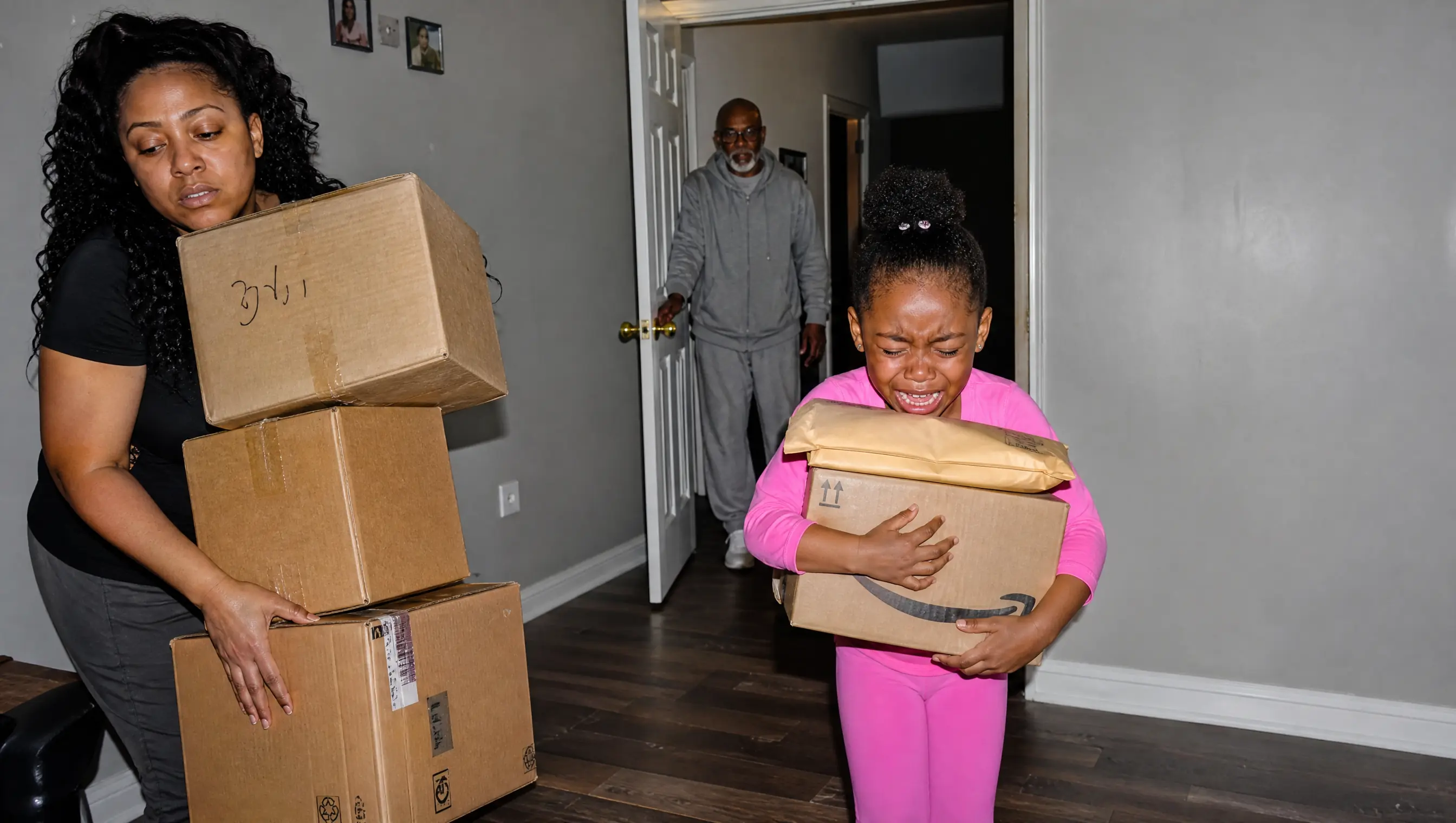
The shoebox of birthday cards, the tub of Halloween costumes that went back to the year she was four and insisted on being a tortilla. All morning the house had been getting emptier around the edges, the way a mouth gets emptier when a tooth comes out and your tongue won't stop finding the gap. The kitchen was done. The living room was a rectangle of paler carpet where the couch had been. Her grandfather's workroom off the garage had been done a month ago, by her mother, alone, at night, and Luz had never been allowed in to see it happen.
Now it was her room's turn, and her room was the last thing standing.
The walls were still lavender. She and Abuelo had painted them the summer she turned nine, him on the ladder doing the edges because his hand was steadier, her rolling the big middles and getting it in her hair. The gallery wall was still up, too, because her mother kept saying she'd get to it and then not getting to it: thirty-one frames in every size, black and gold and one made of popsicle sticks, crowded together over the desk. Abuela Pilar in her wedding dress in 1971, looking like she was about to laugh at the photographer. Her mother at fifteen with a terrible perm. Abuelo in his shop apron holding up a recovered armchair like a fish he'd caught. Luz as a baby, Luz in a Christmas pageant, Luz and Kiara at seven with their front teeth missing in the same spot, which they had believed at the time was a sign from God that they were meant to be best friends forever.
Under the wall, angled toward the dead television, were the two gaming chairs. Black with blue racing stripes, the kind with the bucket seats and the little headrest pillows. One was hers. One was Kiara's, though it had lived here for three years because Kiara's mother had said she was not having that spaceship in her living room. When the vinyl on both of them had cracked last winter, Abuelo had taken them into his workroom and re-covered the seats so carefully you could not see the seam unless you knew where to look. He had been an upholsterer for forty-one years. He said a chair was a promise you made to somebody's back.
Her mother came in with another box already in her hands.
Inez Montoya was wearing the grey cardigan she wore to everything that was hard, over a beige top that had a coffee stain near the hem she hadn't noticed. Her dark curls were pulled back so tight it looked like it hurt. She had been up since four-thirty. Luz knew because she had heard her in the hallway, taping, the screech of the tape gun going on and on like an animal that wouldn't stop complaining.
"Arms," her mother said.
Luz held out her arms. She didn't know why. Her body did it before she could decide. Her mother set the first box on them, the one marked LUZ — BOOKS in black marker, heavy enough that Luz had to bend her knees. Then the second, LUZ — DESK STUFF, on top of the first.
"Just get the last ones," her mother said. "We're behind schedule."
She said it the way she said everything now, flat and focused, looking at the box and not at Luz. Behind schedule. As if the house were a train and they had missed their stop. As if there were a timetable posted somewhere for how long it should take to empty out the only place you could remember living.