The first man who answered Claire Whitaker’s ranch ad laughed when he saw the work.
The second told her she should sell before the bank took the place.
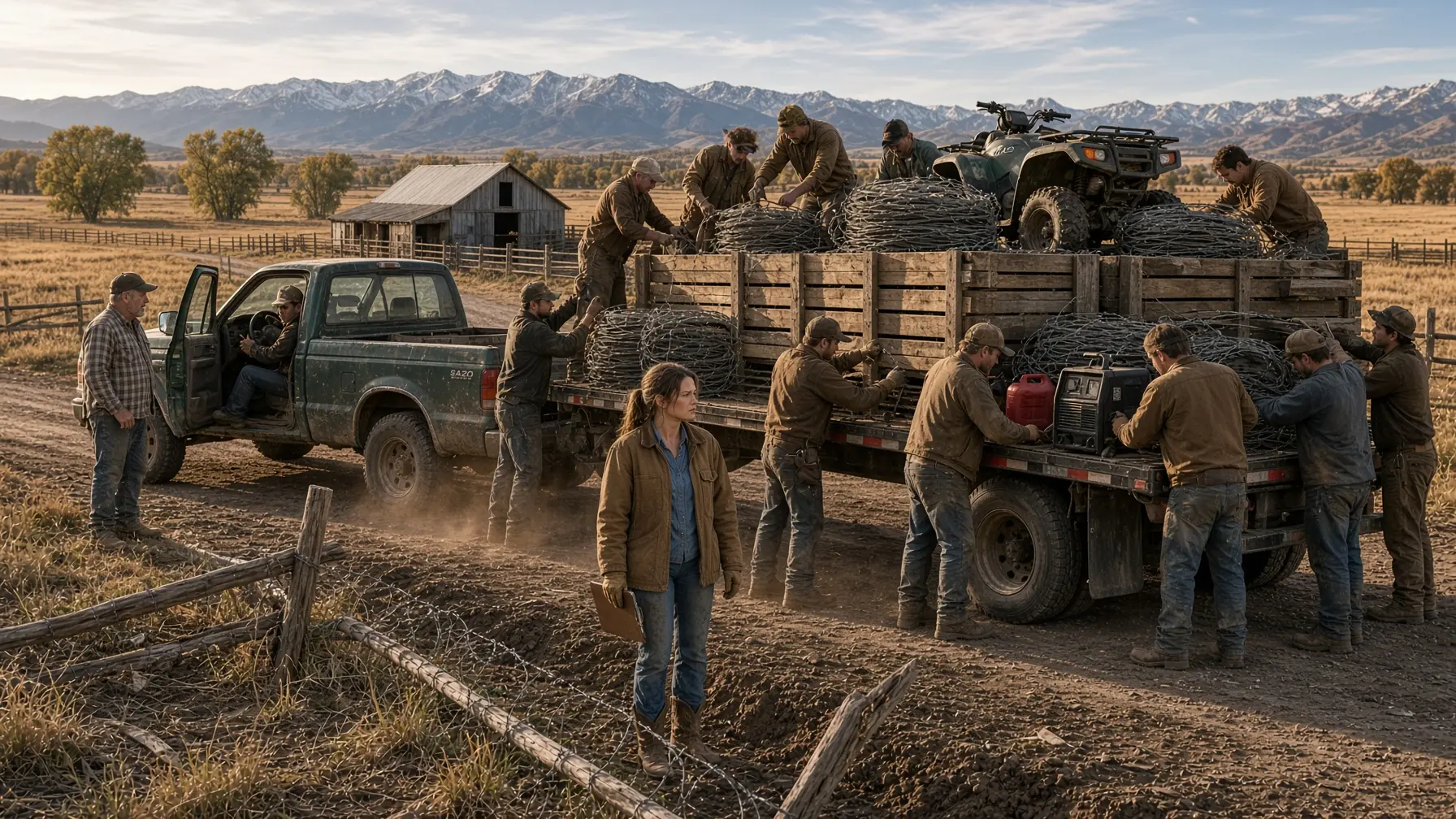
The third stood beside the collapsed north fence with his thumbs hooked through his belt, studied the ruined irrigation trench, and shook his head.
“Lady, one person can’t save this ranch in a day.”
Claire Whitaker did not argue.
She crossed his name off the clipboard.
Because none of them understood what happened at six o’clock Friday evening if the work was not finished.
At 6:01 p.m., Claire would not simply lose cattle access to water or miss a fall hay contract.
A financing clause buried inside a development agreement would activate.
Stonebridge Land Holdings would gain the right to assume control of Whitaker Ranch for less than one-fifth of its appraised value.
All 1,840 acres.
Pasture.
Creek frontage.
Hay ground.
The old barns.
The house where Claire had been born.
The hill where her grandfather’s ashes had been scattered.
And the man behind Stonebridge was Warren Hale.
Her father’s closest friend.
At Thomas Whitaker’s funeral eleven months earlier, Warren had stood beside Claire in a black suit, placed one hand on her shoulder, and said:
“Your dad asked me to look after you.”
At the time, Claire had believed him.
Now she understood that some promises sounded different after you knew what they were preparing you to lose.
Friday began at 5:37 in the morning.
Frost silvered the porch rail.
A red line of dawn stretched across the Wyoming plains.
Claire stood outside wearing her father’s old brown canvas coat and holding coffee she had forgotten to drink.
From the county road, Whitaker Ranch still looked beautiful.
Golden late-season grass.
Cottonwoods lining Miller Creek.
The horse barn catching the first sunrise across its silver roof.
A hundred black cattle spread across the west pasture.
From a distance, nothing looked desperate.
Claire knew better.
Three hundred yards of north fence had been flattened Wednesday night.
Not weakened.
Flattened.
Two water gates were jammed.
A pump-house belt had been cut clean through.
Twenty-seven fence posts had been broken or deliberately pulled loose.
Six carriage bolts were missing from the cattle chute.
Fresh truck ruts crossed the east drainage channels after midnight, crushing two shallow culverts and pushing mud into the diversion trench.
All of it less than forty-eight hours before a county agricultural compliance inspection.
Bad luck happened on ranches.
Wind broke fences.
Cattle leaned on posts.
Belts snapped.
Culverts clogged.
Bolts worked loose.
But bad luck did not cut rubber in a straight line with a blade.
Bad luck did not remove six bolts and leave the washers stacked beneath the chute.
Bad luck did not drive a heavy truck through a drainage field at two in the morning.
This was choreography.
Somebody wanted the ranch to fail inspection.
Claire’s phone buzzed.
WARREN HALE
She stared at the message.
Need to talk before noon. There may still be a graceful way out.
She deleted it.
Warren had been part of her life since she was six.
He had taught her to drive a stick shift on the ranch’s old Dodge.
Bought her first pair of real riding gloves.
Sat in the front row at her college graduation.
When Claire’s father died suddenly from a heart attack, Warren was the first person through the door.
He brought casseroles.
Helped Ellen Whitaker arrange accounts.
Called lenders.
Explained contracts.
Used the calm voice of an older family friend helping two grieving women through paperwork they could barely read without crying.
Seventeen days after the funeral, he brought one more packet.
A “temporary land-protection and development agreement.”
He said it would help secure bridge financing while estate matters settled.
Claire’s mother signed.
Claire had still been in Denver, finishing an engineering project before moving home permanently.
Six months later, while reviewing every document connected to the ranch, Claire found the clause.
If Whitaker Ranch failed to maintain specified agricultural operating conditions during the financing term, Stonebridge could trigger a distressed-control provision.
The clause was aggressive.
Possibly challengeable.
But litigation would take months.
Whitaker Ranch had days.
Claire had spent eight years as a civil engineer in Denver.
Drainage plans.
Water systems.
Infrastructure inspections.
Contract language.
She understood exactly what Warren had assumed she would not.
He still saw the girl who drew horses in feed-room dust.
Claire let him.
She did not know who had destroyed the fence.
She did not know who cut the belt.
She did not know who drove through the drainage channels.
But Warren somehow learned about every ranch problem before she reported it.
And every new disaster was followed by the same advice.
Sell.
Rest.
Let somebody else carry it.
Be realistic.
At 6:12 a.m., the first ranch hand applicant arrived.
He inspected the damage.
Then named a price almost three times what Claire had advertised.
She was already offering double the normal day rate.
“No,” she said.
He shrugged.
“Then lose the place.”
He left.
At 6:46, two brothers arrived.
They looked at the fence.
Then the culverts.
Then the clock.
Eleven minutes later, their truck disappeared down the road.
At 7:20, Claire stood beside the barn with Toby Reed.
Toby was sixty-eight and had worked Whitaker cattle since Claire was in elementary school.
His left shoulder predicted snow more accurately than local television.
His right knee had given up predicting anything except pain.
He looked toward the north fence.
Then toward Claire.
“What’d your dad say when machinery broke?”
Claire sighed.
“He had several versions.”
“The polite one.”
“There wasn’t one.”
Toby smiled faintly.
Then his expression became serious.
“Inspection’s four-thirty.”
“I know.”
“Compliance deadline six.”
“I know.”
“Fence. Water. chute. drainage. cattle move.”
“I know, Toby.”
He looked at her.
“That coffee’s been cold an hour.”
Claire looked at the cup in her hand.
“I know.”
Before the inspector arrived, they needed:
Three hundred yards of north perimeter secured enough to contain cattle.
Water restored to four troughs.
The cattle lane reinforced.
Two culverts cleared.
East drainage ruts repaired sufficiently to maintain runoff.
Thirty-eight steers moved from the low field.
The broken pump belt replaced.
And every repair documented.
Claire had herself.
Toby.
One tractor that started only after threats.
One welding unit.
And less than nine hours.
Her father would have started swearing.
Claire opened the toolbox instead.
At 7:51, diesel rumbled from the county road.
Toby looked up first.
A faded dark-green Ford came through the cottonwoods pulling a flatbed trailer.
The trailer was loaded properly.
Not randomly.
Fence posts stacked and strapped.
Wire rolls.
Come-alongs.
A portable welder.
Hydraulic post driver.
Two ATVs.
Fuel cans.
Shovels.
Sawhorses.
Toolboxes arranged by size.
Claire shaded her eyes.
“There are people in the truck bed.”
Toby squinted.
“Lord help us.”
The Ford stopped.
Passenger doors opened.
People began getting out.
One.
Two.
Three.
Four.
Claire lost count.
Then started again.
Nine.
The oldest appeared to be in his mid-twenties.
The youngest looked barely eleven.
They were all boys.
Or men, in the case of the older ones.
Different heights.
Different builds.
Same dark hair in varying shades.
Same way of immediately looking around the property instead of waiting to be entertained.
Then the driver stepped down.
Tall.
Lean.
Broad through the shoulders.
Maybe forty-seven.
Dark brown hat.
Weathered denim jacket.
Gray beginning at his temples.
He closed the door and approached Claire without hurry.
“Claire Whitaker?”
“Yes.”
“Caleb Mercer.”
He offered his hand.
His grip was firm, dry, brief.
“I saw your ad.”
Claire looked behind him.
“At this point I’m afraid to ask.”
Caleb followed her gaze.
“My boys.”
“All nine?”
“Yes.”
Toby coughed into one hand.
Claire stared at Caleb.
“I advertised for one emergency ranch worker.”
“I know.”
“You brought a small county.”
One corner of his mouth moved.
“You said the work had to be done today.”
“Yes.”
“So one man seemed like a bad interpretation of the problem.”
Claire almost laughed.
She had not slept enough for this.
“How much?”
“Your posted day rate.”
“For all of you?”
“For me.”
Claire folded her arms.
“And them?”
“They work for me.”
“That doesn’t answer the question.”
“It answers mine.”
She studied him.
“No.”
Caleb’s eyebrows lifted.
“I’m not letting nine people work a full ranch day for one wage.”
“The youngest three aren’t doing hired labor.”
Claire looked again.
“Then why are they here?”
“School’s out for teacher conference.”
The youngest boy lifted one hand from beside the trailer.
“Friday schedule.”