The first splash of red struck Amara Ellis just below her collarbone.
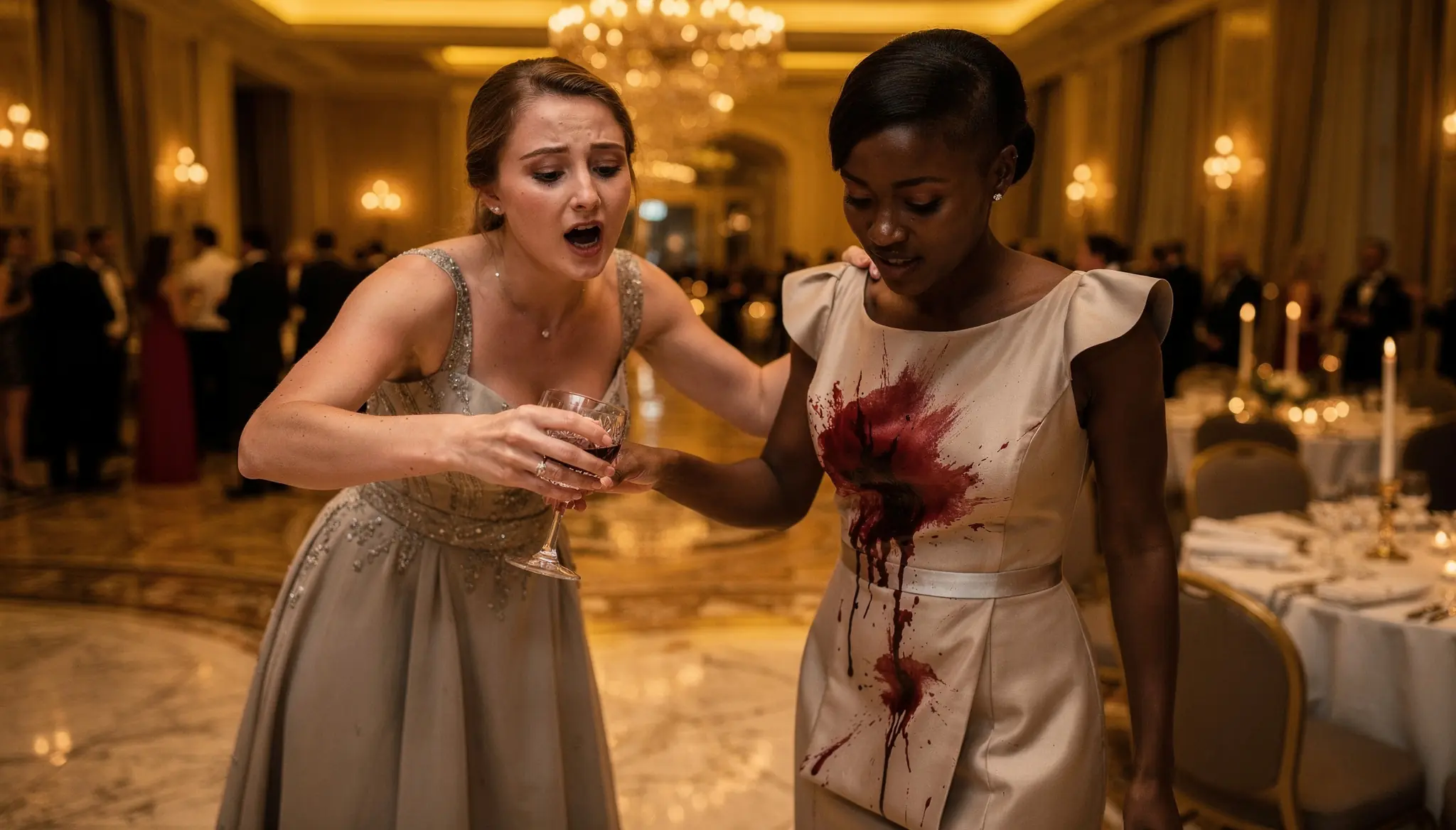
For an instant, she thought a server had stumbled with a glass of punch. Then the red wine spread down the white satin of her gown, cold and fast, carrying the unmistakable sweet, sharp scent of crushed grapes and alcohol.
It ran over the delicate stitches at her waist and gathered in the folds of the skirt. Across the crowded ballroom, a violinist missed a note. A woman near the dessert table gasped.
And Celeste Vaughn, standing close enough to reach out and steady her, lowered the empty glass and laughed.
“Oh, sweetheart,” Celeste said, her rose-gold evening gown glittering beneath the chandeliers. “Perhaps you should have chosen a dress the same color as the wine.” Her voice was loud enough for the people beside them to hear, though the smile she wore suggested they should take it as a joke. Amara looked down at the red streaks. A single drop rolled from the end of her shaking finger and landed on the marble floor. She was sixteen years old. She had spent four months making that dress. For several terrible seconds, all she could do was stare.
The St. Catherine Arts Foundation's annual celebration filled the ballroom of Charleston's Marlowe Grand Hotel with musicians, photographers, donors, and local families who had worked hard for invitations. The foundation sponsored a scholarship program for young artists from schools that had lost much of their arts funding. Its weekend celebration began with a Friday evening reception and ended with a Saturday morning showcase, when five finalists would present original work before a committee of professional designers and educators. Amara was one of those finalists. She had never been inside a hotel that smelled of fresh roses and polished wood before that night.
She had also never imagined she would be standing beneath crystal chandeliers while a beautiful woman deliberately ruined something her family could not afford to replace. Celeste was twenty-six, the daughter of the foundation's largest corporate sponsor and the unofficial face of its younger donors' committee. She knew every photographer by name. She knew how to make an insult sound like a compliment. When she tilted her head toward Amara's gown and gave a little theatrical sigh, several guests offered uncertain laughter, not because the moment was funny but because nobody knew whether refusing to laugh would make Celeste angry.
“It’s red wine,” Amara whispered. Her voice sounded small even to herself.
Celeste lifted one shoulder. “These receptions are crowded. Accidents happen.” A few steps away, a waiter was offering guests wine from a silver tray. The red liquid had come from a glass of cabernet, not from any art supplies. Amara had seen Celeste take the glass, pause, look directly at the front of the dress, and tilt her wrist. Now Celeste’s smile widened as she watched the wine soak across the fabric.
“Some people,” Celeste added, “should be more careful wearing white.”