I.
By a quarter past eleven, the last of the guests had gone out through the brass revolving doors of Achterberg's into the snow on Wisconsin Avenue, and Rosalind Achterberg was alone with the pyramid.
Or she thought she was.
The rotunda had been built in 1918 to make people look up, and it still did its job. Four stories of cream plaster rose to a coffered dome; tall windows ran along the street side, each one framing a column of blue streetlight and falling snow. For the gala, the display department had banked the marble floor with wrapped boxes in gold and oxblood paper and set two dozen small trees on plinths, each lit with warm white bulbs. The caterers had cleared the champagne flutes an hour ago. The string quartet had packed up. Someone had left a single program on a chair, and it said, in the typeface her grandmother had chosen in 1964, ACHTERBERG'S — ONE HUNDRED AND NINE CHRISTMASES — THANK YOU, MILWAUKEE.
The store would close for good on the thirty-first of January.
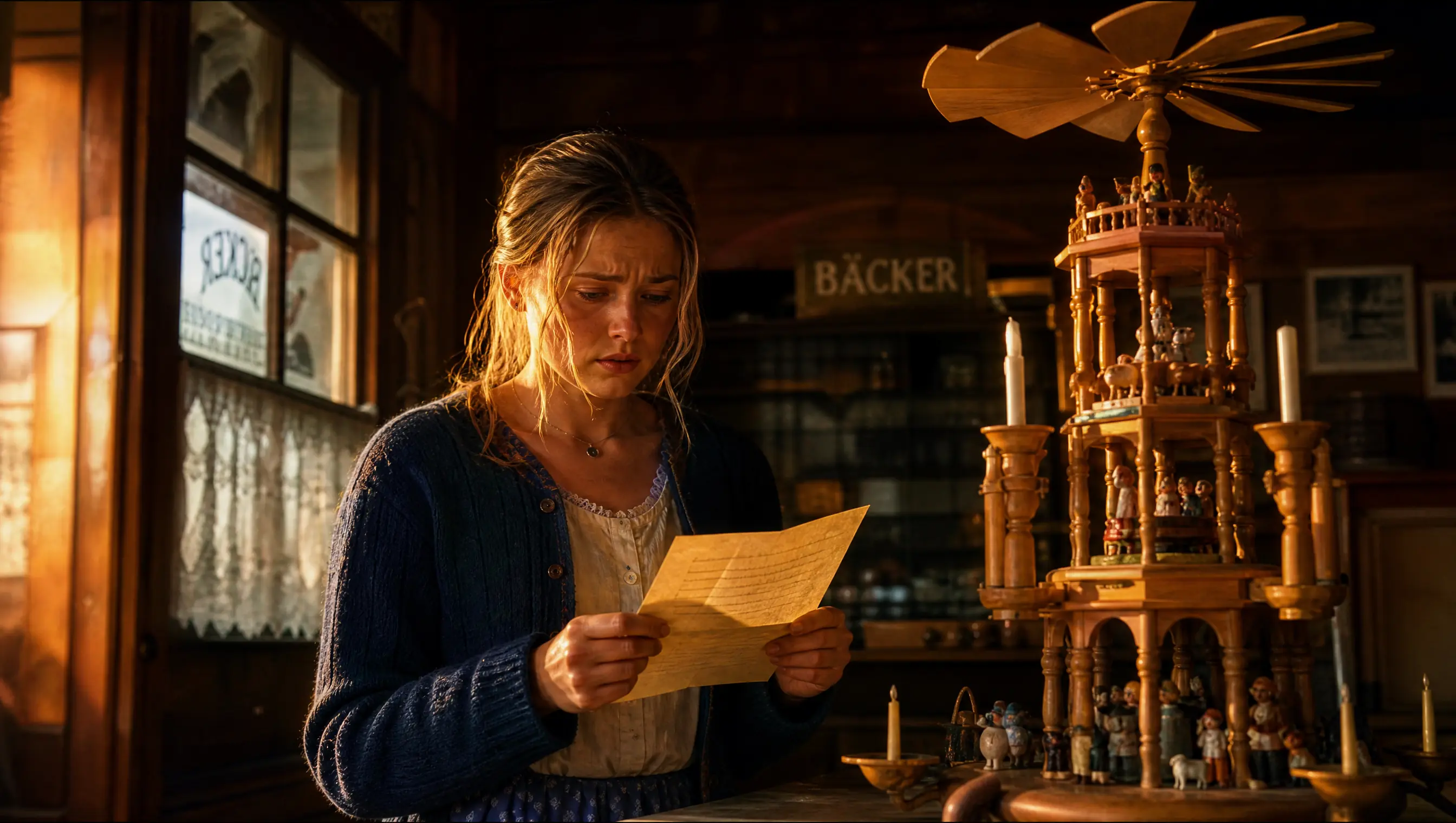
In the center of the rotunda stood the pyramid: five tiers of turned and carved linden wood, taller than any man in the building, crowded with nutcracker soldiers in red coats and black shakos, angels with trumpets, shepherds, a carved fir forest, a tiny sleigh. Dozens of candle-shaped lamps ringed each tier, and at the very top, where a great fan of paddles had once turned the whole thing round like a carousel, there was a flat wooden crown and a single brass socket, empty.
It had not turned since 2015, when the motor her father had installed in 1988 seized and the electrician said the gears were older than the building codes. It stood still now, every December, and people loved it anyway.
The star waited on a velvet cushion on the bottom ledge, where Roz had set it down at nine o'clock.
The star went up at the end of the gala. It always had. Her father had done it every year from a wooden stepladder, with Lucjan Pawlak from the display department holding the ladder's feet and pretending not to be nervous, and the whole floor would applaud. Before her father it had been her grandfather, and before him her great-grandmother Liesl, who had been five feet tall and had used, according to family legend, a stepladder and a broom handle.
Tonight Roz had given the speech. She had thanked the sixty-one people still on the payroll by name, which took eleven minutes, and the city, and her mother, and her father's memory, and she had said the sentence she'd rehearsed in the car — *A store is a promise you make to a street* — and it had come out fine. Then she had turned to the ladder and found that her hands were shaking so badly she could not have held a teacup.
So she had smiled and said, "The star goes up when the last guest goes home. That's the new tradition. Somebody has to start one."
They had laughed. They had loved her for it, a little. And now the last guest was gone, and the ladder had been folded and carried down to the basement by a helpful catering manager, and Roz — in her black velvet gala dress and her mother's pearl-and-diamond earrings, with her cream coat over her arm because she had meant to leave twenty minutes ago — looked at the star and at the bottom ledge of the pyramid and thought: *Well.*
The bottom ledge was a broad shelf of oak a foot off the floor, built to hold the outermost ring of figures. Her father had a rule about it, the only rule he had ever said in a voice that was not entirely kind: *Nobody stands on the ledge. Not you, not me, not the mayor.* She had been seven and had wanted to touch the shepherds.
She stepped out of her heels. She set her left foot on the ledge, then her right, sheer black tights on cold oak, and the whole pyramid gave the faintest sigh of settling wood. She lifted the star — gilded brass over a wooden core, as big as a dinner plate and heavier than it looked — and reached.
She was short by four inches. She rose onto her toes. The coat slid on her arm. The star's peg found the brass socket and would not go in; it needed to be pressed straight down, and she was pressing at an angle, and her balance tipped, and she thought, quite clearly, *This is how the last Achterberg goes. On the ledge. In tights.*