The platform was wood gone gray with weather, and the mountains beyond it wore snow the way a man wears a coat he cannot afford to take off. Overcast light flattened every edge. Steam from the locomotive rose and tore itself apart against the cold. Somewhere a brakeman shouted a number that meant nothing to anyone who did not work the line. Crates stood stacked near the freight door, stenciled GALENA and MINE in black letters that had run a little in last week's damp. The air smelled of coal, wet pine, and the iron tang of rails.
She stepped down carefully, one gloved hand on the railing, the other closed around the handle of a small hard brown suitcase with brass hardware. The dress was deep burgundy, fitted at the bodice with a long row of buttons, ruffles at the throat and cuffs, the skirt full enough to make the boards creak when she turned. Matching red boots showed beneath the hem when the wind lifted it. Dark reddish-purple leather gloves. A burgundy hat with dark feathers and a brooch that caught what little light there was. Fair skin. Blonde hair pinned with care that had survived two days of travel. Blue eyes that searched the platform as if names might be written on faces.
Thomas Reed stood a few yards off, late twenties or early thirties, brown hair under a dark brown Stetson, light stubble along his jaw, eyes more green than blue in that flat weather. A long brown duster over a brown vest and dark shirt, neckerchief knotted plain, brown trousers, boots with silver spurs that made a quiet sound when he shifted his weight. A leather gun belt rode his right hip, revolver holstered there as if it belonged to the clothing and not to a story. He had come to meet a freight invoice and a rumor. He had not come to meet a bride.
She walked toward him with the suitcase held close and stopped at a polite distance that still felt like a decision.
"Thomas Reed?"
"That's me."
"Then I finally found you."
He looked past her at the conductor wrestling a large trunk toward the baggage cart, then back at her face. "Found me for what?"
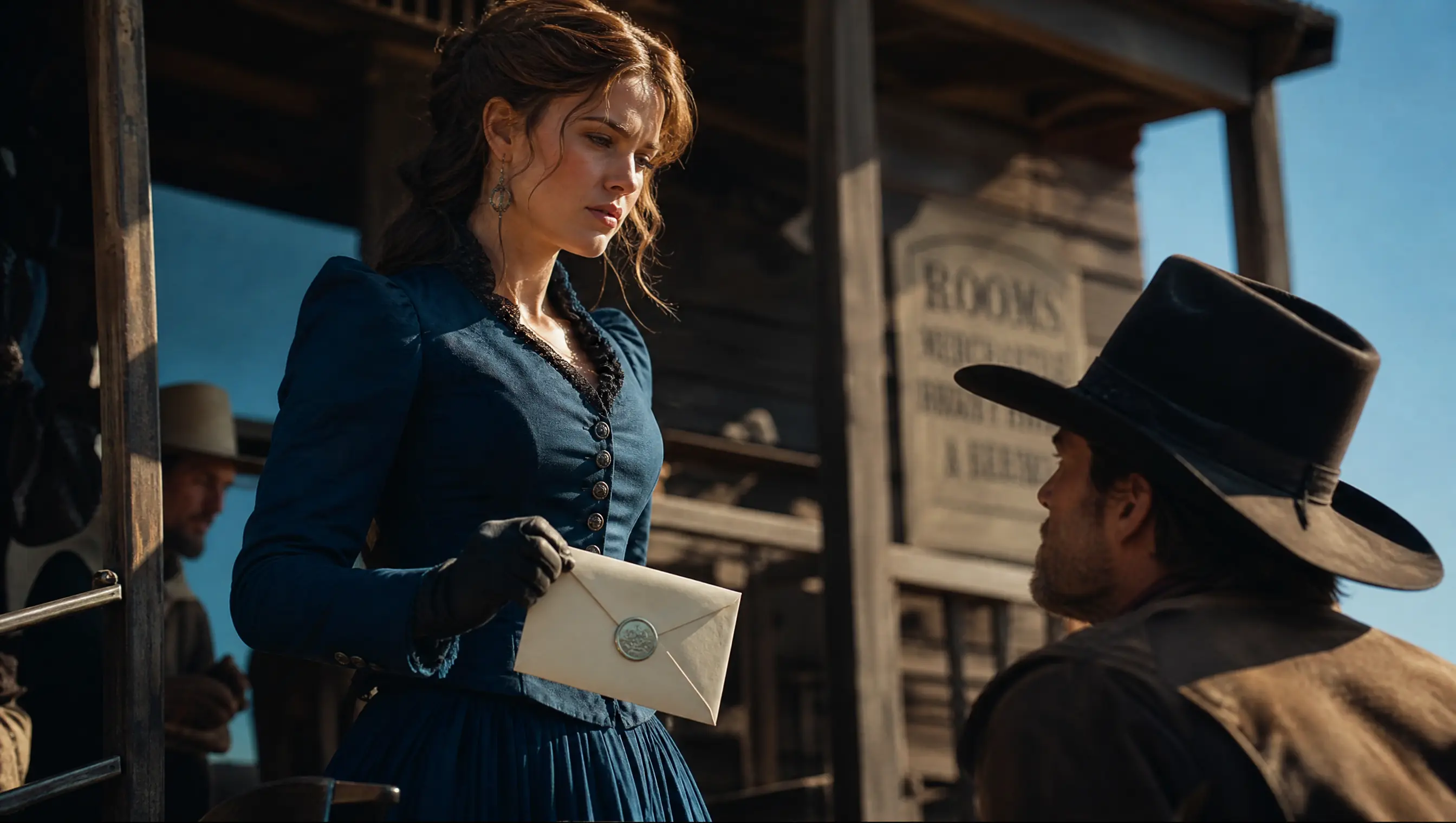
She set the suitcase down, opened the clasp with gloved fingers, and drew out a creamy envelope. Cursive showed through where the paper had thinned at the fold—Dear Mr. and Mrs. Howard & Edward—or the suggestion of those names, the kind of formal opening a person used when they wanted strangers to believe a letter had been meant for a household and not for a trap. The seal was silver-gray wax, an interlocking HR monogram, border text in a ring around it. She held it out.
"You asked me to become your wife."
Thomas did not take it at first. When he did, he turned it once, as if weight alone might confess something. "I never wrote this."
"That isn't funny."
"I'm not laughing."