The fluorescent lights in Harborview General's emergency triage bay hummed the way cheap lights always hummed—thin, relentless, a little sickly. Blue wooden-framed chairs sat in uneven rows under them, most occupied by people who had already learned how long a night could stretch.
A teenager with a swollen ankle rested his head against a wall painted the color of old mint gum. An older man coughed into the crook of his elbow and apologized to no one each time.
A woman in a business blouse scrolled her phone with one thumb and pressed an ice pack to her other wrist with the other, checking the time as if time might negotiate. Above the triage desk, blurry blue wayfinding signs pointed toward Radiology, Pediatrics, and the restrooms.
The desk itself was a low fortress of laminate and patience: a monitor with a screen-saver that had given up being cheerful, a desk phone with a sticky note that said BACKLINE, a stack of manila folders soft at the corners, and a nurse whose pen moved as if the paper beneath it were the only thing in the room that mattered.
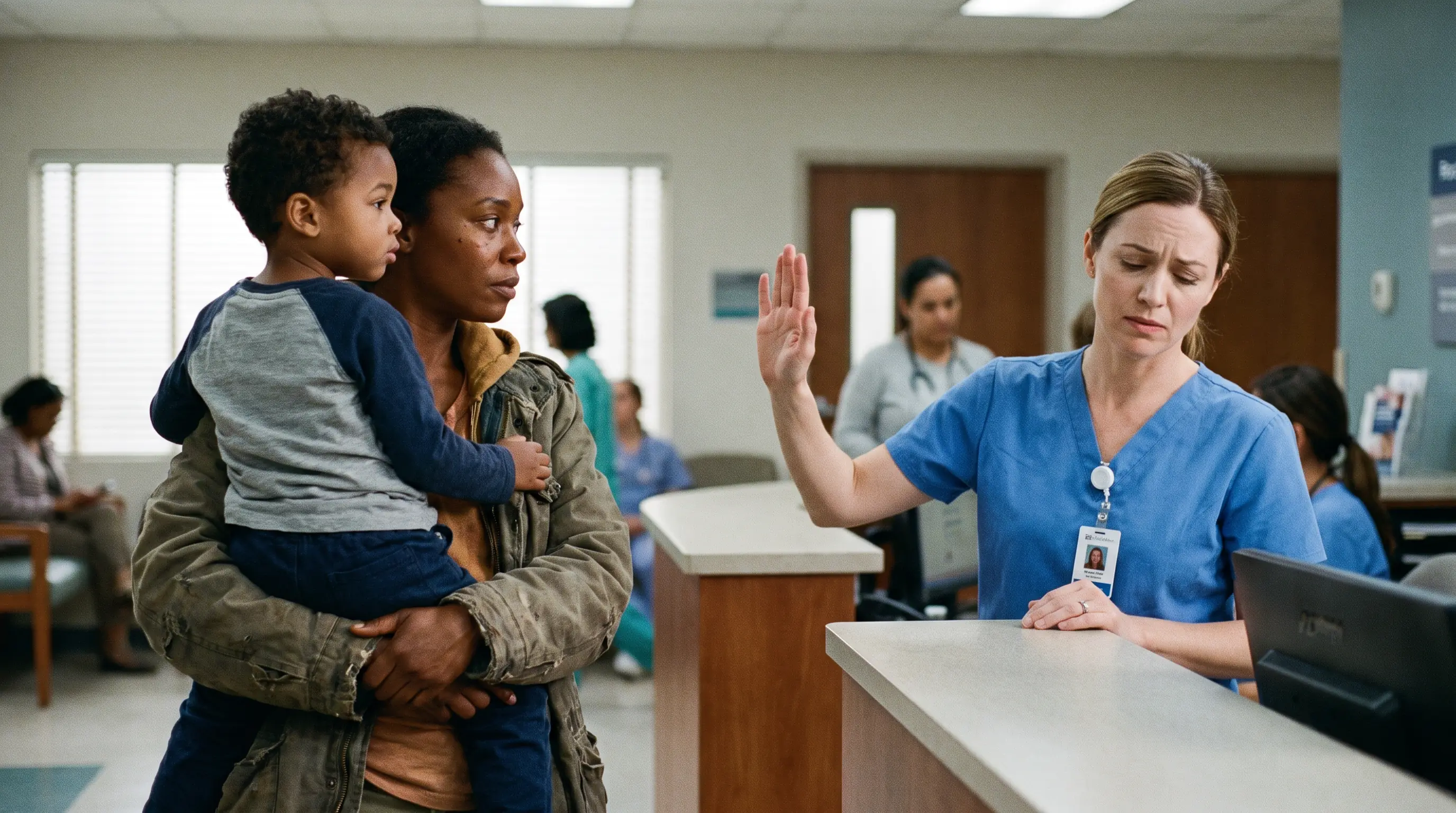
Alana Reeves ran across that floor with her son in her arms.
She was thirty-one, grey zip hoodie half-zipped over a white undershirt, grey sweatpants, white sneakers that had seen too many double shifts and one too many rainstorms in the Meridian parking lot. Her hair was in a messy high bun that had started neat at six that morning and surrendered sometime after dinner, when Devin's inhaler had stopped being enough and the kitchen clock had begun to look like an accusation. Devin was seven, light grey T-shirt, jeans, sneakers with a loose lace that slapped faintly against her forearm as she ran. His body was too heavy and too light at once—heavy with limpness, light with the terrifying sense that something essential was leaking out of him. His eyes were half-open and unfocused. A bright tear or bead of sweat clung to his cheek. Each breath was a thin, whistling fight, the kind that made strangers glance up and then glance away because looking too long felt like trespassing on fear.
Twenty minutes earlier she had been in their apartment hallway debating whether the car seat straps were tight enough while Devin's wheeze climbed the scale from concerning to intolerable. She had broken every speed limit she could afford to break and still arrived to fluorescent indifference. The distance between home competence and hospital dismissal was only a parking garage and a set of automatic doors.
"Please," Alana said when she reached the desk. Her voice cracked once and then steadied, because steady was what she knew how to do when monitors lied and families begged and the night shift still had six hours left. "He can't breathe right. I need someone now."
The nurse glanced up. She was white, late forties or early fifties, teal scrubs faded at the elbows, stethoscope around her neck, ID badge clipped to a pocket, hair tied back with the practical severity of someone who had stopped caring how it looked by the second hour of her shift. Nora Spalding. The badge said so in plain block letters, beside a photo in which Nora looked younger and less tired. She looked at Alana, then at Devin, then back down at the manila folder under her pen, as if the boy were a sentence she could edit later.