I.
It had rained on the night of Saint Matthew and on every night since, and by the last week of September in that year of 1816 the people of Wendlebury St. Giles had stopped remarking on it. There was no use. The wheat stood black in the stook on the low fields toward the river, sprouting where it stood. The barley had never properly ripened at all.
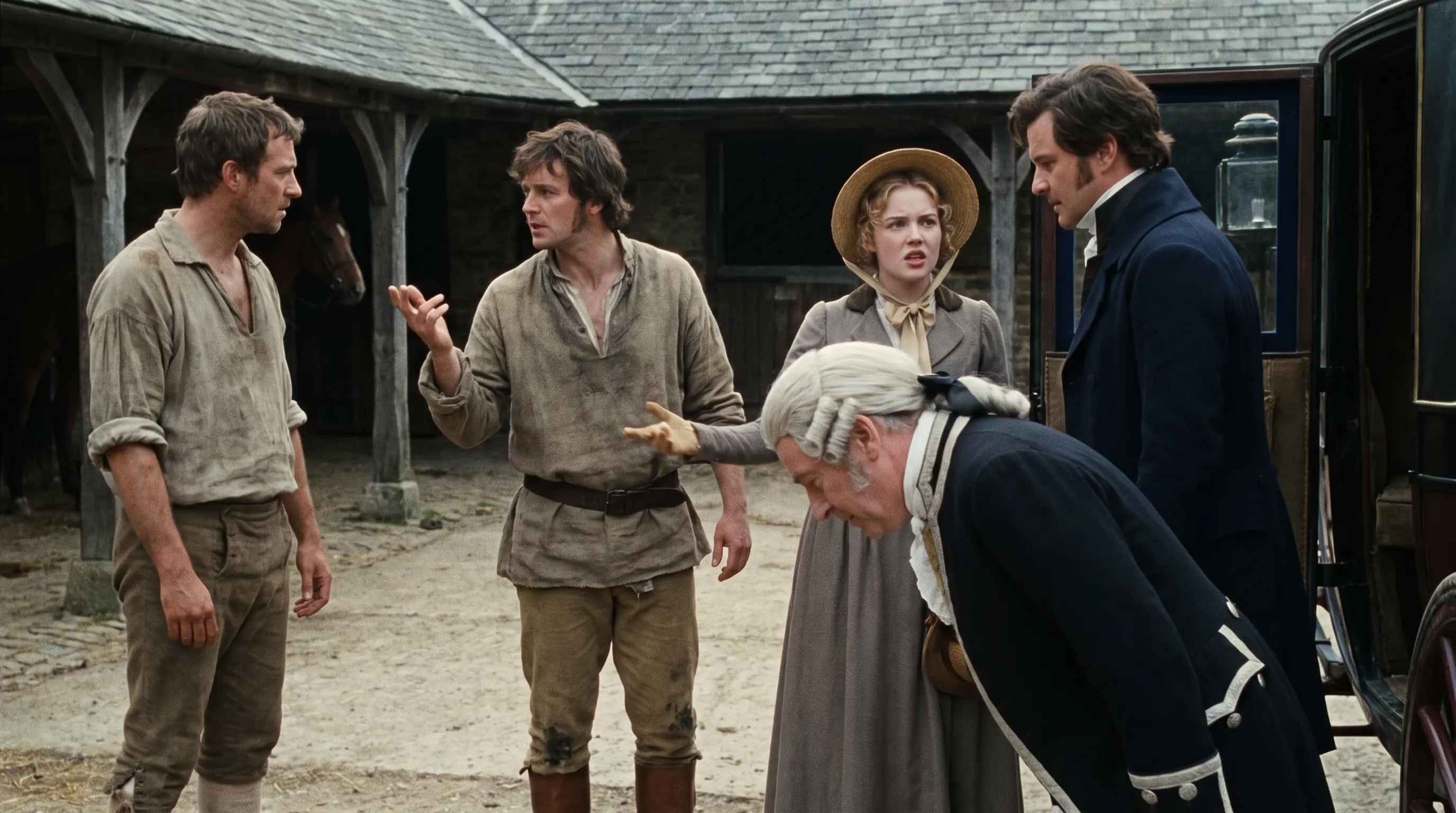
Miss Kezia Thorley went out through the rectory garden a little before six, while her aunt still slept and her uncle still snored with the regularity of a man who had made his peace with Providence and expected the same courtesy in return. She wore her oldest habit, the dark green one with the cuffs turned twice, and boots that had been resoled by Hobday the cobbler so many times that he had begun to call them "the Thorley estate."
The mist lay in the dips of the grass like milk in a saucer. The great house of Wendlebury Abbey rose out of it to the east, grey and long and blank-windowed, every shutter closed since the funeral in May. Below it, beyond the walled garden and the bothy and the old tithe barn, the stable block made a square of honey-coloured stone with a clock tower that had stopped at twenty past four on the day the old Duke died, because no one had had the heart to wind it.
Kezia meant to ride Sibyl one last time. That was the whole of her intention, and she had rehearsed it on the walk as if someone might stop her and demand it: the grey mare was to go to Tattersall's on Monday, with the other hunters, by order of the new Duke, and Kezia had ridden her four mornings a week for six years by the invitation of the old one, and she would ride her on Saturday at dawn if she had to saddle her with her own two hands.
The yard gate was unbarred. She noted that, and frowned, and went through.
Inside, the cobbles shone wet. The pump dripped. A barn cat sat on the mounting block with the air of a magistrate. There was a lantern burning in the far loose box—the big foaling box at the end, where old Bathsheba had been moved a week ago—and its light came out over the half-door in a soft yellow wedge that lay across the stones.
Kezia went to it before she went to Sibyl. Everyone in the parish knew Bathsheba was carrying late and carrying badly; Enoch Pridmore had been grey in the face about her at church on Sunday, which for Enoch was the equivalent of weeping in the aisle.
She looked over the half-door, and stopped.
The old mare was on her feet, head low, flanks dark with dried sweat, nosing at something in the straw. The something was a foal: wet still, all legs and astonishment, a bay with a white snip, folded up in the bedding like a carpenter's rule. And beside it, sitting with his back against the boards and his knees drawn up and his head tipped back against the wall, was a man Kezia had never seen in her life, fast asleep.
He was in his shirtsleeves, and the shirt had been a good one once and was now ruined: the right sleeve was dark to the shoulder, stiff with what she understood after a moment was blood and birth-water, and there was a long smear of it across his chest where he must have wiped his hand. His waistcoat hung on a nail. His boots were caked to the ankle. He had a narrow, weathered face, not handsome exactly, with a nose that had been broken and set by someone who was not a surgeon, and a day's dark beard, and his hair was too long for fashion and too short for a poet.
The foal made a small sound, a kind of creak. The man's eyes opened at once.