The red and blue lights appeared in Tessa Monroe’s rearview mirror just as she passed the elementary school on Willow Street.
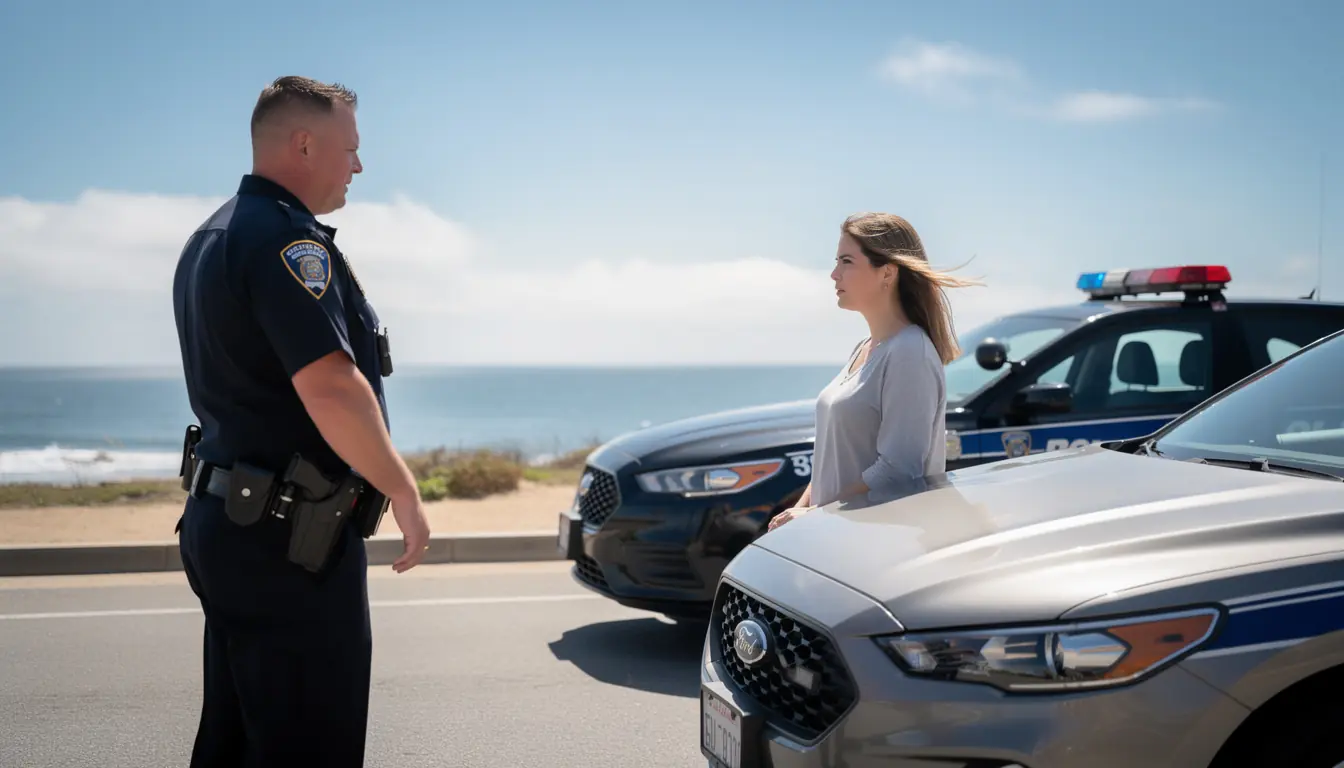
She had not been speeding. She had stopped at the last intersection, signaled before turning, and kept both hands on the wheel while waiting for a delivery truck to pull away from the curb. The only unusual thing about her silver sedan was that it was thirteen years old and had a small dent above the left rear tire.
Tessa checked the mirror again. The police cruiser was still behind her, its lights flashing hard against the windows of the closed shops.
She pulled into a legal parking space beside a pharmacy, turned off the engine, and looked at the clock.
7:18 a.m.
There was a lemon pound cake on the passenger seat, wrapped in a clean dish towel, and a birthday card in her handbag. She was supposed to reach her mother's house before eight. Her mother had turned sixty-four that morning, and Tessa had promised not to arrive with flowers from a gas station like she had the previous year.
The officer approached slowly, one hand resting near his belt. He was broad-shouldered, white, and perhaps forty-five, with a square face and a nameplate reading SGT. DANNER.
“Window down,” he ordered.
Tessa lowered it.
“Good morning, Sergeant. Is there a problem?”
“You know why I stopped you.”
“No, sir.”
“You ran the stop sign back there.”
Tessa glanced toward the intersection. “I came to a full stop. The school crossing guard was standing on the corner.”
Danner leaned closer. “Are you telling me I don't know what I saw?”
“I'm telling you what happened.”
“License, registration, insurance. Now.”
She handed him the documents from the console. Danner looked at her driver's license and then at the old sedan, as though deciding whether the two belonged together.
“Tessa Monroe,” he read. “That's your car?”
“Yes.”
“Where are you headed in such a hurry?”
“My mother's house.”
He glanced at the cake. “That her breakfast?”
“It's her birthday.”
“Funny. Everybody's got a little story when they get stopped.”
Another patrol car rolled up behind him. A young officer stepped out, a woman with short dark hair and a new uniform, and waited near the rear of Tessa's car.
Danner checked something on the screen inside his cruiser. When he returned, the expression on his face had changed.
“Step out of the vehicle.”
“Am I being cited for the stop sign?”
“I said get out.”
Tessa set her hands flat on the steering wheel. She was thirty-eight years old and had spent fifteen of those years learning how quickly an ordinary roadside encounter could become dangerous when one person with power decided that a question was an insult.
“I'm going to unbuckle,” she said. “Then I'll open the door.”
“Stop narrating and move.”
She followed his instruction. The cold morning air felt sharp against her face, and she stood beside the car in a navy cardigan, dark jeans, and low shoes.
Danner looked her up and down.
“Mind if I search your vehicle?”
“I don't consent to a search.”
His mouth tightened. “You think that stops me?”
“I am asking you to explain the legal basis.”
“Now I smell something suspicious.”
The young officer behind him shifted her weight. Tessa could see her badge: OFFICER ELLIS.
“You can check with your supervisor,” Tessa said.
“I'm the supervisor here.”