She was 19. He was 62. The marriage contract was nothing more than a bill of sale signed in her brother's gin-soaked parlor to clear a mountain of gambling debt.
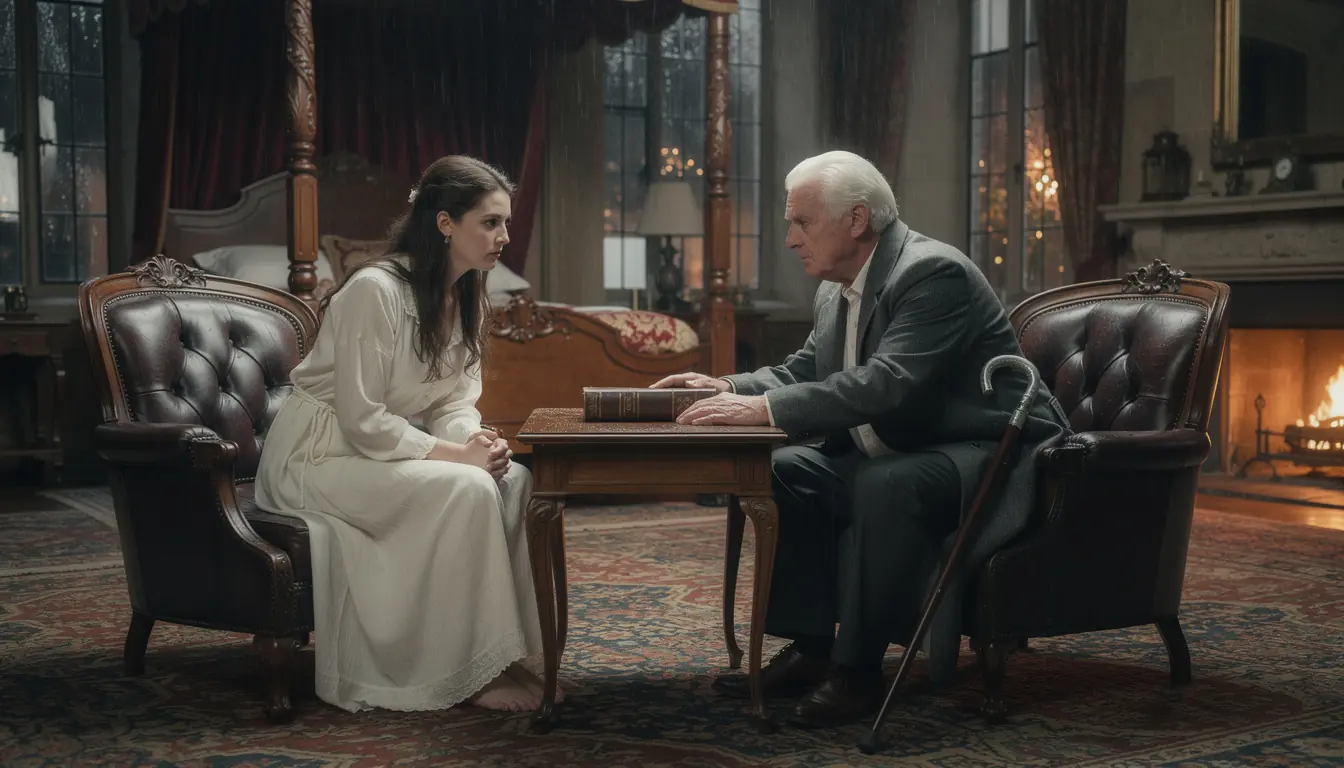 Josephine expected the worst. She expected a monster.She sat rigid in the master bedroom of a sprawling country estate, waiting for the heavy footsteps of the old duke to claim his purchased bride. But when the heavy oak door finally clicked open, what he handed her changed the course of her entire life.The rain battered the windows of the Harding estate like a collection of unpaid debts. Inside the parlor, the air was thick with the scent of stale gin, wet wool, and desperation.Josephine sat in a high-backed armchair, her spine completely straight, staring at a damp water stain on the faded floral wallpaper. She had memorized its shape over the last three hours: it looked like a skull.Her brother Charles paced the length of the room. The heels of his boots clicked unevenly against the warped floorboards. He was sweating despite the chill in the drafty house, pausing only to refill his glass from a decanter that was already half empty."He is late," Charles muttered, wiping his mouth with the back of his hand.Josephine said nothing. She wore her best gown, a stiff emerald-green silk monstrosity that had belonged to their mother. It was terribly out of fashion, pinched too tightly at the ribs, and smelled faintly of mothballs and dried lavender. It was the dress of a woman being presented, not for a season in London, but for a private auction."If he backs out now, I am ruined!" Charles hissed, rounding on her as if she were the architect of his misery. "Do you hear me, Josie? Ruined! They will throw me in Fleet Prison. Or worse, the men from the docks will simply break my legs!""I hear you, Charles," she said.Her voice was flat, stripped of any emotion. She had spent all her tears two days ago when he first told her of the arrangement: Thomas Ashbourne, the Duke of Clydesdale, a man older than their late father. A man known for his vast coal mines, his silent demeanor, and his immense, suffocating wealth. Charles owed men money; the Duke had offered to pay those men, provided Charles signed over the only asset the Harding family had left: her.A heavy carriage rumbled into the gravel drive, the sound crunching through the oppressive silence of the room. Charles bolted to the window, his face pale, then flushed red with manic relief."He is here."Josephine didn't move. She felt a cold numbness spread from her stomach to her fingertips. This was the moment her life ended.She was not a romantic. She had stopped reading poetry when she realized it did not put firewood in the hearth or meat on the table. She knew exactly what men were: they were creatures of transaction. Her brother traded her for his safety; the Duke was buying a young body to warm his bed and perhaps squeeze out a late heir. It was a business arrangement, nothing more.The parlor door opened. The housekeeper, Mrs. Gable, stepped aside, her eyes downcast.