Sarah Martinez wiped the sweat from her face as she finished cleaning the last bathroom on the third floor. It was 2:00 a.m., and the hospital was quiet except for the soft beeping of machines and the footsteps of night nurses. Her back ached from bending over toilets and mopping floors for the past eight hours. This was her life.
Every night, five days a week, she pushed her cleaning cart down the empty hallway, her rubber shoes making soft, squeaking sounds on the shiny floor. The wheels of her cart had a wobbly one that made a clicking noise with each turn. Sarah had learned to ignore these sounds long ago. They were part of her world now.
At 34 years old, Sarah had been cleaning hospitals for 12 years. She started when she was 22, right after her mother got sick. Someone had to pay the bills, and cleaning jobs were easy to find. You didn’t need special training or fancy clothes. You just needed strong hands and the will to work hard.
Sarah lived in a small apartment above her family’s restaurant. The building was old, and the walls were thin. She could hear everything from the restaurant below, the sizzling of food on the grill, the voices of late-night customers, and the clatter of dishes being washed. The smell of fried food always filled her apartment, making her clothes smell like grease even on her days off.
Her apartment had two small rooms. The bedroom barely fit her bed and a tiny dresser. The other room served as her kitchen, living room, and dining room all at once. There was no space for anything extra. No piano, no books, no decorations, just the basic things she needed to survive.
Growing up, Sarah had always been different from other kids. While they played games during recess, she would sit by herself and listen to the sounds around her. She loved the way the school bell rang in different tones depending on how hard someone pulled the rope. She noticed how the cafeteria ladies hummed while they served lunch and how their humming created little melodies that made her smile.
But music lessons cost money that her family didn’t have. Her father worked 16 hours a day in their small restaurant, cooking food for customers who barely left enough tips to pay the rent. Her mother helped when she could, but she got tired easily and had to rest often. There was never extra money for things like piano lessons or music books.
When Sarah was eight, her teacher at school noticed that she could remember any song after hearing it just once. The teacher suggested that Sarah’s parents think about music lessons. Sarah’s father laughed, not in a mean way, but in the tired way of someone who knew that dreams cost money they didn’t have.
“Music doesn’t pay bills,” he told the teacher. “Sarah needs to learn useful things.”
So Sarah learned useful things. She learned how to help in the restaurant after school. She learned how to count money and make change for customers. She learned how to clean tables and wash dishes. By the time she was 12, she could cook most of the items on their menu.
But late at night, when the restaurant was closed and her parents were sleeping, Sarah would sit by her small window and listen to the sounds of the city. Cars driving by made different musical notes depending on how fast they were going. The old pipes in their building created a rhythm when someone upstairs took a shower. Even the refrigerator in their restaurant hummed in a way that sounded like music to her.
Sometimes Sarah would tap out rhythms on her desk at school or on the counter at the restaurant. Her fingers would move like she was playing an invisible piano. She didn’t even realize she was doing it most of the time. It just felt natural, like breathing.
Years passed. Sarah finished high school and started working full-time to help her family. First, she worked in a factory making clothes. Then, she cleaned offices at night. Finally, she found the hospital job, which paid better than the others. Every month, she gave most of her paycheck to her parents to help pay for the restaurant and their apartment.
Sarah never complained about her life. She understood that everyone had to work, and her work was honest work. But sometimes, when she was cleaning the children’s ward at the hospital, she would hear music playing softly from the playroom. It was usually simple songs meant to help sick children feel better. But even those simple songs made something inside Sarah’s chest feel warm and excited.
One evening, Sarah was walking home from work when she saw a sign posted on the community center door. The community center was in an old building between a grocery store and a laundromat. Sarah had walked past it thousands of times, but never paid much attention to it.
The sign was written in bright blue letters:
“Free piano lessons for adults. No experience needed. Classes start next week.”
Sarah stopped walking and read the sign three times. Free piano lessons. She had never seen those words together before. Music lessons always cost money. Lots of money. But this sign clearly said free.
She looked around to make sure no one was watching, then carefully read the smaller words below.
“Community program for working adults. Classes every Tuesday and Thursday evening, 7:00 p.m. to 8:00 p.m. Piano provided. All skill levels welcome.”
Sarah’s heart started beating faster. Tuesday and Thursday evenings were her nights off from the hospital. She could come to these classes without missing work, and they said no experience was needed, which was good because she had no experience at all.
But doubt crept into her mind quickly. She was 34 years old. Wasn’t that too old to start learning piano? Most people who play piano started when they were children. Their fingers were young and flexible. Sarah’s hands were rough from years of cleaning with harsh chemicals. Her fingers were strong, but they were used to holding mops and scrub brushes, not delicate piano keys.
Also, what would she wear to a piano class? Sarah owned three sets of work clothes and one old dress that she wore to church sometimes. Would the other students be fancy people with expensive clothes and education? Would they laugh at a hospital janitor who wanted to learn piano?
Sarah stood in front of that sign for ten minutes, reading it over and over. Part of her wanted to walk away and forget about it. Life was easier when you didn’t want things you couldn’t have.
But another part of her, a part she had kept buried for many years, was waking up and asking questions.
What if she could learn to play piano?
What if those songs she heard in her head could come out through her fingers?
What if the music that lived inside her chest could finally find a way to escape?
Sarah took a deep breath and looked at the sign one more time. At the bottom, in smaller letters, it said, “First class, Tuesday, September 5th. Just show up.”
Just show up.
That didn’t sound too scary. She could just show up and see what happened. If it was too hard or too embarrassing, she could leave and never come back. But if she didn’t try, she would always wonder what might have happened.
Sarah walked the rest of the way home with the words “Just show up” repeating in her mind. For the first time in years, she felt excited about something that had nothing to do with work or paying bills. She felt excited about something that was just for her.
Maybe it wasn’t too late to learn something new.
Maybe 34 wasn’t too old to start chasing a dream she had given up long ago.
Maybe, just maybe, there was still time for music in her life.
Sarah fell asleep that night with her fingers moving against her pillow, practicing piano on an instrument that existed only in her dreams.
Tuesday evening came faster than Sarah expected. She had spent the weekend thinking about the piano class, changing her mind a dozen times about whether to go. On Monday, she almost convinced herself to forget the whole thing. But Tuesday afternoon, while she was eating lunch before her shift at the hospital, she made a decision. She would go to the class just once to see what it was like.
Sarah had never been inside the community center before. The building was older than she thought, with faded yellow paint and windows that needed cleaning. She pushed open the heavy glass door and found herself in a small lobby with worn carpet and fluorescent lights that buzzed softly overhead.
A woman with gray hair and a friendly smile sat behind a desk covered with papers and coffee cups. She looked up when Sarah walked in and pointed down a narrow hallway.
“Piano classes in room three,” the woman said. “Just follow the sound of music.”
Sarah walked down the hallway, her work shoes making more noise than she wanted them to. She could hear voices and the sound of piano keys being pressed. Her stomach felt nervous, like she was about to take a test she hadn’t studied for.
Room three was smaller than she expected. About 15 people sat in folding chairs arranged in a half circle around an old upright piano. The piano was brown wood with scratches and water marks on top, but it looked like it still worked fine.
Most of the other students were older than Sarah. There were several people with gray hair who looked like they were retired, and a few middle-aged people who probably had office jobs during the day. Sarah was relieved to see that everyone was dressed casually. Her clean jeans and work shirt didn’t look out of place.
The teacher stood next to the piano. She was a small Asian woman who looked to be in her 60s, with short black hair and kind eyes behind wire-rimmed glasses. She wore a simple blue sweater and comfortable shoes.
“Welcome, everyone,” the teacher said with a slight accent. “My name is Mrs. Chun, and I will be your piano teacher for the next 12 weeks. I have been teaching piano for 30 years, and I promise you that anyone can learn to play if they practice and have patience with themselves.”
Mrs. Chun asked each student to introduce themselves and explain why they wanted to learn piano. Sarah listened as people shared their stories. A retired man named Robert said he had always wanted to play piano, but his parents made him play football instead. A woman named Linda said her daughter was getting married and she wanted to surprise her by playing a song at the wedding.
When it was Sarah’s turn, she felt her face get warm.
“My name is Sarah,” she said quietly. “I work at the hospital, and I just... just always wanted to try playing piano.”
Mrs. Chun smiled at her. “That’s a perfect reason,” she said. “Music should be for everyone who wants it.”
The first lesson was about sitting properly at the piano bench and placing your hands correctly on the keys. Mrs. Chun showed them how to curve their fingers like they were holding a small ball. She demonstrated how to keep their wrists relaxed and their shoulders down.
“Piano playing should never hurt,” Mrs. Chun explained. “If your hands or arms hurt, you are doing something wrong. The music should flow through you like water, not fight against you like a storm.”
Sarah tried to copy what Mrs. Chun showed them. Her hands felt clumsy and uncertain on the keys. The other students seemed to catch on more quickly. Robert had played guitar before, so his fingers already knew how to be independent of each other. Linda had taken piano lessons as a child and remembered some of the basics.
Mrs. Chun taught them about the white keys and black keys and how they had names like letters of the alphabet. She showed them where to find middle C, the most important note for beginners. Sarah pressed middle C over and over, trying to remember exactly where it was and how it sounded.
They spent the rest of the class learning to play a simple five-note scale, C-D-E-F-G, up and down over and over. Sarah’s fingers stumbled at first, hitting wrong keys or pressing too hard. The sounds that came out were clunky and uneven, nothing like the smooth music she heard in her head.
But Mrs. Chun was patient with everyone. She moved around the room, gently adjusting hand positions and encouraging students who were struggling. When she came to Sarah, she noticed that Sarah’s hands were rougher than the other students.
“You work with your hands,” Mrs. Chun observed. “That’s good. Strong hands can make beautiful music once they learn to be gentle.”
After class, most of the students left quickly. Sarah lingered, looking at the piano and trying to process everything she had learned. Mrs. Chun was packing up her sheet music and books.
“How did you like your first lesson?” Mrs. Chun asked.
“It was harder than I thought it would be,” Sarah admitted. “My fingers don’t want to do what my brain tells them to do.”
Mrs. Chun laughed softly. “That’s normal. Your brain and your fingers need time to become friends. Right now, they are strangers. But if you practice, they will learn to work together.”
“I don’t have a piano to practice on,” Sarah said, feeling embarrassed.
“Many of my students don’t have pianos at home,” Mrs. Chun said. “You can practice finger exercises anywhere, on a table, on your leg, even in the air. The most important thing is to practice the movements until they become automatic.”
Sarah walked home that night feeling confused about how she felt. Part of her was excited that she had actually done it. She had gone to a piano class and learned something new. But part of her was discouraged. Playing piano looked so easy when Mrs. Chun did it, but when Sarah tried, her fingers felt like they belonged to someone else.
She thought about quitting before the next class. Maybe she wasn’t meant to play piano. Maybe some people were just born musical and others weren’t. Maybe she should stick to what she knew, cleaning and working and paying bills.
But Thursday evening came, and Sarah found herself walking back to the community center. She couldn’t explain why, but something pulled her back to that room with the old piano and the patient teacher.
The second class was about rhythm and counting. Mrs. Chun played simple patterns and had the students clap along. Sarah discovered that rhythm came more naturally to her than finger positions. She could feel the beat in her body, like her heart was keeping time with the music.
They learned a simple song called “Mary Had a Little Lamb.” It only used three notes, E, D, and C. Mrs. Chun played it first, and it sounded beautiful, even though it was just a children’s song. Then she had each student try.
When Sarah’s turn came, she positioned her fingers carefully over the keys and tried to remember the pattern. E-D-C-D-E-E-E. Her first attempt was shaky and slow, but she got most of the notes right.
Mrs. Chun nodded encouragingly. “Good,” she said. “Now try to make it smooth, like you’re telling a story about Mary and her lamb.”
Sarah tried again. This time she thought less about which keys to press and more about the melody itself. Something clicked, just for a moment, and the notes flowed together more naturally.
After class, Sarah stayed behind again. She asked Mrs. Chun if she could practice on the piano for a few more minutes. Mrs. Chun said yes, as long as Sarah locked the door.
When she was left alone with the piano, Sarah felt more relaxed. She played “Mary Had a Little Lamb” several more times, each attempt getting a little smoother. Then she experimented with playing the notes in different orders, seeing what sounds she could make. She discovered that if she played the notes more slowly, the song sounded sad. If she played them faster, it sounded happy. If she held some notes longer than others, it created a different feeling entirely.
This surprised her. She hadn’t expected that she could change the emotion of a song just by how she played it.
Week after week, Sarah returned to the piano class. She learned new songs, “Twinkle, Twinkle, Little Star,” “Happy Birthday,” and “Amazing Grace.” Each song was a little more complicated than the last, using more keys and requiring her fingers to move in new ways.
Sarah practiced everywhere. At work, during her breaks, she would tap out piano exercises on the breakroom table. At home, she practiced finger movements while watching the old TV in her tiny living room. She drew pictures of piano keys on paper and labeled them with note names, studying them until she could identify any key without looking.
The other students in the class progressed faster than Sarah. Robert started playing simple classical pieces. Linda was working on the wedding song she wanted to surprise her daughter with. But Sarah didn’t feel jealous or discouraged anymore. She was too busy discovering how much she loved the feeling of making music, even simple music.
Mrs. Chun noticed Sarah’s dedication. After the sixth week of classes, she approached Sarah with a suggestion.
“Would you like to stay after class sometimes and practice more?” Mrs. Chun asked. “I see how much you love this, and I think extra practice would help you a lot.”
Sarah’s face lit up. “Yes,” she said without hesitation. “I would love that.”
So Sarah began staying after every class, practicing on the community center piano while Mrs. Chun graded papers or prepared for other lessons. Sometimes Mrs. Chun would give her extra exercises to work on or show her a new technique that wasn’t covered in the regular class.
During these private moments, Sarah felt like she was discovering a part of herself that had been hidden for 34 years. Her rough hands, which were so good at scrubbing and cleaning, were learning to create beauty instead of just removing dirt. Her strong fingers, which had held countless mops and brushes...
Three months had passed since Sarah started taking piano lessons. What began as a curious experiment had become the most important part of her week. She looked forward to Tuesday and Thursday evenings more than she looked forward to her days off from work.
Something had changed in how Sarah approached the piano. During her first month, every lesson felt like climbing a mountain. Each new song was a challenge that required all her concentration and effort. But now, in her third month, something different was happening. The music wasn’t fighting against her anymore. It was starting to flow through her in ways that surprised everyone, including herself.
Mrs. Chun noticed the change first. During a regular class, she had taught the students a simple version of Canon in D by Pachelbel. It was more complicated than anything they had learned before, with a repeating bass line that required the left hand to play independently from the right. Most of the students struggled with the coordination. Robert, who had been one of the faster learners, got frustrated trying to make his hands work separately. Linda found the rhythm confusing and kept stopping in the middle to start over.
But when Sarah tried the piece, something magical happened. Her left hand found the bass pattern naturally, like it had been waiting for this moment all her life. Her right hand picked up the melody and began adding small decorations that weren’t written in the music, little flourishes and variations that made the simple arrangement sound richer and more interesting.
Mrs. Chun stopped teaching and listened. The other students stopped their own practicing and turned to watch Sarah. In the small community center room, with its buzzing fluorescent lights and folding chairs, Sarah was creating something beautiful and unexpected.
When Sarah finished playing, the room was quiet for a moment. Then Robert started clapping, and the other students joined in. Sarah looked up from the piano keys, surprised by the attention.
“Where did those extra notes come from?” Linda asked. “They weren’t in the sheet music.”
Sarah felt her face get warm. “I don’t know,” she said honestly. “They just felt like they belonged there.”
Mrs. Chun walked over to the piano with a thoughtful expression.
“Sarah, can you play that again? But this time, I want you to play only what’s written on the page. No extra notes.”
Sarah tried to play the piece exactly as written, but it felt wrong somehow. Her fingers wanted to add the decorations, wanted to make the melody more interesting. It was like trying to speak without using half the words she knew.
“It’s hard to play it plain,” Sarah admitted. “The other notes want to come out.”
Mrs. Chun nodded slowly. In 30 years of teaching, she had seen maybe five students who had what Sarah was displaying, the ability to hear music beyond what was written on the page. It was rare and precious, and it couldn’t be taught. Either you had it or you didn’t.
After that class, Mrs. Chun asked Sarah to stay behind for a longer practice session than usual. Instead of giving Sarah exercises to work on, Mrs. Chun sat down next to her at the piano bench.
“I want to try something with you,” Mrs. Chun said. “I’m going to play a simple melody, and I want you to listen carefully. Then I want you to play it back to me, but add whatever you think would make it sound better.”
Mrs. Chun played a basic melody in C major, just eight notes going up and down the scale. It was the kind of simple tune that beginning students might learn in their first month.
Sarah listened, then placed her hands on the keys. She played the melody back, but instead of just eight plain notes, she added a harmony line with her left hand. She changed the rhythm slightly, making some notes longer and others shorter. She repeated the melody a second time, but an octave higher, creating an echo effect.
What started as eight simple notes became a minute-long piece of music that told a story. It had a beginning, a middle, and an end. It had emotion and movement and life.
Mrs. Chun sat in amazement. “Sarah, how did you know to do that?”
“I could hear it in my head,” Sarah explained. “When you played the simple version, I heard all these other possibilities, like there was more music hiding behind the notes you played.”
This was when Mrs. Chun realized that Sarah had a gift that went far beyond what could be learned in a community center class. Sarah had an instinctive understanding of harmony, rhythm, and musical structure that usually took years of advanced study to develop.
But Sarah didn’t understand how unusual her abilities were. To her, what she was doing felt natural. She assumed that everyone who played piano could hear the extra music hiding in simple melodies. She thought that everyone could feel the way certain chord progressions wanted to resolve, or how a melody line wanted to be supported by harmony.
Mrs. Chun began giving Sarah more challenging pieces to work on during their after-class sessions. She introduced Sarah to the music of Bach, with its complex interweaving melodic lines. She showed her Chopin waltzes, with their flowing rhythms and elegant decorations. She played recordings of Mozart sonatas and Beethoven symphonies.
Sarah absorbed everything like a sponge. She couldn’t read the advanced sheet music yet. Her reading skills were still at a beginner level. But when Mrs. Chun played a piece for her, Sarah could hear the structure underneath. She could identify the main melody, the supporting harmonies, and the way the composer had put everything together.
More importantly, Sarah began to understand how she could take those ideas and make them her own. When Mrs. Chun taught her a simple Bach minuet, Sarah learned it exactly as written first, but then she would experiment with it, trying different rhythms or adding her own harmonies. She never changed the core of what Bach had written, but she found ways to make it personal.
Mrs. Chun started bringing in books of sheet music from her personal collection, advanced books that she normally used with students who had been playing for years. She would play pieces for Sarah to listen to, then help her learn simplified versions.
Sarah’s favorites were the romantic composers, Chopin, Schumann, and Rachmaninoff. Their music spoke to something deep inside her. When Mrs. Chun played Chopin’s Nocturne in E-flat major, Sarah felt like she was hearing her own emotions expressed in sound. The longing, the beauty, the mix of sadness and hope. It was like Chopin had looked into her heart and written music about what he found there.
“Can I learn to play that?” Sarah asked after hearing the nocturne for the first time.
Mrs. Chun hesitated. The piece was far beyond Sarah’s current technical level. It required advanced finger coordination, complex pedaling, and subtle musical interpretation that took most students years to develop.
“It’s very difficult,” Mrs. Chun said gently. “Maybe we should wait until you’ve been playing for a few more years.”
But Sarah couldn’t get the piece out of her head. She went home that night and could still hear every note of the nocturne in her mind. She lay in bed moving her fingers against her pillow, trying to remember how the melody went.
The next day at work, during her lunch break, Sarah went to the hospital’s small library and used one of their computers to look up the nocturne on YouTube. She listened to it over and over with her headphones on so she wouldn’t disturb other people. She discovered that different pianists played the piece in different ways. Some played it faster, some slower, some emphasized the melody more, others brought out the harmony.
Sarah realized that there wasn’t just one right way to play a piece of music. Each pianist brought their own interpretation to the notes.
This excited Sarah in a way she couldn’t fully explain. It meant that when she added her own touches to the simple pieces she was learning, she wasn’t doing anything wrong. She was doing what every musician did, taking the composer’s notes and making them come alive through her own understanding and emotion.
Sarah began staying later and later after piano class. Mrs. Chun had given her a key to the community center so she could lock up after practicing. Some nights Sarah would practice until midnight, losing track of time as she explored the piano’s possibilities.
She worked on the pieces Mrs. Chun assigned, but she also experimented with her own ideas. She would take a simple melody like “Amazing Grace” and try playing it in different keys or with different rhythms. She discovered that changing the key could completely change the mood of a song. Playing “Amazing Grace” in a minor key made it sound mysterious and sad instead of hopeful and uplifting.
One evening, while practicing a simple arrangement of “The Swan” by Saint-Saëns, Sarah found herself playing notes that weren’t in the sheet music. Her left hand began playing a bass line that supported the melody in a new way. Her right hand added subtle variations to the melody line, making it more expressive.
When she finished playing, Sarah realized that she had essentially rewritten the arrangement. It was still “The Swan,” but it was her version of “The Swan.” The basic melody was the same, but everything else, the harmony, the rhythm, the emotional expression, came from inside her.
This was the moment when Sarah began to understand that she might have a real talent for music. Not just the ability to learn songs that other people had written, but the ability to create her own musical ideas, to take existing music and make it uniquely hers.
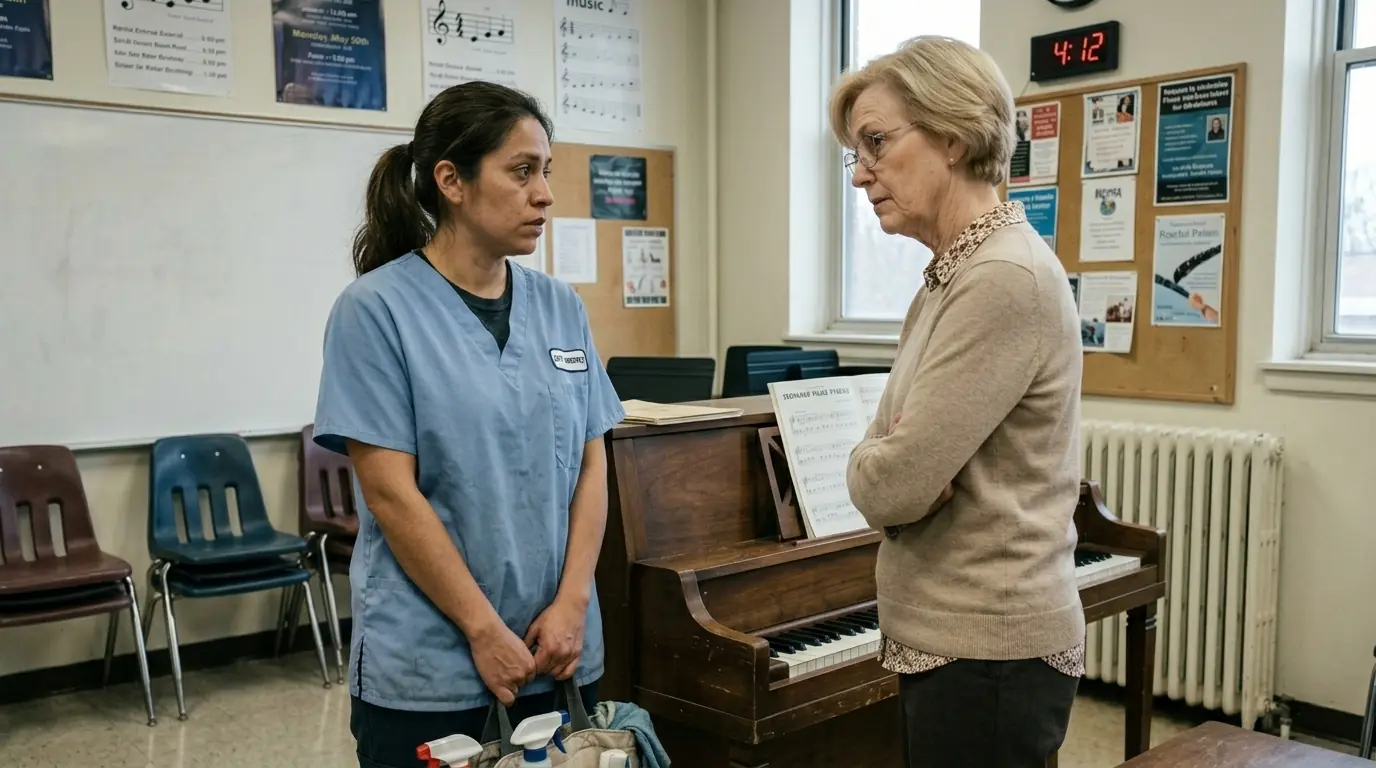
Mrs. Chun arrived early for the next class and heard Sarah playing her version of “The Swan.” She listened from the hallway, not wanting to interrupt. When Sarah finished, Mrs. Chun walked into the room with tears in her eyes.
“Sarah,” she said softly, “that was composition.”
Sarah’s biggest problem was time. She could only access the piano at the community center twice a week during class, and for a few hours afterward when Mrs. Chun let her stay to practice. But the music in her head didn’t follow a schedule. It was there when she woke up in the morning, when she was cleaning hospital rooms at night, and when she was trying to fall asleep.
She needed more time with a piano, but she couldn’t afford to buy one. Even a small keyboard cost several hundred dollars, money that Sarah didn’t have. Her paycheck from the hospital went to rent, food, and helping her family with the restaurant. There was never anything left over for extras, especially not something as expensive as a musical instrument.
But Sarah was determined to find ways to practice even without a piano.
She started by creating a paper keyboard. Using a ruler and a pen, she drew piano keys on several pieces of paper and taped them together to make a keyboard that was almost the right size. She put this paper keyboard on her kitchen table and practiced finger exercises while she ate breakfast.
At first, practicing on paper felt silly. There was no sound, no feedback, no way to know if she was pressing the right keys. But Sarah discovered that the finger movements were important even without sound. Her hands needed to learn the patterns, the distances between keys, the way different fingers had to stretch to reach certain notes.
She practiced scales on her paper keyboard every morning before work. C major, G major, F major, all the scales Mrs. Chun had taught her. She would move her fingers across the paper keys, humming the notes in her head. Gradually, her muscle memory improved. When she got back to the real piano on Tuesday and Thursday nights, her fingers knew where to go.
Sarah also practiced during her breaks at work. The hospital break room had several tables where employees could eat lunch or take coffee breaks. During quiet moments when Sarah was alone in the breakroom, she would practice finger exercises on the table surface.
She discovered that different tables made different sounds when she tapped them. The plastic tables made a sharp clicking sound. The wooden table in the corner made a softer, more musical tone. Sarah preferred the wooden table because she could almost imagine that it was a piano.
Her co-workers began to notice Sarah’s unusual behavior. During breaks, instead of reading magazines or talking on her phone like other employees, Sarah would sit at a table moving her fingers in complicated patterns, sometimes humming softly to herself.
“What are you doing, Sarah?” asked Maria, another janitor who had worked at the hospital for many years.
“Practicing piano,” Sarah explained, feeling a little embarrassed.
Maria looked at the empty table. “I don’t see a piano.”
“I’m taking lessons,” Sarah said. “But I don’t have a piano at home, so I practice the finger movements wherever I can.”
Maria looked confused, but she wasn’t mean about it. “That’s nice, honey. I didn’t know you were musical.”
Neither did Sarah until recently. But every day, she was discovering new things about herself and her relationship with music. She realized that she had been hearing music in everyday sounds her whole life, but she had never known how to express what she was hearing.
So Sarah started carrying a small notebook with her everywhere. When she heard interesting sounds or rhythms during her day, she would write them down using a simple system she invented. A short line for quick sounds, a long line for sustained sounds, curves for sounds that went up or down in pitch.
She wrote down the rhythm of the hospital elevator. Ding, whoosh, thunk, ding. She noted the melody of the coffee machine in the breakroom, a series of beeps and gurgles that seemed to follow a pattern. She even transcribed the rhythm of her own footsteps walking down different hallways.
At home, Sarah’s practice sessions became more creative. She couldn’t play a real piano, but she could work on other aspects of music. She checked out books about music theory from the public library and read them during her lunch breaks. She learned about major and minor scales, about chord progressions, about how composers structured their pieces.
Sarah discovered that understanding music theory helped her make sense of the patterns she heard in her head. When she listened to classical music on her old radio, she could identify the key changes and chord progressions that the composers used. She began to understand why certain combinations of notes sounded happy while others sounded sad.
She also found free music lessons on YouTube, watching them on her old laptop when she got home from work. The video quality wasn’t great, and the sound cut out sometimes, but Sarah absorbed everything she could. She learned about proper posture, about pedaling techniques, about how to shape musical phrases.
Most importantly, Sarah discovered that she could practice listening. She would put on classical music and focus completely on what she was hearing. She trained herself to follow individual melody lines through complex pieces. She learned to identify different instruments in orchestral music. She practiced hearing the difference between major and minor keys, between different time signatures.
This kind of practice didn’t require a piano, but it was just as valuable as finger exercises. Sarah’s ear was becoming more sophisticated. When she did get to play the real piano on Tuesday and Thursday nights, she could hear more clearly when something sounded right or wrong.
Mrs. Chun noticed Sarah’s rapid improvement and asked her about her practice routine.
“I practice every day,” Sarah told her, “just not always on a piano.”
“What do you mean?” Mrs. Chun asked.
Sarah explained her system of paper keyboards, table practice, and listening exercises. Mrs. Chun was amazed by Sarah’s creativity and dedication.
“Most students practice only when they have access to a piano,” Mrs. Chun said. “But music is much bigger than just the instrument. You’re practicing music in your mind and in your heart. That’s why you’re improving so quickly.”
Mrs. Chun began giving Sarah special assignments that she could work on without a piano. She taught Sarah to analyze pieces of sheet music, identifying the key signatures and chord progressions even without playing them. She had Sarah listen to recordings and write down what she heard, the structure of the pieces, the way themes were developed, the techniques the composers used.
Sarah dove into these assignments with enthusiasm. She realized that learning about music was like learning a new language, and she was hungry to become fluent. Every piece of information helped her understand the music she heard in her head.
One of Sarah’s most productive practice sessions happened during a night shift at the hospital. It was a particularly quiet night. No emergencies, no urgent cleaning tasks. Sarah found herself alone in the children’s playroom, which had an old electronic keyboard that was missing several keys.
The keyboard didn’t sound very good, and many of the keys didn’t work at all. But for Sarah, it was like finding treasure. She could practice finger movements on real keys, even if the sound wasn’t perfect. She could work on pieces that used only the keys that still functioned.
Sarah spent two hours that night playing the broken keyboard, working on simplified versions of the pieces Mrs. Chun had taught her. She had to be creative, transposing melodies to keys that still worked, finding alternative fingerings for passages that used broken keys.
This challenge turned out to be excellent training. When Sarah got back to the good piano at the community center, playing on proper keys with full sound felt easy by comparison. Her technique had improved significantly from adapting to the limitations of the broken keyboard.
Sarah also began to volunteer at the community center on weekends. She offered to help with cleaning and maintenance in exchange for extra practice time on the piano. The center director was happy to have the help, and Sarah was thrilled to have more access to the instrument.
During these weekend practice sessions, Sarah had the piano room completely to herself, without other students around, without the pressure of a formal lesson. Sarah felt free to experiment in ways she never had before.
She worked on the pieces Mrs. Chun had assigned, but she also explored music that was far beyond her supposed skill level. She found sheet music for Chopin nocturnes in the center’s small music library and tried to figure out how to play them. Most of it was too difficult for her current technique, but she could work out the main melodies and some of the simpler passages.
Sarah discovered that she learned better by trying pieces that were too hard for her than by sticking to pieces that were easy. The challenging music forced her to stretch her abilities, to find new solutions to technical problems, to push beyond what she thought she could do.
During one of these weekend sessions, Sarah attempted to play the opening of Rachmaninoff’s Piano Concerto No. 2. She had heard it on a classical music radio station and fallen in love with the sweeping emotional melody. The sheet music was incredibly complex, far beyond anything she had tried before.
Sarah couldn’t play the piece as written. It required technical skills she hadn’t developed yet. But she could pick out the main melody line. She could play a simplified version of the left-hand accompaniment. Gradually, over several weekend sessions, she began to piece together a version that her current abilities could handle.
It wasn’t Rachmaninoff’s original version, but it was recognizable. More importantly, it was beautiful. When Sarah played her simplified arrangement, she felt the same emotional impact that she felt when listening to professional recordings.
Spring arrived with news that would change everything for Sarah. Mrs. Chun made an announcement at the beginning of class one Tuesday evening that made everyone sit up with interest.
“The community center is planning its annual talent showcase,” Mrs. Chun told the class. “It’s a chance for people to share their hobbies and skills with the community. They’re looking for piano students who would like to perform.”
Sarah felt her stomach flutter with nervousness and excitement. The idea of playing piano in front of strangers was terrifying, but also thrilling. She had been playing for six months now, and she had progressed far beyond what anyone expected, including herself.
“The performance would be very casual,” Mrs. Chun continued, “just family and friends from the community. Nothing fancy or formal. Each performer would play for about five minutes.”
Robert raised his hand. “What kind of pieces should we play?”
“Something you feel confident about,” Mrs. Chun said. “Something that shows what you’ve learned, but also something you enjoy playing. The most important thing is that you feel comfortable with your choice.”
After class, Mrs. Chun approached Sarah privately.
“I hope you’ll consider participating in the showcase,” she said. “You’ve made remarkable progress, and I think performing would be a wonderful experience for you.”
Sarah felt torn. Part of her wanted to share her music with other people. She had discovered something beautiful in herself, and she wanted others to hear what she could do. But another part of her was afraid. What if she made mistakes? What if people didn’t understand why a hospital janitor was trying to play piano? What if they thought she was being foolish?
“What should I play?” Sarah asked. “I’m not sure any of my pieces are good enough for a performance.”
“I think you should play ‘Für Elise’ by Beethoven,” Mrs. Chun suggested. “You’ve been working on it for the past month, and you play it beautifully. It’s a piece that most people recognize, and it’s perfect for your current level.”
Sarah nodded, but privately she felt disappointed. “Für Elise” was a lovely piece, and she did play it well, but it felt safe, predictable. It was the kind of piece that people expected to hear from a beginner piano student.
The truth was Sarah had been working on something much more challenging. During her weekend practice sessions at the community center for the past two months, she had been slowly learning Rachmaninoff’s Piano Concerto No. 2. Not the full concerto, that would be impossible for someone at her level. But she had been working on the opening theme, the part that had captured her heart when she first heard it on the radio.
Sarah had created her own arrangement of the opening theme. She had simplified the left-hand accompaniment and adapted the right-hand melody to fit her current technical abilities. It wasn’t the full professional version, but it captured the emotional power and beauty of Rachmaninoff’s original composition.
Every weekend, Sarah spent hours working on this piece. She had memorized it completely, playing it over and over until it felt like a part of her. When she played the Rachmaninoff, she felt like she was expressing something deep and true about herself, something that “Für Elise” couldn’t capture.
But Mrs. Chun didn’t know about Sarah’s secret project. Sarah had always practiced the Rachmaninoff when she was alone at the community center, never during regular class time or when Mrs. Chun was around. She wasn’t sure her teacher would approve of her attempting something so far beyond her supposed level.
Sarah went home that night thinking about the talent showcase. The performance was still six weeks away, giving her plenty of time to perfect “Für Elise,” if that’s what she chose to play. But the more she thought about it, the more she felt drawn to the idea of performing the Rachmaninoff instead.
The next few weeks passed quickly. Sarah continued attending her regular piano classes, working on the pieces Mrs. Chun assigned and practicing “Für Elise” as suggested. But during her weekend sessions, she focused entirely on the Rachmaninoff opening.
Sarah had reached the point where she could play the piece from memory without making any significant mistakes. More importantly, she had found her own interpretation of the music. She played it slightly slower than most professional recordings, which allowed her to bring out the emotional depth of the melody. She had developed her own style of phrasing that made the music sound personal and heartfelt.
One Saturday afternoon, while Sarah was practicing the Rachmaninoff at the community center, something magical happened. She had been working on a particularly difficult passage where the melody moved between her hands in a complex pattern. Suddenly, everything clicked into place. Her hands moved across the keys with complete confidence. The melody flowed seamlessly, and the music filled the room with power and beauty.
For the first time, Sarah felt like she wasn’t just playing notes on a piano. She felt like she was channeling something larger than herself, expressing emotions and ideas that went beyond words. The music came through her, but it also came from her, as if she and Rachmaninoff were collaborating across time to create something beautiful.
When she finished playing, Sarah sat quietly at the piano bench, amazed by what had just happened. She realized that this was what she wanted to share at the talent showcase. Not a safe, predictable piece that showed she could follow instructions, but this piece that revealed who she really was as a musician.
The decision scared her. Playing Rachmaninoff at a community talent show was ambitious to the point of being risky. People might think she was showing off or trying to be something she wasn’t. Mrs. Chun might disapprove of her choosing something so advanced without permission.
But Sarah also knew that she would regret it if she played it safe. The Rachmaninoff represented everything she had discovered about herself over the past six months. It represented her willingness to work harder than anyone expected, to dream bigger than seemed reasonable, to find beauty in places where others might not think to look.
Two weeks before the talent showcase, Mrs. Chun asked each student to confirm what they would be performing. When it was Sarah’s turn, she took a deep breath and made her decision.
“I’d like to play something different from ‘Für Elise,’” Sarah said.
Mrs. Chun looked surprised. “Oh? What would you prefer to play?”
“The opening theme from Rachmaninoff’s Piano Concerto No. 2,” Sarah said quietly.
The room fell silent. The other students looked at Sarah with expressions ranging from surprise to confusion. Mrs. Chun’s eyebrows rose significantly.
“Sarah,” Mrs. Chun said carefully, “that’s a very advanced piece. Are you sure you’re ready for something that challenging?”
“I’ve been working on it during my weekend practice sessions,” Sarah explained. “I’ve created my own arrangement that fits my current abilities. I’d like to show you, if that’s okay.”
Mrs. Chun nodded, though she looked concerned. “Please go ahead.”
Sarah walked to the piano and positioned her hands over the keys. She could feel everyone watching her, waiting to see if she could really play something as ambitious as Rachmaninoff. For a moment, doubt crept into her mind. Maybe this was a mistake. Maybe she should stick with “Für Elise” after all.
But then Sarah heard the opening notes in her head, the sweeping melody that had captured her heart months ago. She placed her fingers on the keys and began to play.
The music that filled the community center room was nothing like what anyone expected to hear from a beginner piano student. Sarah’s arrangement captured all the emotional power of Rachmaninoff’s original composition while adapting it to her current technical level. The melody soared and dipped with perfect phrasing. The accompaniment provided rich harmonic support without being too complex for her left hand to handle.
Most importantly, Sarah’s interpretation was deeply personal. She played with a level of musical maturity that usually took years to develop. Every note was carefully shaped. Every phrase was thoughtfully expressed. The music told a story of longing, hope, struggle, and triumph, Sarah’s own story told through Rachmaninoff’s notes.
When Sarah finished playing, the room was completely silent. She looked up from the piano keys to find everyone staring at her in amazement. Mrs. Chun’s eyes were filled with tears.
“Sarah,” Mrs. Chun said softly, “that was extraordinary. How long have you been working on that piece?”
“About two months,” Sarah admitted. “I know it’s more advanced than what we’ve been doing in class, but I fell in love with the melody, and I wanted to learn how to play it.”
Robert shook his head in disbelief. “That was incredible. I’ve been playing guitar for 20 years, and I recognize real musical talent when I hear it. You have something special, Sarah.”
Linda nodded in agreement. “I’ve never heard anything like that in a community center class. You should be performing in concert halls, not talent shows.”
Mrs. Chun walked over to Sarah, still looking amazed. “I need to ask you something honestly. Have you had other musical training that you haven’t told me about? Private lessons or classes when you were younger?”
“No,” Sarah said. “This community center class is the only musical instruction I’ve ever had. Everything else I’ve learned from library books, YouTube videos, and just... listening.”
Mrs. Chun sat down heavily in one of the folding chairs. In 30 years of teaching, she had never encountered a student like Sarah. The combination of natural talent, dedicated practice, and musical instinct was extraordinary.
“Sarah,” Mrs. Chun said, “I need to tell you something important. What you just played, the technical skill, the musical interpretation, the emotional depth...”
The night of the talent showcase arrived faster than Sarah expected. She had spent the past two weeks preparing mentally and emotionally for this moment. But as she stood in the small backstage area of the community center auditorium, her heart was beating so fast she could hardly think straight.
The community center had been transformed for the evening. Folding chairs were arranged in neat rows facing a small stage that had been set up at one end of the main room. The old upright piano that Sarah knew so well had been moved to the center of the stage and tuned specially for the performance. Simple stage lights had been borrowed from the local high school, giving the humble space an unexpectedly professional appearance.
Sarah peeked through the curtain that separated the backstage area from the audience. About 60 people had come to watch the showcase, family members, friends, and neighbors who wanted to support the community center’s programs. She recognized some faces from the neighborhood, including several people who ate regularly at her family’s restaurant.
Her parents were sitting in the third row, looking proud, but also confused. Sarah had told them she was taking piano lessons, but they had never heard her play. They couldn’t understand how their daughter, who cleaned hospital floors for a living, had become confident enough to perform in front of a crowd.
Mrs. Chun was sitting in the front row with a woman Sarah didn’t recognize. The stranger was elegantly dressed in a dark blue dress and had the kind of composed, attentive posture that suggested she was someone important. Sarah wondered if this was the conservatory director that Mrs. Chun had mentioned.
The showcase had already been going for an hour. Sarah had listened from backstage as various community members shared their talents. An elderly man had played folk songs on his guitar. A group of teenagers had performed a dance routine they had learned from YouTube videos. A woman in her 40s had sung a beautiful version of “Amazing Grace” that brought tears to several people’s eyes. Each performance had been warmly received by the audience. People clapped enthusiastically and called out encouragement. The atmosphere was supportive and friendly, more like a family gathering than a formal concert.
But Sarah felt different from the other performers. They were sharing hobbies and skills that brought them joy, but they weren’t necessarily trying to prove anything or change their lives. For Sarah, this performance felt like much more than entertainment. It felt like a test that would determine her future.
Sarah looked down at her clothes and felt a familiar wave of insecurity. She was wearing the same blue dress she had worn to high school graduation 15 years ago. It was the nicest dress she owned, but it was obviously old and out of style. The fabric had faded slightly, and there was a small stain near the hem that she hadn’t been able to completely remove.
The other performers had looked confident and polished. Sarah felt like she was pretending to be something she wasn’t, a real musician instead of a hospital janitor who had learned to play piano in her spare time.
“Sarah Martinez,” called the volunteer who was coordinating the backstage area. “You’re next.”
Sarah’s stomach dropped. She had been dreading and anticipating this moment for weeks, and now it was here. There was no more time to practice, no more time to second-guess her song choice, no more time to worry about whether she was making a terrible mistake.
She walked to the edge of the stage and waited while the previous performer, a 12-year-old boy who had recited a poem about his pet hamster, took his bow and walked off stage. The audience applauded warmly, and then the community center director stepped up to the microphone.
“Our next performer is Sarah Martinez,” the director announced. “Sarah works at City General Hospital and has been taking piano lessons here at the community center for the past six months. She’ll be playing a piece by Rachmaninoff.”
Sarah heard a few murmurs from the audience. Rachmaninoff was a name that many people recognized as being serious classical music, not the kind of thing they expected to hear at a community talent show. She saw her parents exchange glances, looking surprised and slightly worried.
Sarah walked across the stage to the piano bench, her legs feeling unsteady. The stage lights were brighter than she had expected, making it difficult to see the audience clearly. She could hear people shifting in their chairs, programs rustling, someone coughing softly.
She sat down at the piano bench and adjusted her position. The piano felt familiar. It was the same instrument she had been practicing on for months, but the setting made everything feel different. The silence in the room was complete now, with 60 people waiting to hear what she would do.
Sarah placed her hands on the keys and felt their familiar weight and texture. She had played this piece hundreds of times during her weekend practice sessions. She knew every note, every phrase, every subtle dynamic change. But now, with an audience watching, she felt like she was about to attempt something impossible.
Doubt flooded her mind. What if she forgot the music halfway through? What if her hands froze up from nervousness? What if people thought she was being ridiculous, trying to play music that was obviously too advanced for someone like her?
Sarah closed her eyes and tried to remember why she had chosen this piece. It wasn’t because she wanted to show off or impress anyone. It was because the music meant something to her. It expressed feelings and experiences that she couldn’t put into words. It told the story of her life, the struggle, the dreams, the unexpected discovery of beauty in difficult circumstances.
She thought about all the hours she had spent practicing on paper keyboards and broken instruments. She thought about the nights she had stayed late at the community center, working through difficult passages until they became natural. She thought about the moment when she first heard this melody and felt like it was speaking directly to her heart.
Sarah opened her eyes and looked out at the audience. She could see Mrs. Chun in the front row, smiling encouragingly. She could see her parents looking nervous but proud. She could see neighbors and strangers all waiting to hear what she had to offer.
This was her moment, not to prove that she was as good as professionally trained musicians, but to share the music that lived inside her, to show what was possible when someone followed their passion despite difficult circumstances, to demonstrate that beauty could emerge from the most unlikely places.
Sarah took a deep breath and placed her fingers on the keys.
The opening notes of Rachmaninoff’s Piano Concerto No. 2 began to fill the small auditorium. The first few measures were soft and contemplative, like someone thinking out loud. Sarah played them with perfect control, each note carefully shaped and timed. The melody emerged gradually, building from simple statements into more complex musical ideas.
The audience fell completely silent. This was not what they had expected to hear at a community talent show. The music was sophisticated, emotionally powerful, and performed with a level of skill that seemed impossible from someone who had been playing piano for only six months.
As Sarah continued playing, she felt her nervousness disappear. The music took over, carrying her along with its emotional flow. She forgot about the audience, forgot about her old dress and her rough hands, forgot about all the reasons why she might not belong on a stage playing classical music.
She was no longer Sarah, the hospital janitor, who was pretending to be a musician. She was simply a person sharing something beautiful with other people, using the language of music to communicate feelings that went beyond words.
The melody soared and dipped through different emotional territories. There were moments of quiet reflection, passages of passionate intensity, and sections where hope and sadness seemed to dance together. Sarah’s arrangement captured all of these moods while remaining technically manageable for her current abilities.
What made the performance extraordinary was not just Sarah’s technical skill, but her musical interpretation. She played with the emotional maturity of someone who had lived through real challenges and found meaning in struggle. Every phrase was shaped by her personal understanding of what the music meant.
The audience was completely captivated. People who had come expecting to hear simple songs and amateur performances found themselves listening to something approaching professional quality. The music filled the small space with power and beauty that transformed the community center auditorium into something resembling a concert hall.
Mrs. Chun sat in the front row with tears streaming down her face. In 30 years of teaching, she had never been more proud of a student. The woman sitting next to her, Dr. Patricia Williams, the conservatory director, was leaning forward in her chair, completely absorbed in what she was hearing.
Sarah’s parents watched in amazement as their daughter revealed a side of herself they had never known existed. This was the same person who cleaned hospital floors and helped serve food in their restaurant. But she was also someone capable of creating beauty that moved people to tears.
As the piece approached its climactic moment, Sarah felt completely connected to the music. Her hands moved across the keys with confidence and grace, bringing out every nuance of melody and harmony. The final measures built to a powerful conclusion that seemed to contain all the emotion and energy that had been building throughout the piece.
When Sarah played the final chord, she held it until the sound completely faded away. Then she lifted her hands from the keys and sat quietly for a moment.
The moment Sarah’s fingers touched the piano keys, everything in the small auditorium had changed. The casual chatter that had filled the room during previous performances had stopped completely. Parents who had been half watching while checking their phones had suddenly looked up. Children who had been fidgeting in their seats had become perfectly still.
The opening notes of Rachmaninoff’s Piano Concerto No. 2 weren’t loud or dramatic. They were soft, almost tentative, like someone beginning to tell a very important story. But there was something in the way Sarah played those first few measures that commanded attention. Every note was perfectly placed. Each silence carefully timed. The melody emerged with crystalline clarity.
In the third row, Sarah’s mother leaned forward and whispered to her husband, “Is that really our Sarah?”
Her father could only nod, too amazed to speak. They had raised their daughter, worked alongside her in the restaurant, watched her clean other people’s messes to help support the family. But they had never seen this side of her, this person who could create beauty that made strangers hold their breath.
Mrs. Chun, sitting in the front row, felt her heart swell with pride and wonder. She had taught hundreds of students over 30 years, but she had never witnessed a transformation like Sarah’s. Six months ago, Sarah could barely find middle C on the piano. Now she was performing one of the most beloved pieces in the classical repertoire with the musical maturity of someone who had been studying for decades.
Dr. Patricia Williams, the conservatory director, had come to the talent show as a favor to her old friend Mrs. Chun. She had expected to hear a promising student play, a simple piece perhaps, “Für Elise” or a basic Bach minuet. She had not expected to witness the kind of raw talent that appears maybe once in a generation.
As Sarah continued playing, the music began to build in complexity and emotion. Her left hand provided a rich harmonic foundation while her right hand shaped the famous melody with exquisite sensitivity. The way she handled the transitions between different musical ideas showed an instinctive understanding of musical structure that couldn’t be taught.
But what truly stunned everyone in the audience was not just Sarah’s technical ability. It was the depth of emotion she brought to the music. When she played the tender, searching passages, you could hear longing in every note. When the music became more passionate and urgent, her playing conveyed a sense of desperate hope that spoke to something universal in the human experience.
Robert, the retired man from Sarah’s piano class, sat in the fifth row with his mouth open. He had played guitar for 20 years and considered himself fairly musical, but he had never heard anything like this in person. This wasn’t just someone playing the right notes in the right order. This was someone channeling the composer’s deepest emotions and making them her own.
Linda, who had been working on a simple wedding song for her daughter, felt tears streaming down her face. She couldn’t have explained why the music was affecting her so powerfully, but every phrase seemed to speak directly to her heart. The combination of technical brilliance and emotional honesty was overwhelming.
In the middle section of the piece, Sarah encountered a particularly challenging passage where the melody jumped between her hands in rapid succession. During her practice sessions, this section had given her trouble for weeks. But now, performing in front of an audience, her hands moved across the keys with perfect confidence and precision.
The audience held its collective breath as Sarah navigated the complex musical terrain. Every person in the room seemed to understand instinctively that they were witnessing something extraordinary.
This wasn’t just a community talent show anymore. This was a moment when exceptional talent revealed itself in the most unexpected place.
A woman in the back row, who had only come because her grandson was performing in the dance routine, found herself leaning forward with complete attention. She had attended professional concerts at the city symphony hall, and what she was hearing now was easily comparable to anything she had experienced there.
The music reached its emotional climax as Sarah approached the most powerful section of her arrangement. Her playing became more intense, more urgent, as if she was pouring every emotion she had ever felt into the piano keys. The melody soared above the accompaniment like a bird breaking free from a cage, expressing a kind of joy and freedom that seemed to lift everyone in the room.
Dr. Williams found herself taking notes on her phone, trying to capture what she was observing. The technical aspects were impressive enough, Sarah’s finger independence, her dynamic control, her ability to balance melody and accompaniment. But what truly amazed Dr. Williams was Sarah’s musical instincts. She was making interpretive choices that showed a deep understanding of the music’s emotional content.
This wasn’t someone who had learned to play the notes correctly. This was someone who understood what the composer was trying to communicate and had found her own way to express those same emotions. It was the difference between reading words off a page and truly understanding the story they told.
As the piece moved toward its conclusion, Sarah’s playing became even more expressive. She shaped each phrase with the skill of a master storyteller, building tension and releasing it, creating moments of suspense followed by satisfying resolution. The audience was completely under her spell, following every musical gesture with rapt attention.
The final section of Sarah’s arrangement was her own creation. She had taken Rachmaninoff’s themes and developed them in a way that felt both true to the original and uniquely personal. The melody returned one last time, but now it was transformed by everything that had come before, sadder and wiser, but also more hopeful.
Sarah’s parents watched their daughter with a mixture of pride and bewilderment. This was the same person who had served coffee and cleaned tables in their restaurant just a few hours earlier. But now she seemed transformed, elevated by the music, into someone they barely recognized. Yet at the same time, they could see that this musical Sarah was the truest version of their daughter they had ever witnessed.
Mrs. Chun wiped tears from her eyes as she watched her student approach the final measures. She had known that Sarah was special from early in their lessons, but even she hadn’t anticipated anything like this. Sarah wasn’t just playing the music. She was living it, breathing it, making it as much a part of herself as her own heartbeat.
The teenage volunteers who were managing the backstage area had stopped their duties completely and were standing in the wings, mesmerized by what they were hearing. They had expected to spend the evening helping elderly people on and off the stage and making sure the microphone was working properly. They hadn’t expected to witness what felt like a life-changing musical experience.
As Sarah played the final phrase of her arrangement, she slowed the tempo slightly, allowing each note to ring out clearly in the hushed auditorium. The melody descended gracefully, like a bird settling gently to earth after soaring through the sky. The harmony underneath provided a rich, satisfying foundation that gave the ending a sense of completeness and peace.
The very last chord was a simple C major triad, but Sarah played it with such perfect timing and touch that it seemed to contain all the emotional complexity of the entire piece. She held the chord until every vibration had faded away completely, then slowly lifted her hands from the keys.
The silence that followed was unlike anything anyone in the room had ever experienced. It wasn’t the awkward quiet that sometimes follows an amateur performance while people decide how enthusiastic their applause should be. It was the profound silence that occurs when people have been genuinely moved by something beautiful and need a moment to process what they’ve just experienced.
Sarah sat perfectly still at the piano bench, hardly daring to breathe. She had poured everything she had into that performance, all her dreams, all her struggles, all her love for music that had been building inside her for months. Now it was over, and she felt both exhausted and exhilarated.
The silence stretched on for what felt like an eternity, but was probably only 10 or 15 seconds. During that time, something shifted in the room. Everyone present seemed to realize simultaneously that they had just witnessed something extraordinary.
This wasn’t just a nice performance by a local amateur. This was artistry of the highest order.
Then Dr. Williams began to clap. Her applause was measured and deliberate, the kind of appreciation that comes from deep musical understanding. Mrs. Chun joined her immediately, clapping with the enthusiasm of a teacher whose student had just exceeded every expectation.
The applause spread quickly through the audience, but it was different from the polite appreciation that had greeted the previous performers. This was thunderous, sustained, emotional applause. People weren’t just being supportive. They were genuinely moved and wanted to express their appreciation for something beautiful.
Sarah’s parents were on their feet, clapping with tears in their eyes. Robert was shaking his head in amazement while applauding enthusiastically. Linda was still crying, but now they were tears of joy and wonder. The woman in the back row was applauding as enthusiastically as she had ever applauded at the symphony hall. Children who didn’t understand classical music, but could recognize exceptional talent, were clapping along with their parents.
The weeks following the talent showcase passed in a blur of phone calls, meetings, and conversations that Sarah could hardly believe were happening to her. Dr. Patricia Williams had been true to her word about wanting to discuss Sarah’s future.
Immediately, three days after the performance, Sarah found herself sitting in the conservatory director’s office, surrounded by awards, photographs of famous musicians, and shelves full of musical scores.
“Sarah,” Dr. Williams said, leaning forward across her desk, “I’ve spent the past few days thinking about your performance, and I’ve also had you investigated.”
Sarah’s eyes widened in alarm, but Dr. Williams quickly reassured her.
“Nothing intrusive. I just needed to verify that you really are who you say you are. Self-taught musicians with your level of ability are so rare that I had to make sure you weren’t someone with extensive classical training pretending to be a beginner.”
“And?” Sarah asked nervously.
“And you are exactly who you claim to be,” Dr. Williams said with a smile. “A hospital janitor who started taking piano lessons six months ago at a community center, which makes what you’ve accomplished even more remarkable.”
Dr. Williams opened a folder on her desk.
“I’ve been in contact with our scholarship committee. The conservatory has a special program for adult students with exceptional musical ability, regardless of their background or previous training. Based on your performance the other night, I’m prepared to offer you a full scholarship to begin studying here immediately.”
Sarah felt the room spinning slightly. “A full scholarship? But I don’t have any formal musical education. I wouldn’t know how to fit in with real music students.”
“Sarah,” Dr. Williams said patiently, “you need to stop thinking of yourself as someone who isn’t a real musician. What you played the other night demonstrated musical understanding that most of our graduate students would envy. Yes, there are technical skills you’ll need to develop and music theory you’ll need to learn formally. But the most important thing, the ability to make music that moves people, you already have.”
The scholarship offer was overwhelming. But it also created practical problems that Sarah couldn’t ignore.
“I appreciate this more than I can say,” Sarah told Dr. Williams, “but I can’t afford to stop working. I need my job at the hospital to pay my bills and help support my family.”
Dr. Williams had anticipated this concern.
“The scholarship includes a modest living stipend, and we can arrange your class schedule so that you can continue working part-time if necessary. We’re also connected with several local organizations that provide additional financial support for promising music students.”
Over the following week, Sarah had similar conversations with Mrs. Chun, her parents, and her supervisor at the hospital. Everyone was supportive, but Sarah could see that they were all as amazed as she was by how quickly her life was changing.
Mrs. Chun was particularly emotional when Sarah told her about the scholarship offer.
“I’ve been teaching for 30 years,” she said, “and I’ve never had a student receive this kind of recognition. You’ve made me so proud. But more importantly, you’ve proven that it’s never too late to discover who you’re meant to be.”
Sarah’s parents had mixed feelings about their daughter’s new opportunity. They were proud of her accomplishment and excited about her future, but they were also worried about the practical implications.
“Music is beautiful,” her father said. “But can you make a living from it? Will you be able to take care of yourself?”
These were the same questions Sarah was asking herself. The conservatory scholarship was an incredible opportunity, but it also meant stepping into a world she knew nothing about. She would be studying alongside people who had been preparing for musical careers their entire lives. She would be expected to perform in recitals, compete for additional opportunities, and eventually find a way to build a career in music.
The decision became easier when Sarah visited the conservatory for a tour and sat in on several classes. She watched advanced students work on pieces that she recognized from her listening sessions. She realized that while their technical skills were more developed than hers, their musical understanding wasn’t necessarily more sophisticated.
During the tour, she met Professor James Morrison, who would become her primary piano instructor if she accepted the scholarship. Professor Morrison asked Sarah to play something for him, and she chose the same Rachmaninoff arrangement that had stunned the talent show audience.
When she finished playing, Professor Morrison was quiet for a long moment.
“I’ve heard about your performance last week,” he finally said. “But hearing you play in person is even more impressive. You have an instinctive understanding of musical phrasing that usually takes years to develop. I would be honored to work with you.”
Sarah made her decision that afternoon. She accepted the scholarship and began the process of transitioning from full-time hospital janitor to full-time music student. Her supervisor at the hospital was understanding and arranged for her to continue working two nights a week to help with expenses.
The first few months at the conservatory were challenging in ways Sarah hadn’t expected. Learning to read complex sheet music fluently was harder than she had anticipated. Music theory classes introduced concepts that were completely new to her. She had to develop practice habits that were more systematic and focused than the intuitive approach she had been using.
But Sarah also discovered that her unconventional background gave her certain advantages. While other students sometimes got caught up in technical perfectionism, Sarah never lost sight of the emotional content of the music. Her interpretation of pieces was often more mature and emotionally honest than students who had better technical training but less life experience.
Six months after starting at the conservatory, Sarah performed in her first student recital. She chose to play Chopin’s Nocturne in E-flat major, the piece she had fallen in love with during her early lessons with Mrs. Chun. Her performance was met with enthusiasm from students, faculty, and audience members who had heard about the remarkable woman who had transformed from janitor to conservatory student in less than a year.
Word of Sarah’s story began to spread beyond the conservatory. A local newspaper wrote an article about her journey from hospital cleaning staff to classical music student. The story was picked up by regional media, then national outlets. People were fascinated by the idea that extraordinary musical talent could emerge so late in life and from such unexpected circumstances.
The media attention led to performance opportunities that Sarah had never imagined. She was invited to play at fundraising events for music education programs. Local orchestras asked her to perform as a soloist with simplified arrangements of concertos. Each performance reinforced her growing confidence and reputation as a musician with something unique to offer.
Two years after her talent show performance, Sarah received an invitation that seemed impossible. The City Symphony Orchestra was planning a special concert highlighting local musical talent, and they wanted Sarah to perform the full version of Rachmaninoff’s Piano Concerto No. 2 with the orchestra.
“The full version?” Sarah asked Dr. Williams when she brought her the invitation. “I don’t think I’m ready for that. It’s incredibly difficult.”
“You have eight months to prepare,” Dr. Williams said. “Professor Morrison thinks you can do it, and so do I. This could be the performance that establishes you as a serious professional musician.”
Sarah accepted the challenge and began working on the full concerto with an intensity she had never applied to anything before. The piece required technical skills that pushed her to her absolute limits. She practiced six hours a day, working with Professor Morrison to develop the finger strength, coordination, and endurance necessary to perform a full concerto with orchestra.
But as Sarah worked on the piece, she realized that the technical challenges weren’t the most difficult part. The hardest thing was believing that she belonged on a stage with a professional orchestra, performing one of the most beloved pieces in the classical repertoire.
The night of the concert arrived in early spring, almost exactly three years after Sarah had first walked into the community center for her first piano lesson. She stood backstage at the city’s symphony hall wearing an elegant black dress that Dr. Williams had helped her select. The nervous energy she felt was similar to what she had experienced before the talent show, but magnified by the significance of the occasion.
The symphony hall held over a thousand people, and the concert was sold out. Many people had come specifically to hear Sarah’s story in musical form, the woman who had discovered her calling later in life and pursued it with unprecedented dedication.
When Sarah walked on stage and saw the full orchestra waiting for her, she felt a moment of unreality. Three years ago, she had been cleaning hospital floors and dreaming of music during her break time. Now she was about to perform as a soloist with the city’s premier musical organization.
She sat down at the beautiful concert grand piano and nodded to the conductor. The orchestra began the opening measures of the concerto, and Sarah felt the familiar melody wash over her. But now it was surrounded by the rich, complex orchestration that Rachmaninoff had originally composed. The sound was overwhelming and beautiful, exactly as she had always imagined it would be.
When her entrance arrived, Sarah began to play with complete confidence.