They had warned her, every soul in the village of Nettlefold, from the curate to the woman who sold eggs by the churchyard, that she must never set foot upon the Duke of Ashkam's land. Beatrice Hartley heard the warning again in her own head, as she set her boot to the top rail of the boundary style, and swung herself over it. The morning was already warm. The forbidden meadow beyond the wall lay gold and green under a July sun, humming with bees, and somewhere in it grew the one flower she had crossed a mile of hedgerow to find. Her sketching box knocked against her hip as she landed on the far side.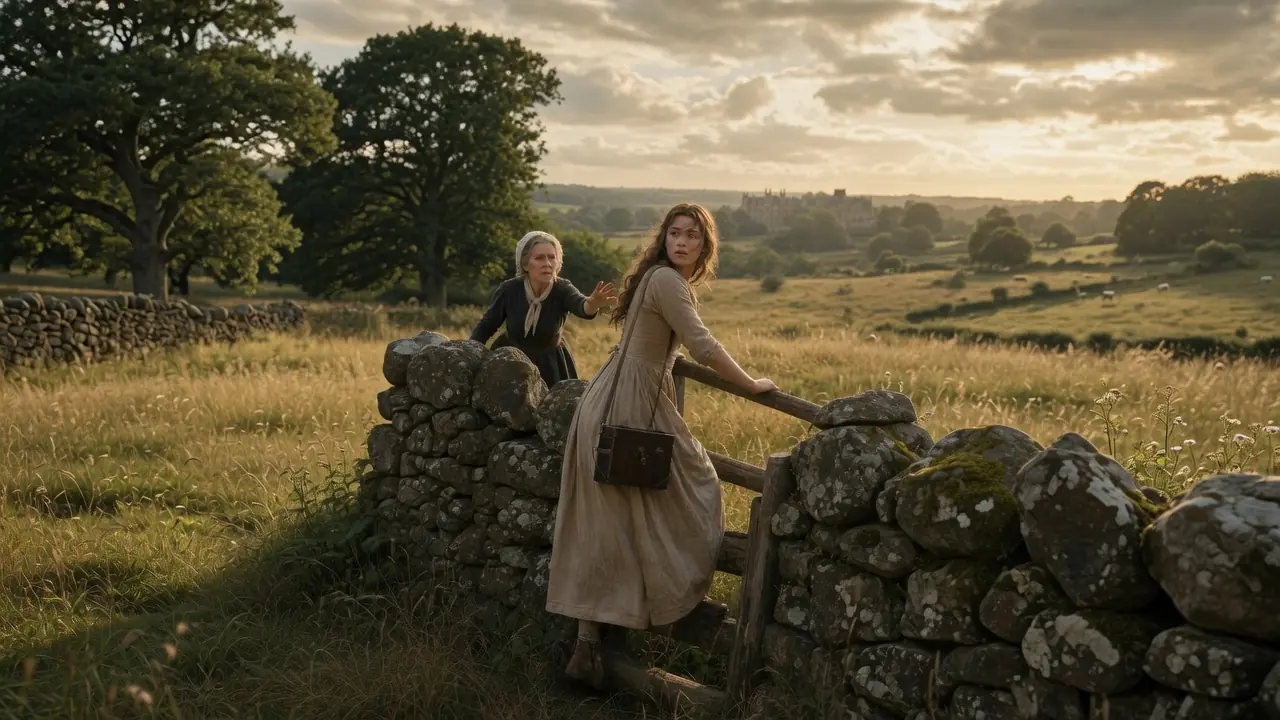
She pressed her hand flat to the lid to quiet it, as though the box itself might give her away, and stood a moment in the long grass, with her heart going quick and foolish beneath her stays. You are trespassing, Beatrice, she told herself under her breath in a fair imitation of her aunt's voice. You are trespassing on a duke's land, and you will be taken up for it, and no one will marry a woman who has been taken up for trespass. " Then she smiled, because she had no intention of marrying anyone, and walked on into the grass. The meadow smelled of hot clover and crushed thyme, where her hem dragged it.
Grasshoppers sprang away from her boots in little dry clatters. She had come for the marsh helleborine, a green and rose orchid that grew. So the old gardener at the parsonage swore, only in the damp hollow at the bottom of the Duke's western meadow, where a spring rose cold out of the chalk. Beatrice had drawn every wild flower in three parishes. She had filled four boxes with them, pressed and labeled in her small exact hand, each one named twice.
Once in the plain English her neighbors used, and once in the Latin she had taught herself from a borrowed volume she was not supposed to have read. The helleborine she had never drawn because the only place it grew was the one place she was forbidden to go, which she said aloud to a passing bee is a poor reason to leave a flower undrawn. She found the hollow by its coolness before she saw it. A drop in the air, a green breath rising off wet ground. The grass changed underfoot from dry gold to a deep spongy emerald.
And there, in the shade of a single leaning alder, stood the orchids. A dozen of them, slender stems hung with blossoms the exact flush of the inside of a shell, each lip veined in rows, each one nodding faintly, though there was no wind. Beatrice stopped breathing for the space of three heartbeats. Oh, she said, "Oh, you are worth hanging for," she knelt. The damp came at once through the knees of her muslin, cold and shocking, and she did not care.
She flung back the lid of her box, drew out her pencil and a clean sheet, and set the point to the paper with hands that had gone perfectly steady, the way they always did the moment there was something in front of her worth the drawing. the village and the warnings and the duke and her aunt all fell away. There was only the curve of the stem, the tilt of the lowest flower, the cold green smell of the spring and the scratch of graphite over paper. She did not know how long she knelt there long enough that the sun climbed and the shade of the order shifted off her shoulders. long enough that she had turned to a second sheet and begun to lay in very lightly the veining of a single lip, tongue caught between her teeth in concentration, long enough that she did not hear the horse until it was almost upon her.
The sound came all at once, the soft thud of hooves on turf close, and the creek of leather, and a voice above her, low and even, and entirely unhurried. You are aware, the voice said, that you are kneeling in the middle of the Duke of Ashkam's meadow. Beatrice's pencil skidded. A gray line shot across the orchid's face and spoiled it. She looked up.
The sun was behind him, so that for a moment he was only a shape on a tall gray horse, broad through the shoulders, straight in the back, a dark coat, and a darker hat, and beneath the hat, a jaw she could not read for the glare. The horse tossed its head and shifted, and the light swung, and she saw him properly, a young man, not above 7 and 20, with a face that would have been called handsome anywhere in England, and severe everywhere in it. Gray eyes the color of the chalk spring itself, a mouth set in a line that had clearly cost him some effort to keep straight. He was not in livery. His coat was good, but plain.
The coat of a man who worked out of doors and did not care to be admired for it. A steward, she decided at once. Or a baiff, or one of those overbearing land agents who counted a duke's rabbits and prosecuted a duke's poachers and thought themselves grand as the duke himself. Her chin came up. I am aware, she said, that I am kneeling in the middle of the finest stand of marsh helleborine I have seen in my life, and that whoever owns this meadow has done nothing whatsoever to deserve it.
Something moved at the corner of his mouth and was suppressed. The Duke, he said, does not, as a rule, cultivate weeds for the pleasure of passing artists. They are not weeds. She sat back on her heels, spoiled sheet forgotten, and heard her own voice climb into the register. her aunt most despared of.
They are Epipactis palustris, and they are rarer in this county than an honest magistrate, and they grow in precisely three places within a day's walk of here, and two of those have been drained for pasture by men who could not tell an orchid from an onion. This is the third. And a man on a horse has come to tell me I may not look at it. A man on a horse, he agreed gravely, has come to tell you that you are trespassing, and that the duke's keepers take up trespasses, and that a young woman found alone on this land without leave would do well to gather her box and go home before she is seen by someone less patient than myself. Then you had better take me up.
" She turned back to her box, and with great deliberation drew out a fresh sheet. I have three orchids left to draw, and I am not leaving until I have drawn them. You may watch if it improves your mourning. You may fetch your keepers if it improves your standing with the Duke. But I have walked a mile through nettles for this flower, and I mean to have it, and neither you nor your master will move me before I do.
There was a silence. A curlew called somewhere down the water meadow, long and falling. The gray horse cropped a mouthful of grass. My master, the man said at last in an odd, careful voice. Whoever pays your wages.
Beatrice did not look up. Her pencil was moving again, quick and sure, the Duke of Ashkam, who owns a meadow he never walks in, and a flower he does not know he has. Does he even come here? They say in the village he does not. They say he shut up the great house two summers past and has scarcely been seen since and that the land is run by agents who care for nothing but the rents.
She heard the bitterness slide into her own voice and did not check it. They say a good many things about the Duke of Ashkam. None of them kind. The man dismounted. He did it without haste, swinging down and looping the rein over his arm.
And then he crossed the wet grass toward her and stood looking down not at her but at the orchids at the whole leaning nodding stand of them in the green shade with an expression she could not name at all. Up close he was taller than she had thought and there was a weariness about his eyes that did not match the rest of him as though some part of him had been kept awake for a long time. What do they say? He asked quietly in the village about the Duke. Beatrice ought to have been warned by the quiet.
She was not. That he is proud, she said, setting a line, that he cares more for a boundary wall than for the people who live along it. that when the Hartley's lease came up for renewal this Lady Day, it was his agent who doubled the rent on a cottage my grandfather built with his own hands, and his agent who said that if we did not care for the terms, we might carry our objections to the Duke himself, knowing full well the Duke would not see us, has not seen a single tenant since he came into the title, and hides in whatever grand house he has fled to, while men who cannot pay are turned onto the road. her pencil pressed hard enough to nearly tear the sheet. That is what they say about the Duke of Ashkam.
Now you may tell me I am wrong, and I shall be very glad to hear it, for it is a poor thing to hate a man one has never met. The man had gone very still. The Hartleys, he said, "Of Nettlefold. " "Yes," she glanced up, and something in his face made her pencil pause at last. Why, you are Miss Hartley, Beatrice Hartley.
She said it plainly, the way she said everything, and I do not see that it is any concern of a land agents. He was quiet for so long that the curlew called twice more. When he spoke again, his voice had changed, had lost the dry edge of amusement entirely, and gone somewhere flatter and further away. "I am not a land agent," he said. My name is Ashkam.
This is my meadow, Miss Hartley. And I have never in my life heard of your cottage, your lease, or your grandfather's wall, which I am beginning to think is a graver charge against me than any you have yet laid. Beatrice's hand opened. The pencil dropped into the wet grass. For one long, ringing moment, she could not make her mind fit the shape of it.
This plain coated man on his tired gray horse. This stranger she had been lecturing for a quarter of an hour on the crimes of the Duke of Ashkam was the Duke of Ashkam. She heard her own voice replaying every word of it. She felt the heat climb her throat and flood her face to the roots of her hair. And then, because she was Beatrice Hartley, and because retreat had never once in her life occurred to her as an option worth taking, she reached down, retrieved her pencil from the grass, wiped the point on her ruined skirt, and set it back to the paper.
"Well," she said. Her voice was not quite steady, and she hated it for that. "Then your grace may have me taken up himself and save his keepers the walk. But I will tell you to your face what I have said behind your back since you seem never to have heard it, and it seems a shame to waste the occasion. You have doubled the rent on people who fed your father's household for 40 years.
You have not answered a single letter my aunt has written to your agent since Candlemas, and you own the most beautiful thing in this county, and did not know it was here. " She lifted her chin and met the chalk gray eyes without flinching. Though her heart was beating so hard, she thought, "He must surely see it. Now, are you going to send for your keepers, or are you going to let me finish my drawing? " The Duke of Ashkam looked at her for a long moment.
Then slowly she bent her head and drew. Though for the first time in her life the flower would not hold still in her eye and the lines came out wrong and she had to begin again twice because her hand so steady a moment ago had begun quite without her leave to shake. She could see him at the edge of her vision the whole time. He did not move. He did not speak.
He stood at the lip of the chalkspring in his plain good coat. a duke who had been called a scoundrel to his face in his own meadow, and he let her stay. It made no sense. Everything she knew about the man said he should have called his keepers, or ridden away in cold offense, or at the very least defended himself. He had done none of these things.
He had said, "Finish your drawing. " And he had gone to stand by the water, and there was something in the set of his shoulders. she would not have been able to say what that made her want absurdly to apologize and made her furious that she wanted to. She finished the three orchids. It took her the better part of an hour, and neither of them said a word in all that time, and the silence between them stopped being a hostile thing, and became somehow, without her ever deciding to allow it, a companionable one.
Two strangers in a green hollow with a cold spring rising and the bees working the clover overhead. Each of them in their own way, hiding. When she had done, she closed the box and got to her feet, and her knees were soaked through and stained green, and she did not care in the least. Your grace. She dropped him a curtsy that was, she was aware, a fraction too shallow to be entirely respectful.
I have finished. I will trouble your meadow no further. He turned from the water in the full light. His face was younger than she had thought and more tired, and there was something working behind the gray eyes that she could not read at all. Miss Hartley.
He inclined his head. You said your aunt has written to my agent since Candlemas six times. The old anger came back steadying her. She has had no reply to any of them. What is the agent's name?
Beatrice frowned. Surely he knew his own agents name. Mr. Pruitt. He keeps his office above the wool merchants in Malbury. Something crossed the Duke's face.
Quick and cold and gone. He did not explain it. Go home the way you came, he said. By the style, not the gate. The gate is watched.
Do not let my keepers see you. And do not cross my land again, Miss Hartley. Not because I would take you up for it, because it is not safe for a young woman to be found here alone, and I would not have that on my conscience along with everything else you have this morning been so good as to lay there. It should have been a dismissal. It did not somehow feel like one.
"And the orchids? " she asked. He looked back at the leaning stand of them in the shade. The rose lipped, nodding, impossible flowers, and for a moment the severe mouth softened into something that was very nearly, but not quite. A smile.
"They may stay," he said, since they were here before either of us, and will be here after. "Good morning, Miss Hartley. " He swung up onto the gray horse in one clean motion, gathered the rein, and rode away up the long gold slope of the meadow without once looking back, and Beatrice Hartley stood in the wet grass, with her box under her arm and her heart, in a state she could not begin to account for, and watched him go until the summer haze took him, and thought, "I have made a very great fool of myself, and I do not think it is over. " She was more right than she knew. She went home by the style as he had told her, climbing the boundary wall out of the Duke's land and back into her own ordinary world of hedgerow and cart track and the distant gray tower of Nettlefold Church.
The sun stood high now, and the road threw up its dust in a fine hot powder that caught in her throat. All the mile home, she argued with herself, and lost. Her aunt was in the cottage garden when she came through the gate, up to the elbows in a basin of shelled peas, a broad straw hat crammed down over her gray curls against the glare. Miss Prudence Hartley took one look at her niece's soaked and grass stained skirts and set down the basin. You have been on the Duke's land, she said.
It was not a question. Beatrice Anne Hartley, you have been over that wall after your weeds, and you smell of the chalk spring. And do not trouble to deny it, for I have known you six and 20 years, and you have never once come home clean from doing as you were told. I have been on the Duke's land, Beatrice agreed. She sat down rather suddenly on the garden bench.
And I have met the Duke. The peas went everywhere. Her aunt did not so much as glance at them. You have Beatrice. Prudence sat down beside her with a thump.
Tell me at once. All of it. What did he say? Did he take your name? Did his keepers see you?
Oh child, if he prosecutes, we cannot afford. With the rent as it stands, we cannot afford so much as a summons. He is not going to prosecute. Beatrice heard how strange the words were, even as she said them. He let me finish my drawing.
He stood by the spring. the whole hour and let me draw. And then he told me to go home by the style so the keepers should not catch me. And he aunt he did not know did not know what about us about the lease about Pruitt doubling the rent and never answering your letters. He had never heard of it.
He looked she stopped groping after it. He looked as though it had struck him, as though I had told him something about his own house that he did not know, and could not bear. Prudence Hartley was silent a moment. She was a shrewd woman who had kept a roof over the two of them for 11 years on very little, and she did not believe in dukes with tender consciences. or she said gently, he is a clever man who saw a pretty girl in his meadow and thought a soft word would send her home quiet with no trouble to himself.
Beatrice, my dear, men of that rank do not stand about in wet grass being lectured by curate's niece because their hearts are moved. They do it because it costs them nothing and it gets them what they want, which in this case was you gone before you were seen and the family made awkward. She took her niece's stained hand and held it. Whatever he said to you in that meadow, put it out of your head. He is the Duke of Ashkam.
We are the people he is turning off his land. There is no version of this world in which those two facts sit down to tea together, and the sooner you have that fixed in you, the less it will hurt when the summons comes. " Beatrice looked at her aunt's kind, tired, weather browned face, and thought of the Duke's hand going up unthinking to the grey horse's nose, and of the way he had said, "Mr. Pruitt, cold and quick, like a man who had just discovered a stone in his own boot. " "Yes, aunt," she said. She did not believe a word of it.
"That was the trouble. She sat in the July garden with the shelled peas rolling in the dust at her feet. And she turned the morning over and over, and every time she turned it, she was more certain, foolishly, dangerously certain, that something had happened in that green hollow that neither of them had meant to happen, and that could not now be made to unhappenen, however sensible her aunt might be. It was 3 days later that the letter came. It came not by the carrier, as letters did in Nettlefold, but by a man on horseback in dark livery, Ashkam livery, the silver hound on the sleeve, who rode up the cart track in the cool of the evening, and asked, very civil, for Miss Hartley, not the elder Miss Hartley, Miss Beatrice Hartley.
and he put into her hand a single folded sheet, heavy cream paper sealed with gray wax, and he waited, hat in hand, while she broke it, as though he had been told to bring back word that she had. The hand inside was black and upright, and had been written quickly, but not carelessly. It said, "Miss Hartley, I have looked into the matter of your family's lease, and of the six letters your aunt was so good as to write, none of which reached me. I find that I have been, as you said to my face, a scoundrel, though not in the particular you suppose it, and I should be glad of the chance to be a scoundrel in fewer particulars going forward. " Mister Pruitt is no longer in my employee.
There is a good deal I must set right, and I find I do not know my own land well enough to set any of it right without help. You know it better than I do. Come to Ashkam House on Thursday, if your aunt will permit it, and bring your drawings, all of them, the orchids, and the rest. I have a proposal to put to you that is entirely honorable and almost certainly unwise. A Beatrice read it twice.
Then she looked up at the waiting servant and at her aunt frozen in the doorway with a candle in her hand, and she heard very clearly the sound of a door she could not see swinging shut behind her, and ahead another one opening onto a country she had no map for at all. Tell his grace, she said, and was pleased to find her voice quite steady, that Miss Hartley will come. Thursday came in on a haze of heat that lay over Nettlefold like a held breath. Beatrice had walked the mile of lane in her one good gown, a sprigged muslin the color of ripe wheat, let down twice at the hem and turned once at the cuffs, and beautiful all the same, her aunt said, on a girl who moved as though the world were hers to survey. She carried her four sketching boxes strapped together with a leather belt, and by the time the gates of Ashkam house rose gray out of the beech avenue, her arms ached, and her collar clung damp to her neck.
She had never been so close to the great house. No one in the village had, not in two summers. She stopped at the head of the drive and looked at it. A long pale front of Portland stone, three stories of tall shuttered windows, and over the door a carved hound with one paw lifted, worn smooth by weather. Half the shutters were closed.
Grass grew between the flags of the forecourt, and a rose had thrown a long unpruned arm clear across the face of the west wing, blowsy with bloom no gardener had thought to check. "It is asleep," she said aloud to steady herself. "A whole house asleep in the sun. " "Not asleep, Miss. " A footman had come down the steps, young, freckled, his livery a size too large at the shoulder.
Only quiet. His grace is expecting you. if you'll come this way. He took two of the boxes from her and she was grateful and followed him in under the lifted paw of the hound. Inside the house smelled of beeswax and cold stone, and faintly of lilies going over somewhere out of sight.
Their steps rang on the marble of a great hall where the pictures had been hung with Holland cloth against the dust, so that a whole gallery of ashcoms looked down at her as pale shrouded shapes, faceless, watching. She kept her chin up and her eyes forward and pretended her heart was not going like a hare's. The footman showed her into a library at the back of the house, and here at last the shutters stood open. Summer light fell in long gold bars across a room that was plainly the only one in the house still lived in. A fire laid but unlit.
A chair drawn to the window with a book face down on its arm. A desk drowned under papers, and the whole far wall shelved floor to ceiling with more books than Beatrice had known were printed in the world. The Duke of Ashkam stood at the window with his back to her, exactly as he had stood at the chalk spring, one hand at his side, and the other holding a paper up to the light. He turned when the footman announced her, and for a moment neither of them said anything at all. He was not in his plain out of doors coat now.
He was dressed as a duke in dark blue superfine and a waistcoat the gray of the chalk, and it made him at once more remote and, oddly younger, as though the fine cloth were a costume he had been put into against his will. The weariness was still about his eyes. But there was something else in them today, a kind of weary lightness, as if he had spent three days deciding whether to laugh or to think better of the whole affair. Miss Hartley, he bowed. You came.
I said I would. Your grace. She set down her boxes. I am told I do not go back on a thing once I have said it. It is counted a fault in me.
I begin to see how it might be. He gestured to the boxes. You brought them all. You asked for all of them. She unbuckled the belt.
Though I warn you, three of these are common things. Vetch and Campion and the like, and you will be very bored before we are halfway through, and too well bred to say so, and I shall have to guess it from your face. I am reliably informed, he said, that my face gives nothing away. Your face, said Beatrice, opening the first box, gave away the entire game the moment I named Mister Pruitt, but I will let you keep believing it since it seems to comfort you. She heard him make a sound that was almost a laugh quickly cut off the first she had drawn from him and did not look up because she found she was smiling and did not want him to see how easily he had done it.
They spread the drawings on the long table by the window. She had meant to be brisk businesslike. A woman come to render a service, but the drawings undid her as they always did, and within a quarter of an hour she had forgotten to be anything but herself. She showed him the orchids first, the good plate and the two spoiled ones, the gray line still shot across the ruined face where his voice had startled her. And then the rest, the meadow saxifrage, the bee orchid that mimicked its own pollinator, the small blue milkwort no one troubled to look at, each one named twice in her small exact hand.
"You did all these," he said. It was not quite a question. He had bent over the milkwort and there was a stillness in him. She recognized the stillness of a person who has been surprised into attention. Every flower in the county, every flower I could reach without breaking a law.
She turned a page. The best of them were on your land. That is rather the difficulty with your land. Your grace. It has the finest wet meadow in three parishes and the rarest orchid in the county and a chalk spring that has run cold since before the conquest.
And the man who owns it has kept it locked up behind a wall and let his agent squeeze the people at its edges dry. She hurt herself and stopped. Forgive me. My aunt says I have no governor on my tongue and she is right. No, he straightened.
No, do not stop. That is precisely the reason I asked you here. And he told her then, standing at the window with the summer light on his face, what the proposal was. He wanted the estate surveyed, not for its rents, which was all Pruitt had ever cared for, but for what was actually on it, the meadows, the springs, the old woods, the wild corners no plow had ever turned. He wanted it drawn and named and understood before he made a single decision about a single acre because he had discovered he said that he did not know the first thing about the country he had inherited and that not knowing had already cost people their homes without his ever hearing of it.
I have been from home a great while he said and something closed in his face on the words some door he did not open longer than I should have been. I came back to find the whole of it run by ledger and never once by. He made a short gesture at the drawings on the table. By this, by what is actually here? I need someone who has looked at this land the way you look at it.
Who knows where the spring rises and why the helleborine grows in the one hollow and nowhere else? I will pay you properly for the work, Miss Hartley, and I will begin by setting your family's lease back to what it was before Pruitt touched it. that I have done already this morning. It is not a bribe. It is a debt and it stands whatever you decide.
Beatrice stood very still. The light moved on the table. Somewhere in the sleeping house a clock told the half hour thin and far. You have restored the lease, she said. Already before I gave you my answer.
It was never yours to buy back with your answer. It was wrong and I have mended it. He held her eyes. The survey is a separate thing and you may say no to it and go home and the lease will still stand. I want that understood between us before you say anything at all.
And there it was again. The thing that made no sense, the thing her aunt had warned her against and explained away and been so certain of. A man of that rank did not mend wrong before he had got what he wanted for it. And yet here was one who had. Why?
She asked. Not the lease. The rest of it. A duke does not want his weeds cataloged. Your grace.
You could sell the wet meadow to be drained tomorrow and be the richer for it, and no one in London the wiser. Why do you want to know what is there? He was quiet a moment. Then he crossed to the chair by the window and picked up the book that lay face down on its arm and turned it over in his hands without opening it. And she saw that it was a battered old herbal, its spine cracked white with use.
Because someone I he stopped, began again more carefully. Because I was taught once by a person I have lost that a piece of land is not a sum of money, that it is a living thing with a memory longer than ours, and that a man who holds it holds it in trust and answers for it. I forgot that for a long time. I am trying to remember it. He set the herbal down.
That is more than I meant to say. You have a way of getting more than a man means to say, "Miss Hartley, I imagine it is another of your faults. " "My very worst," she agreed, and her voice was not steady. And she covered it by bending to her boxes. "Very well, your grace.
I will survey your land for you. " On conditions, the corner of his mouth moved. Naturally, I keep copies of everything I draw. The plants are yours to know, but they are mine to have drawn. And you will not drain the wet meadow, nor cut the old wood by the spring, until I have shown you what is in them, and you have looked, really looked, not glanced at over a ledger.
Those are my terms. They are hard terms, said the Duke of Asham gravely. A man might almost think you did not trust him. A man would be right. She held out her inkstained hand, as she had seen the men do over a bargain at market, and after a moment's startled pause, he took it, and his grip was warm and dry, and entirely unlike a duke's, and neither of them, for a moment too long, quite let go.
It was into that moment, Beatrice would remember it afterward with a particular clarity, that the door opened without a knock. Julian, said a woman's voice, cool and carrying. The whole house is talking of it, so I have come to see for myself. Beatrice stepped back and took her hand away. In the doorway stood a lady perhaps 5 years her senior, and the most beautiful creature Beatrice had ever seen at close quarters, tall, dark-haired, dressed in a traveling gown of deep peacock silk that had certainly never been let down at the hem.
with a face of such cold perfection that it seemed less made of flesh than cut. Her eyes went once over Beatrice. From the mended cuffs to the grass, no washing had wholly got from the hem, and filed her away with the swiftness of a woman sorting cards. Lady Sybil, the Duke's voice had changed, gone formal and shut. I did not know you had come down.
Evidently, she came into the room. My mother sent me to see whether the reports were true. They said you had shut yourself up like a hermit and would see no one, and that the estate was going to rack, and now I find you have not been seeing no one at all. Again, the glance, cooler than before. You have been seeing a village girl with a box of pictures.
Do present me, Julian. I am all curiosity. Miss Hartley, said the Duke, with a stiffness Beatrice had not heard in him before. of Nettlefold. She has consented to make a survey of the estates natural features.
Miss Hartley, my cousin, Lady Sybil, Vane. Cousin, repeated Lady Sybil with the faintest possible smile, as though the word amused her. How very correct you are today, Julian, Miss Hartley. She did not curtsy. She inclined her head the precise fraction owed to a person of no consequence.
A survey of the natural features. What an original arrangement. And does your family know, child, that you spend your days alone with a bachelor duke among his weeds? The color came up in Beatrice's face? She felt it and despised it and lifted her chin against it.
My aunt knows exactly where I am, my lady, she said, and exactly what I am doing, which is more than can be said, I think, for a good many people who spend their days in company. I am cataloging the wild flowers of the estate. If that is a scandal, it is a very green and harmless one, and I am content to be ruined by it. " There was a small silence. The Duke's mouth had done its almost smiling thing again.
He mastered it. Lady Sybil's beautiful eyes rested on Beatrice with a new and colder attention, the attention of a woman who has been answered back by someone she had not thought could speak. "How refreshing," she said at last, in a voice that made it clear she had found it anything but. "Julen, when you are quite finished with the wild flowers, I should like a word. My mother is most anxious to know your intentions for the winter, for the London house, for a great many things that have waited a great while on your convenience.
She let the words hang, gathered her silk, and turned in the doorway. Do not let me keep you from your survey, Miss Hartley. I am sure we shall meet again. Nettlefold is so very near. And she was gone in a rustle of peacock, leaving the room colder than she had found it.
Beatrice let out a breath. she had not known she was holding. The Duke stood looking at the closed door with an expression she could not read at all. Something between weariness and warning. "My cousin," he said, "is not so alarming as she wishes to be.
She is exactly as alarming as she wishes to be," said Beatrice. "She merely does it very quietly, which is worse. " She began with hands that wanted something to do to gather her drawings. "I ought to go, your grace. It grows late and I have a mile to walk and I would rather not do it in the dark.
Ashb will drive you. He said it before she could refuse. No, I will hear no argument. You have carried four boxes a mile in this heat to oblige me. You shall not carry them back.
And Miss Hartley, he hesitated, and for the first time since Lady Sybil had opened the door, the shut look left his face. Thank you for coming and for saying to my cousin what half the county has wanted to say to her for a 12 month and none have dared. It was worth the whole survey to me to watch it. That said Beatrice surprised into honesty was very nearly a joke. Your grace I am reliably informed I do not make them.
You are reliably informed of a great many things that are not true. She buckled her boxes. I shall begin on Monday. the high wood first before the summer's too far on and the flowers go over. Good evening, your grace.
She was at the door when he spoke again, and something in his voice made her stop. Miss Hartley, a word of not warning. Council, he had turned back to the window so that she saw him in profile against the gold light, and the weariness had come back into the set of his shoulders. My cousin is right in one particular. However unkindly she put it, there are people watching this house and what I do with it and whom I do it with.
My mother among them. There is a an arrangement long spoken of between our families that I have neither made nor unmade and that Lady Sybil has come to press. He paused. I tell you this not because it touches you. It does not.
I tell you so that you will not be caught off your guard by talk and think I have kept a thing from you. I would rather you had it from me. Beatrice stood very still in the doorway with her boxes under her arm. Something had gone tight and cold under her ribs, and she was too honest with herself not to know what it was, and too proud to let it show. "You are to marry her," she said.
"I am to do nothing I have not agreed to," said the Duke. and I have agreed to nothing, but it is expected. I will not pretend to you that it is not. Why should you pretend anything to me? " She heard her own voice come out light and clear and perfectly steady, and was glad of it.
Glad as she had rarely been glad of anything. I am the woman drawing your weeds, your grace. Your marriage is no more my affair than my aunt's peas are yours. I shall begin on the highwood on Monday. Good evening.
And she went out through the great shrouded hall where the faceless Ashkams watched her go, and out under the lifted paw of the stone hound into the blue summer dusk, and she did not let herself think a single one of the thoughts that were crowding at the edge of her mind, until she was in the gig, with her boxes safe beside her, and the beech avenue swallowing the house behind her. Then she thought them all at once, and they were not comfortable. She had known him 3 days. She had spoken to him twice. It was absurd.
It was worse than absurd. It was exactly the folly her aunt had named and she had denied. To feel at the news that he was as good as promised to his cold and lovely cousin. This small hard drop of something in the chest. This sense of a door quietly closing that she had not even known she had walked up to.
She had told him the truth in the doorway. His marriage was no affair of hers. She was the woman drawing his weeds. And that she told the darkening hedgerows is the whole of it. And I will thank you to remember it, Beatrice Hartley.
The hedgerows kept their council. She had the survey. She had her family's lease restored, which was no small thing, which was the thing that mattered. The roof over her aunt's gray head and her own. She had a summer's honest work at good pay, drawing the flowers she loved on the finest land in the county.
It was more than she had had on Sunday. It was a great deal more than a curate's orphaned niece had any right to expect, if a part of her had, in a green hollow 3 days ago, begun without her leave to hope for something it had no business hoping for. Well, that part could be governed, as her tongue could not. She would draw his flowers and take his money and keep her copies. And when the summer ended and he married his peacock cousin in the great house, she would go home to Nettlefold and press her orchids and be exactly as she had always meant to be, which was nobody's, and free.
It was a very sensible resolution. She held to it for the length of the beech avenue, at the foot of the drive, where the estate wall gave onto the public lane. The gig slowed for the turn, and in the last of the light, Beatrice saw a man standing in the shadow of the gate post. He was well-dressed, in a bottle green coat, and he was not one of the estate people. She knew every face for miles, and this was a stranger, soft-handed and city pale, with a long, clever face, and a way of standing very still.
He watched the gig come down, and as it passed, he lifted his hat to her quite civily, and smiled. Miss Hartley, I think, he said. Miss Beatrice Hartley of Nettlefold. The driver did not slow. Beatrice half turned in her seat as they went by.
You have the advantage of me, sir, she called back. For the present. He was still smiling. He set his hat back on his head. Only for the present.
And then the hedge came between them and he was gone. and Beatrice sat the rest of the way home with her boxes against her knee and a coldness at the back of her neck that had nothing to do with the falling dusk, because there had been something in the man's soft, civil voice, some private satisfaction, that she liked no better than she had liked Lady Sybil's cool sorting glance, and because a stranger, who knew her name and her village, and had waited at a duke's gate to say them to her, was not, whatever else he was, a thing that boded well. Her aunt was at the gate with the lantern when the gig set her down. Well, Prudence took a box from her, peering into her face. You have been an age.
What did he want? What have you agreed to, Beatrice? You have your closed look on the one you had the winter your mother child. What has happened? Nothing has happened.
Beatrice kissed her cheek and went in ahead of her into the lowwarm kitchen that smelled of the day's baking and set her boxes down and turned. The lease is restored aunt fully to what it was before Pruitt. He did it this morning before I said yes to anything. It stands whatever I do. Prudence sat down slowly on the settle.
Restored, she said fully, fully. Then he wanted something very great indeed, said her aunt, to pay so much for it in advance. But her eyes had filled, and she put the back of her hand to them once, and took it away. 11 years I have written those letters, and had them thrown in the fire, and a girl goes over a wall after a weed, and it is mended in a morning. There is no sense in the world.
None. She looked up sharply. What does he want, Beatrice? What did you agree to? to draw his land for him.
All of it, the meadows and the woods and the springs, everything that grows. A survey. He is to pay me for it properly, and I keep my copies. " Beatrice sat down across from her. That is all it is, aunt.
Honest work. I will be there by daylight and home by dark, and there is nothing in it that the whole village might not see. And the duke, said Prudence quietly. What is the duke in all this honest work? Beatrice looked at her aunt's tired, shrewd face across the scrubbed table, and thought of the gray eyes and the cracked herbal, and the almost smile, and the shut look that had come down when the door opened, and the flat, steady voice saying, "It is expected.
I will not pretend to you that it is not. " And she found she could not quite say the sensible thing. The Duke, she said at last, is to marry his cousin, a lady civil vain, who came in while I was there in a gown the color of a peacock, and looked at my hem as though it were a thing she had found on her shoe. It is long arranged between the families. He told me so himself in so many words, standing at his own window.
Told me plainly, so that I should not be caught out by talk, which was decent of him. She turned her ink stained hands over on the table. So you may put your mind at rest, aunt. There is nothing to fear on that account. He is spoken for, and I am the woman who draws his weeds, and we both of us know exactly what we are.
Prudence Hartley looked at her niece for a long moment in the lantern light and what she saw there did not seem to comfort her at all. Oh my dear, she said softly. It is worse than I thought. It is nothing at all, said Beatrice. You have said his name three times, said her aunt, and each time as though you were setting down something hot.
She reached across and covered Beatrice's hands with her own. Listen to me, child. A man who mends a wrong before he is asked and tells a girl the truth when a lie would serve him better. That is a good man or a very clever one. And I cannot tell you which and neither can you on three days knowing.
But a good man who is promised to another and lets a girl come every day to his empty house through a whole green summer. That is the most dangerous thing in the world, Beatrice. more dangerous than any scoundrel because he will break your heart without ever once meaning you the smallest harm and there will be no one to blame for it and no summons to fight and no wall to climb back over. Only the long walk home. Beatrice said nothing.
Out in the dark, a night jar churred once from the hedge, long and low. I gave him my word, she said finally. The lease stands on it. I cannot go back now. No, said Prudence, and sighed, and pressed her hands, and let them go.
No, you never could go back on a thing. Not once you had said it. It is counted a fault in you. She rose and took up the lantern, and at the foot of the stairs, she paused. There was a man came asking after you today.
While you were gone, the cold touched the back of Beatrice's neck again. A man in a green coat, soft-spoken, a stranger, her aunt turned, the lantern swinging shadows up the wall. You have seen him at the gate of Ashkam as I came away. He knew my name and my village, and he had waited there to say them to me. Beatrice stood.
What did he want, Aunt? What did he ask? He asked how long we had held our lease, and whether we were content in it, and whether, Prudence frowned, holding the memory carefully, as she held everything, whether it was true the Duke had lately been much upon the western land. He asked it lightly, as a man asks after the weather. But he wrote your name in a little book, Beatrice.
When I gave it him, I saw him do it, and he thanked me very civil, and went off toward Malbury. I did not like him. I could not have said why. His name, he did not leave it. The two women looked at each other across the low, warm kitchen, and outside the night jar churred again, and the July dark pressed soft against the little uncurtained window, and Beatrice Hartley, who 3 days ago had crossed a forbidden wall for the sake of a single flower, felt the whole shape of her summer shift under her like ground giving way, and knew, with the same certain, foolish, dangerous instinct that had told her in the meadow that it was not over, that the man in the green coat had written her name in his little book, for a reason, and that she would learn what it was long before she was ready to.
Monday came in hot and cloudless, the sky over the high wood bleached almost white at its edges, and Beatrice was up among the beeches before the dew had lifted. The wood climbed the shoulder of the down in a long green tide, oak giving way to beech, and beech to hazel, and the floor of it was deep in last year's mast, so that every step she took released a dry brown whisper and a smell of leaf mold and warm bark. She had spread her boxes on a fallen trunk furred with moss, and was on her knees over a spike of broad-leaved helleborine when she heard the gray horse come up the ride. You are early, Miss Hartley," the duke said, swinging down. "I had meant to be here to show you the way.
I have been finding my own way about this county since before you owned it, your grace. " She did not look up from the plant. You would only have got in the light. Sowerby, I am learning. He looped the rein over a branch and came to stand at a careful distance, hands behind his back, looking down at the green spire she was drawing.
That is another orchid. It is. She was pleased and hid it. Cephalanthera, near cousin to your marsh helleborine, only she likes it dry and shaded where the other wants her feet wet. You have both within a mile.
It is a very ill-behaved estate, your grace. It has no notion of what a proper improved property ought to grow. I begin to think, he said, that I have inherited the most disreputable acres in England. She glanced up at that. There had been something in it, the faintest lift, dry as the beech mast underfoot, and she saw that he was watching her sidelong to learn whether it had landed.
It had. She looked back down quickly at her sheet so that he should not see the corner of her mouth go. That was a joke, your grace. It was an observation. It was a joke.
You may as well own it. They are not a hanging matter. She laid a soft line down the stem. Sit. If you mean to stay, you block the sun standing there, and I cannot draw a shadow that keeps shifting.
He sat a duke on a moss log in the middle of his own high wood, and for a while he said nothing at all. And the wood filled the silence for them. A wren scolding somewhere in the hazel. The creek of the beeches, a wood pigeon turning its five soft notes over and over. Beatrice drew.
The heat came down in dusty green shafts through the canopy and laid coins of light across her paper, and she moved her hand to keep the plant in shade and did not hurry. "You said a person taught you," she said at last, without looking up. "About the land, that it was a living thing, and held in trust. " "In the library," you said it, and then you stopped as though you had put your hand on a hot bar. She kept her eyes on the orchid.
You need not tell me, I only wondered. The pigeon went on with its five notes. When he spoke, his voice had gone lower and flatter and had lost its careful ease. My brother, he said, "Edmund, he was the elder. All this was to have been his, the house, the wood, the wet meadow, the whole of it.
He loved it the way you love it. He knew every spring on the estate and the name of every covert and which field flooded in a wet march. A dry sound in his throat that was not a laugh. I did not. I was the second son.
I had a commission and a horse and no expectation of any of this, and I was glad of it, for it left me free. I was abroad with the regiment the winter I lost him. Oh, Beatrice said softly. Her pencil had stopped. I came home to a title I had never been raised to carry, and a house full of his things, and men of business, who had run it all by ledger while I was away, and saw no reason to stop.
Pro among them. He looked away up the green ride. I could not walk in the wet meadow. I could not open the library. It was his more than any room.
So I shut the shutters and let the agents do as they had always done and told myself it was grief when it was cowardice and the two wear the same coat. He turned the old ache of it over once more and set it down. And a girl came over my wall after a flower and told me to my face what my cowardice had cost people I had never troubled to meet. That is the whole of it, Miss Hartley. You have got more out of me under a beech tree than my mother has got in a 12-month.
Beatrice looked at him, the tired gray eyes, the good coat, the hands quiet on his knees, and something in her chest turned over and would not turn back. He taught you the herbal, she said. The cracked one on the chair. He wrote in the margins. His hand is all through it.
A ghost of the almost smile. I cannot read a word of the Latin. He knew it as you know it. I have been carrying the thing about for 2 years like a man carrying a letter in a language he cannot construe only because the hand is dear to him. Then I shall construe it for you, said Beatrice, and heard how the words came out too warm and could not call them back.
Bring it Thursday. We will read Edmund's marginelia together, you and I. And I will tell you where he was right, and where he was a hopeful amateur, for he will have been both. They always are. She bent to her box.
There, now you have a use for me beyond weeds. You may tell your cousin I am improving the estate's library as well as its ditches. The Duke of Ashkam laughed. It was not the cut-off sound of before. It came out of him whole, low and surprised, and it changed his whole face while it lasted, and Beatrice sat quite still over her drawing, and felt it go through her like the first cold of the chalk spring through the knees of her gown, a shock, and then a wanting to be in it again.
"I shall bring the herbal," he said when he had it under command. "Thursday, and Miss Hartley, thank you for Edmund. I have not said his name aloud to anyone in two years. It is easier than I had let myself believe. They worked on through the morning, the two of them, up the long shaded ride from herine to bird's nest to the little twayblade no one but Beatrice would have stooped for, and the heat thickened, and the wood breathed resin and dust and crushed fern.
And neither of them spoke of cousins or settlements, or anything at all beyond the green ordinary miracle of what grew there. And Beatrice, laying her lines with a hand that had gone traitorously unsteady again, knew that her aunt had been exactly right, and that it was already far too late to do the least thing about it. The weather broke on the Thursday, as she came up through the park with the boxes, and the promise of the herbal warm in her mind. She felt at first as a change in the air, a heaviness, a green black bruise standing up over the down behind the house. The beeches all at once turning the pale unders sides of their leaves to the coming wind.
The first fat drops struck the dust of the drive and stood in it a moment, dark as pennies, before the sky opened in earnest. She ran. She had crossed half the forecourt when a door in the west wing was flung wide, and the duke himself was there, coatless in his shirt sleeves, shouting something the rain swallowed and beckoning hard. and she bolted for it with the boxes clutched to her chest and came in over the threshold streaming and breathless and laughing into a low stone room that smelled of apples and cold ash. "You are drowned," he said, hauling the door to against the wind.
The rain came down the panes in ropes now, and the light in the room had gone green and swimming. "Here the boxes! Give me the boxes. Are the drawings dry? " The drawings are dry.
I am not a fool with the drawings. She set them down and pushed the soaked hair off her face and looked about her. An old still room, disused, hung with the ghosts of dead herbs, a great scrubbed table, a window full of storm. Your grace, I have ruined your floor. My floor has survived worse than you.
He had taken up a horse cloth from somewhere and stood holding it out at arms length, and there was a helplessness in the gesture. A man who did not know how to offer a woman a cloth to dry herself and was going to do it anyway. That undid her more than any grace could have. You will take a chill. Take it.
I will not look. She took it and dried her face and her hands, and the rain roared on the roof, and the two of them stood in the swimming green light. 3 ft apart with the storm sealing them into that small stone room as surely as a locked door. And the laughter went out of the air by degrees and left something behind it that neither of them named. I brought the herbal, he said.
His voice was not quite steady. It is in the library. I thought, when the rain stops, when the rain stops, she agreed. Neither of them moved toward the library. The thunder walked along the down, and the window shook with it, and a curl of her wet hair had come loose, and lay against her cheek, and she saw him look at it and look away, and felt her own breath go shallow and foolish in her chest.
"Miss Hartley," he said, very low. "Your grace," when I said at the window that it was expected, he stopped. Began again, the way he always began again when the truth cost him. I have been trying this last sennight to unmake a thing that has been building toward me since I was a boy. It does not unmake easily.
There are settlements drawn and lands promised and my mother's word given and a great cold engine of it all grinding on whether I will or no. He looked at her steadily through the green half dark. I tell you this because I find I do not want you to think me a man who lets himself be married off like a like a field changing hands. I am trying. I only wanted you to know that I am trying.
That is all I have any right to say and it is already a great deal more than I have any right to say. The rain filled the room. Beatrice held the horsecloth against her, and did not trust her voice, and so she said nothing, and let the storm say it for her. And when at last the thunder moved off eastward, and the light came back gray and ordinary through the streaming glass, they went and read Edmund's herbal together at the library window, heads bent close over the dead man's careful hand, and did not once, all afternoon speak of what had passed in the still room, because it did not need speaking of, and because both of them knew it now, and knowing was worse and better than any word. It was some days later, and the survey scarcely begun, that the man in the green coat came for her in earnest.
She had walked down to the water meadow at the western edge alone. The Duke was from home, gone to Malbury on estate business, to finish the marsh helleborine, before the last of the blooms went brown. She was kneeling at the chalk spring where the whole thing had begun, the cold green breath of it rising around her when a shadow fell across her paper and a soft voice said, "How very fitting. " Where it started, there we find her still. She came up onto her feet fast, her heart knocking.
He stood on the dry grass above the hollow, the bottle green coat immaculate, his long, clever face composed into every appearance of friendliness. Close to he was older than she had thought, and his eyes were not friendly at all. "You are on the duke's land, sir," she said. "And I do not know your name, and I do not choose to. " "Sowerby," he inclined his head.
"I am in the way of doing small services for great families. at present for the Vanes, Lady Sybil's people, whom I think you have met. He smiled. I have wanted a quiet word with you these 10 days, Miss Hartley, and you are a very difficult young woman to catch alone. Then you have caught me.
Say your word and take yourself off my spring. Your spring? He looked down into the cold water with a kind of pleasure. That is rather my word, in fact. Do you know what this land is, Miss Hartley?
This pretty wet corner you have spent your summer drawing. Do you know what is written of it in the settlements now being copied fair in a lawyer's office in London? The cold that had nothing to do with the spring came up the back of her neck. Say it plainly, sir. I have no patience for a man who unwraps a thing slowly to enjoy the unwrapping.
Plainly then, he drew a folded paper from his breast, not to give her, only to hold, tapping it against his gloved palm. This western land, spring and meadow and wood, and the cottages along its edge, Miss Hartley, your cottage among them, is the marriage portion. It goes to the Vanes on the day his grace weds Lady Sybil. And the Vanes are improvers. They have drained four such meadows in Leicester and made them pay.
This one will be drained within the year. The woodfeld, the springs stopped, the cottages fallen in, and cleared. He watched her face with real attention. The rare orchid you have crossed a county to draw will be under a wheat field by next harvest. And the survey, the loving, particular, beautiful survey you are making of every covert and every spring is precisely the valuation the lawyers require to price the portion.
You are not saving this land, child. You are measuring it for the plow. Beatrice stood very still in the rising green breath of the spring, and the roaring in her ears was not the water. "You are lying," she said. "He would not.
He told me he gave his word I should show him the meadow before ever a spade touched it. He restored my family's lease with his own hand before I had agreed to a thing. " Did he? Sowerby's voice was soft as felt. A man restores a lease he knows is to fall in within the 12 month.
It costs him nothing, and it buys him a pretty biddable surveyor who will map his land for love. He gives his word about a meadow he has contracted to sign away. Miss Hartley. He tucked the paper back into his coat. I do not say the Duke of Ashkam is a wicked man.
I say he is a weak one, promised where he does not wish to be promised. and using you gently, I am sure, and without once meaning you harm, to make the last of it bearable to himself. My principles wish the marriage to go forward cleanly. A village girl trailing about the estate makes talk, and talk is untidy. From another pocket, unhurried, he produced a small, heavy purse, and set it on the mossy lip of the spring where the water had stood since before the conquest.
Finish the survey. Take this. Go visit a cousin in another county until the autumn. That is all. It is a great deal of money for a curate's niece, and it is offered kindly.
Take your purse off my spring, said Beatrice in a voice she did not recognize. Consider it. There is your aunt to think of. Lee is restored can be unrestored when the land changes hands. He lifted his hat, civil to the last.
Only for the present, I said when we met. You will find I am a man who keeps his word better than some dukes. Good day, Miss Hartley. He left the purse where it lay. She heard the dry grass whisper under his boots as he climbed the slope, and then he was gone over the rise, and she was alone with the orchids and the cold spring and the small fat purse, sitting obscene upon the moss.
She did not touch it. She snatched up her drawings, her hands shaking now past all governing, and half of the marsh helleborine plate tore under her own fingers, and she left the purse where the man had put it, and climbed out of the hollow, and walked fast and blind up the long gold slope toward the house, telling herself with every step that it was a lie, that Sowerby was a paid liar, that the Duke had wept his brother's name into a beechwood, and could not could not have, but there were settlements drawn. He had said so himself in the still room with the rain coming down. Lands promised. My mother's word given.
He had told her plainly so that she should not be caught out by talk. He had never once said which lands. The house rose gray and half shuttered before her. The stone hound lifting its worn paw over the door. Ashby the footman was crossing the forecourt with a basket.
He touched his hat. surprised. Miss Hartley, his grace is not yet back from Malbury. I will wait in the library, she said. I have drawings to leave.
She did not wait to be shown. She went in under the hound, and across the shrouded hall, where the faceless Ashkams watched, and into the library, where the summer light lay in its long gold bars, and she stood in the middle of the beloved room, with her ruined plate crushed against her, and her breath coming hard, and told herself she had only come to leave her work. The desk was drowned in papers as it always was, and on the top of them, unfolded, weighted with the cracked old herbal that had lain on the chair a fortnight since, Edmund's Herbal, his dear dead hand in every margin, was a document written in a clerk's fair copper plate, and across the head of it, where she could not help but read it, ran the words, schedule of the Western lands. being the portion settled upon the marriage of his grace, the Duke of Ashkam and the Lady Sybil Vane, and beneath in a neat surveyor's column that she knew, that she knew because the shapes of the coverts were the shapes she herself had drawn, the wet meadow, the chalkr, the high wood, the Hartley cottage, and its garden, and its restored and worthless lease. Beatrice put out one hand and set it flat upon the desk to keep herself up.
She did not weep. The gold light lay quiet across the schedule of her whole loved country, priced and portioned and promised away, and Edmund's herbal held the corner of the page down as though the dear dead hand itself were pointing to it. Somewhere out in the sleeping house, a clock told the half hour, thin and far he had known. Every morning in the wood, every word over the marginalia, the storm in the still room, and I am trying, only wanted you to know that I am trying. He had known that the meadow was signed away, and her home along with it, and he had let her kneel in the wet grass, drawing it for love, measuring it, as Sowerby, for the plow.
She heard the gray horse in the forecourt, then the clean familiar sound of it, hooves on the flags, the creek of leather, the low word to Ashb, the Duke of Ashkam, home from Malbury, coming in under his own worn hound to find her standing white in his brother's library, with her hand on the schedule of everything he had promised her he would not do. Beatrice Hartley straightened her back and lifted her chin and folded her torn drawing once carefully along its ruin. Whatever he was, good man or weak one, scoundrel in fewer particulars or in more, she was going to hear it from his own mouth to his own face, exactly as she had said everything to him from the first hour in the meadow. The library door opened behind her on his quick unguarded step. Ashb said you had, Miss Hartley.
His voice changed on her name. Beatrice, what is it? What has happened? She turned round with the desk at her back and the gold light between them, and she did not know until she opened her mouth which of them was about to break. Whose land is this?
Her voice came out low and even, and it frightened her more than shouting would have, because she had never in her life heard herself sound so cold. The Duke stopped three paces inside the door. His eyes went from her white face to her hand flat upon the desk, and from her hand to the copper plate sheet beneath it, and she watched the understanding come into him, the way water comes into a boot, slow, and then all at once. Beatrice, whose land is this? She lifted the horrible page and held it up between them.
And her hand was steady now, steady as it had been over the orchid. Steady the way it always went when the thing before her was too large to shake at. The wet meadow, the highwood, the chalk spring where you found me. My grandfather's cottage with its worthless mended lease. Read it out, your grace.
It is your hand at the foot of it. Read me what it says across the top. I know what it says. His voice had gone very quiet. Say it.
The schedule of the western lands. He did not look away from her. Being the portion settled upon the marriage of the Duke of Ashkam and the lady's Sybil Vane. The clock in the sleeping house told another quarter, thin and far, and the gold bars of light lay across the drowned desk, and across Edmund's cracked herbal, which had held the corner of the page down all the long fortnight, while she read the marginalia, and let herself be undone. A man came to me this morning at the spring, she said.
Sowerby, he does small services for great families, he tells me, for the Vanes at present. He put a purse down on the moss where the water has run since before the conquest. And he told me what my summer has been. That the survey I have made for love, every covert, every spring, every stand of helleborine I crossed a county to draw is the valuation the lawyers wanted to price the portion before they drain it. That the meadow goes under a wheat field by next harvest.
that you restored my family's lease knowing it was to fall in within the 12 month because a leased out girl maps a duke's land cheaper than a paid surveyor and with a great deal more gratitude. Her breath caught once and she mastered it. He named you a weak man your grace promised where you did not wish to be promised and using me gently to make the last of it bearable. And I stood in your spring and called him a liar. And then I came up to your house to prove it.
And I found this under your brother's book. He had gone white now himself. You believe him? I found the schedule. Her eyes stung.
And she would not let them. You knew. Every morning in the high wood, every word we read of Edmund's hand, the storm, the stillroom, you knew the meadow was signed away and my home along with it. and you let me kneel in the wet grass and measure it for the plow. That is what I found under the herbal, your grace.
That is what your dear dead brother's book was waiting down. The word cracked out of her before she could stop it, and she saw it land on him like a blow. Do not, he said. Lo, call him that. Then tell me I am wrong.
She flung the page down onto the desk between them. Tell me to my face as I have told you everything to yours since the first hour. Tell me you did not know. For a long moment he said nothing. The wwwren scolded somewhere out in the wet park.
A drip fell from the eaves past the window and another. Then the Duke of Ashkam crossed the room, not to her, but to the desk and set his own hand down upon the schedule beside hers and turned it over. On the back, in his own black upright hand, quickly written but not carelessly, ran three lines of figures and a date, and under them a single sentence she had to bend to read. Instrument of renunciation to Malbury Thursday to be signed before Hartopp and witnessed. Let it cost what it costs.
I did not let you measure it for the plow, he said. I let you show me what I was about to give away so that I should have the courage to give away everything else instead. He looked at her. I have known you 11 days, Miss Hartley. I have been to Malbury this morning to unmake the whole engine of my life.
Ask me why if you dare, and I will tell you, and then you may decide whether I am a scoundrel in more particulars or fewer. " Beatrice stood with her hand beside his on the paper close enough to feel the warmth of it and did not trust herself to move. "Tell me," she said. "All of it. " As I told you about the lease.
He drew a breath and told her the match was made when I was 9 years old and Sybil was 13. He said, "Our mothers made it over a tea table at Bath. The way they made everything, the two families lands ran together on the western side. hers and mine. And if the children married the two halves would be one, and the water would run through both.
It was Edmund's match. First, he was the heir. He was to have civil and the joined land, and I was to have my commission and my freedom, and everyone was content. And no one asked the four children what they thought, because no one ever does. His mouth twisted.
Then I lost my brother, and I came home to his title and his house, and waiting at the bottom of it like a stone in a well, his marriage. The Vanes had advanced money against it years since, a great sum, spent long ago on their own affairs, secured on the promise. My mother had given her word. The settlements were 3/4 drawn before I ever set foot in England. I was not asked to make the match.
I was asked to keep it because a gentleman keeps his family's word and the alternative was ruin and a broken faith and my mother's name in every drawing room from here to town. So you shut the shutters. Beatrice said slowly and let the agents run it. So I hid. He said it without flinching now.
She had taught him that in the wood for two years I could not look at any of it clearly enough to fight it. And then a girl came over my wall after a flower and told me I was a coward. And I found she was right. And I found he stopped. Began again the way he always began again when the truth cost him.
I found I could not sign away the one corner of this earth that a woman had knelt in the wet grass to save. I could not put the chalk spring under wheat. I could not turn your aunt onto the road. And I discovered somewhere between the high wood and the still room that I would rather be poor and forsworn and the talk of every table in England than marry where I felt nothing and lose everything I had only just learned how to see. He looked at her steadily through the gold light.
The renunciation forfeits the vain advance out of my own funds. every penny paid back which will take the London house and the better part of what is not entailed. It costs me my mother's countenance and the good opinion of people whose good opinion I was raised to prize above breathing. Let it cost what it costs. I wrote that this morning at Malbury before I signed.
I meant it. I did not tell you because I had nothing yet to tell. A man does not say to a woman, "I am setting fire to my whole life, and I think it may be on your account until the thing is done, and he can stand before her free. " I meant to come to you when it was done. I did not think you would find the schedule under Edmund's book, or I should have burned the cursed thing a sennight since.
" Beatrice looked down at the page, at the clerk's cold copper plate on the one side, and his own black hand on the other, and the date, and let it cost what it costs. You went to Malbury this morning, she said. You said estate business. It was the most important business the estate has had in 2 years. The ghost of the almost smile touched his mouth and was gone.
I have signed the renunciation. Beatrice, it wants only the Vane's counter signature to be passed all recall and that they will not give quietly for it costs them the joined land and shames them. decides. Sowerby did not come to your spring to warn you. He came to frighten you off the estate before the ink was dry, so that the match might yet be pushed through over a compliant, absent duke.
You were not the price of the land, Miss Hartley. His voice roughened. You were the reason I found I could not sell it. She opened her mouth and found she had nothing steady to put in it, and shut it again. And that was the moment she would remember it afterward with the same terrible clarity as all the rest, that the library door opened without a knock, and Lady Sybil Vane came in out of the wet afternoon in a riding habit the color of a bruised plum, stripping the gloves from her long white hands, with Sowerby a pace behind her in his bottle green coat, and his soft, clever face composed, and his eyes already going to the schedule on the desk.
How very affecting, said Lady Sybil. Mister Sowerby told me I should find a scene. And for once he has not exaggerated. Julian, she let the gloves fall to a side table. My mother has had a letter from a lawyer in Malbury.
And Mr. hearttop. He writes to say his client has signed an instrument of renunciation and desires our counter signature and that until he receives it, he cannot in conscience proceed. Her cold, beautiful gaze swept over Beatrice, over the ruined muslin, the ink stained hands, and filed her once more away. I came to see whether my cousin had run entirely mad, or only temporarily over a village girl and a box of weeds. I find it is difficult to tell.
You may tell your mother, said the Duke, that I am perfectly sane and perfectly resolved, and that the renunciation stands. I will repay the advance to the last penny out of my own funds. I will not marry you, Sybil. I ask your pardon for the two years I let it hang between us unanswered. That was cowardice, and you deserved better of me than that.
But I will not keep a bargain made over a tea table before either of us could speak. And I think if you are honest, you never wished me to keep it either. Something flickered far back in Lady Sybil's eyes. There and gone, quick as a fish under ice. What I wish, she said, has never once been asked by you or by anyone.
That is rather the point of us, Julian. We are not asked. She turned to Saabby without haste. You told me the girl would take the purse and go. She left it on the spring, my lady.
Sowerby's voice was smooth as felt, a romantic. But romantics are cheap in the end, and the settlement is drawn, and a signed renunciation is only paper until it is countersigned. His grace has spent a great deal of feeling this morning. He has not yet spent the money, which he has not got, and cannot raise without the sale of the London house, which his mother's joint sits upon, and which she will never. That is enough, said Beatrice.
She had not meant to speak. The words came out of her the way they had come out in the meadow before she knew she had opened her mouth, and every head in the room turned. You put a purse down on a spring that has run cold since before your family had a name to sell," she said to Sowerby. And her voice climbed into the register her aunt most despared of, and she let it climb. "You told me I was measuring my own home for the plow.
You are very free, sir, with other people's earth and other people's hearts. For a man who does small services and leaves his name off his little book. I have drawn every flower on this estate. I know what is in the high wood and why the helleborine grows in the one hollow and nowhere else. And I know the difference now between a man who is weak and a man who was only afraid.
And you, sir, are neither. You are merely for sale. Take your purse off my spring and yourself out of this house. There was a silence you could have set a candle in. Sowerby's soft face did not change, but his eyes did, and Beatrice saw that she had without meaning to made an enemy for life.
She found she did not care. Julian said, Lady Sybil in quite a different voice. She had crossed to the window. She stood with her back half to them, looking out at the streaming park in the great black bruise of cloud drawing off eastward over the down. And for a moment, a moment Beatrice alone was placed to see.
The cold perfection of her face came apart at the edges, and what was underneath it was not cruelty at all. It was a weariness that matched the Duke's own, the weariness of a person kept a long time in a costume they had never chosen. made to stand where they were told and want what they were bidden and never once be asked. "Do you know," Lady Sybil said still to the glass that I have hated this joined land since I was a girl. They walked me over it every summer of my childhood.
This is yours. This will be yours. You have only to be agreeable, and it is yours, as though a person were a stream to be run through two properties for the convenience of both. She turned. The edges of her had drawn together again, but not quite so hard.
I do not want your meadow, cousin. I never wanted your meadow. I wanted once to be asked a question. Any question. It is a very long time since anyone troubled.
Her mouth curved, not warmly, but not entirely without warmth. The village girl asks questions of everyone, it seems, whether they will or no. How exhausting for you. How enviable. She drew a breath and crossed to the desk and took up the pen that lay in the standish.
And for one instant Beatrice thought she meant to sign the schedule and end them all. Instead she turned the clerk's copper plate face down and drew from the breast of her habit a second folded paper, heavier, older, sealed once and broken, and laid it flat upon the desk beneath her white hand, and pushed it the width of the wood toward Beatrice. My father's copy of the settlement, she said, the one that binds the Vanes to the match. Without it, there is no bargain to enforce, and my mother may write what letters she pleases. She lifted her hand from it.
Read the first line. If you doubt me, I am told you read everything. Beatrice reached out and drew the old paper to her and unfolded it. The wax cracked further under her thumb. It smelled of dust and cold rooms and years.
Across the head of it, in a hand 50 years old, ran the words articles of agreement between the family of Vane and the family of Ashkam, touching the marriage of their children and the joining of their western lands. And below, where the signatures should have gathered to make it whole, there was one name struck clean through with a single hard stroke of fresh black ink, Sybil's own. And beside the ruin of it, in her cold, upright hand, three words, I do not consent. There, said Lady Sybil vain. Now it is only paper two.
She picked up her gloves. I am sorry, Julian, for the two years, and for my mother, and for that man at your gate, whom you will now have the pleasure of turning out. I find I am even a little sorry to the village girl, which is a novel sensation, and one I do not propose to repeat. " She inclined her head the precise fraction owed to an equal, and Beatrice understood that it was from this woman an extraordinary thing. Miss Hartley, do go on asking your impertinent questions.
Someone in this county ought to Sowerby, without so much as looking at him, you are dismissed, both from my mother's service and from this room. Walk to Malbury. The exercise will do you good. She swept out in a rustle of bruised plum, and the room was warmer for her going than it had ever been for her staying. And Sowerby stood a moment, with his composure cracking at last, into something small and billious.
And then he took up his hat and went after her without a word, and the front door closed far off in the sleeping house with a sound like a held breath let go. Beatrice stood with the old settlement in one hand and its struck through name and looked at the Duke of Ashkam across his brother's desk and neither of them for a moment could find the beginning of anything to say. "She released you," Beatrice managed at last with her own hand before witnesses. "She released us both. " He came round the desk slowly.
It seems I was not the only one kept two years in a costume. He stopped an arm's length from her, close enough that she could see the pulse going at his throat, and the tiredness leaving his gray eyes by degrees like cloud drawing off a hill. The renunciation will cost me the London house and half of what I have, and my mother will not speak to me before Michaelmas, and the whole of the town will say the Duke of Ashkam ran mad in a wet summer over a curate's niece and a box of orchids. The almost smile came, and this time he let it come all the way. They will be entirely right, and I find I do not care in the smallest particular.
You will be poor, said Beatrice unsteadily. I will be poorer. I will still have a disreputable estate that grows the rarest orchid in the county, and a chalk spring older than the conquest, and I will have kept my brother's wood standing, which is the only thing I have done in 2 years that I think Edmund would forgive me for. He was very close now. And I will have, if she will have me, if she can bear a forsworn and half ruined duke, who did not know his own land until she showed it to him.
The woman who came over my wall and told me the truth when a lie would have served her far better, and who has, I think, been unmaking me a little more thoroughly every morning of this green summer than any settlement my mother ever drew. " Beatrice looked up at him. The gold light was full on both their faces now the storm gone off east and somewhere down in the wet park a blackbird had begun liquid and unhurried to sing. "You are not to say it," she said, if you do not mean it past the end of the summer. "I am not a stream, your grace, to be run through your life for a season and turned out when the weather changes.
I would rather have the long walk home now than later. " My aunt warned me of you the first night and she was right in everything but the ending and I will not have the ending she feared. Julian, he said what? My name is Julian. You have called me your grace since the meadow and I have wanted every single time to tell you to stop.
He lifted one hand and very carefully as a man handles a thing he has waited a long while to be permitted to touch. Tucked back the loose wet curl that had lain against her cheek since the still room. I mean it past the end of the summer, Beatrice. I mean it past the end of everything I have. I have loved you, I think, since you told a bee I was worth hanging for and did not know I could hear you.
Marry me. Be poor with me. Draw my ill-behaved acres for the rest of our lives, and name every flower on them twice, and let me learn the Latin from you one hard word at a time, out of Edmund's herbal. I am asking you a question, and I will keep asking it until you are tired of being asked, which Lady Sybil assures me is the one sure way to your heart. And Beatrice Hartley, who had never once in her life been able to go back on a thing she had said, and who had said in a green hollow 11 days ago that it was not over, laughed and wept both at once, and put her inkstained hand up against his heart, where she could feel it going quick and foolish as her own, and said, "Yes, yes, you great, tired, impossible man.
Yes. " He kissed her then in his brother's library with the shutters open for the first time in two summers and the whole shrouded house waking around them and it was gentle and it was not brief and it tasted of rain. And out in the park the blackbird sang the storm away and the marsh helleborine went on nodding in its cold green hollow a mile off and the world for once made perfect and improbable sense. They were married in the small church at Nettlefold in the last warm week of September. With the harvest in, and the hedges heavy, with hip and haw, and it was not a grand wedding, the curate, who had once warned Beatrice off the Duke's land, read the bands himself, three Sundays running, in a voice that grew prouder each time.
Her aunt Prudence stood up with her in a new gray gown she pretended not to be delighted with and wept without troubling to hide it and told anyone who would listen that she had known from the first the man was either very good or very clever and had turned out most inconveniently to be both. There was no peacock silk in the pews and no cold sorting glance. Lady Sybil did not come, but she sent 3 days before a small flat parcel by a Malbury carrier, a plain silver frame, and set in it a pressed spike of marsh helleborine, not one of Beatrice's own, but gathered, the enclosed card said in a cold upright hand, "From the joined land I have relinquished, that you may have the last flower it will ever owe to the Vanes. Do go on asking your questions. " It was as near to warmth as the woman had, and Beatrice hung it in the still room where the storm had sealed them in, and thought of her kindly every time she passed it, which she had not expected, and which she counted among the stranger gifts of that summer.
They were poor, as he had promised. The great London house was sold that winter, and half the plate with it, and the Duke of Ashkam learned to keep his own accounts at the drowned desk, where his brother's herbal still held down its corner of paper. But the shutter stayed open. The Holland cloth came off the pictures, so that the gallery of ashcoms looked down no longer as faceless shrouds, but as what they were, a long line of ordinary people who had held a piece of living earth in trust, some well and some badly, and passed it on. Grass no longer grew between the flags of the forecourt.
The blowsy unpruned rose across the west wing was let to bloom exactly as it pleased because the new duchess would not have it cut and said so and was not a woman anyone argued with twice and the western land was safe. The wet meadow was never drained. The high wood was never felled. The chalk spring rose cold out of the chalk that autumn and the next and the next. as it had risen since before there were ashcoms or Vanes or any name at all to quarrel over it.
Beatrice finished her survey by the following midsummer. every covert, every spring, every ill-behaved and disreputable acre drawn and named twice in her small exact hand, and Julian bound the whole of it in a great book, and kept it in the library where his brothers marginalia lived, so that no man who came after them should ever again hold the land without knowing the first thing about what grew on it. On the first truly warm morning of that 2nd July, Beatrice woke to the smell of hot clover coming in at the open window and found her husband already gone from beside her and knew exactly where to look. She found him at the bottom of the western meadow in the green hollow under the leaning alder standing at the lip of the chalk spring in his plain out of doors coat with the gray horse cropping grass behind him. And she stopped at the top of the slope a moment as she had stopped that first forbidden morning and watched him.
A duke on his knees now in the wet grass, bent over the leaning, nodding, impossible stand of orchids. Edmund's cracked herbal open on the moss beside him, sounding out a word of the Latin under his breath, getting it wrong and trying again. Epipactis, he was saying as she came down through the grasshopper's dry clatter. Epipactis palustris marsh helleborine. there.
I have had it right twice this week. You had it wrong twice this week as well. She knelt beside him in the cold that came at once through the knees of her gown and did not care and never would. But you are improving your grace for a hopeful amateur. I am reliably informed, he said, that hopeful amateurs are not a hanging matter.
He looked up at her, and the gray eyes were not tired at all now, and the almost smile had long since become a whole and easy thing. Though I was warned once by a woman of great authority that this particular flower was worth hanging for, I have been trying two years to discover whether she meant it. Beatrice took the pencil from behind her ear and opened her own box on the moss beside his brother's book and set the point to a clean sheet with a hand that had gone perfectly steady. The way it always did the moment there was something before her worth the drawing. She meant it, she said.
She has never once gone back on a thing she said. It is counted a fault in her. And the marshalline nodded in the cold green breath of the spring that had run since before the conquest. And the bees worked the clover overhead, and two people knelt together in the wet grass of a meadow no one would ever plow, and drew and named it twice and stayed.