The dry cleaner on Tower Road was supposed to open at six. At six-fourteen, Desmond Hale was still standing under its dark awning with his car keys in his hand, watching the sky over the plains go from charcoal to the color of weak tea, and doing the arithmetic every pilot does without meaning to.
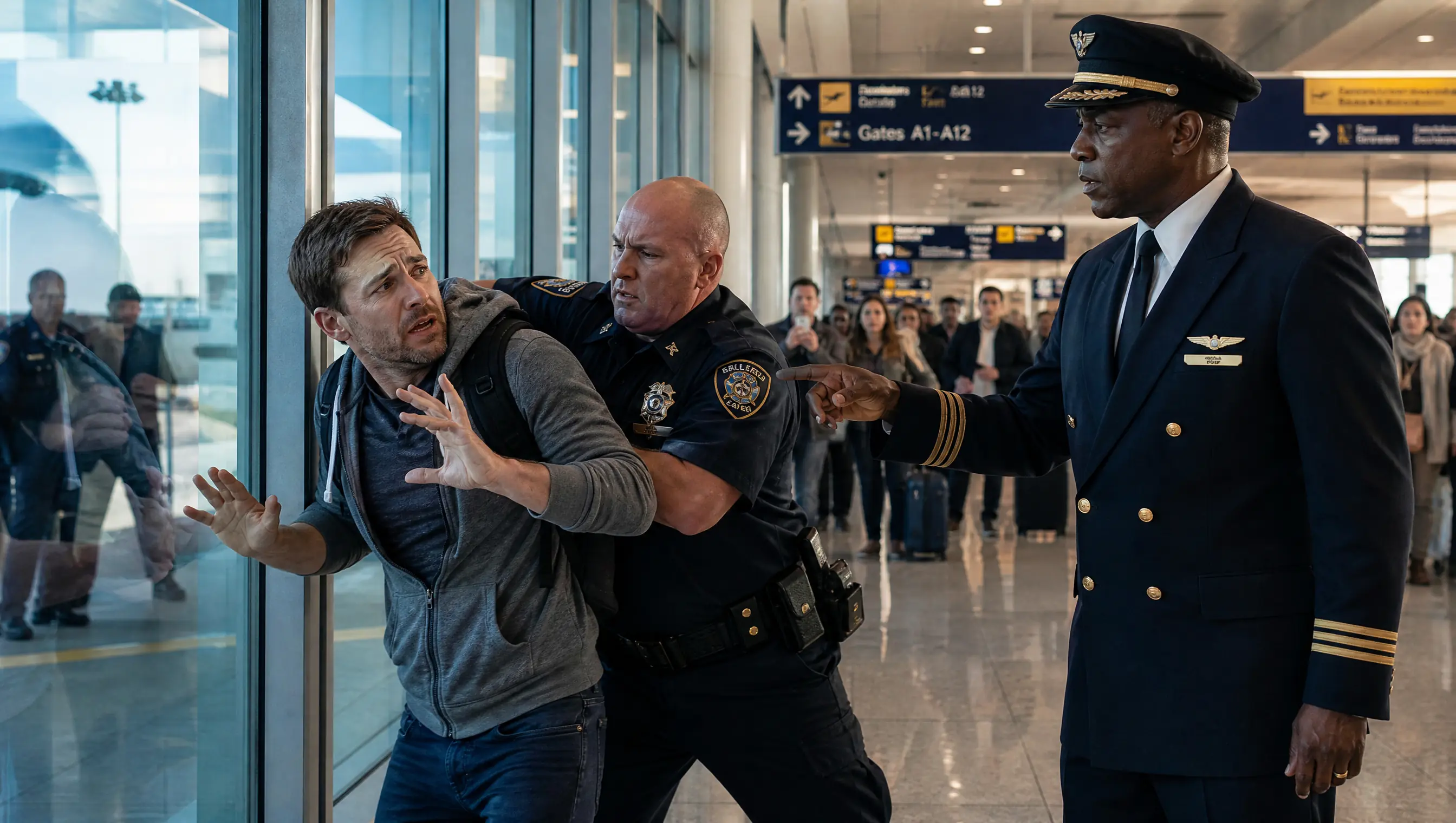
Show time for Cordillera Flight 2216, Denver to Seattle, was seven-ten. Push was seven-fifty-five. Employee lot, shuttle, Known Crewmember lane, train to B, crew room, change, gate. Forty minutes if the shuttle was waiting and the world was kind.
At six-nineteen a woman in a pink fleece came jogging across the parking lot with a ring of keys held out in front of her like an apology.
"Captain Hale. Oh, I'm so sorry. My grandson had the car."
"It's all right, Mrs. Tran."
"It's not all right. You have the airplane."
"The airplane will wait for me," he said, and smiled, because she looked as though she might cry, and because it was mostly true. "It doesn't have a choice."
She found his garment bag on the rack in under a minute: two white shirts, the navy trousers, the jacket with four gold stripes on each sleeve and the wings above the breast pocket, pressed flat as a promise. He had spilled coffee down the front of the jacket on Thursday, on the Boise turn, a whole cup when the first officer hit the brakes harder than he meant to on a wet taxiway, and he did not own a second one that fit. Celeste had told him for two years to buy a backup. Celeste was right about most things, and he had told her so many times that it had stopped being romantic and become simple record keeping.
So he drove to the airport in jeans and a gray quarter-zip pullover, the garment bag hanging from the hook behind the driver's seat, his crew badge on its lanyard tucked inside his collar where it would not swing against the steering wheel. He was fifty-six years old. He had been flying for Cordillera for nineteen years and for somebody or other for thirty-one, and he had a habit, from before he could remember having habits, of making himself small when he was not in uniform. Not small in body. He was six foot two and broad through the shoulders in the way of men whose fathers had loaded trucks. Small in a different way. Quiet hands. A soft voice. Eyes that moved without seeming to look.
His grandfather had called it walking light. "Not because you're less," Granddaddy Abel had said once, on the porch in Macon, with a jelly glass of sweet tea sweating a ring onto the railing. "Because they're scared, and scared people swing. You walk light so you get home."
Granddaddy Abel had worked as a redcap at Terminal Station in Atlanta for thirty-four years, carrying other people's suitcases up and down the platforms, and he had been called "George" by men who never asked his name and "boy" by men who were younger than his children. He had saved every quarter of every tip in coffee cans buried under the azaleas. Some of those quarters, eventually, had paid for Desmond's first hour of flight instruction at a grass strip outside Perry, Georgia, in a Piper Cub so old the fabric on its wings had been patched with bedsheets.
Desmond thought about his grandfather more than he expected to, at fifty-six. Mostly in airports.
* * *