The Great Hall of Chicago Union Station was built to make people feel small in a way that was good for them, and on the second Saturday of December, at a quarter past one in the afternoon, it was doing its job. Light came down from the barrel-vaulted skylight a hundred and some feet overhead, gray and soft as dishwater, and fell between the Corinthian columns onto the long wooden benches, which were the same benches people had been waiting on since Coolidge, worn pale along the arms where ninety years of elbows had rested.
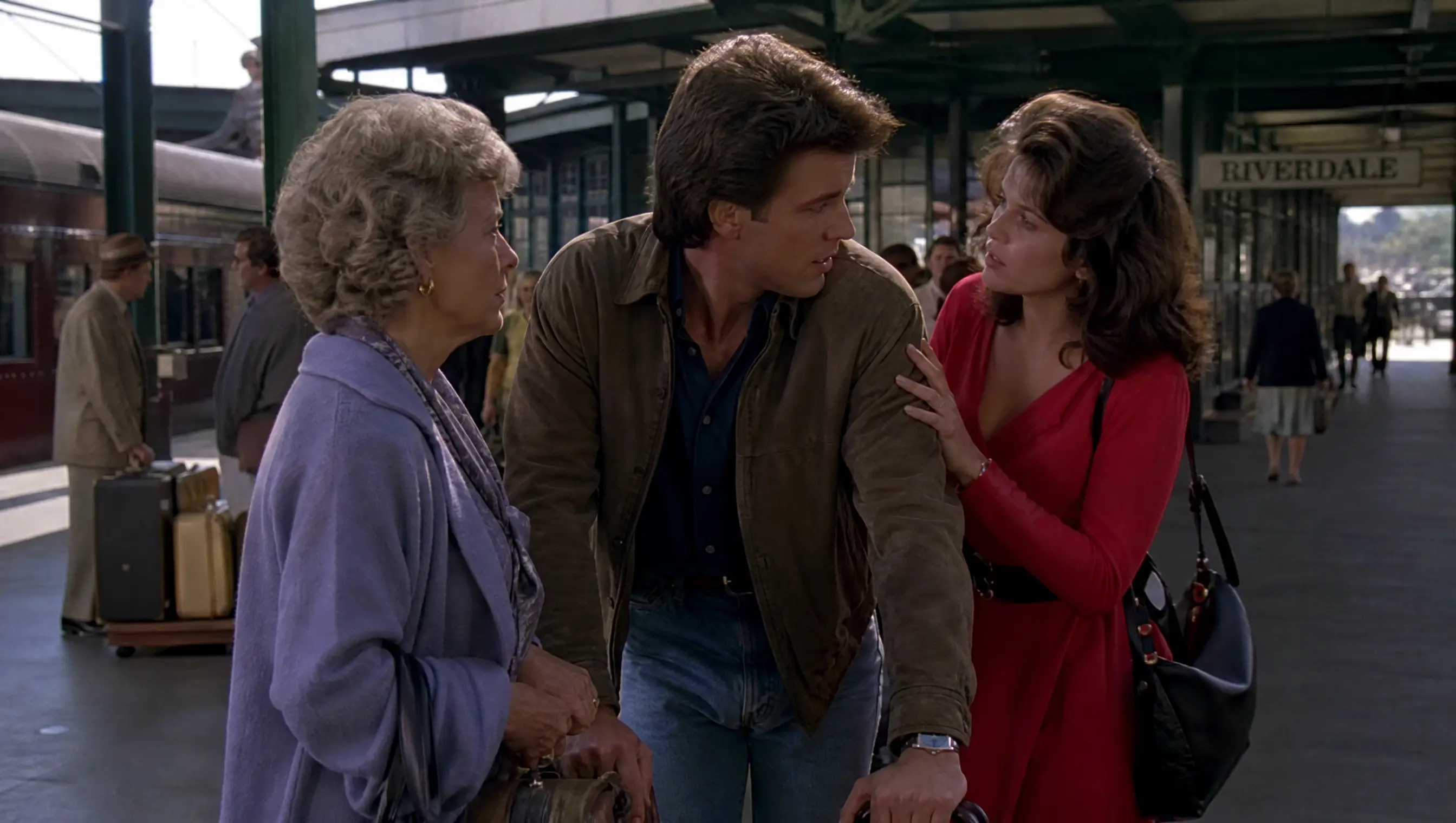
A Christmas tree stood near the Clinton Street doors, thirty feet of fir hung with silver balls that reflected the whole hall back upside down. A toddler was shrieking with joy at the echo. A man in a Bears jacket was asleep sitting straight up with a gallon of milk between his feet. The air smelled like wet wool, floor wax, and the cinnamon pretzels from the stand down in the concourse, and under all of it, faint and permanent, like a pulse in a wrist, came the low diesel breathing of the trains.
James Fitzhugh was nineteen feet up an orange fiberglass extension ladder, replacing the driver in a brass wall sconce that had been flickering for a week, and he was trying very hard not to look at the bench where his daughter was sitting.
He looked anyway. He always did. Ruby was nine and sat the way nine-year-olds sat when they had been told to stay put, which was technically on the bench but with one sneaker tucked under her and her whole body leaning toward whatever was interesting. She had her sketchbook open on her knee, the big spiral one with the black cover he had bought her at the Blick on State Street for her birthday, and a pencil in her fist, and she was drawing something across the hall with her tongue at the corner of her mouth. Her coat was purple and her hat was purple with a pom-pom, and that was something, at least. Purple was easy to find from nineteen feet up.
"You're not supposed to have her here," Ron Winnick had said the Saturday before last, standing at the bottom of a different ladder in the same hall. Ron was the station's facilities supervisor, a big, slow man with reading glasses on a cord and the squint of someone who has spent thirty years listening to buildings complain. He hadn't been angry. That had been the worst part. "I like Ruby. Ruby's not the issue. You leave her on a bench in a public train station while you're up a ladder with your back turned, and one day something happens, and it's not the lawyers I worry about, James. It's you. Next time, I write it up. I mean it. A write-up goes in the file, and the file's what they look at in March when the day shift bids come up."
James had said he understood. He did understand. He understood it the way he understood the electrical code, completely and with a sense of its general wisdom, and also with the knowledge that the code had never had to find someone to watch a nine-year-old on a Saturday in December when the regular sitter, a retired lunch lady named Shirley who lived two floors down from them in Pilsen, had called at six that morning sounding like her lungs were full of gravel.
"I'm so sorry, baby," Shirley had croaked. "I'd breathe on her. You don't want me breathing on her."
He had called his sister in Joliet, who had her own three. He had called the YMCA. Then he had stood in the kitchen with a box of Cheerios in his hand and done the terrible arithmetic every single parent knows, which loss could be survived this month, and said, "Ruby, get your sketchbook."
She had been delighted. She liked the station better than anywhere, better than the aquarium, better than the Art Institute lions in their wreaths. "It's like a church," she had told him once, "but everybody's leaving." She said things like that sometimes, and he had the uneasy sense that she was standing slightly to the side of the world he lived in, seeing it from an angle he could not get to.
He tightened the last screw on the sconce, flipped the breaker on his handheld test lead, and watched the light come up steady and gold. One small thing fixed. He started down the ladder.
That was when he saw the old woman with the suitcase.