They remember who told them they were lovable before they achieved anything.
They remember who made mistakes feel survivable.
They remember who listened without turning every conversation into a lecture.
They remember who believed in them during the seasons when they could not find confidence for themselves.
A grandmother’s words can remain in a grandchild’s heart for decades. A sentence spoken in the kitchen, during a car ride, after a disappointing game, or beside a bed at night may return years later when that child is facing rejection, failure, grief, or uncertainty.
The grandchild may no longer be small.
They may have a home, career, marriage, or children of their own. Yet in a difficult moment, they may still hear Grandma’s voice:
“You do not have to earn my love.”
“We will figure it out together.”
“I believe in you.”
This is one of the quiet powers of grandmotherhood.
A grandmother cannot remove every hardship from a grandchild’s life. She cannot prevent every disappointment, choose every friendship, or protect them from every mistake. She cannot guarantee that the world will always recognize their worth.
But she can help build an emotional foundation strong enough to support them when the world feels unsteady.
She can speak words that separate love from performance.
She can remind the child that feelings matter without allowing feelings to control every decision.
She can celebrate character instead of praising only achievement.
She can become a safe place where honesty does not immediately lead to shame.
For many adults over sixty-five, speaking this openly may feel unfamiliar. They may have grown up in homes where love was expressed through work, provision, discipline, and sacrifice rather than direct emotional language.
Their parents may have loved deeply without saying, “I am proud of who you are.” They may have provided food, shelter, and protection but rarely asked about feelings. Mistakes may have been corrected firmly, sometimes without reassurance that love remained intact.
Those generations often became resilient and responsible. Yet many carried quiet questions into adulthood:
“Was I loved for who I was or for how well I behaved?”
“Could I disappoint my family and still belong?”
“Did anyone truly believe in me?”
Grandmothers today have the opportunity to give grandchildren both strength and emotional security. They can pass down family values while also offering language that helps children understand their worth.
This does not require long speeches.
The most powerful phrases are often simple:
“I love you exactly as you are.”
“You never have to earn my love.”
“I am so grateful I get to be your grandparent.”
“Your thoughts and feelings matter to me.”
“I believe in you, even when you do not believe in yourself.”
“It is okay to make mistakes. They are how we learn.”
“You make this world brighter just by being in it.”
“I will always be a safe place for you to come home to.”
“I am proud of the person you are becoming, not just what you achieve.”
“No matter what happens, we will figure it out together.”
These words should not be spoken only once. Children build security through repetition. They need to hear love after success and after failure, during easy seasons and complicated ones.
The words must also be supported by action. “Your feelings matter” means Grandma listens. “You do not have to earn my love” means affection does not disappear when the child disappoints her. “I am a safe place” means the grandchild can tell the truth without being mocked, exposed, or immediately rejected.
Words and actions together create trust.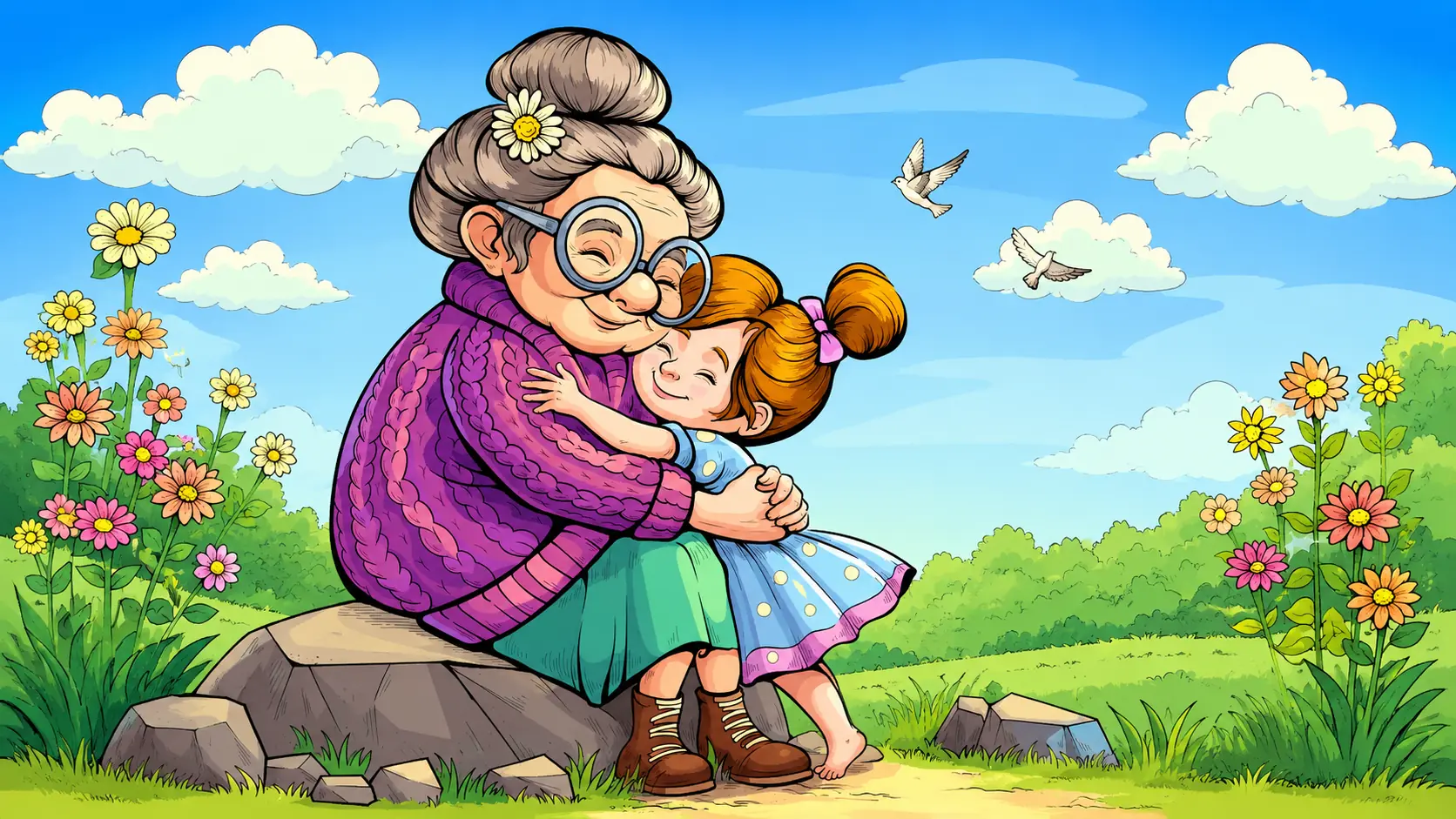
1. “I Love You Exactly as You Are”
Children receive many messages about who they should become.
They should be quieter, more confident, more social, more athletic, more organized, more obedient, more successful, or more like another child.
Some correction is necessary. Grandchildren need guidance, boundaries, and encouragement to grow. Loving a child as they are does not mean approving of every behavior or refusing to help them mature.
It means separating the child’s worth from the parts of them that are still developing.
A grandmother can say, “I love you exactly as you are, and I will help you learn better ways to handle this.”
The child hears two truths:
“My behavior may need to change.”
“My belonging is not in danger.”
That distinction is powerful.
Children Often Confuse Correction With Rejection
Young children do not always understand emotional complexity. When an adult is angry, the child may believe the relationship itself is threatened.
They may think:
“Grandma is disappointed, so perhaps I am no longer lovable.”
This fear can lead to hiding mistakes, lying, perfectionism, or people-pleasing.
Grandma can protect against this by making love explicit.
“I did not like what happened, but I love you exactly the same.”
The statement does not erase accountability. It creates enough safety for accountability to be received.
Love the Temperament, Guide the Behavior
A quiet grandchild should not be treated as though they are defective because they do not enjoy large gatherings.
An energetic child should not be described as “too much” simply because their body needs movement.
A sensitive child should not be mocked for crying easily.
Grandma can appreciate temperament while teaching skills.
“You notice feelings deeply. That is part of your caring heart. Let us also learn what helps when the feelings become overwhelming.”
This turns a trait that might create shame into something the child can understand and manage.
Avoid Comparing Grandchildren
Comparison damages the message of unconditional love.
“Why cannot you be more like your cousin?”
“Your brother never behaved this way.”
“Your sister is the smart one.”
Even when spoken casually, these statements can become lifelong wounds.
Children begin believing love is distributed according to rank.
Grandma can celebrate each child individually.
“You have your own way of seeing the world.”
This does not require pretending every child has the same strengths. It means strengths are not used to diminish another child.
Loving Them as They Are While Allowing Them to Change
Children grow.
Interests change.
Personalities deepen.
Teenagers develop beliefs, styles, and ambitions that may surprise their grandparents.
“I love you exactly as you are” means Grandma remains curious about the person in front of her, not only attached to the child she remembers.
She can say, “Tell me who you are becoming.”
The relationship stays alive when Grandma allows the grandchild to grow without treating change as betrayal.
What This Phrase Becomes Later
An adult who heard this message may enter relationships with a stronger understanding of healthy love.
They may recognize when someone demands that they shrink, perform, or abandon themselves to earn affection.
Grandma’s voice becomes a standard:
“Real love can guide me without erasing me.”
2. “You Never Have to Earn My Love”
Children quickly learn that much of life is conditional.
Good grades bring praise.
Winning brings applause.
Helpful behavior brings approval.
Poor choices bring consequences.
These patterns are part of normal life. Effort and responsibility matter. But if every expression of affection seems connected to performance, a child may believe love itself must be earned.
They begin working not only to succeed, but to secure belonging.
A grandmother can offer a different foundation.
“You never have to earn my love.”
This tells the child that love is not a prize given only when they are impressive.
Unconditional Love Is Not Unconditional Permission
This phrase can be misunderstood.
It does not mean Grandma agrees with every choice or removes every consequence.
She may say no.
She may be disappointed.
She may create distance from harmful behavior.
She can still communicate:
“My love remains, even when my answer is no.”
The relationship is secure, but behavior still matters.
This teaches a child that healthy love includes both acceptance and boundaries.
The Child Who Tries to Be Perfect
Some children become highly responsible because they fear disappointing the adults they love.
They bring home excellent grades, avoid conflict, help constantly, and rarely ask for anything.
Adults may praise them as easy children.
Inside, they may be carrying anxiety.
“What happens if I fail?”
“Will everyone still be proud?”
Grandma can say:
“You do not have to be perfect with me.”
“I love you on ordinary days too.”
This creates room for the child to rest.
After a Failure
The phrase matters most when something goes wrong.
The child fails a test.
Does not make the team.
Breaks something important.
Lies.
Loses a friendship.
Makes a decision with serious consequences.
Grandma does not need to minimize the event.
She can say:
“We need to deal honestly with what happened. You still do not have to earn my love.”
The child learns that failure requires responsibility, not exile.
Do Not Use Love as a Reward or Threat
Adults sometimes say:
“If you loved me, you would behave.”
“Grandma will not love you if you act like that.”
These statements are often said lightly, but children may take them seriously.
They teach that affection can be withdrawn to control behavior.
A grandmother should correct directly.
“I will not allow you to hit.”
Not:
“Bad children do not deserve hugs.”
The boundary addresses the action without attacking belonging.
When the Grandchild Is Grown
Adult grandchildren also need to know love is not dependent on constant agreement.
They may choose a career, partner, location, or lifestyle Grandma would not have chosen.
She can express concern respectfully while protecting the relationship.
“I may need time to understand, but you never have to earn my love.”
This allows honest difference without emotional abandonment.
The Long-Term Gift
A child who knows love does not have to be earned may become less vulnerable to relationships built on manipulation.
They may understand that healthy love does not require constant proving.
They may offer the same security to their own children.
3. “I Am So Grateful I Get to Be Your Grandparent”
Children often hear that adults love them.
Fewer children hear that adults are genuinely grateful to know them.
“I am grateful I get to be your grandparent” tells the child their existence brings joy.
It communicates:
“You are not merely another responsibility.”
“You are not an interruption.”
“Knowing you is a gift.”
Children Notice Whether Adults Enjoy Them
A grandmother may provide food, transportation, gifts, and practical care while appearing constantly irritated.
The child may know they are loved but wonder whether their presence is enjoyable.
This phrase answers that question.
“I am glad you are here.”
A grandchild who feels enjoyed develops a different kind of confidence from one who merely feels tolerated.
Gratitude Should Not Create Pressure
The phrase should not mean:
“You must make me happy.”
Children should never become responsible for a grandparent’s emotional well-being.
Grandma can express gratitude without placing a burden.
“I am grateful for you, and you are free to be yourself.”
The child is a gift, not an emotional caretaker.
Say It During Ordinary Moments
Do not save the phrase for birthdays or graduations.
Say it while making breakfast.
During a car ride.
After laughing together.
“I was just thinking how lucky I am to be your grandma.”
The ordinary timing makes the words feel sincere.
When Grandparenthood Was Unexpected or Complicated
Some grandparents raise grandchildren because of family crisis. Others meet grandchildren later through blended families, adoption, or remarriage.
The relationship may not follow the expected path.
Gratitude can still be spoken.
“I did not know life would bring us together this way, but I am grateful I get to be your grandparent.”
This honors the relationship without pretending the circumstances have always been easy.
Grandparents Through Choice
Not every meaningful grandparent relationship is biological.
A step-grandparent, family friend, neighbor, or older mentor may become a grandparent figure through consistent love.
The phrase “I am grateful I get to be your grandparent” can affirm that chosen bond.
The Memory It Creates
One day, the grandchild may wonder whether their visits were a burden as Grandma aged.
They may remember her words:
“She was grateful for me.”
That memory can ease regret after loss.
4. “Your Thoughts and Feelings Matter to Me”
Children are often told what to do long before they are asked what they think.
Adults decide where they go, when they leave, what they eat, and which rules apply. This is necessary because children need guidance.
But even when the adult makes the final decision, the child’s inner experience matters.
Grandma can say:
“Your thoughts and feelings matter to me.”
This means:
“I may not always agree.”
“I may not always change the decision.”
“But I want to understand.”
Feelings Matter Without Controlling Everything
If a child does not want bedtime, the feeling matters.
Bedtime may still happen.
If they are angry about leaving the park, the anger matters.
The family may still leave.
Grandma can say:
“You are disappointed. I understand. It is still time to go.”
This teaches that feelings can be respected without becoming commands.
Ask Follow-Up Questions
The phrase becomes real through listening.
“What made you feel that way?”
“What do you think happened?”
“What would help?”
The questions should not be used to interrogate or lead the child toward Grandma’s preferred answer.
Curiosity communicates respect.
Avoid Dismissing Small Feelings
Adults know some childhood problems will pass quickly.
The broken toy will be forgotten.
The friendship may recover.
The school embarrassment will become a small memory.
But saying “That is nothing” does not build resilience.
It teaches the child to hide distress.
Grandma can keep perspective while offering empathy.
“I know this may feel different later, but it hurts right now.”
Respecting Feelings During Family Conflict
Grandchildren may have complicated emotions about divorce, new family members, moves, or parental decisions.
Grandma should not use those feelings to recruit the child to her side.
She can listen without criticizing the parents.
“You are allowed to feel sad and confused.”
This supports the child without increasing conflict.
When the Child’s Feelings Are About Grandma
The most difficult test comes when the grandchild says:
“You hurt my feelings.”
“You did not listen.”
“I do not like when you say that.”
Grandma may feel defensive.
A strong response is:
“Your feelings matter to me. Tell me more.”
She can explain her perspective later.
Listening first proves the phrase is not merely decorative.
The Adult This Child May Become
A grandchild who learns that thoughts and feelings matter may become better able to express boundaries, identify unsafe relationships, and seek help.
They learn that having emotions does not make them weak or difficult.
5. “I Believe in You, Even When You Do Not Believe in Yourself”
Every child experiences seasons of doubt.
They struggle with school.
Compare themselves with others.
Feel awkward in a changing body.
Question their abilities.
Lose motivation after failure.
During these moments, a grandmother’s belief can become borrowed courage.
“I believe in you, even when you do not believe in yourself.”
The phrase does not promise that everything will be easy or that the child will succeed at every goal.
It says:
“I see strength in you that this moment has hidden.”
Belief Should Be Specific
General encouragement is helpful.
Specific encouragement is stronger.
“You kept trying even after the first attempt failed.”
“You have always been thoughtful with people who feel left out.”
“You learn slowly at first, but once you understand, you remember deeply.”
Specific observations give the child evidence.
Do Not Confuse Belief With Pressure
“You are too talented to fail” may increase anxiety.
“You must prove everyone wrong” can turn support into performance.
Grandma’s belief should feel steady, not demanding.
“You can take this one step at a time.”
“I believe you can handle the next part.”
Believing in Them During a Different Dream
A grandchild’s goals may not match Grandma’s expectations.
They may choose art instead of business, a trade instead of college, or a quieter life instead of visible success.
Grandma can ask whether concern is based on genuine risk or simply unfamiliarity.
Believing in the child does not mean approving every plan without thought.
It means taking their aspirations seriously.
During Depression, Anxiety, or Deep Struggle
Sometimes a child cannot access hope.
Grandma should not use encouragement as a substitute for professional care.
“I believe in you” can exist alongside:
“We need more support.”
“Let us speak with someone who can help.”
Belief is not denial.
It is accompaniment.
The Voice They Carry Into Adulthood
Years later, during a job interview, difficult pregnancy, business failure, or family crisis, the grown grandchild may hear:
“Grandma believed I could keep going.”
That voice can become part of their resilience.
6. “It Is Okay to Make Mistakes—They Are How We Learn”
Children often fear mistakes because adults react strongly.
A spilled drink produces irritation.
A wrong answer creates embarrassment.
A poor decision brings a long lecture.
The child may begin avoiding challenges to avoid failure.
Grandma can offer a healthier message:
“It is okay to make mistakes. They are how we learn.”
This does not mean every mistake is harmless or without consequences.
It means mistakes are part of growth, not proof of permanent inadequacy.
Distinguish Mistakes From Harmful Choices
Accidentally dropping a plate is different from throwing it in anger.
Forgetting homework is different from repeatedly refusing responsibility.
Grandma can name the difference while preserving dignity.
“That was a mistake. Let us clean it up.”
Or:
“You made a choice that hurt someone. We need to repair it.”
Both situations can become learning.
How Grandma Responds Matters More Than the Phrase
If Grandma says mistakes are okay but reacts with anger every time one happens, the child believes the reaction.
She can pause.
Address safety.
Then guide the repair.
“What can we do next?”
Share Your Own Mistakes
Grandparents may appear almost all-knowing to young children.
Sharing age-appropriate stories can reduce fear.
“I made a mistake like that when I was young.”
The story should not take over the child’s experience. It should communicate companionship.
Avoid Rescuing Them From Every Consequence
Learning requires responsibility.
If the child forgets something, Grandma should not always rush to fix it.
She can help them think.
“What could you do differently tomorrow?”
Consequences become information rather than humiliation.
Apologizing Is Part of Learning
Grandma should model mistakes openly.
“I spoke too sharply. I am sorry.”
The child learns that adulthood does not mean never being wrong.
It means taking responsibility.
The Perfectionist Grandchild
Some children become highly anxious about correctness.
Grandma can intentionally celebrate attempts.
“I am proud that you tried something difficult.”
This shifts attention from flawless results to courage.
The Lifelong Lesson
An adult who believes mistakes are survivable may take healthy risks, ask for help, repair relationships, and continue learning.
7. “You Make This World Brighter Just by Being in It”
Children often receive praise for what they do.
“You are a good student.”
“You are talented.”
“You helped.”
These statements are valuable.
But children also need to know their existence itself carries worth.
“You make this world brighter just by being in it.”
The phrase tells the child:
“You do not have to perform every moment to matter.”
Identity Beyond Productivity
Modern culture often measures people by achievement, popularity, income, or appearance.
A grandmother can offer a different measure.
“I love the way you notice people who are lonely.”
“Your laugh brings joy.”
“Your curiosity changes the room.”
She sees the child’s presence, not only productivity.
Be Careful With Exaggeration
The phrase should feel sincere, not like empty praise.
Grandma can connect it to real moments.
“You made my day brighter when you called.”
This gives the child a concrete understanding of their positive impact.
Supporting a Child Who Feels Invisible
Some grandchildren feel overlooked in school, friendships, or even the family.
They may compare themselves with more outgoing siblings.
Grandma’s words can provide a place where they feel recognized.
“You do not have to be the loudest person to bring light.”
During Dark Seasons
A teenager or adult grandchild may struggle with hopelessness.
The phrase can be deeply meaningful, but it should not replace immediate safety support when needed.
Grandma can say:
“Your life matters enormously to me, and we are getting help together.”
Words of worth should lead to protective action.
Do Not Make Their Light Responsible for Your Happiness
“You are the only reason I live” places an emotional burden on the child.
A healthier message is:
“Your presence adds joy to my life, and my emotional well-being is not your responsibility.”
Grandchildren should feel valuable, not trapped.
The Legacy
The child may later look at another person who feels invisible and say:
“You make the world brighter.”
Love learned becomes love offered.
8. “I Will Always Be a Safe Place for You to Come Home To”
The word “home” means more than a building.
It is the emotional experience of being allowed to return.
A safe place is where a grandchild can tell the truth, ask for help, rest after failure, and be known without immediate humiliation.
Grandma can say:
“I will always be a safe place for you to come home to.”
The promise is powerful and must be understood carefully.
Safe Does Not Mean Secret
If a child reveals danger, abuse, self-harm, or serious risk, Grandma must involve responsible adults or professionals.
She should not promise to hide everything.
A safe response is:
“I will protect your privacy whenever I can, but if you are in danger, we will get help together.”
Safety is more important than secrecy.
Safe Does Not Mean No Boundaries
Grandma’s home may have rules.
No violence.
No cruel speech.
No dangerous behavior.
She can remain a safe place while saying:
“I love you, and this behavior cannot happen here.”
Boundaries make safety possible.
A Safe Place After Failure
A grandchild who has made a mistake may fear returning.
Grandma can say:
“Come home. We will tell the truth and face it together.”
This does not erase consequences.
It prevents shame from isolating the child.
Emotional Safety
The grandchild should not be mocked, compared, or exposed publicly after sharing something personal.
Grandma can disagree without ridicule.
“I see this differently, but I want to understand.”
Physical Home May Change
Grandma may move, become ill, or enter assisted living.
The physical house may be sold.
The promise can adapt.
“Wherever I am, you can call me.”
Home becomes the relationship.
After Grandma Is Gone
Even death does not entirely erase the feeling of safety she created.
A grown grandchild may ask internally:
“What would Grandma say?”
Her steady love has become part of their inner home.
9. “I Am Proud of the Person You Are Becoming, Not Just What You Achieve”
Achievement attracts attention.
Awards, grades, promotions, and victories are easy to celebrate.
Character develops more quietly.
Patience.
Honesty.
Kindness.
Courage.
Responsibility.
The willingness to apologize.
Grandma can say:
“I am proud of the person you are becoming, not just what you achieve.”
This teaches the child that worth is larger than performance.
Celebrate Process
Instead of only saying, “You got an A,” say:
“You stayed committed even when the work was hard.”
Instead of only praising the trophy:
“You treated the other team respectfully.”
The achievement is still celebrated, but character receives attention too.
Notice Hidden Growth
A child may not win, yet show courage.
They may fail and still return.
They may include another child who was alone.
These moments deserve recognition.
“I noticed what you did.”
Avoid Creating a Fixed Identity
“You are the smart one” can create pressure.
What happens when the child struggles?
Praise choices and habits rather than assigning a permanent role.
“You worked carefully.”
Pride Without Possession
Grandma’s pride should not make the grandchild’s success about her.
“I always knew my family would produce a doctor” can burden the child.
A healthier message is:
“I am proud of you because I see the effort and integrity you brought to this.”
When Their Path Changes
The grandchild may leave a respected job, change majors, or begin again.
Grandma can focus on courage and honesty rather than status.
“I am proud that you are facing the truth about what fits your life.”
Character During Hardship
People reveal much during disappointment.
Grandma may say:
“I am proud of the way you are handling something painful.”
This tells the grandchild that becoming matters as much as winning.
10. “No Matter What Happens, We Will Figure It Out Together”
Children often imagine problems as permanent.
A lost object feels catastrophic.
A failed class feels like the end of the future.
A broken friendship feels impossible to survive.
Grandma can offer steadiness:
“No matter what happens, we will figure it out together.”
This does not promise that Grandma can solve everything.
It promises the child will not face the next step alone.
Together Does Not Mean Grandma Takes Over
The child should remain involved.
“What do you think the first step is?”
Grandma supports problem-solving instead of removing responsibility.
Begin With the Next Small Step
Large problems become less frightening when divided.
“We do not need every answer tonight.”
“First, we tell the truth.”
“Tomorrow, we make the call.”
This teaches that crises can be approached gradually.
Honest Limits
Grandma should not promise outcomes she cannot guarantee.
She may not be able to fix an illness, restore a relationship, or remove every consequence.
She can say:
“I do not know how this will end, but we will find the next right step.”
This is more trustworthy than false reassurance.
When Professional Help Is Needed
Together may mean calling a doctor, counselor, teacher, attorney, or another qualified person.
Asking for help is not failure.
Grandma can model humility:
“This is bigger than what we can solve alone.”
Family Unity Without Enabling
If the grandchild faces consequences for harmful behavior, Grandma can remain supportive without rescuing them from responsibility.
“I will stand beside you while you make this right.”
Love helps the child face truth.
The Message During Grief
Some problems cannot be solved. A death cannot be reversed.
“Figure it out together” may then mean learning how to live through the loss.
“We will cry, remember, and take one day at a time.”
Togetherness does not remove pain.
It prevents isolation.
How to Make These Words Believable
Children trust patterns more than speeches.
A grandmother can say every beautiful phrase and still create insecurity if her actions repeatedly contradict them.
“I love you exactly as you are” must include respect for temperament and individuality.
“You never have to earn my love” must remain true after disappointment.
“Your feelings matter” requires listening.
“I am a safe place” requires privacy, boundaries, and honesty.
“We will figure it out together” requires showing up when the problem becomes inconvenient.
This does not require perfection.
Grandma will make mistakes.
The most believable action may sometimes be repair.
“I said something that did not match the love I want you to feel. I am sorry.”
Repetition Matters
Children may shrug, laugh, or act embarrassed when Grandma says emotional things.
Do not assume the words are unwanted.
Teenagers may roll their eyes and remember the sentence for life.
Say it naturally.
Write it in a card.
Leave it in a message.
Repeat it during both success and difficulty.
When Grandchildren Live Far Away
Distance changes the form of connection, not its meaning.
Grandma can send a voice message:
“I believe in you.”
Write a letter:
“You never have to earn my love.”
Call after a difficult event:
“We will figure out the next step together.”
Written words can become keepsakes.
A grandchild may save a message and replay it years later.
When the Relationship Is Strained
Not every grandparent-grandchild relationship is close.
Family conflict, distance, past hurt, or limited access may create pain.
Grandma should not use beautiful phrases to avoid accountability.
If she has contributed to the distance, she can say:
“I love you, and I also understand that some of my actions hurt you.”
“I want to become safer, not merely call myself safe.”
Trust must be rebuilt through behavior.
The grandchild may need time.
Love cannot demand immediate closeness.
When Grandma Struggles to Say Emotional Words
Some women feel uncomfortable with direct affection because they did not receive it themselves.
They may fear sounding unnatural.
Begin simply.
“I am glad you are here.”
“I believe in you.”
Write the words if speaking feels difficult.
Emotional language becomes easier with practice.
The discomfort is not proof the words are unnecessary.
It may be evidence of a family pattern ready to change.
The Words Grandma May Wish She Had Heard
As she speaks to her grandchildren, Grandma may recognize the child inside herself.
She may wish someone had said:
“You do not have to earn my love.”
“It is okay to make mistakes.”
“Your feelings matter.”
This realization can bring grief.
She cannot rewrite her childhood, but she can honor that younger self by creating a different legacy.
Every sentence offered to the grandchild becomes part of healing across generations.
What Grandchildren May Remember After Grandma Is Gone
They may forget the exact day.
The kitchen.
The clothing.
The activity.
But they remember how her voice sounded when she said:
“I believe in you.”
They may find the words in an old card.
Hear them in a saved voicemail.
Repeat them during a hard season.
A grandmother’s language can become emotional inheritance.
The grandchild may one day speak the same words to their own child:
“You never have to earn my love.”
In that moment, Grandma’s influence continues.
A Final Message From Grandma
My dear grandchild, there are things I hope you never have to question.
I hope you never question whether I love you exactly as you are.
You will grow, change, make mistakes, and become someone neither of us can fully imagine today. There may be choices I do not understand immediately and seasons when we see life differently.
But your worth will never depend on becoming a copy of me.
You never have to earn my love.
You do not need a perfect report card, a trophy, a title, or a life that looks impressive from the outside.
I will celebrate your achievements, but I will not measure your lovability by them.
I am deeply grateful I get to be your grandparent.
You are not a burden placed inside my life.
You are one of its gifts.
Even when I am tired, even when visits are noisy, and even when life becomes complicated, I hope you know how thankful I am that our stories belong to each other.
Your thoughts and feelings matter to me.
I may not always agree with every opinion or change every decision because you are upset. But I want to hear your heart.
I want you to know that your inner world is not too small, dramatic, or inconvenient for my attention.
I believe in you, especially during the moments when you cannot find belief for yourself.
I have lived long enough to know that one failure does not define a life.
A lost opportunity can lead to another path.
A frightened person can still be brave.
A tired person can rest and begin again.
It is okay to make mistakes.
Please do not waste your life trying to appear perfect.
Tell the truth.
Repair what you can.
Learn.
Try again.
The people who grow are not those who never fall. They are those who become honest enough to stand again.
You make this world brighter simply by being in it.
Not because you entertain everyone.
Not because you solve every problem.
Not because you achieve more than other people.
Your existence carries value.
Your laugh, questions, sensitivity, courage, and presence bring something into this family that no one else can replace.
I hope I will always be a safe place for you to come home to.
Safe does not mean I will approve of everything or hide you from every consequence.
It means you can return with the truth.
It means you do not have to face shame alone.
It means we can sit down, breathe, and decide what happens next.
I am proud of the person you are becoming.
Awards may fade.
Jobs may change.
Plans may fail.
But kindness, honesty, courage, patience, and the willingness to repair will shape every place you go.
Those are the things I hope you build your life upon.
No matter what happens, we will figure out the next step together.
I may not have every answer.
There will be problems I cannot solve and places I cannot physically follow you.
But love can still stand beside you.
We can ask for help.
Tell the truth.
Make a plan.
Pray.
Rest.
Begin again.
One day, my voice may no longer be in the next room.
My chair may be empty.
The house may belong to someone else.
When that day comes, I hope these words remain inside you.
I love you exactly as you are.
You never had to earn my love.
I was grateful to be your grandma.
Your thoughts and feelings mattered.
I believed in you.
Your mistakes never made you hopeless.
You brought light into my world.
You always had a home in my heart.
I was proud of who you were becoming.
And whatever life placed before you, I wanted you to remember one thing:
You were never meant to face it believing you were alone.