Children hear many comments about how they look.
“You are so pretty.”
“You are handsome.”
“That outfit looks adorable.”
“You have beautiful eyes.”
These words are usually spoken with love. There is nothing wrong with telling a grandchild they look nice or noticing a bright smile. Warm affection can help children feel cherished, and appearance-based compliments can be part of that affection.
But when most praise focuses on the outside, children may begin to believe that appearance is the most important thing adults notice about them.
They learn that being attractive receives attention.
They may start comparing their body, hair, clothing, height, or skin with other children. As they grow, they may look to mirrors, photographs, social media, classmates, and strangers to decide whether they deserve confidence.
This pressure can affect boys and girls alike.
A granddaughter may begin believing that being pretty is more valuable than being brave, thoughtful, creative, or determined. A grandson may feel he must look strong, athletic, tall, or confident even when he feels uncertain inside.
Grandparents can offer another kind of mirror.
A grandmother can help her grandchild see qualities that have nothing to do with appearance. She can notice kindness, effort, persistence, creativity, patience, inclusion, emotional maturity, energy, courage, and humor.
These compliments do more than make a child feel good for a moment.
They teach the child what is worth developing.
When Grandma says, “I love how kind you are to others,” she is showing that kindness is visible and valuable.
When she says, “You worked really hard on that,” she teaches that effort deserves recognition even before the result is perfect.
When she praises courage, patience, or the ability to include someone, she helps the child build an identity around character rather than comparison.
This matters because appearance changes.
Children grow.
Bodies develop.
Clothing styles change.
Hair turns gray.
Faces age.
A person whose worth depends mainly on appearance may spend a lifetime fearing change.
But kindness can deepen.
Courage can grow.
Patience can be practiced.
Creativity can follow a person into every season of life.
A sense of humor can comfort people through grief, illness, and uncertainty.
These inner qualities become part of the legacy a grandchild carries long after childhood.
For readers over sixty-five, this subject may bring reflection. Many older women grew up in homes and communities where girls received frequent comments about beauty, weight, clothing, and whether they looked “ladylike.” Boys were often praised for looking strong, tough, or athletic.
Character mattered, but adults did not always name it clearly.
A child might have been helpful for years without hearing, “You make people feel welcome.” They might have worked hard without anyone distinguishing effort from results. They may have shown courage quietly, yet only heard comments about a dress, haircut, or physical ability.
Grandmothers today have a chance to widen the language of love.
They can still tell a grandchild, “You look wonderful today.” But they can also make sure the child hears much more:
“I noticed your patience.”
“You kept going.”
“You handled that with maturity.”
“You made someone feel included.”
“You brought joy into the room.”
The most powerful compliments are not vague flattery.
They are specific observations.
They tell the child, “I see what you did, how you treated people, and who you are becoming.”
This kind of praise feels believable because it is connected to a real moment.
It also gives the child something they can continue practicing.
A child cannot fully control whether other people consider them beautiful. They can choose to be kind. They can keep trying. They can develop creative ideas, show courage, and learn to respond more patiently.
Grandma’s words help move confidence from the outside world to the child’s own character.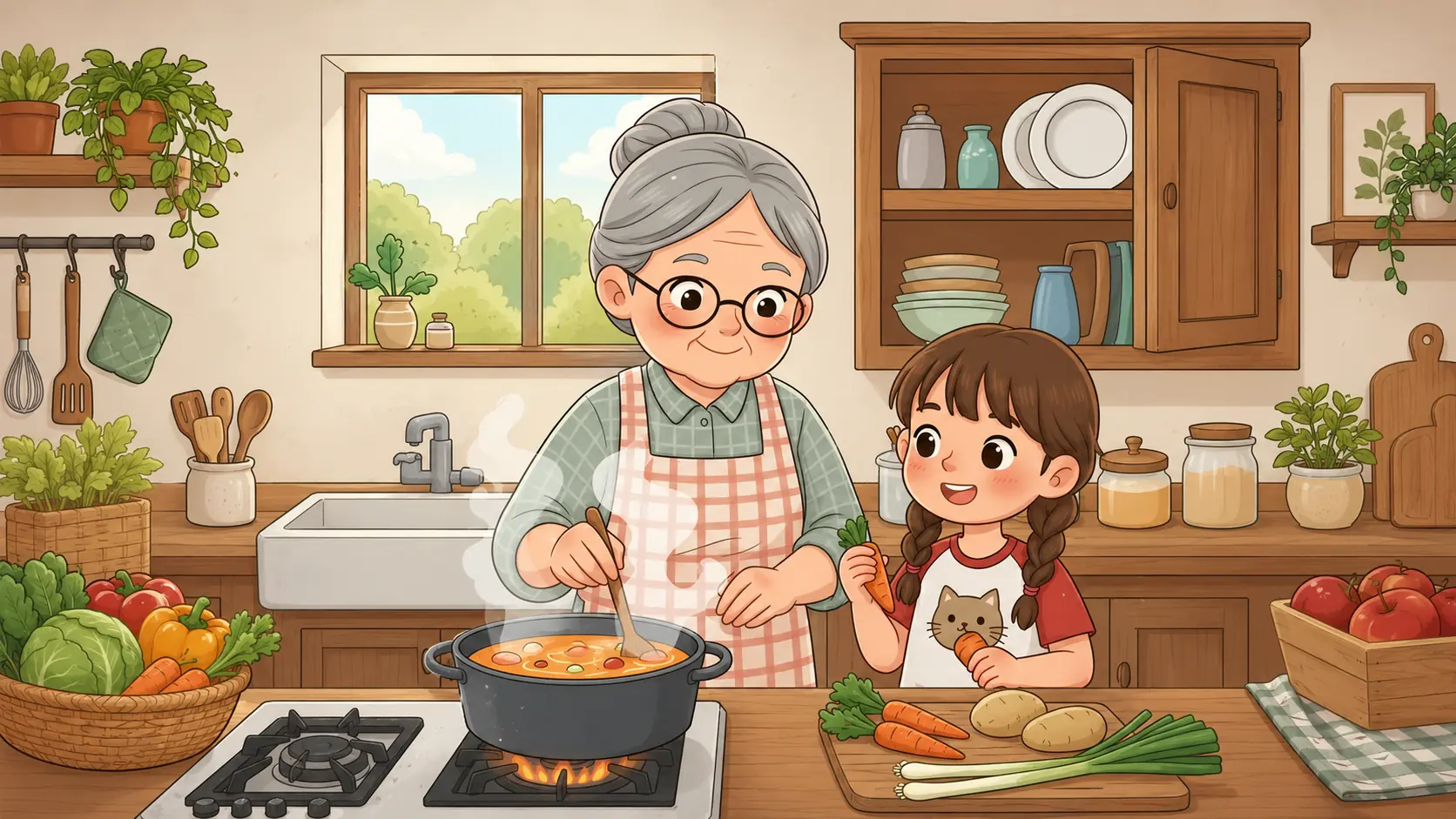
1. “I Love How Kind You Are to Others”
Kindness is often quieter than achievement.
A child may receive a certificate for good grades, a trophy for sports, or applause for a performance. But the moment they share with someone, comfort a classmate, or notice a lonely child may pass without public recognition.
Grandma can make sure it does not pass unnoticed.
“I love how kind you are to others.”
This tells the child that kindness is not invisible.
It matters.
Notice the Specific Act
General praise can feel pleasant, but specific praise helps the child understand exactly what they did.
“I noticed that you moved over so your cousin could sit beside you.”
“You saw that your friend was sad and asked if she was okay.”
“You gave your brother another turn without anyone asking.”
These details make the compliment believable.
The child does not simply hear, “I am a kind person.”
They understand what kindness looks like in action.
Kindness Is More Than Being Polite
Adults sometimes confuse kindness with quiet obedience.
A child who never disagrees may be called kind, while a child who speaks honestly may be labeled difficult.
True kindness is not constant compliance.
A child can set boundaries and still be kind.
They can say no respectfully.
They can defend someone who is being mistreated.
They can tell the truth even when it creates discomfort.
Grandma can praise this form of courage:
“You were kind to your friend when you stood up for her.”
This teaches that kindness includes protection, honesty, and dignity.
Avoid Turning Kindness Into a Burden
Some children, especially girls, are praised so heavily for being kind and helpful that they begin ignoring their own needs.
They become responsible for everyone’s feelings.
They give away what they need.
They remain in unhealthy situations because they fear being considered selfish.
Grandma can balance the compliment:
“I love your kind heart, and you are also allowed to protect your own feelings.”
This teaches that compassion and boundaries belong together.
Kindness Toward People Who Are Different
Children often notice differences before adults discuss them.
A grandchild may meet someone with a disability, a different language, an unfamiliar culture, or a family structure they do not understand.
Grandma can encourage curiosity and respect.
“I admired how warmly you welcomed him even though he was new.”
The child learns that kindness is not reserved for people who are easy or familiar.
Kindness Inside the Family Counts
Children are often polite in public and impatient at home.
Grandma can notice kindness toward siblings, parents, and relatives.
“You were tired, but you still helped your little sister.”
Family kindness matters because home is where people are most likely to take one another for granted.
When the Child Is Not Kind
A compliment should not become a fixed label the child must protect.
If they behave cruelly, Grandma should address it honestly.
“That choice was not kind. I know you are capable of treating people better.”
She separates the behavior from the child’s whole identity.
The child learns that kindness is a practice, not a permanent title.
The Adult This Child May Become
A child whose kindness is noticed may become an adult who understands that compassion has value even when it brings no reward.
They may care for a parent, welcome a new colleague, comfort a grieving friend, or speak gently to someone having a difficult day.
Grandma’s words become part of the reason they continue.
2. “You Worked Really Hard on That, and It Shows”
Children often hear praise for results.
“You got the highest score.”
“You won.”
“That picture is beautiful.”
“You are so smart.”
Results matter, and accomplishments deserve celebration. But when praise focuses only on the outcome, children may conclude that effort matters only when it produces success.
A grandmother can offer a more stable message:
“You worked really hard on that, and it shows.”
This praises the process.
Effort Builds a Growth Mindset
A child who believes ability is fixed may avoid difficult tasks.
If they think they are “smart,” they may fear situations where they might struggle and appear less intelligent. If they believe they are “not good at” something, they may stop trying.
Effort-based praise teaches that skills can grow.
The child learns:
“I may not be able to do this yet.”
That one word—yet—creates possibility.
Be Honest About the Result
Effort praise should not require pretending the outcome is perfect.
Grandma can say:
“I can see how much time you put into this.”
She does not have to claim every drawing is extraordinary or every performance flawless.
Children often know when adults exaggerate.
Specific honesty builds trust.
Effort Is Not Always Visible
A child may appear calm during a presentation while fighting enormous fear inside.
They may complete homework that seems easy to others but requires great concentration.
Grandma can ask questions:
“What part took the most work?”
This helps her understand the effort that may not be obvious.
Avoid Praising Exhaustion
Hard work is valuable, but children also need rest.
A grandchild should not believe worth comes from pushing until they collapse.
Grandma can say:
“You worked hard, and now your body deserves a break.”
This teaches balance.
When Effort Does Not Bring Success
Sometimes a child works hard and still loses, fails, or receives a disappointing result.
This is when process praise matters most.
“I know the result hurts. Your effort still mattered because you learned something and showed discipline.”
The compliment does not deny disappointment.
It protects the child from believing the effort was wasted.
Recognize Consistency
Hard work is not only intense effort at the last moment.
It can mean practicing for ten minutes each day.
Reading one page at a time.
Returning to a difficult task.
Grandma can say:
“I noticed how consistently you worked.”
This teaches that progress is often built quietly.
The Long-Term Gift
An adult who values effort may become more willing to learn, begin again, and remain patient through slow progress.
They understand that meaningful work often happens before anyone notices the result.
3. “I Admire How You Kept Trying Even When It Was Difficult”
Persistence is different from effort.
Effort says, “I worked.”
Persistence says, “I continued after frustration appeared.”
Children need to know that difficulty is not proof they should stop.
“I admire how you kept trying even when it was difficult.”
This compliment recognizes resilience.
The Moment After Failure Matters
A block tower falls.
A math problem remains confusing.
A sports skill does not improve quickly.
A friendship conversation feels awkward.
The child may say:
“I cannot do it.”
Grandma can avoid rushing in with, “Yes, you can.”
That response is well-intended but may feel dismissive.
She can say:
“It feels impossible right now. I noticed that you tried again even while feeling frustrated.”
This validates both the struggle and the persistence.
Persistence Does Not Mean Never Stopping
Children should not be taught to continue every activity indefinitely.
Sometimes wisdom means resting, changing strategies, asking for help, or choosing a different goal.
Grandma can distinguish persistence from stubborn exhaustion.
“You have tried several times. Would a break or some help make sense now?”
The child learns that perseverance includes flexibility.
Praise Strategy Changes
A child who keeps repeating the same unsuccessful method may need guidance.
Grandma can say:
“I admired how you tried a different way.”
This teaches problem-solving, not merely endurance.
Emotional Persistence
Persistence is not limited to school or physical skills.
A child may keep trying to repair a friendship, communicate a feeling, or enter a new group despite nervousness.
“I know that conversation was uncomfortable, but you stayed with it.”
Emotional courage deserves recognition.
Do Not Compare Their Pace
“You finally did it. Your cousin learned much faster” ruins the compliment.
Children progress differently.
Grandma should celebrate the grandchild’s own journey.
When Quitting Is the Healthier Choice
Some environments, friendships, or activities become harmful.
A child should not believe “never quit” is always the highest virtue.
Grandma can say:
“I admire that you gave this a real effort. Choosing to stop something unhealthy can also be brave.”
This teaches discernment.
The Adult Voice That Remains
Years later, when facing a difficult job, illness, or family crisis, the adult grandchild may remember:
“Grandma noticed that I could keep going.”
That memory can become strength.
4. “You Have Such Creative Ideas”
Creativity is often treated as a special talent belonging only to artists.
In reality, creativity appears whenever a child imagines, combines, experiments, invents, questions, or finds a new solution.
A cardboard box becomes a spaceship.
A story takes an unexpected turn.
A child finds a different way to organize something.
Grandma can say:
“You have such creative ideas.”
This tells the child that originality has value.
Creativity Needs Freedom From Constant Correction
Adults may unintentionally shut down creativity by insisting there is one correct way.
The sky should be blue.
The story should make sense.
The craft should match the example.
The child should use the toy according to its intended purpose.
During safe play, Grandma can allow unusual choices.
“Tell me about what you created.”
She becomes curious instead of corrective.
Praise the Idea, Not Only the Finished Product
A project may be messy or incomplete.
The creative thinking still matters.
“I never would have thought to use those pieces that way.”
The child learns that imagination is valuable before perfection.
Creativity in Problem-Solving
A grandchild may find a clever way to carry several objects, solve a household problem, or help someone.
Grandma can recognize practical creativity:
“That was an inventive solution.”
This broadens the child’s understanding of creativity beyond art.
Protect Creativity From Comparison
One child may draw realistically. Another may invent unusual stories. Another may build complicated structures.
Do not rank them.
Each creative style reflects a different mind.
Boredom Can Support Creativity
Grandma does not need to fill every minute with entertainment.
When children become bored, they may invent.
She can say:
“I wonder what you can create with what we already have.”
This communicates confidence in the child’s imagination.
Creativity and Confidence
Children who are afraid of mistakes often copy rather than create.
Grandma can make experimentation safe.
“You do not have to make it look like anyone else’s.”
This helps the child trust their own ideas.
The Future Value
Creative adults adapt to change, solve problems, imagine new possibilities, and bring beauty into ordinary life.
Grandma’s recognition tells the child that their mind has something original to offer.
5. “I Noticed How Patient You Were Today”
Patience is difficult for children.
Their sense of time is still developing. Waiting can feel endless. Sharing can feel unfair. Younger siblings move slowly. Adults take too long to answer.
That is why patience deserves specific recognition.
“I noticed how patient you were today.”
Notice the Effort Behind the Calm
A child may appear quiet while working hard internally.
They wanted to interrupt.
They wanted the first turn.
They felt frustrated but waited.
Grandma can say:
“I could see that waiting was not easy, and you handled it well.”
This recognizes self-control rather than assuming the moment was effortless.
Patience Is Not Silence at Any Cost
Children should not be praised for tolerating unfairness, mistreatment, or ignored needs indefinitely.
Patience does not mean never speaking up.
Grandma can say:
“You waited respectfully, and then you told me what you needed.”
This teaches both patience and self-advocacy.
Practice Through Small Moments
Waiting for cookies to cool.
Taking turns in a game.
Letting Grandma finish a phone call.
Helping a younger child with shoes.
These ordinary moments build the skill.
Grandparents Must Model Patience
A grandmother cannot reasonably praise patience while snapping whenever the child moves slowly.
She can model:
“I am feeling impatient, so I am taking a breath.”
Children learn that patience is not a personality trait some people magically have. It is a response people practice.
Do Not Demand Adult Patience From a Young Child
Development matters.
A toddler cannot wait like a ten-year-old.
Grandma should keep expectations realistic.
Praise growth from the child’s own starting point.
Patience With Themselves
Children also need patience during learning.
“You gave yourself time instead of becoming angry.”
This helps reduce perfectionism.
The Lifelong Lesson
Patience supports relationships, learning, caregiving, work, and decision-making.
A child who learns that patience is noticed may continue practicing it when no one is praising them.
6. “You Make People Feel Welcome and Included”
Few compliments carry more social value than this one.
“You make people feel welcome and included.”
It praises the child’s ability to notice who is standing alone, invite someone into a game, or make room at the table.
Inclusion Is a Skill
Some children naturally approach others. Others need guidance.
Grandma can point out opportunities gently.
“Your cousin looks unsure. Would you show him where the toys are?”
Later, she can say:
“You helped him feel comfortable.”
The child learns what inclusion looks like.
Notice the Quiet Child
Welcoming does not always require a dramatic gesture.
It can be moving over.
Explaining the rules.
Using someone’s name.
Listening to an unfamiliar accent patiently.
Inviting another child to join.
Grandma should name the specific behavior.
Avoid Making the Child Responsible for Everyone
A compassionate child may feel obligated to include someone in every situation, even when they need space or the other person behaves harmfully.
Grandma can teach boundaries:
“You are kind to welcome people, and you are not required to stay in an unsafe situation.”
Inclusion should not come at the cost of self-protection.
Family Gatherings Offer Practice
Grandchildren may vary in age, personality, and interests.
Older children can help younger ones participate without being forced to become full-time caregivers.
Grandma can say:
“I appreciated how you explained the game to your little cousin.”
Inclusion Across Differences
A child who welcomes people of different backgrounds learns a value that reaches far beyond family.
Grandma can model respectful curiosity and hospitality.
The Child Who Feels Left Out
Sometimes the grandchild who includes others does so because they know loneliness.
Grandma can recognize both the kindness and the pain.
“You make others feel welcome. I also want to make sure you feel included.”
This prevents the child from becoming the person who cares for everyone while remaining unseen.
A Legacy of Belonging
An adult who learned to include others may transform classrooms, workplaces, neighborhoods, churches, and families.
They understand that one invitation can change someone’s entire day.
7. “I Am Proud of the Way You Handled That Situation”
This compliment recognizes judgment and emotional maturity.
The result may not have been perfect.
The child may still have felt angry, cried, or needed help.
But something about the response showed growth.
“I am proud of the way you handled that situation.”
Focus on the Choice
“You walked away before saying something hurtful.”
“You told the truth.”
“You asked an adult for help.”
“You apologized without being forced.”
The child learns which response was valuable.
Praise Regulation, Not Emotional Suppression
A child should not believe handling something well means showing no emotion.
They may cry and still behave responsibly.
Grandma can say:
“You were very upset, and you still used words instead of hitting.”
This teaches that feelings and self-control can coexist.
Difficult Social Situations
A friend excludes them.
A sibling takes something.
A teacher misunderstands them.
Children need guidance, but they also need recognition when they respond thoughtfully.
When the Situation Was Handled Imperfectly
Perhaps the child initially shouted but later returned to apologize.
Grandma can praise the repair.
“You did not handle the first part the way you wanted, but I am proud that you came back and made it right.”
This teaches that maturity includes recovery.
Avoid Publicly Retelling the Story
A grandchild may not want a difficult situation shared with relatives, even as praise.
Respect privacy.
Grandma can celebrate quietly.
Help Them Reflect
“What do you think helped you handle it that way?”
Reflection helps the child recognize their own strategy.
The Adult Skill Beneath the Compliment
Emotional maturity affects marriage, parenting, work, friendships, and conflict.
Grandma is not merely praising one moment.
She is helping the child build a lifelong identity as someone who can respond thoughtfully.
8. “I Love the Energy You Bring Everywhere We Go”
Some children enter a room quietly.
Others arrive like a burst of music.
They talk, laugh, move, ask questions, and bring enthusiasm into ordinary places.
Energetic children are often corrected more than they are appreciated.
“Sit down.”
“Be quiet.”
“Stop moving.”
“Calm down.”
Boundaries are necessary. Children need to learn where certain levels of energy are appropriate.
But constant correction can make an energetic child believe their very presence is exhausting.
Grandma can say:
“I love the energy you bring everywhere we go.”
Separate Energy From Unsafe Behavior
The child’s liveliness is not wrong.
Running near traffic is unsafe.
Shouting in a hospital is inappropriate.
Grandma can guide context without rejecting personality.
“I love your excitement. We need a quieter version in this room.”
This preserves dignity.
Energy Can Bring Joy
An enthusiastic child may make family gatherings more playful, encourage others to participate, and turn ordinary moments into adventures.
Grandma can name the gift.
“You helped everyone feel excited.”
Protect Against the “Too Much” Label
Children who repeatedly hear “You are too much” may begin shrinking themselves or seeking attention through even louder behavior.
Grandma can offer balance:
“Your energy is wonderful, and we are learning where to use it.”
Introverted Grandchildren Need Recognition Too
Not all children bring visible energy.
A quiet child may bring calm, thoughtfulness, or warmth.
Compliments should fit the actual child, not force a personality type.
For a quieter grandchild, Grandma might say:
“I love the peaceful energy you bring.”
The principle is noticing the atmosphere the child creates.
Help the Child Regulate Energy
Movement breaks, outdoor play, and physical tasks can help.
Grandma can say:
“Your body has a lot of energy. Let us take it outside.”
This is guidance, not shame.
The Future Strength
Energy can become leadership, enthusiasm, creativity, motivation, and joy.
A child who learns to direct it rather than suppress it may become a powerful positive presence.
9. “You Showed a Lot of Courage When You Did That”
Courage is not the absence of fear.
It is action taken while fear is present.
Children often believe brave people do not feel nervous. Grandma can correct this misunderstanding.
“You showed a lot of courage when you did that.”
Recognize Small Acts of Bravery
Speaking in class.
Entering a new group.
Trying a food.
Telling the truth.
Going to the doctor.
Sleeping away from home.
Apologizing.
These moments may seem small to an adult and enormous to a child.
Do Not Force Courage
A child should not be pushed into frightening situations merely so adults can praise bravery afterward.
Support should be gradual and respectful.
Grandma can ask:
“What would help you take one small step?”
Courage and Vulnerability
Saying “I am scared” can itself be courageous.
So can asking for help.
Grandma can praise honesty:
“It was brave to tell me you were worried.”
This prevents the child from equating courage with emotional silence.
Moral Courage
Standing up for someone, refusing to join cruelty, and telling the truth when peers disagree require significant bravery.
“You did what was right even though it was uncomfortable.”
This helps the child value integrity over popularity.
Courage After Failure
Trying again after embarrassment is a powerful form of courage.
Grandma can say:
“You went back even after the first time was hard.”
Do Not Compare Fear Levels
“What are you afraid of? Your brother did it easily” creates shame.
Fear is individual.
Praise the grandchild’s own step.
Courage With Wisdom
Bravery is not reckless risk.
Grandma can teach:
“Courage also means knowing when to get help or leave something unsafe.”
The Voice They Carry
An adult grandchild facing uncertainty may remember that courage once existed in small childhood moments.
They have evidence that fear does not have to make every decision.
10. “I Admire How You Use Your Sense of Humor to Make Others Smile”
Humor can be dismissed as silliness.
Yet a healthy sense of humor is a powerful social and emotional gift.
It connects people.
Relieves tension.
Brings perspective.
Creates joy during ordinary days.
“I admire how you use your sense of humor to make others smile.”
Praise Humor That Connects, Not Hurts
Not every joke is kind.
Children may use teasing, embarrassment, or imitation to get laughs.
Grandma can distinguish between humor that includes and humor that wounds.
“That made everyone laugh without making anyone feel small.”
This teaches ethical humor.
Humor as Emotional Relief
A child may make a gentle joke during a tense moment and help everyone breathe.
Grandma can recognize the social awareness involved.
“You knew exactly how to lighten the mood.”
Do Not Make the Funny Child Perform Constantly
A humorous child may begin believing their role is to keep everyone happy.
They may hide sadness because people expect jokes.
Grandma can say:
“I love your humor, and you never have to make us laugh when you do not feel like it.”
This protects emotional honesty.
Family Humor Builds Belonging
Shared jokes, funny sayings, and playful memories create family culture.
Grandma can participate while ensuring no one becomes the permanent target.
Humor Through Difficult Seasons
Older adults know that laughter does not deny pain.
Families can grieve and still laugh at a memory.
A grandchild who learns this may use humor as resilience rather than avoidance.
Notice Originality
The child may see absurd connections, invent characters, or tell stories with surprising timing.
“You have a wonderful way of noticing what is funny.”
This recognizes creativity within humor.
The Lifelong Gift
A kind sense of humor can help an adult comfort children, strengthen friendships, survive hard seasons, and create warmth wherever they go.
Why Compliments About Character Matter So Deeply
Children are constantly building a story about themselves.
The words repeated around them become part of that story.
If a child mainly hears comments about appearance, the story may become:
“My value depends on how people see me.”
If they hear specific recognition of character, the story grows wider:
“I am kind.”
“I can work hard.”
“I keep trying.”
“I have creative ideas.”
“I can be patient.”
“I help people belong.”
“I can handle difficult situations.”
“My energy has value.”
“I can act with courage.”
“My humor brings joy.”
These identities are not rigid labels.
They are invitations.
The child thinks, “This is something I can continue becoming.”
Praise Should Be Specific, Sincere, and Balanced
Children can recognize empty praise.
If every action receives “Amazing!” the word loses meaning.
Specific observation is more powerful.
“You waited while your sister finished.”
“You tried three different ways.”
“You welcomed the new child.”
The compliment does not need to be dramatic.
A calm voice can make it feel more genuine.
Do Not Use Praise to Control
“You are such a good girl, so you will share, right?” turns praise into pressure.
The child learns that affection depends on immediate compliance.
Compliments should recognize what already happened, not manipulate the next action.
Make Room for Internal Satisfaction
Grandma can ask:
“How did you feel about what you did?”
This helps the child develop pride that does not depend entirely on adult approval.
Compliment Quietly Sometimes
Public praise can embarrass children, especially teenagers.
A private comment may feel more meaningful.
“I noticed what you did back there. That was thoughtful.”
Avoid Fixed Labels
Even positive labels can create pressure.
“You are always the patient one” may make the child feel unable to admit frustration.
Praise the action rather than assigning a permanent role.
“You were patient in that moment.”
What Grandmothers Can Model
Compliments have greater power when children see the qualities practiced.
A grandmother who praises kindness should treat service workers and relatives kindly.
A grandmother who praises patience should repair when she becomes impatient.
A grandmother who praises courage can admit her own fears and still take wise action.
Children notice whether words match behavior.
Grandma does not need to model perfection.
She can model growth.
“I was not very patient earlier. I am going to try again.”
This may teach more than a flawless performance ever could.
Complimenting Grandchildren of Different Ages
Young children benefit from short, immediate language.
“You kept trying.”
“That was kind.”
Older children can understand deeper reflection.
“You showed maturity by pausing before you answered.”
Teenagers may resist praise if it feels exaggerated or public.
Keep it specific and respectful.
Adult grandchildren still need character-based affirmation.
“I admire the way you are caring for your family.”
“I am proud of how honestly you handled that change.”
The need to be seen does not disappear with age.
When the Grandchild Is Struggling
A child who is having behavioral, academic, or emotional difficulties may hear mostly correction.
Grandma can still find truthful qualities to notice.
Perhaps they told the truth after first lying.
Perhaps they returned after walking away.
Perhaps they showed kindness to an animal.
The compliment should not ignore serious problems.
It reminds the child they are more than the problem.
This can make growth feel possible.
When Family Members Focus Heavily on Appearance
Grandma may not control what peers, media, or relatives say.
She can gently widen the conversation.
If someone says, “You are the prettiest girl here,” Grandma might later add:
“And I loved how warmly you greeted everyone.”
She does not need to create conflict.
She simply makes sure the child hears that appearance is not the whole story.
The Compliments Grandma May Wish She Had Heard
A grandmother may realize she spent her own childhood hearing about weight, clothing, prettiness, or whether she looked proper.
She may have longed for someone to notice her courage, intelligence, patience, or imagination.
Speaking differently to grandchildren can become part of healing.
She cannot change the words spoken to her.
She can change what the next generation carries.
What Children Remember After Grandma Is Gone
A grandchild may forget the outfit Grandma admired.
They may forget which hairstyle she liked.
But they may remember:
“She thought I was kind.”
“She noticed how hard I tried.”
“She believed I was brave.”
These words become part of emotional inheritance.
During a difficult season, they may ask:
“What quality did Grandma see in me?”
The answer can restore a part of themselves they had forgotten.
A Final Message From Grandma
My dear grandchild, I may tell you that you look lovely, handsome, bright, or wonderful.
But I hope you always know that your appearance is only one small part of what I see.
I see the way you treat people.
I notice when you make room for someone who feels left out.
I see how hard you work when something matters to you, even when no one else sees the hours behind the result.
I admire the moments when you keep trying after frustration tells you to stop.
I love the unusual ideas your mind creates and the way you can imagine possibilities others might miss.
I notice your patience, especially when waiting is difficult and you still choose self-control.
I see the warmth you bring to people who are new, shy, or uncertain.
I am proud when you handle a hard situation with honesty, responsibility, or restraint, even if the first part was messy.
I love the energy you carry into a room, whether that energy is loud and joyful or quiet and peaceful.
I notice your courage—not because you are never afraid, but because you take the next step while fear is still beside you.
I admire the way your humor can make another person feel lighter.
These are the things I hope you learn to value in yourself.
The world may try to tell you that your reflection is your greatest source of worth.
It is not.
Mirrors can show your face.
They cannot show the kindness you offered when no one asked.
They cannot show the effort behind the finished work.
They cannot show persistence after disappointment.
They cannot show imagination, patience, inclusion, judgment, courage, or the joy your humor gives another person.
Those qualities are visible in the way you live.
One day, your appearance will change.
Everyone’s does.
But the character you build can continue growing for the rest of your life.
Your kindness can become deeper.
Your courage can become steadier.
Your patience can become wiser.
Your creativity can solve problems you have not yet imagined.
Your humor can bring light into rooms where people are hurting.
I hope my compliments become more than pleasant words.
I hope they help you recognize the parts of yourself that deserve protection and practice.
When the world focuses too heavily on how you look, remember that Grandma saw more.
I saw the work.
The heart.
The courage.
The imagination.
The way you made people feel.
And those are the beautiful things about you that no mirror could ever fully reflect.