On May 7th, 74-year-old Warren Puit stood at the edge of 80 acres that had been planted with soybeans less than a month earlier, watching the crop disappear beneath two feet of brown water.
It hadn't rained enough to cause a flood. The creek beside the field wasn't even out of its banks.
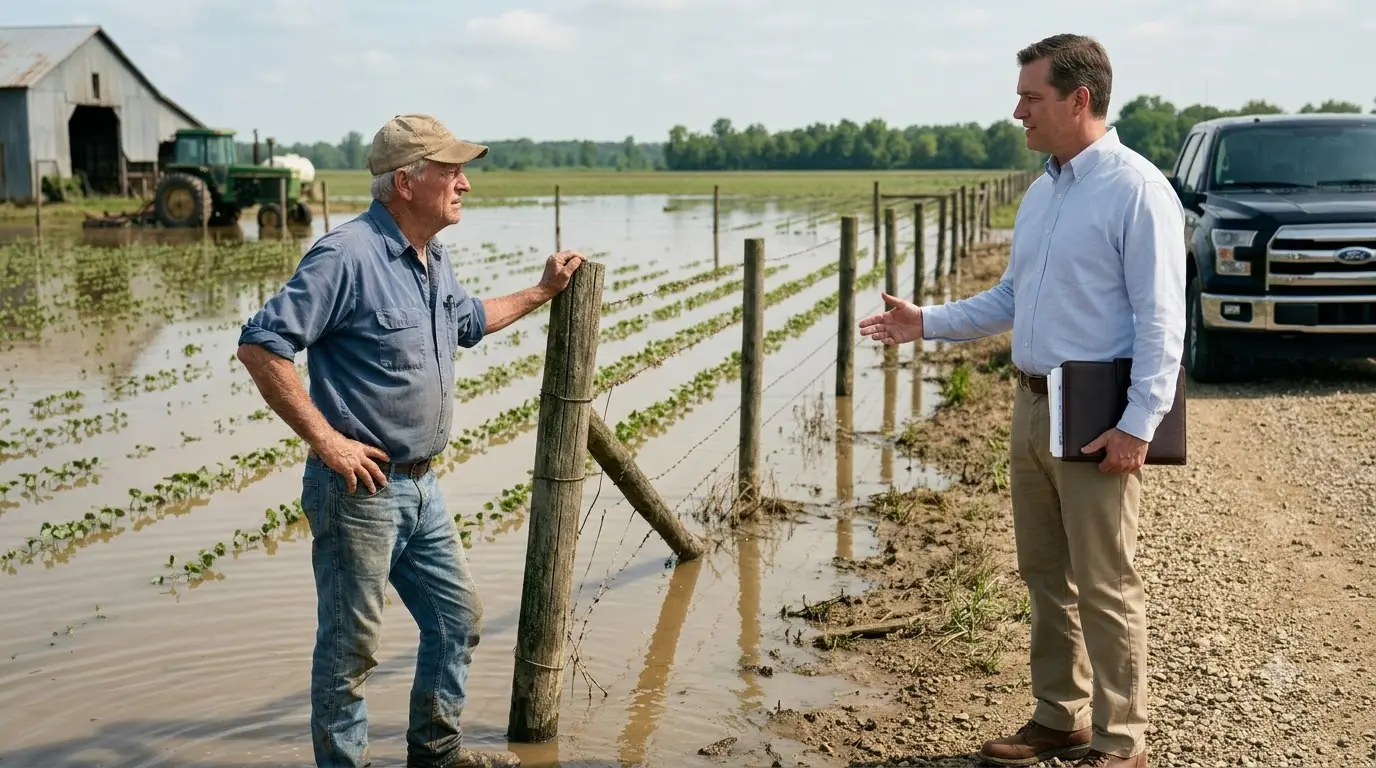
Yet the water kept coming, flowing through a drainage ditch that had never carried anything like this much water onto Warren's property before.
Three days later, the regional manager of the bank holding Warren's farm loan arrived with a simple message. If another season was lost, the bank would begin foreclosure proceedings.
Warren had heard variations of that threat before. What he didn't know was that the flooding wasn't merely ruining his crops. His granddaughter had been walking those 80 acres every morning, recording what was appearing in the water, and she had begun to suspect that the bank had accidentally created something worth far more than the soybeans it was destroying.
By the time Warren understood what she had found, the bank was already preparing to take the farm, and the 80 acres they thought would force him out would soon become the reason he no longer needed them.
At 5:18 on a Wednesday morning in early May, 74-year-old Warren Puit stepped onto the porch of his farmhouse, expecting to see the same flat fields he had seen every spring of his life. Instead, he stopped halfway down the steps and stared at a sheet of brown water stretching across the lowest part of his farm.
Between 50 and 60 acres of wheat that had been standing green and thick only days earlier were now submerged, with fence posts poking through the surface and the tops of a few rows barely visible beneath the water.
Warren stood there for several seconds without moving because the first thing that bothered him was not how much of the crop had been lost, but how little rain had fallen the night before. He could remember storms that had dumped four inches in an afternoon and left the ditches running like rivers.
But this was different.
The ground around the farmhouse was damp, not soaked. The creek on the eastern boundary was sitting comfortably inside its banks, and there was no standing water on the neighboring fields high enough to explain what Warren was seeing below him.
He pulled on his boots, walked through the yard, crossed the gravel lane, and followed the edge of the flooded field until he found the one thing that made him stop again.
The water was moving toward his land, not away from it.
It slipped steadily through a drainage channel that had always carried runoff in the opposite direction.
Warren followed the flow upstream through a strip of brush until the old ditch opened onto property that was no longer simply farmland. Beyond the tree line sat a recently cleared tract controlled by the development group that had been buying acreage along the county road.
At the edge of that tract was a concrete drainage outlet Warren had never seen there before. It had been cut into the bank and connected to a newly widened channel, and water was pouring through it with enough force to push a visible current across the field below.
Warren stood with both hands on the top rail of the fence, watching the water he had spent 40 years trying to keep off his bottom ground now being deliberately directed toward it.
The timing made the site even harder to dismiss because the bank holding Warren's operating note had been asking questions about the lower acreage for months.
His farm covered 600 acres, much of it still productive. But the bank had begun describing the flooded ground as increasingly unproductive, and after several offers to buy portions of the property, Warren had refused every one of them.
He had told them the same thing each time.
He was not interested in selling pieces of the farm simply because someone else believed they could make more money with them.
The last conversation had ended with a polite reminder that agricultural loans depended on performance, and Warren understood exactly what that meant without anyone having to spell it out.
By 7:00, Warren was still standing beside the drowned wheat when a dark pickup came slowly down the lane and stopped near the fence.
Gerald Voss, the bank's regional vice president, climbed out wearing a clean shirt and work boots that looked almost too new for the mud around him.
Rather than pretending to be surprised by the flooding, he looked across the field with the calm expression of a man inspecting numbers on a spreadsheet.
He told Warren that nobody wanted to see him lose money on another bad season, then offered to make things simple by buying the farm's lowest acreage and helping him restructure the remaining debt.
Warren listened without interrupting, but when Gerald finished, he shook his head and said he had no intention of selling.
Gerald did not argue.
That was what made his next words linger after he walked back toward the truck.
He told Warren that he did not have to keep fighting the water forever, because water had a way of making decisions for people who refused to make them themselves.
Then he climbed behind the wheel and drove away as quietly as he had arrived.
Warren watched the truck disappear down the lane before turning back toward the flooded field.
For the first time that morning, the water looked less like an accident and more like the opening move in something he had not yet figured out.
Just before 8:00, Casey Puit came up the driveway from town and found her grandfather standing at the edge of the field with his hat in his hand.
She started toward him, but then she stopped too because something about the flooded acreage caught her attention before the ruined wheat did.
There were birds everywhere.
Far more than Warren would normally expect over his fields in early May.
Casey wasn't studying the crop that had been destroyed beneath them.
She was watching the water.
The birds were still there the following morning, and by the end of the week, Casey had stopped thinking of them as a strange consequence of the flooding and started paying attention to where they were landing.
Some stayed along the shallow edges where the water met the remaining wheat, while others gathered around pockets of vegetation that Warren was certain had not been there a month earlier.
The flooding itself showed no sign of disappearing either.
Water that should have drained away after a few days remained trapped across the lowest ground, and when another small rain came through the following week, the acreage filled again almost immediately.
For Warren, there was nothing mysterious about it.
He had lost the crop, and that was what mattered.
The wheat never recovered, and by the time the planting window for the next crop arrived, the lower 80 acres were still too wet to work.
His tractor could move across the higher ground, but every attempt to get machinery into the flooded section risked burying an axle in mud, so Warren eventually made the decision he hated most and left the acreage alone.
One planting cycle had disappeared without a harvest, and the letters from the bank became more serious at almost exactly the same time.
Casey, however, kept returning to the water.
She started taking photographs from the same locations every few days, recording how high the water stood, how long particular sections remained submerged, and what appeared to be growing along the edges.
The first thing she noticed was the cattails, which began spreading through shallow areas that had previously been covered by crops.
Then came other aquatic plants that seemed to be establishing themselves without anyone putting a seed in the ground.
Small fish appeared in the deeper pools, followed by crawfish, and before long, the birds were no longer simply passing through.
Wading birds were feeding along the margins while other species settled into the flooded acreage for longer periods than Casey would have expected from ordinary storm runoff.
She showed Warren some of the photographs one evening at the kitchen table, but he barely looked at them before pushing them back across the table.
To him, the pictures showed exactly what he had been looking at every day.
Wet ground where productive farmland was supposed to be.
He told Casey that cattails did not pay the bank. Fish did not pay the fertilizer bill, and birds certainly were not going to replace the wheat he had lost.