The bank gave nineteen-year-old Eli Walker seventy-five days to save his family farm.
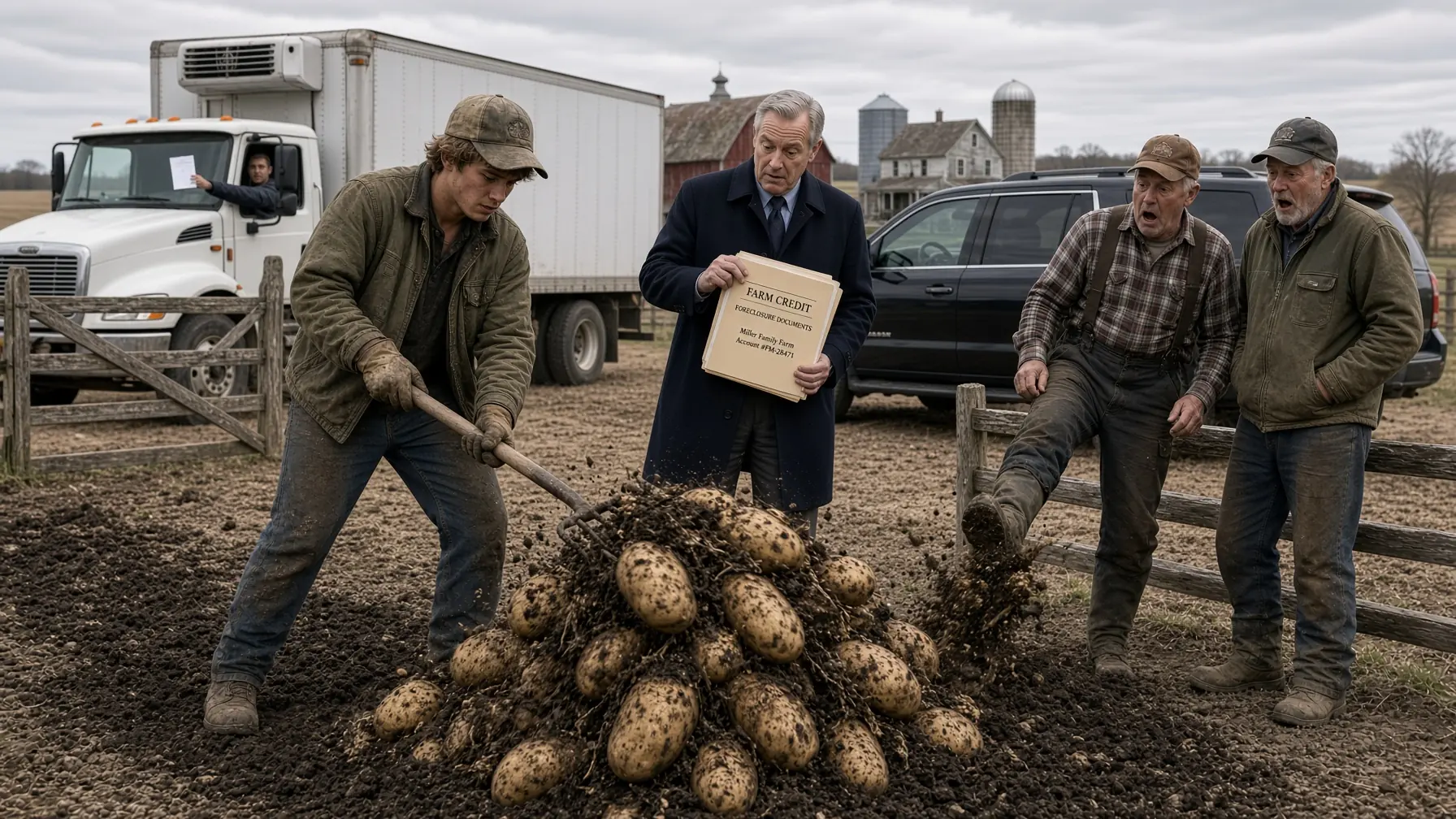
Not seventy-six.
Not “until winter.”
Not “until things improve.”
Seventy-five.
The number sat at the top of the letter in black ink beside a date Eli would later remember more clearly than his own birthday.
SEPTEMBER 3.
By November 17, Walker Family Farm had to bring its overdue operating loan back within terms or the bank could begin foreclosure proceedings against the property.
Eighty-seven acres outside Kennett Square, Pennsylvania.
A white farmhouse with a sagging porch.
Two greenhouses.
A machinery shed.
A produce barn.
Fourteen acres of vegetable ground.
Twenty-three acres of tired hay.
And the low hill where Eli’s grandfather had planted six apple trees after coming home from Korea.
The farm had survived drought.
Flooding.
A tractor fire.
Eli’s father’s back surgery.
Two terrible tomato seasons.
It had survived because somebody in the Walker family always found one more thing to try.
But this time the numbers were different.
They owed the bank $46,800 in delinquent payments and fees.
That was not the total farm debt.
It was simply the amount they had to cure before the bank would agree to restructure the rest.
Eli read the letter twice at the kitchen table.
His mother, Karen, stood beside the sink.
His father, Daniel, sat across from him wearing the stiff black brace he still hated after lumbar surgery six months earlier.
Nobody spoke for almost a minute.
Finally Daniel said:
“So that’s it.”
Eli looked up.
“No.”
His father gave him a tired smile.
“Son.”
“No.”
“Forty-six thousand dollars in seventy-five days isn’t a crop plan.”
“It doesn’t say we have to pay the whole mortgage.”
“It says forty-six-eight.”
“I can read.”
Daniel leaned back slowly.
The movement hurt.
Eli saw it.
His father tried not to show it.
That made everything worse.
Karen sat down beside her husband.
“We could sell the south parcel.”
Eli immediately shook his head.
“No.”
“It’s eleven acres.”
“It’s our best road frontage.”
“It’s also land.”
“It’s also the only piece developers keep asking about.”
Daniel looked at him.
“That’s why it would sell.”
Eli stared at the bank letter.
The south parcel ran along Route 82.
Flat.
Accessible.
Worth more to a builder than to a vegetable farm.
Sell it and the family might survive another year.
Maybe two.
Then taxes rose.
Then equipment failed.
Then they sold another piece.
Eli had watched neighboring farms disappear that way.
Not all at once.
Ten acres.
Then five.
Then a barn lot.
Then the house standing alone beside a subdivision with streets named after the family who used to own the land.
“No,” Eli said again.
Daniel’s expression hardened.
“You don’t get to decide this by yourself.”
“I know.”
“This isn’t a movie.”
“I know.”
“You don’t save a farm because you want it more.”
Eli looked at him.
“I know.”
His father’s voice softened.
“Then what exactly are you saying?”
Eli folded the letter.
“I’m saying give me two weeks before we list anything.”
Karen stared.
“Two weeks to do what?”
“I don’t know yet.”
Daniel closed his eyes.
That answer frightened him more than if Eli had promised a miracle.
But he nodded.
“Two weeks.”
Eli had grown up on Walker Farm believing farmers solved problems with work.
Then he learned that work alone was sometimes just a faster way to become exhausted.
He had been home full-time since graduating high school.
College had been the plan.
Agricultural business at Penn State.
Maybe soil science.
Instead his father’s back failed during spring planting, and Eli postponed enrollment.
He told everyone it was temporary.
By September he was running most of the farm.
That meant waking before five.
Irrigation.
Harvest.
Deliveries.
Repair work.
Invoices.
Farmers’ markets.
And arguments with his father about whether the old Ford 7610 tractor was “making a noise.”
“It has always made that noise,” Daniel insisted.
“All machines make noise.”
“This one sounds expensive.”