The valley remembers things people forget.
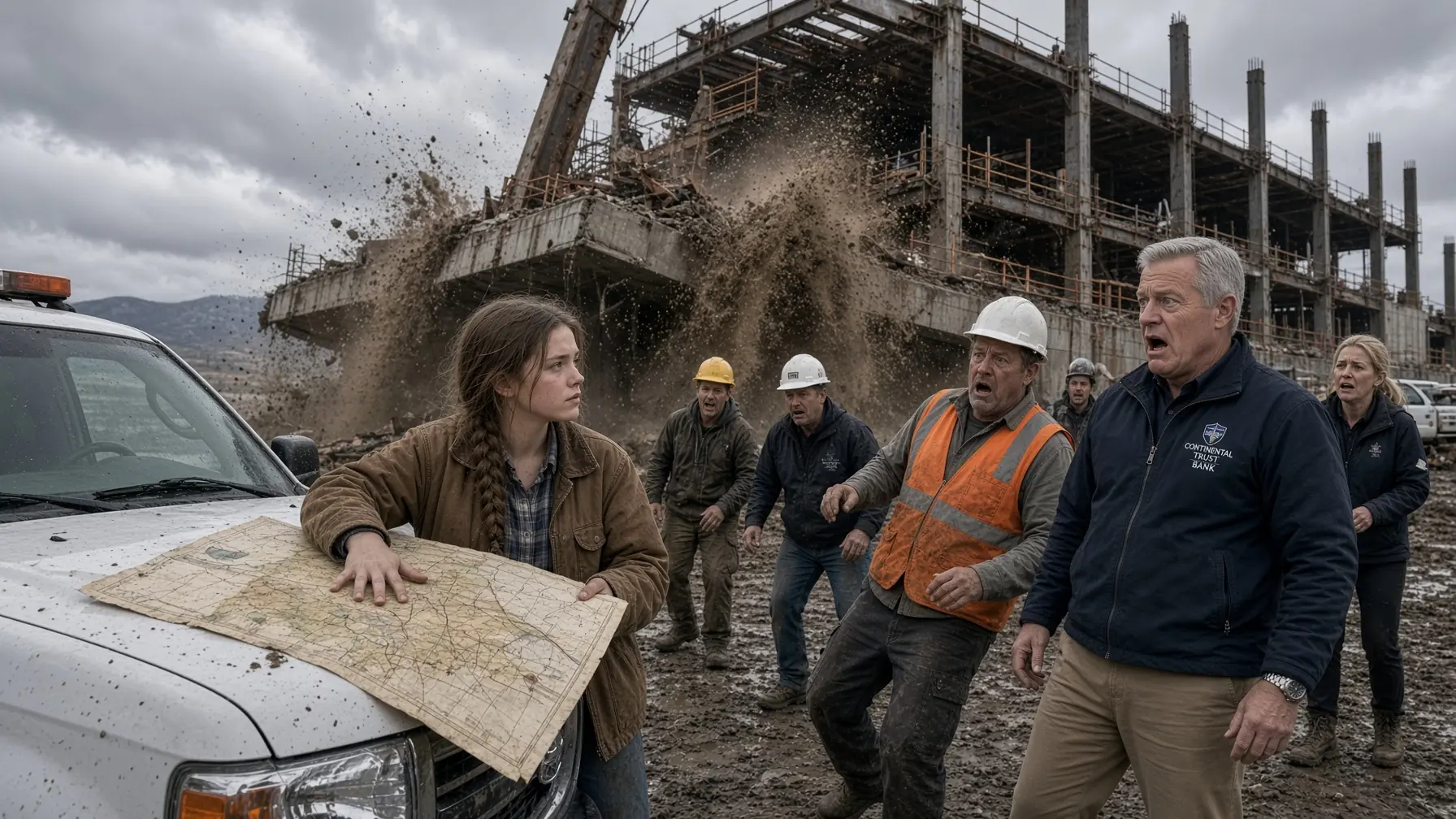
That was what Maren Holloway’s grandfather used to tell her in the blue hour before sunrise, when the Montana sky was still gray and the mist crawled out of the river bottom like something breathing.
He would stand on the porch with both hands around a coffee cup and look toward the Cottonwood River.
“The land keeps records,” he would say. “You watch long enough, you learn how to read them.”
Maren was fourteen years old in the spring of 1993.
And she had been reading those records most of her life.
The Holloway farm sat along an eastern bend of the Cottonwood River, in a part of Montana most travelers passed through without realizing there was anything there worth stopping for.
Three hundred acres.
Hay fields.
Pasture.
Cottonwoods along the river.
Dark timber rising beyond the higher ground.
The farmhouse had been built in 1911. The barn leaned slightly south and had leaned that way for so many years that Maren’s father no longer considered it a problem.
“Some things settle into their tilt,” he said once, “and decide they’re staying.”
The land had its own habits too.
That spring, the river ran lower than normal.
Not dramatically.
Three inches, maybe four, below the usual high-water mark beside the ford.
Most people would not have noticed.
Maren did.
The killdeer nested farther from the bank.
The cattails in the southern slough were thinner.
A wet patch in the lower pasture that normally stayed slick through May had dried on top while remaining strangely soft underneath.
Maren pushed a stick into it.
The first six inches were dry.
Then the wood suddenly entered cold, yielding ground below.
She wrote it down.
She kept a green spiral notebook in the kitchen drawer.
Inside it were dates, rainfall, water levels, where the deer drank, which sections of pasture dried first, where cattle hesitated before crossing, and which troughs they preferred during hot weather.
Nobody had assigned the notebook to her.
She kept it because her grandfather had.
His fifty-three years of notebooks were stacked in a wooden crate in the barn loft.
Small handwriting.
Precise dates.
Weather.
Water.
Animals.
Frost.
Ground movement.
Things most people saw once and forgot.
Maren had read every one.
She was not a strange child.
She simply listened more than she talked.
That distinction mattered.
Because in late April, three white pickup trucks came down the gravel road and stopped beside the old Pruitt property.
Each truck had the same logo on the door.
A blue shield.
Underneath:
CONTINENTAL TRUST BANK
COMMERCIAL REAL ESTATE DIVISION
Behind the pickups came a low trailer carrying survey equipment.
Behind that came a black SUV so polished it looked misplaced on a Montana gravel road.
Maren watched from the kitchen window.
The Pruitt property began at the Holloway fence line and stretched for nearly five thousand acres.
The last Pruitt brother had died the previous year. His heirs lived in Oregon, Arizona, and California and had no interest in returning to run cattle in Montana.
Continental Trust had purchased the parcel outright.
At the feed store, people said the bank planned to hold and develop it.
What that meant became obvious when the trucks arrived.
Maren’s father, Caleb Holloway, came into the kitchen pulling on his canvas jacket.
He was forty-six and looked older that year.
Running three hundred acres mostly alone will do that.
His father—Maren’s grandfather—had suffered a stroke two summers earlier and now lived with Maren’s aunt in Billings, where he could get better care.
Caleb still ran the farm the way his father had taught him.
But he carried the weight alone now.
Eight hundred dollars in veterinary bills sat unpaid on the kitchen table.
A tractor needed a transmission seal.
Hay prices had been poor.
So when Maren asked about the activity next door, Caleb did not have the energy for outrage.
“What’re they building?” she asked.
“Logistics, processing, distribution. Something like that.”
“On the whole Pruitt place?”
“That’s what I heard.”
“All five thousand acres?”
“Eventually.”
She looked through the window again.
Three men had gotten out near the fence.
One held a tablet and pointed toward the gentle slope leading down into the river bottom.
Maren frowned.
“Dad?”
“Mhm?”
“That’s a bad place to build.”
Caleb stopped pulling on his glove.
He looked at her.
He knew exactly which place she meant.
He had grown up walking the same ground.
But he was tired.
And it was not his property.
“It’s bank land now, Maren.”
“I know.”
“They bought it. They can build what they want.”
She nodded.
He was right.
Legally.
But after he left for the barn, she opened the kitchen drawer and took out her green notebook.
She met the bank people on a Tuesday.
Maren was walking the fence line, checking barbed wire and watching where the cattle had been pushing through near a low corner, when she saw a folding table set up on the Pruitt side.
Five people stood around it.
Plans had been spread across the table and weighted with smooth river stones.
A blonde woman noticed Maren first.
She looked about forty and wore expensive leather boots that were still too clean to belong to that country.
“Hi there,” she called. “You live nearby?”
Maren pointed across the fence.
“Right there.”
The woman smiled.
“Oh, perfect. We’re going to be neighbors, sort of.”
She walked closer.
“I’m Lauren Castille. Continental Trust. We’re managing the development.”
“Maren Holloway.”
Lauren held out a hand.
Maren shook it.
Then she looked past her at the plans.
She could not read the labels from where she stood, but she could make out the layout.
One large rectangular building was marked PHASE ONE.
It sat low.
Too low.
Near the river bottom.
Parking lots and holding yards spread above it.
Additional phases climbed gradually toward timbered high ground.
Maren pointed.
“You’re putting the main building there?”