At 9:04 on Monday morning, rainwater still clung to the sidewalks outside Midstate Community Bank’s Livingston Avenue branch.
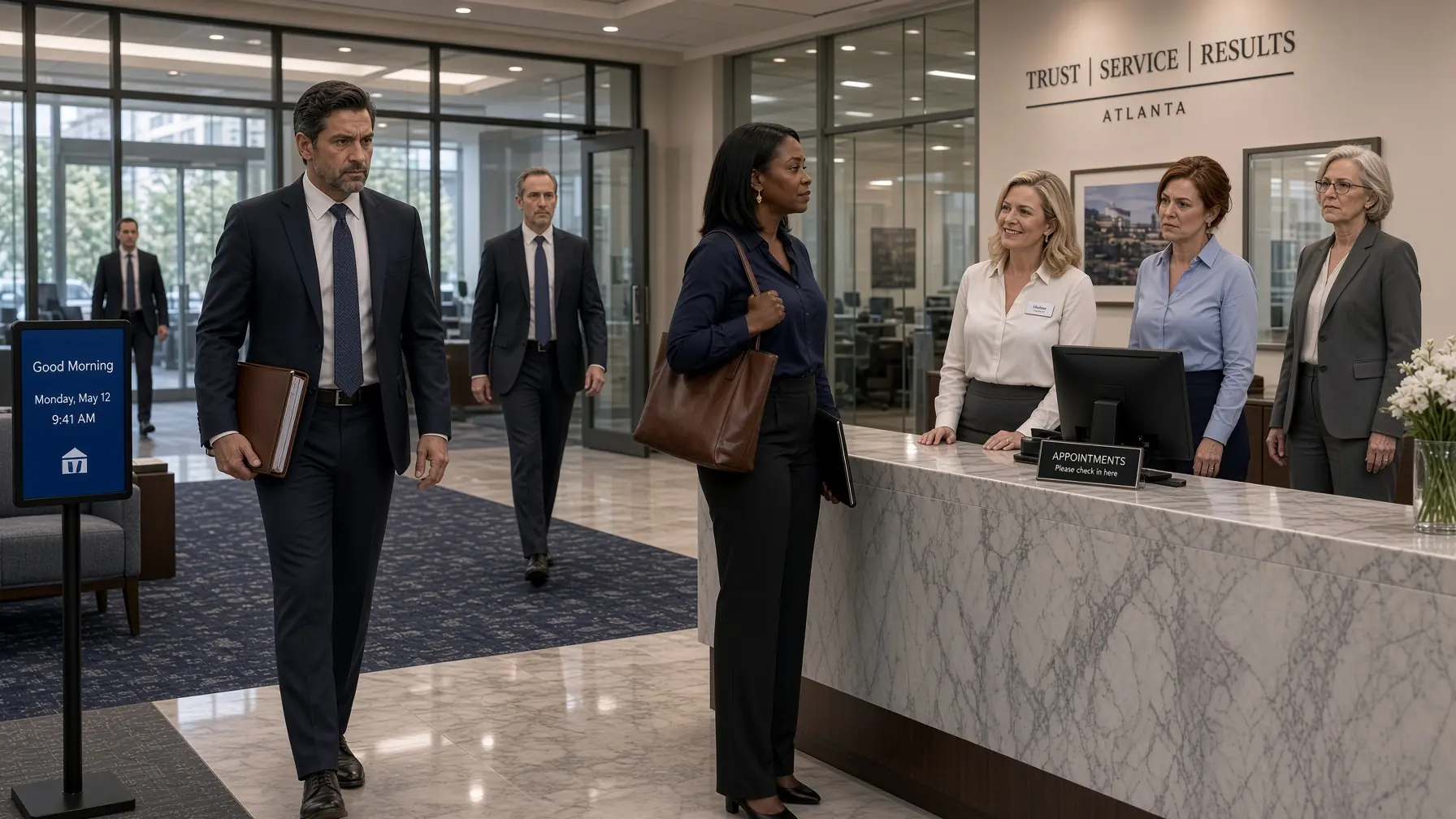
The storm had passed before sunrise, leaving Atlanta washed in silver light and the kind of humid air that made the glass doors fog briefly whenever they opened.
Inside, the branch smelled of carpet cleaner, burnt coffee, printer toner, and the faint floral perfume of the woman working the reception counter.
I was seated eleven feet away.
Nobody knew why.
That was intentional.
My name is Adrian Cole, and for the previous seven weeks I had been working as an independent integration auditor on Midstate Community Bank’s acquisition.
Midstate was not failing.
There had been no dramatic government seizure.
No panicked customers lining up for withdrawals.
No overnight disappearance of the bank’s name.
The institution had been acquired through a regulated transaction by Ardent Ledger Financial Group, a fast-growing financial infrastructure company that had spent years building payment platforms, commercial banking systems, and back-office technology for regional institutions.
The transaction had closed the previous Friday.
Monday was the first normal business day under transition control.
My job was not to decide whether employees smiled enough.
I audited systems.
Appointment routing.
Staff coverage.
Access controls.
Cash procedures.
Escalation paths.
Transition permissions.
Anything that could become unsafe, inconsistent, or unfair when one operating structure became another.
I had a seventy-three-item readiness sheet open on my laptop.
At 9:06, one customer became item thirty-two.
Her name was Regina Matthews.
I knew the name.
I pretended I didn’t.
Regina entered wearing black trousers, a navy silk blouse, low heels, and carrying a simple brown leather tote.
No executive assistant.
No security.
No expensive logo large enough to announce itself from across the lobby.
She looked like somebody with somewhere important to be who did not need the room to know it.
The woman behind reception glanced up.
“Good morning.”
Her badge read:
LINDSAY CORBETT — SENIOR CLIENT SERVICES
Regina smiled.
“Good morning. I have a nine o’clock appointment with Elliot Weaver.”
Lindsay turned toward her computer.
“Name?”
“Regina Matthews.”
Lindsay typed.
There was a pause.
“I see you.”
Regina glanced toward the business offices lining the right side of the lobby.
“Is Elliot available?”
“He’s not here yet.”
“Do you know when he’s expected?”
“Soon.”
No apology.
No explanation.
Just soon.
Regina nodded.
“All right.”
Lindsay pointed toward the upholstered chairs beside the window.
“You can wait there.”
“Thank you.”
Regina sat.
Nothing was wrong yet.
People ran late.
Appointments slipped.
Branches were staffed by human beings, not machinery.
I returned to the audit.
At 9:09, another customer entered.
White man.
Late forties.
Blue golf shirt.
Khakis.
He walked directly toward Lindsay.
“Morning.”
Her face brightened.
“Morning, Mr. Turner. How’s the new warehouse?”
“Still stealing my money.”
“What do you need?”
“Quick transfer between business accounts.”
“Elliot handling you?”
“No.”
“Doesn't matter.”
Lindsay looked toward the hallway.
“Jason?”
A banker appeared almost immediately.
“Yes?”
“Can you take Mr. Turner?”
“Sure.”
Mr. Turner disappeared into a glass office.
Entry to banker:
One minute, thirty-four seconds.
I recorded it.
Not because I believed it proved anything.
A transfer might be simpler than Regina’s appointment.
Different permissions.
Different workflow.
Auditors should be especially suspicious of conclusions that arrive before evidence.
At 9:15, a white couple entered carrying trust documents.
No appointment.
A second employee, Megan Pace, greeted them.
“Someone told us a banker could help,” the husband said.
“Of course.”
“Do we need an appointment?”
“No problem.”
Megan checked her screen.
“Angela?”
Another banker appeared.
The couple walked past Regina.
Regina watched them go.
Her face remained calm.
But she closed the black folder she had been reviewing.
That tiny movement made me reopen the transition handbook.
Midstate’s acquisition guidance included a specific fallback procedure for scheduled transition appointments.
If the named banker was unavailable beyond five minutes, the appointment should be transferred to the next qualified employee unless a documented compliance, access, or operational restriction prevented reassignment.
I checked the branch staffing map.
Four bankers were qualified.
Two had already been made available to people who arrived after Regina.
At 9:17, Regina stood.
She returned to the counter.
“Excuse me.”
Lindsay looked up.
“Yes?”
“Do you know whether Elliot is on his way?”
“He hasn’t called me.”
“Could another banker review the transition documents?”
Lindsay shook her head.
“That really should stay with the person assigned to the relationship.”
Regina looked briefly toward the glass offices.
“Is anyone else qualified?”
Lindsay’s tone changed.
Not openly rude.
Just firmer.
“We’ll let you know when Elliot gets here.”
Regina waited half a second.
Then:
“All right.”
She returned to her chair.
I wrote:
9:17 — scheduled transition customer requests reassignment. Declined.
Then stopped.
Now there was a question.
Why was flexibility available for later arrivals but not for her?
There might still be an innocent answer.
At 9:20, the branch manager emerged from her office.
Cynthia Larkin.
Fifty-six.
Gray jacket.
Silver-rimmed glasses.
Nine years managing Livingston Avenue.
She stopped beside reception with coffee.
“Everything okay?”
“Yes,” Lindsay said.
Then she lowered her voice.
“Elliot’s appointment is still waiting.”
“Who?”
“Matthews.”
Cynthia looked toward Regina.
One glance.
Less than two seconds.
“Keep her with Elliot.”
Then she returned to her office.
I looked at my screen.
The procedure did not say that.
At 9:23, Regina stood again.
This time a younger employee met her halfway.