When the president stepped out of the motorcade at the signing ceremony, the entire hall rose to its feet, except for Rowan Hale, the driver whom CEO Vivien Ashcroft had just described to her assistants as an ordinary man who happened to know how to hold a steering wheel. Rowan only adjusted his cuff as though he had not noticed the veteran agents watching him with an odd, unmistakable respect. Then the president walked past a room full of billionaires and stopped directly in front of him, extending a hand and saying, "Welcome back, Ghost One." The glass in Vivien's hand trembled slightly. The man she had dismissed only hours earlier was suddenly the one person in the room everyone else seemed to fear and admire at once, and she had no idea who he truly was.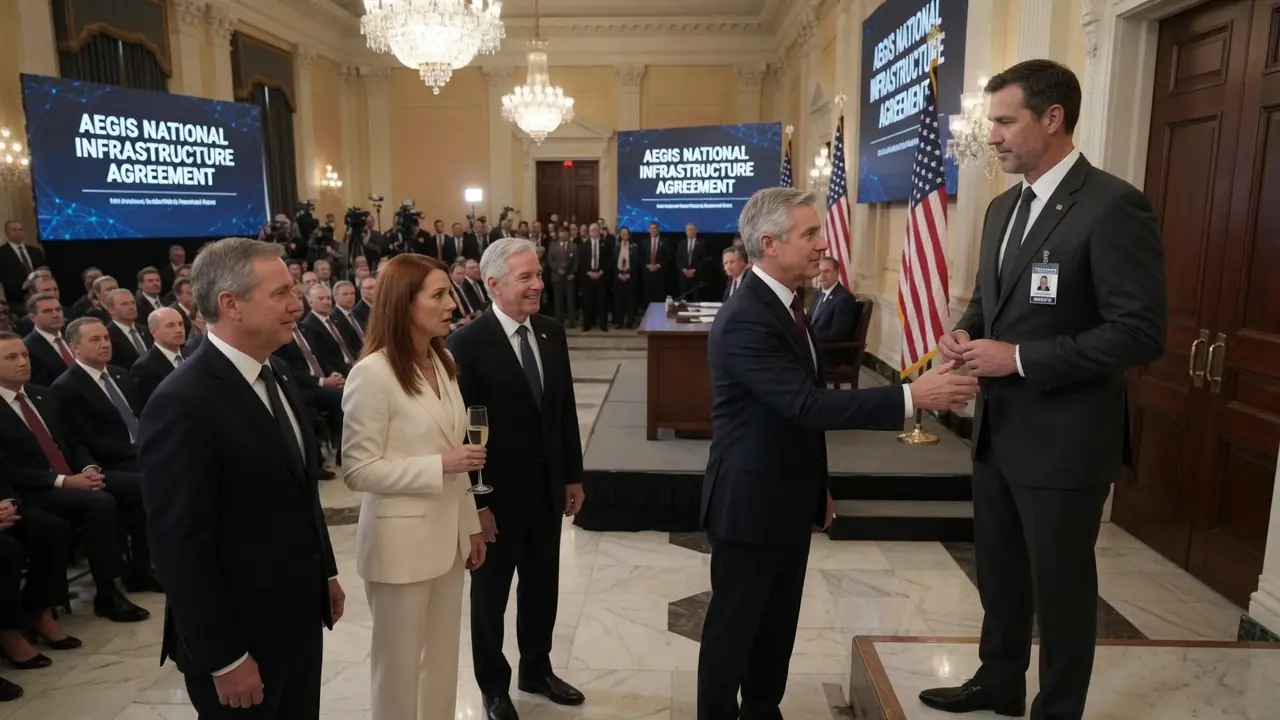
Three days before the signing ceremony, Rowan received a routine dispatch from the private transportation company he contracted with, informing him that he would be covering for the regular driver of Ashcroft Meridian's chief executive, who had left suddenly for a family emergency. He arrived early, checked the tires, checked the mirrors, and waited outside the glass tower with the same patience he brought to every job, never once expecting the assignment to matter beyond a paycheck. Vivien came down through the lobby surrounded by three assistants, each one narrating a different part of her schedule, and she barely glanced at him as she slid into the back seat, and told him to open the door and follow the route without input from him. Rowan absorbed the instruction without reaction, the same way he absorbed most things, filing it away rather than answering it. Before they had even reached the first intersection, she was telling an assistant on speakerphone that she did not need a driver who thought, only one who drove and stayed quiet, and the words landed in the front seat exactly the way she intended them to.
He did not flinch, did not adjust his posture, did not give her the satisfaction of a reaction, and this unsettled something in her that she could not immediately name. He had taken jobs like this dozens of times over the past several years, driving for executives who barely remembered his name by the end of a contract, and he had long ago stopped expecting anything different. What mattered to him now was simpler than it had ever been before: a steady paycheck, health coverage, help with Mara's tuition, and evenings quiet enough that he could call his daughter without static on the line or the sense that someone might be listening. He kept a photograph of Elise tucked in the visor of every car he drove, a small habit no employer ever noticed and a reminder of the promise he had made to her in the hospital room six years earlier: Mara would never grow up in the shadow of a father who was never truly present. Vivien, for her part, had no interest in the private life of a temporary driver.
To her, he was simply another interchangeable piece of the machinery that kept her schedule running, no different from the elevator that carried her to the lobby or the assistant who confirmed her calendar each morning. On the way to a meeting with federal trade officials, Rowan noticed a silver sedan appear at three consecutive intersections, always a few car lengths back, always adjusting its speed to match theirs exactly. He said nothing about it to Vivien, choosing instead to reroute around a non-existent construction delay and take a longer path through a side avenue that any ordinary driver would never have known existed. Vivien complained that he had deviated from the schedule without asking her, irritated that a hired driver would take that kind of liberty, yet they still arrived two minutes ahead of the original estimate.
When she stepped out at the building entrance, the silver sedan rolled past the spot where their car would have originally been parked, empty of the confrontation it seemed to have been waiting for. Rowan memorized the plate number without remark, tucking it away the way he tucked away everything that might matter later. That evening, Grant Callaway, the head of security for Ashcroft Meridian, pulled the day's route logs as a matter of routine and noticed something that made him sit back in his chair. The alternate path Rowan had chosen matched almost turn for turn, a contingency route once used by federal protective details during periods of elevated threat, a route that was never published or taught to commercial drivers.
Grant pulled the new driver's file and found only a handful of lines, a name, a license number, and a start date. There was nothing that explained where a private hire had learned a maneuver like that. He sat with a thin folder a long time, turning over the same question without an answer. Where does an ordinary civilian driver learn to move like that?
Grant requested a deeper background check through human resources, and what came back only deepened the mystery rather than resolving it. Rowan's record showed several years of military service, but the specifics of his deployments and assignments had been sealed under a classification. Grant did not have clearance to view, and after his discharge, he seemed to vanish from every conventional database for nearly seven years before resurfacing as a licensed civilian driver. When Grant asked him directly about his background, Rowan offered nothing more than a mild answer about having once driven for people who did not tolerate being late, a phrase that closed the conversation as neatly as it opened it.
When the car stopped outside a hotel for a private meeting, Rowan noticed that the seal on Vivien's briefcase had been disturbed in a way so slight that almost no one would have caught it. He asked her carefully whether the case had left her sight at any point that afternoon. Vivien told him he had overstepped the boundaries of a driver and instructed him not to involve himself in matters that had nothing to do with traffic or timing. Rowan did not argue the point, though he quietly photographed the broken seal on his phone before she noticed what he was doing.
That night, alone in his apartment, he compared the photograph against an old catalog of security markings he still remembered from another life and found a match belonging to a defunct firm called Wexler Strategic Systems, a company that had officially dissolved years earlier. He stared at the name for a long while before setting the phone down, aware that whatever he had just uncovered was only the surface of something much larger. Vivien attended a closed reception the following evening for investors and government officials, and Rowan was told to wait outside with the other drivers, an instruction he followed without complaint. Even from the curb, though, he studied the building's layout, the flow of catering staff, and the placement of cameras, and he noticed a service entrance propped open in a way that violated the building's own posted protocol.
He mentioned it to Grant without explaining exactly how he had spotted it, and Grant's team found a card cloning device hidden near the doorway. Evidence of an attempt to steal digital access rather than stage any kind of physical confrontation. Grant began cautiously to trust that Rowan might be more useful than his file suggested, though Vivien still treated the discovery as coincidence rather than skill. Grant spent that same evening quietly cross-referencing the cloned card device against the building's vendor logs, and what he found troubled him more than he let on to anyone else in the security office.
The device had been installed using credentials belonging to a maintenance contractor who, according to every record Grant could access, had not actually worked in the building for over a year, a discrepancy that suggested someone with real institutional knowledge had orchestrated the breach rather than an opportunistic outsider. He began keeping a private file of his own, separate from the official incident reports, cataloging every strange detail that had surfaced since Rowan had joined the rotation, the sedan, the broken seal, the propped door, and the ghost contractor. Unable yet to see how they connected, but increasingly certain that they did. Inside the reception, Gideon made a point of telling a cluster of investors that Vivien had grown paranoid, that she was now taking her cues from a driver instead of her own board, and the remark traveled through the room quickly enough that Vivien felt the sting of it before she even reached her car.
She was angry, and once the doors closed behind her, she turned that anger on Rowan, demanding to know why an apparently intelligent man would settle for a job behind a wheel. Rowan answered simply that an ordinary job did not make an ordinary man, a line that did nothing to soften her mood in the moment. She told him coldly that he was paid to move her from one point to another and warned him not to turn the arrangement into something larger than it was. Rowan said nothing in response, letting the silence sit between them for the rest of the ride.
When her own phone remained silent that night, Rowan's rang. It was his college-age daughter, Mara, checking in the way she always did, and through the brief exchange, Vivien learned, almost by accident, that he was a single father who had raised his daughter alone for years. Rowan did not perform hardship for the benefit of an audience. He only asked whether she had eaten and reminded her to check the lock on her apartment door before bed, the same small ritual he had repeated on nearly every call since Mara left for school.
Vivien, listening from the back seat, found herself struck by how ordinary the exchange sounded, how little it resembled the transactional check-ins she had with her own family, where every conversation eventually circled back to the company or the family name. She thought briefly of her own father, a man who had measured his affection in opportunities handed down rather than questions asked, and wondered uncomfortably which version of care actually meant more. It was the first moment Vivien had looked at Rowan as a person rather than a title, though she was not yet ready to admit it to herself. When Rowan pulled up to her building later that night, he noticed an envelope tucked among the mail on her entry table that had not been there that morning.
Inside was a single old photograph of Rowan in uniform along with a short handwritten line that read, "Ghosts should stay buried." He slipped the photograph into his jacket before Vivien could see it. Understanding now that whoever was behind the surveillance had recognized exactly who he used to be, Rowan understood that the person orchestrating events around Vivien had identified him, and that meant the situation had changed in ways he could no longer navigate alone. He reached out to Nathan Crowe, a former colleague who now worked in federal security, and Nathan warned him bluntly to stay out of it, insisting that whatever was unfolding was bigger than one driver could manage on his own.
Through their conversation, it became clear that Ghost One had once commanded a covert unit responsible for extracting officials, witnesses, and diplomats from situations that could never be acknowledged publicly. Seven years earlier, that unit had been dissolved after a classified operation was leaked, and Rowan had been quietly blamed for the failure. Though no formal evidence ever tied the breach directly to him, Rowan accepted the blame in silence to protect the remaining members of his team from further scrutiny and walked away from the only career he had ever known, never learning who had actually betrayed them. Nathan pressed him further, asking whether he understood what it would mean to step back into that world after seven years of silence.
After seven years of school pickups, grocery runs, and quiet apartments instead of extraction routes and encrypted channels, Rowan admitted he did not know, only that he could not stand by and watch another operation collapse around people who had no idea they were standing inside one. He thought of Elise in those quiet moments after the call ended, of the years right after her diagnosis, when he had promised himself that Mara would never again come second to a mission with no name. He had kept that promise faithfully, had built an entire ordinary life around keeping it, and yet some instinct older than grief told him that walking away now would not protect anyone, least of all his daughter. Nathan finally relented and agreed to quietly pull whatever unclassified fragments he could access about Wexler Strategic Systems, warning Rowan that if his name resurfaced in any official record, there would be no controlling what happened next.
In the present, Grant discovered that someone with board level access had altered the motorcade route scheduled for the day of the signing ceremony, and the login credentials used belonged to a director who had passed away nearly two years earlier. Rowan concluded this was not an assassination plot, but something more calculated, an attempt to manufacture an incident large enough to collapse the contract without causing casualties since deaths would trigger a federal investigation too thorough for anyone to survive. Vivien overheard part of the conversation between Rowan and Grant and felt betrayed that the two men were investigating matters behind her back rather than bringing them to her directly. She demanded that Rowan tell her plainly who he actually was.
Rowan only said that he was someone trying to make sure she made it to tomorrow, a phrase Vivien interpreted as arrogance rather than reassurance. She decided in that moment that she would terminate his contract the day after the ceremony concluded, unwilling to keep a man around who spoke in riddles about her own safety, and yet, despite her anger, she began to notice, almost against her will, that Rowan had never once asked her for a bonus, a title, or even her trust. Every action he had taken so far had been aimed at protecting her and the people around her without any expectation of credit. Gideon walked into the security office and saw Rowan's face displayed on one of the monitors and the practiced smile he wore in public vanished instantly.
He said the name to himself barely above a whisper. ". Ghost One." Gideon had spent more than twenty years perfecting the appearance of loyalty, sitting at the head of the Ashcroft family table during holidays, attending Vivien's college graduation, standing beside her at her father's funeral with a hand on her shoulder that the entire room read as grief rather than calculation. In private, he viewed the family fortune as something he had built as much as any Ashcroft had, decades of strategy and diplomacy that had never once come with his name on the letterhead, and he had grown tired of watching a woman half his age inherit authority she had not, in his estimation, earned.
The scheme with Wexler Strategic Systems had begun small, a handful of quiet contracts routed through shell companies years earlier, and when Rowan's old unit had come close to exposing it, Gideon had not hesitated to erase his own tracks and let another man's career absorb the damage instead. He told himself in the years since that this was simply how power worked, that someone always had to be sacrificed to keep the larger structure standing, and he had never once lost sleep over the name of the man he sacrificed. Gideon accelerated the final stage of his plan without hesitation. He leaked a fabricated technical report to several media contacts, claiming that the Aegis system built by Ashcroft Meridian carried a catastrophic design flaw and he timed its release to strike exactly as the president arrived at the signing ceremony.
His intent was straightforward. To force the government to abandon the contract, to crash Ashcroft's stock price, and to give the board the justification it needed to remove Vivien from her position once and for all. He had already lined up three sympathetic board votes, men who owed him favors reaching back further than Vivien had been alive, and he was confident that within a week of the ceremony's collapse, he would be sitting in the chief executive's chair himself, finally claiming the title that two decades of quiet maneuvering had in his mind already earned him. Rowan traced the silver sedan that had been following them for days back to a private security firm quietly owned by one of Gideon's relatives, and he brought the evidence directly to Vivien.
She told him it was not enough to accuse a man who had served her family loyally for more than two decades. Unwilling to believe that someone so close to her could be capable of this kind of betrayal, Gideon appeared at precisely that moment and with practiced calm cast doubt on Rowan instead, suggesting that a man with a sealed file might be exploiting the chaos to gain access to sensitive company secrets. Vivien found herself caught between the adviser who had guided her family for twenty years and the driver she had known for barely three days, and in that moment, she chose Gideon. In the argument that followed, Vivien told Rowan flatly that he was nothing more than an ordinary driver imagining himself to be important, and the words hung in the room long after she had said them.
Some part of her recognized, even as she said it, that she was leaning on the same instinct her father had taught her since childhood: authority had to be defended loudly and immediately, or it would be assumed not to exist at all. Yet she pushed the doubt aside and let the anger carry her instead. Rowan did not raise his voice or defend himself. He simply removed his employee badge, set it on the table, and said he would complete his final scheduled drive as agreed before leaving the company for good.
Grant tried to intervene, insisting there was still time to review the evidence properly before anyone made a decision they could not undo, but Rowan told him quietly that Vivien had every right to decide who remained close to her, even if her decision was the wrong one, and that some things a person had to be allowed to get wrong before they could ever get them right. The ride to the ceremony that followed was colder than any silence they had shared before. Vivien slowly realized that Rowan had never once tried to prove her wrong, and what unsettled her most was not his silence, but the quiet certainty in it. It carried the sense that he had been wrongly accused this way before.
Rowan asked her a single question before they arrived. If every title disappeared tomorrow, who would you still trust? Vivien had no answer for him. Just before the motorcade pulled out of the lot, Rowan noticed that the license plate on the escort vehicle behind them had been swapped, and the man driving it was not one of Ashcroft's regular security staff.
His posture was too stiff, and his mirrors were angled wrong for someone who had driven that route a hundred times before. He did not raise an alarm that would spread panic through the convoy or give Vivien another reason to doubt his judgment in front of her staff. Instead, he relayed a short coded message to Grant through a frequency the two of them had quietly agreed on days earlier, a habit left over from a career Grant did not yet fully understand, but had learned to trust. Within seconds, Grant rerouted the lead car onto a different path without alerting the wider security detail, keeping the change small enough that it would look to anyone watching like nothing more than routine caution ahead of a high-profile event.
The impostor vehicle attempted to follow anyway, matching the detour turn for turn, and was intercepted at a checkpoint Grant activated remotely, with federal officers closing the road behind them before the driver even realized he had been identified. The entire threat was neutralized without a single confrontation or moment of visible danger, resolved instead through precision and timing that only someone with Rowan's training could have executed, the kind of quiet invisible save that had once defined his entire career and that no headline would ever report. Vivien understood that Rowan had just saved her from a carefully engineered trap, yet, she still could not comprehend how a hired driver had the authority to order federal checkpoints closed on his word alone. When they reached the conference center, a second problem revealed itself.
The server hosting the Aegis presentation had begun uploading a corrupted version of the data meant to make the entire system appear unstable and unusable, in front of the president and the assembled press. Rowan recognized the method instantly, the same technique used to falsify records and destroy his old unit seven years earlier, exploiting the identity of someone deceased to alter data, and then quietly shifting blame onto whoever happened to be standing closest to the failure. In that instant, he understood with complete certainty that Gideon was the one who had betrayed his old team all those years ago. Gideon had once sold information about government travel routes through Wexler Strategic Systems, and when Rowan discovered the breach at the time, Gideon erased every trace of his involvement and let Rowan take the fall in his place.
Rowan and Grant located the physical server responsible for broadcasting the falsified data, tucked inside a maintenance closet three floors below the main conference hall, disguised behind a panel meant to look like ordinary building infrastructure, rather than destroy it outright, Rowan insisted they preserve it intact so investigators could trace its origin and gather usable evidence, reminding Grant that a broken machine told federal prosecutors nothing, while an intact one, properly handled, could tie every falsified file back to the hands that had built it. Grant photographed the server from every angle, logged the chain of custody the way Rowan instructed, and sealed the room before anyone outside their small circle knew it had ever been found. Within minutes, a quiet request went out through Nathan Crowe's contacts for a federal digital forensics team to be staged nearby, ready to move the moment the ceremony concluded, so that no piece of evidence would sit unprotected long enough for anyone to tamper with it a second time. Vivien learned the truth from Grant before she ever heard it from Rowan himself, and she finally understood that the man she had just called ordinary had accepted public humiliation without protest in order to protect her company and everyone in it.
Outside, the presidential motorcade arrived at the building and a senior agent watching through the security feed recognized Rowan's face on the monitor. He spoke quietly into his earpiece before anyone else in the building understood what was happening. ". Confirm Ghost One is on site." The signing ceremony began in the main hall filled with officials, investors, and members of the press, all unaware of how close the event had come to unraveling only minutes earlier.
Vivien still had to appear composed in public as though nothing had happened, while Gideon stood near the board members, still confident that the falsified data was about to reach every screen in the room, Gideon remained near the board members, while Rowan planned only to finish his final assignment and leave quietly once the ceremony concluded, expecting no recognition and wanting none. Vivien noticed him standing near the exit, but her pride kept her from calling out to him, the weight of her earlier words still sitting uneasily between them. President Caleb Whitmore entered the hall and rather than proceeding directly to the stage as protocol required, stopped the moment he recognized Rowan among the crowd before Vivien, before Gideon, before a room full of billionaires and dignitaries. The president crossed the floor and walked straight toward the driver, standing quietly near the door.
He extended his hand and said the words that silenced the entire hall. ". Welcome back, Ghost One." The room fell completely still. Older agents scattered throughout the crowd straightened immediately, a wordless gesture of respect that needed no further explanation.
Vivien stood frozen, and Gideon's composure cracked for the first time, the realization sinking in that whatever cover he had built for himself was no longer safe. The president revealed just enough for the room to understand that Rowan had once commanded an elite protective unit and had personally saved numerous lives, including the president's own, though he carefully withheld any classified detail that would compromise ongoing security protocols. He described, in general terms, a night many years earlier when a diplomatic crisis had threatened to spiral into something far more dangerous, and how a small team led by the man now standing before them had extracted him and two members of his staff without a single shot fired or a single name leaked to the press. Caleb explained that Rowan had not vanished because he failed at his duty, but because he refused to let his team absorb the consequences of a conspiracy far larger than any of them, choosing silence over a defense that would have exposed people who had trusted him with their lives.
He added with quiet emphasis meant for the entire room that some of the most capable people in the country worked without recognition, without titles, and without anyone in a room like this ever learning their names, and that the country was better for it, even when it meant men like Rowan carried the cost alone. Vivien stood there replaying every moment she had dismissed him as nothing more than an ordinary man behind a wheel. Each memory landing with a fresh and specific discomfort now that she understood what had actually been sitting in her front seat all along. Rowan did not linger in the attention directed at him.
He turned instead to the president and asked whether the technical team had verified the current version of the Aegis presentation, a question that pulled the entire room's focus back to the danger that still had not fully passed. Gideon attempted to slip quietly toward the exit, but federal agents had already secured every door in the building. Rowan looked at him and spoke plainly. Seven years is a long time to wait before making the same mistake twice.
The ceremony paused, but was not cancelled outright. Grant and a team of federal technicians worked quickly to trace the compromised server, and the data recovered confirmed that Gideon had funneled company funds through a network of shell corporations, manipulated stock movements, and stolen proprietary technology from Ashcroft Meridian over a period of several years. More damning still, the digital signature embedded in the falsified files matched the same trace left behind during the original leak that had destroyed Rowan's old unit. Gideon's removal was handled quietly without any dramatic confrontation as agents escorted him into a private room behind the stage for immediate questioning.
He sat across a narrow table from federal investigators with the same composed expression he had worn at every board meeting for twenty years, insisting at first that the falsified data must have originated from a disgruntled former employee rather than anyone in his own circle. When investigators laid out the financial trail, linking his relative security firm to the silver sedan that had trailed Vivien's car for days, his composure thinned only slightly. A flicker at the corner of his mouth that Grant, watching through the glass, recognized as the first real crack in twenty years of careful performance. During that questioning, Gideon made one final attempt to turn Vivien against Rowan, insisting that Rowan had only returned seeking revenge and had used her as bait to settle an old score from a career that had ended in disgrace.
He reminded her almost gently that she had trusted him with the company since she was a young woman still grieving her father and asked whether a stranger from three days ago truly deserved more loyalty than that. Rowan acknowledged plainly that he had not initially known Gideon was involved and that his suspicions only began after noticing the broken seal on her briefcase days earlier, a detail so small that even Gideon listening seemed briefly startled that it had been enough to unravel him. Vivien asked him why he had not simply told her everything from the very beginning rather than letting her stumble through days of doubt and confusion. Rowan answered that trust could not be forced through a title or a résumé and that she had needed to decide for herself whether to follow the evidence or follow whatever felt most convenient at the time.
In that moment, Vivien understood that her greatest failure had never been underestimating his skill, but believing that a person's worth was measured entirely by their position. Gideon was led away in silence without the violence or spectacle she might once have expected from a moment like this. Vivien apologized to Rowan, but she did not offer the kind of vague generic apology people give when they simply want a conversation to end. She repeated back almost word for word the exact sentence she had used to dismiss him, admitting openly that it reflected how she had treated people without power for most of her career.
Rowan accepted the apology, though he made clear he was not offering complete forgiveness in that instant. He told her that respect only meant something when it was given to people who had nothing to offer in return. Vivien returned to the stage soon after and faced a decision no one could make for her. Whether to continue the signing quietly and protect her own reputation or disclose the incident publicly and risk everything she had built.
She chose honesty, informing the room of the security breach, accepting responsibility for the gaps in her company's oversight, and agreeing to an independent audit before the contract could proceed. Her transparency unsettled the board, but earned something more valuable from the federal government. A renewed sense of trust that no amount of polished messaging could have manufactured. The president agreed to move forward with the agreement on the condition that Ashcroft Meridian overhaul its internal security protocols and permanently sever any remaining ties to Gideon's network.
The ceremony resumed and concluded using the original, uncorrupted version of the Aegis data exactly as it had been designed. In the aftermath, the president personally offered Rowan a position as a strategic security adviser. It was an opportunity to reclaim the career and the reputation he had lost seven years earlier. Rowan declined a full-time role without hesitation, explaining that he had spent too many years living like a ghost, present in his daughter's life only through brief phone calls rather than in person.
He agreed instead to assist quietly with an investigation aimed at clearing the names of every member of his old unit who had been unfairly blamed alongside him. Vivien offered him a formal position as head of special security for Ashcroft Meridian, a title with real authority and public recognition attached to it along with a salary that would have made most people in her boardroom envious. Rowan turned down the elevated title without hesitation, explaining that titles had cost him more than they had ever given him, and that he had no interest in trading one gilded cage for another, simply because this one came with better hours. He agreed instead to serve as an independent adviser on the condition that Grant remain in operational control day-to-day and that every employee from the newest driver to the most senior executive be given a real voice in how risks were reported so that no warning would ever again be dismissed simply because of who happened to raise it.
Vivien agreed without argument, and for the first time since her father's death, she found herself restructuring a piece of her company, not to protect her own position, but because it was simply the right way to run it. She asked him quietly whether he still considered her someone who could not be trusted. Rowan told her that she had begun learning to listen before she knew how important the person speaking actually was. It was not a declaration of anything more, but it was the first sign that he was willing to give her the chance to prove it.
As Rowan prepared to drive away that evening, Vivien opened the front passenger door instead of the back one she had always used before. She told him that today she did not need a driver. She needed someone who would tell her when she was heading in the wrong direction. Rowan started the engine and told her in that case she had better put on her seat belt.
Six months later, Ashcroft Meridian had stabilized its reputation, slowly rebuilding under new leadership and stricter oversight while Gideon faced formal charges for fraud, data theft, and obstruction of the ongoing federal investigation. The trial drew far less public attention than the ceremony that had exposed him, largely because Vivien had insisted on handling the fallout with restraint rather than spectacle, releasing only the facts necessary for accountability and nothing more. Rowan's name was formally cleared from every record that had once cast suspicion on him, and the surviving members of his old unit finally had their reputations restored alongside his own, with several of them reaching out to him for the first time in years simply to say thank you. Nathan Crowe called once the paperwork was finalized, his voice carrying something close to relief, and told Rowan that the entire unit's file had finally been closed with an official notation clearing every one of them of wrongdoing.
Mara came home for a break from school and met Vivien for the first time at a small diner Rowan had frequented for years, long before any of this had happened. Vivien arrived without an assistant, without a security escort, and without the packed schedule that had once defined every hour of her day. Rowan introduced her simply as a friend, nothing more elaborate than that, though Mara caught the small, unguarded smile that crossed her father's face when he said the word, a smile she had not seen from him in longer than she could remember. Mara watched the easy, quiet way her father and Vivien spoke to one another, the way Vivien asked real questions about architecture school instead of the polite, distracted ones adults usually offered, and understood there was something deeper forming between them, though she was careful not to tease either of them about it or make more of the moment than it needed to be.
Over coffee, Vivien asked Mara what she was working on this semester and listened—actually listened—to the answer about a housing project for displaced families, the kind of attention Mara had rarely received from anyone connected to her father's old professional life. When the conversation drifted toward the ceremony and the president's now famous handshake, Mara admitted she had watched the footage more times than she wanted to say, still trying to reconcile the composed stranger on the screen with the father who used to fall asleep on the couch after long shifts. Rowan only shrugged and said some things about a person took longer than a video to understand, and Vivien, watching the two of them, thought that was probably the truest thing she had heard him say since the day they met. As they were leaving the diner, a young employee recognized Rowan from recent news coverage and called him Ghost One without thinking.
Rowan only smiled and did not answer to the name. He opened the car door for Mara first, then looked over at Vivien standing beside him. For the first time in years, Rowan was no longer a man living inside his own past or hiding behind the wheel of someone else's car. He was simply Rowan Hale, a father, a man whose name had finally been cleared, and someone who was allowing himself at last to begin again.
For years, he had measured his worth by how completely he could vanish from a situation once the job was finished, by how few traces he left behind of ever having been there at all, and it had taken almost losing everything a second time to understand that disappearing was not the same as protecting the people he loved. Vivien settled into the front seat beside him, no briefcase between them this time, no schedule dictating the next hour, only the quiet, ordinary comfort of two people who had learned in the hardest possible way what it meant to see someone clearly before deciding what they were worth. The car pulled forward into traffic, past the glass tower where she had once called him nothing more than a man who could hold a wheel, past the diner where Mara had laughed at something her father said, out into a city that had no idea how close it had come twice now to losing something it never knew it had. Somewhere behind them, Gideon sat in a cell built from the same silence he had once used as a weapon, and somewhere ahead of them, a life neither Rowan nor Vivien had planned for was quietly beginning to take shape, carrying two people who no longer needed to disappear.