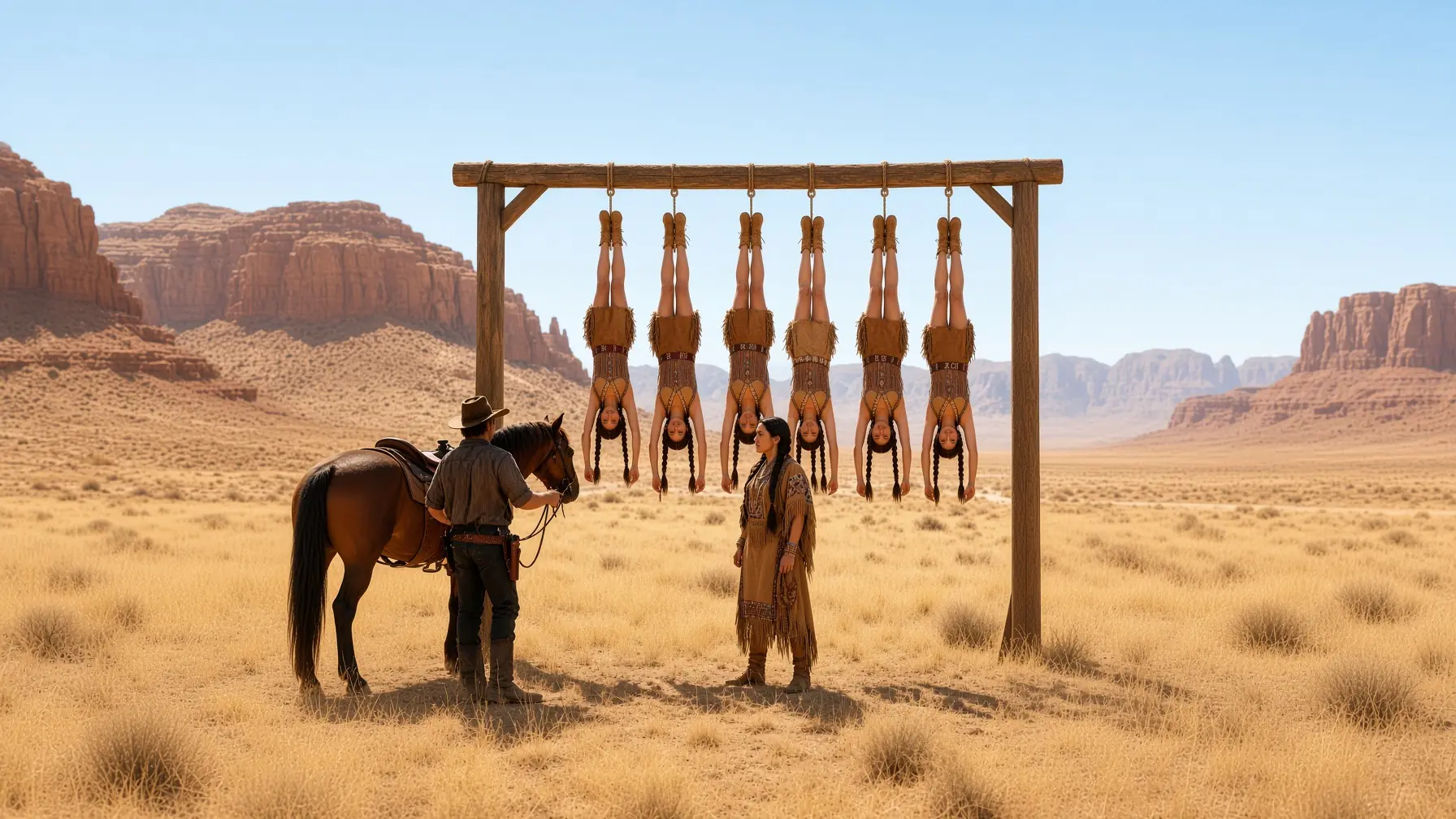
The fire crackled in the stone hearth, casting dancing shadows across the worn wooden walls of the New Mexico cabin. Outside, December wind howled through the pines, but warmth Warmth held back the cold like a memory refusing to fade. Ethan Walker, 70 years old with silver hair and eyes the color of winter sky, sat in his father's old chair. His granddaughter Sarah perched on the ottoman before him, wrapped in a quilted blanket, her face illuminated by firelight and curiosity. "Grandpa," she said, her voice soft in the quiet room.
"You've spent your whole life fighting for indigenous land rights. 50 years as a lawyer. But you never told me the whole story. Why you started. " Ethan reached into the drawer of the side table. His weathered fingers, still steady despite their age, withdrew something wrapped in faded cloth.
He unfolded it slowly, revealing a piece of leather no bigger than a playing card. The surface was worn smooth by decades of handling, but the symbol burned into it remained clear. A crescent moon with eagle wings spreading from its curves. "This," Ethan said, his voice carrying the weight of years and memory, "is called the moon wing. The sacred mark of the Chiricahua Apache.
And this is the story your great-grandfather Jesse Walker never wanted told. Because he thought himself no hero, just a man paying a debt. " Sarah leaned forward, firelight catching in her eyes. Ethan closed his own eyes, and when he spoke again, his voice transformed. Younger, harder. The voice of a man who'd heard this story from his father's own lips on a similar winter night 40 years gone.
August 1884, Arizona territory. My father was 29 years old. His heart was dying. His pockets held $31. Everything he'd ever built had turned to dust.
And he just decided to spend every cent of that money to repay a debt 21 years old. The firelight seemed to flicker and shift, and in the dance of flame and shadow, the past awakened. The desert stretched in every direction like an ocean of fire. August sun hammered down from a sky bleached white with heat. 108°, maybe more.
The kind of heat that killed men and horses with equal indifference. Jesse Walker rode alone. His horse, an Appaloosa named Smoke, picked its way across the cracked red earth with the careful steps of an animal that understood survival. Jesse sat loose in the saddle, his body moving with the horse's rhythm in a way that spoke of decades spent riding. But his hand rested on his chest, feeling the irregular thump beneath his ribs.
The shrapnel, 6 years lodged next to his heart, too close to remove. A gift from the Apache wars he deserted. Every doctor said the same thing. Two years, maybe three. Then the metal would shift, pierce something vital, and Jesse Walker would die in the middle of whatever he was doing.
Probably alone. Probably in pain. He'd made peace with that. What he hadn't made peace with was the emptiness. Catherine, his wife, dead 5 years from consumption.
His son Ethan, 9 years old, living with Catherine's parents in Texas. The boy wouldn't speak to Jesse. Couldn't forgive his father for all the absences, all the times Jesse had chosen anywhere else over home. The ranch in New Mexico, lost to drought and debt. 317 acres that Jesse had built with his own hands, sold for $800 to cover what he owed. $31 remained.
Enough for a meal and a bottle. Enough for six bullets and an end. Jesse reached into his vest pocket without looking. His fingers found what they always found. A piece of leather, 4 in by 3, edges worn soft.
He didn't need to look at it. He'd memorized every line of the symbol burned into its surface. The moon wing. Crescent moon with eagle wings. A voice whispered through his memory.
Deep, calm, accented with the rhythms of Apache speech. "Remember, white boy. A man's worth is measured by his choices when no one is watching. " Jesse was 8 years old again. Dying in the desert, tongue swollen, arrow wound festering in his shoulder. His parents' wagon train destroyed by Comanche raiders.
Three days crawling through sand and stone. Too young to know the proper way to die. Then hands. Brown hands, calloused and strong, lifting a waterskin to his cracked lips. Chief Silver Hawk of the Chiricahua Apache, 38 years old then, hair already streaked with gray.
Eyes that saw through skin and bone straight into the truth of things. Silver Hawk had saved him. Fed him. Tended his wounds for 3 weeks in a hidden cave while his own people hunted white soldiers. And when Jesse was strong enough to travel, the chief had given him this piece of leather.
"If you ever see this mark again," Silver Hawk had said, "you will know they are family to the man who gave you a second life. " For 21 years, Jesse had carried it. Through marriage and war and loss and the slow erosion of everything that made life worth living. He was about to put it back in his pocket when gunfire cracked across the desert. Three shots. Rifle reports echoing off distant rock.
Then two more pistol shots, different pitch. Smoke stamped and tossed his head. Jesse's hand went to his Colt by reflexes, but he didn't draw. Not his business. This territory was full of violence.
Men killed each other over land, over water, over old grudges and new opportunities. A smart man kept riding. Jesse started to do exactly that, but Smoke wouldn't move. The horse stood planted, ears forward, as if listening to something Jesse couldn't hear. The leather charm slipped from Jesse's fingers.
Fell onto the saddle. The moon wing symbol faced upward, catching the brutal sunlight. Silver Hawk's voice again. Stronger now. Almost real.
"A man's worth is measured by his choices when no one is watching. " "Damn it," Jesse said to the empty air. To the ghost of a chief 28 years dead. "You never did let me rest easy. " He turned Smoke toward the gunfire and kicked the horse into a gallop. 800 yards out, Jesse saw them through the shimmering heat. Three men.
White, dirty clothes, unshaven faces. The look of bounty hunters or worse. Armed with Winchesters and belt guns. They were dismounted, walking slowly forward, rifles ready. Their target ran ahead of them.
A woman. Apache, no question. Dark hair in a single braid down her back. Buckskin dress with traditional beading. She was wounded.
Blood darkened her left shoulder. She was out of the arrows, her quiver empty. Only a knife remained in her hand. "Stop running, [ __ ]! " one of the hunters shouted. He was 30-ish, heavy-set with a scar across his face that looked like it came from a knife years ago.
"Boss Crane pays $200 for Black Feather blood brought in alive. " The woman stumbled, but didn't fall. When she spoke, her voice carried clearly despite her exhaustion. "Chinajiniya. " The Apache words were sharp as broken glass. Then in English, accent thick but understandable. "I am daughter of Silver Hawk.
I do not kneel. " Jesse's heart, that damaged and failing organ, suddenly beat so hard it hurt. Daughter of Silver Hawk. The second hunter, younger and thinner, laughed. "Don't care whose daughter you are. You're merchandise now.
Crane's got plans for you and your sisters. " Jesse was already moving. Smoke ate up the ground in powerful strides. Hooves throwing up clouds of red dust. The hunters heard him coming, turned, rifles swinging around. Jesse reined in 40 feet away.
Smoke danced sideways, fighting the bit. But Jesse held him steady with his knees. His hand rested on the butt of his Colt. Not drawing yet, but ready. "Three grown men chasing one wounded woman," Jesse said.
His voice was quiet, but it carried the flatness of a man who'd killed before and would do it again if necessary. "Real brave. " The scarred hunter spat tobacco juice. "Ain't your business, stranger. Ride on. " "Just made it my business. The lady's under my protection now. " The younger hunter grinned, showing teeth stained brown.
"Your protection? Who the hell are you? " Jesse's eyes, pale and flat as weathered stone, moved from face to face. "Someone who doesn't like cowards. " The scarred hunter's hand tightened on his rifle. Jesse moved first. His draw was smooth, practiced, the result of 20 years carrying a gun.
The Colt came up and fired in one motion. The first shot took the scarred hunter in his right shoulder, spinning him around and dropping the rifle from his hands. The man screamed and went down. The second hunter fired his Winchester, but he rushed the shot. The bullet whined past Jesse's ear, close enough to feel the heat.
Jesse's second shot caught the man in his left thigh. He collapsed, howling. The third hunter, younger than the others, tried to flank left. A knife flew through the air and buried itself in his right thigh. He screamed and stumbled.