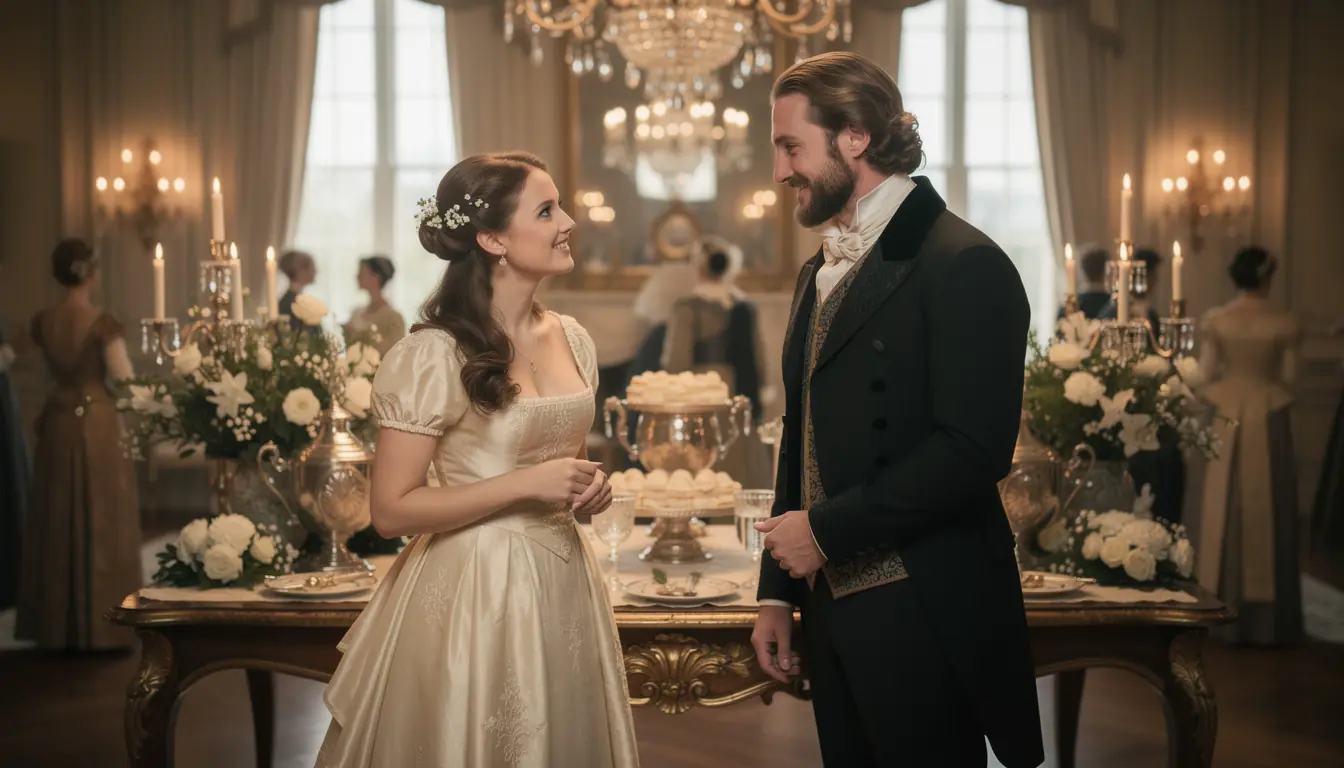
 It was a rather unfortunate circumstance, considering that Maximilian Ashcombe was a gentleman who had spent most of his 36 years being taken seriously by nearly everyone he encountered. He had not expected to be laughed at by a young lady in a cream-colored gown. He certainly had not expected to enjoy it, and he could never have imagined that before the evening was over, he would find himself wondering whether the most remarkable proposal of his life had just been made in jest.The occasion was the wedding of Samuel Whitfield and Florence Ellis, who had become Mrs. Whitfield less than three hours earlier. Their wedding breakfast was being held at a comfortable country house belonging to Florence's uncle—a cheerful gentleman whose greatest ambition that afternoon appeared to be persuading every guest to eat a second helping of pudding.There were flowers on every table, musicians in the adjoining drawing room, and enough laughter drifting through the open windows to make even the servants smile as they passed. Cecily considered it a nearly perfect wedding. The only imperfection was that Florence had already embraced her four times, and each embrace had threatened to disarrange the little white blossoms pinned into Cecily's hair."You must stop looking so pleased with yourself," Florence whispered as they stood beside the refreshment table."I am pleased with you.""No, you are pleased with yourself. There is a distinction."Cecily took a small sip of lemonade. "Very well. I am pleased with both of us."Florence laughed. "You are quite impossible! And yet you insisted I stand beside you in church, because I should never have reached the church without you."That was a considerable exaggeration, although Cecily was willing to accept a small portion of the credit. Six months earlier, Florence Ellis and Samuel Whitfield had been two perfectly sensible people engaged in the foolish occupation of pretending not to be in love. Samuel had been convinced that Florence preferred a gentleman from Bath; Florence had believed Samuel intended to marry a distant cousin. Neither suspicion had possessed the slightest foundation.Cecily, who had known Florence since childhood and had become acquainted with Samuel through her father's work, had eventually grown weary of their mutual misunderstanding. She had arranged for them to attend the same village concert, placed them beside each other at supper, and then found a pressing reason to speak with the organist for the better part of half an hour. By the time she returned, Samuel was holding Florence's hand beneath the table. Three weeks later, he had proposed.Cecily maintained that she had merely encouraged two intelligent people to use the intelligence God had given them. Florence maintained that her friend had performed a miracle."I shall never forget what you did for us," Florence said now, her expression softening."You have thanked me quite enough.""Not nearly enough.""Then thank me by being happy. It is a much more interesting form of gratitude."
The Duke Jokingly Asked Her to Find Him a Wife — “You May Be Looking at Her, Your Grace!”
The Duke Jokingly Asked Her to Find Him a Wife — “You May Be Looking at Her, Your Grace!”
Chapter 1
Theme:
Font Size:
24px
It was a rather unfortunate circumstance, considering that Maximilian Ashcombe was a gentleman who had spent most of his 36 years being taken seriously by nearly everyone he encountered. He had not expected to be laughed at by a young lady in a cream-colored gown. He certainly had not expected to enjoy it, and he could never have imagined that before the evening was over, he would find himself wondering whether the most remarkable proposal of his life had just been made in jest.The occasion was the wedding of Samuel Whitfield and Florence Ellis, who had become Mrs. Whitfield less than three hours earlier. Their wedding breakfast was being held at a comfortable country house belonging to Florence's uncle—a cheerful gentleman whose greatest ambition that afternoon appeared to be persuading every guest to eat a second helping of pudding.There were flowers on every table, musicians in the adjoining drawing room, and enough laughter drifting through the open windows to make even the servants smile as they passed. Cecily considered it a nearly perfect wedding. The only imperfection was that Florence had already embraced her four times, and each embrace had threatened to disarrange the little white blossoms pinned into Cecily's hair."You must stop looking so pleased with yourself," Florence whispered as they stood beside the refreshment table."I am pleased with you.""No, you are pleased with yourself. There is a distinction."Cecily took a small sip of lemonade. "Very well. I am pleased with both of us."Florence laughed. "You are quite impossible! And yet you insisted I stand beside you in church, because I should never have reached the church without you."That was a considerable exaggeration, although Cecily was willing to accept a small portion of the credit. Six months earlier, Florence Ellis and Samuel Whitfield had been two perfectly sensible people engaged in the foolish occupation of pretending not to be in love. Samuel had been convinced that Florence preferred a gentleman from Bath; Florence had believed Samuel intended to marry a distant cousin. Neither suspicion had possessed the slightest foundation.Cecily, who had known Florence since childhood and had become acquainted with Samuel through her father's work, had eventually grown weary of their mutual misunderstanding. She had arranged for them to attend the same village concert, placed them beside each other at supper, and then found a pressing reason to speak with the organist for the better part of half an hour. By the time she returned, Samuel was holding Florence's hand beneath the table. Three weeks later, he had proposed.Cecily maintained that she had merely encouraged two intelligent people to use the intelligence God had given them. Florence maintained that her friend had performed a miracle."I shall never forget what you did for us," Florence said now, her expression softening."You have thanked me quite enough.""Not nearly enough.""Then thank me by being happy. It is a much more interesting form of gratitude."