The candles on the long dining table burned bright, but the air in the hall felt cold enough to freeze wine in its glass.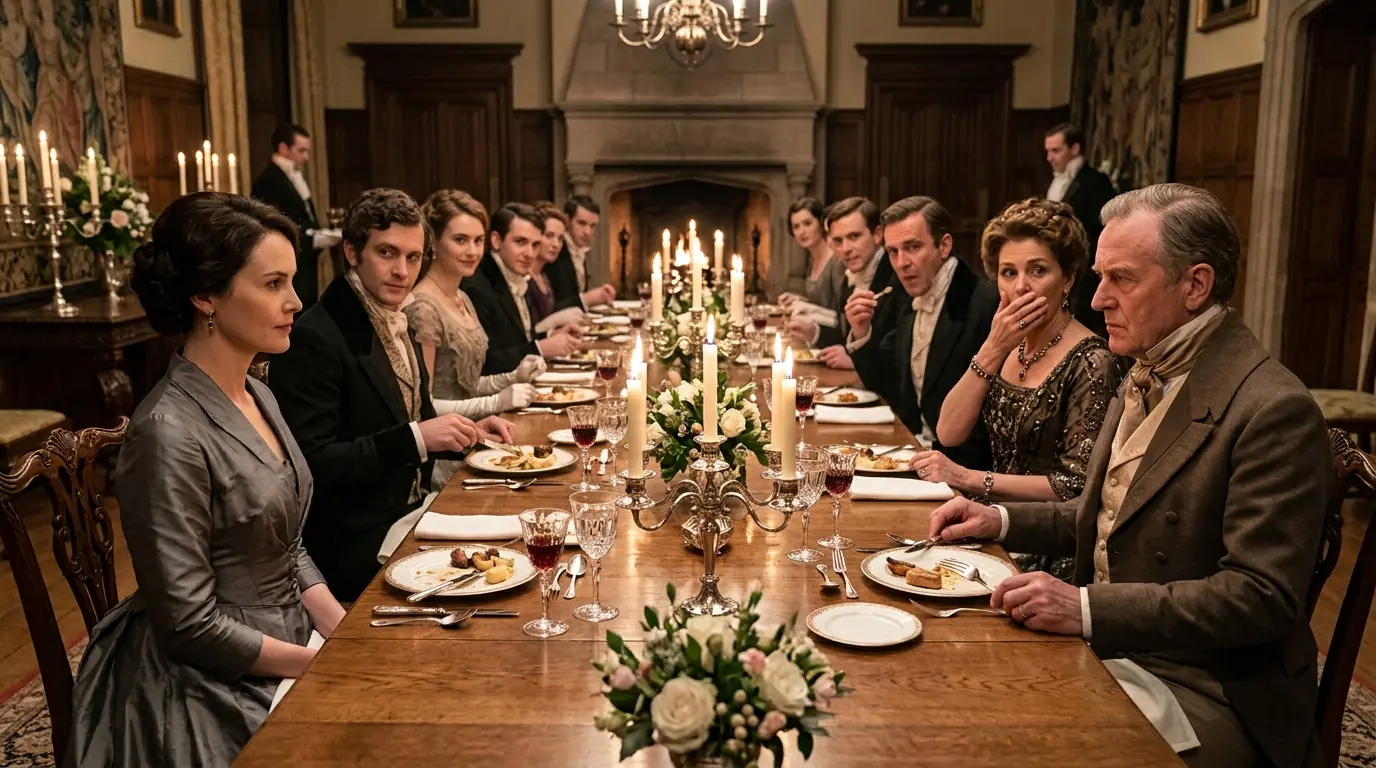
Duke Alaric Ashkam set down his fork with a sharp click and looked across the table at his wife, Eleanor, with open contempt written across his face. Twelve guests sat around them, forks paused midair, breath held, waiting to see what cruel thing he would say next. Eleanor kept her eyes on her plate, her spine straight, her hands folded calmly in her lap, as if she had already decided that nothing he said tonight would break her.
"Tell me, Eleanor," Alaric said, his voice loud enough for the whole table to hear. "Did you choose that gray dress on purpose, or is gray simply the only color that suits you?"
A ripple of nervous laughter moved through a few of the younger guests, though most looked down at their plates, uncomfortable. Eleanor lifted her chin slightly and answered in a calm, even voice.
"I chose it because it was practical for travel, Your Grace. I did not realize dinner required a performance."
Her words were quiet, but they carried weight, and for a moment the Duke's smile faltered. He had married her eight months earlier, not for love, but because his father had left behind a mountain of debt to her family, the Hartleys, and marriage was the only way to settle it without scandal. Eleanor was not unattractive in any true sense, but next to the polished, glittering women of court, with their jewels and practiced laughter, she seemed plain, ordinary, easy to overlook.
Alaric had wanted a wife who would make other men envious. Instead, he felt he had been handed a quiet shadow to sit beside him at every meal, every ball, every long and empty evening.
"A performance," he repeated, leaning back in his chair, enjoying the attention of the table. "No, my dear. A performance would require some effort. I only ask because I recall my mother—may she rest—dressed like a queen for dinner. Even when we dined alone, she understood that a duchess represents the family name. You dress like a farmer's wife visiting the market."
Someone near the end of the table let out a soft gasp. Lady Beatrice Winslow, seated to the Duke's right, covered her mouth to hide a smile, clearly delighted by the humiliation unfolding before her. She had once hoped to marry Alaric herself before his father's debts changed everything, and she had never quite forgiven Eleanor for taking her place, even though Eleanor had never asked for any of it.
Eleanor did not flinch. She had learned in the eight months since her wedding that flinching only encouraged him. Instead, she picked up her spoon and continued eating her soup as though he had commented on the weather.
"If dressing like a farmer's wife means dressing like someone who has actually spent a morning helping the tenants repair a fence after the storm," she said softly, "then I suppose I will wear the title with pride."
A few guests exchanged surprised glances. It was true. Word had quietly spread through the estate that the new duchess had been seen out among the tenants more than once, sleeves rolled up, boots muddy, doing work that no noble woman before her had ever bothered to do.
Alaric's jaw tightened. He hated when she answered him with calm reason instead of tears or anger. Tears he could dismiss. Anger he could mock. But her quiet steadiness unsettled him in a way he refused to admit, even to himself.
"How charming," he said dryly, turning back to his wine. "My wife, the farmhand."
A few guests laughed again, softer this time, and the conversation moved on to safer topics: the upcoming harvest festival, a horse race in the capital, the newest fashions arriving from across the sea.
But not everyone at the table laughed. Near the far end, a woman named Lady Margaret Whitfield sat quietly, watching the exchange with sharp, thoughtful eyes. She said nothing during dinner, but she noticed everything: the Duke's cruelty, the Duchess's composure, and the strange, uncomfortable silence that followed whenever Eleanor spoke sense that no one expected from her. Lady Margaret was not simply a guest that evening; she served as a close companion to the Queen herself, and she had a habit of remembering exactly the kind of details that mattered most in the halls of the royal court.
After dinner, the guests moved to the drawing room for cards and quiet conversation, but Eleanor excused herself early, claiming a headache that was only half true. She walked the long corridor back to her private chambers with steady steps, refusing to let her shoulders sag until she was safely behind her own door. Only then did she allow herself a long, tired breath.
She sat by the window, looking out over the dark gardens below, and thought, not for the first time, about the life she had imagined for herself before her father's debts changed everything. She had once dreamed of a quiet marriage built on kindness—perhaps not passionate love, but respect at the very least. Instead, she had found herself bound to a man who seemed to enjoy finding new ways to remind her that she did not belong in his world.
And yet, despite everything, Eleanor refused to become bitter. She had watched bitterness eat away at other women in similar situations, turning them sharp and cold, and she had decided early on that she would not let Alaric's cruelty change who she was. If he wanted to see her as small and plain, she would let him believe it while quietly living a life she could be proud of, whether he noticed or not.
The next morning, Eleanor rose before the sun, as she always did, and made her way down to the kitchens, where the cook, a warm, round-faced woman named Bridget, greeted her with a smile that few others in the household dared to show the Duchess in front of others.