You there, girl, take my coat and tell your mistress the Duke of Grantmere is waiting and that he does not wait long. The young woman on the step of Renfield House looked at him for a moment with an expression he could not read at all, and then she took his coat. Yes, sir, she said. Ambrose Vane, seventh Duke of Grantmere, was in a foul humor, and being in a foul humor had always made him worse than he meant to be. He had driven forty miles in the rain because his sister had begged him to.
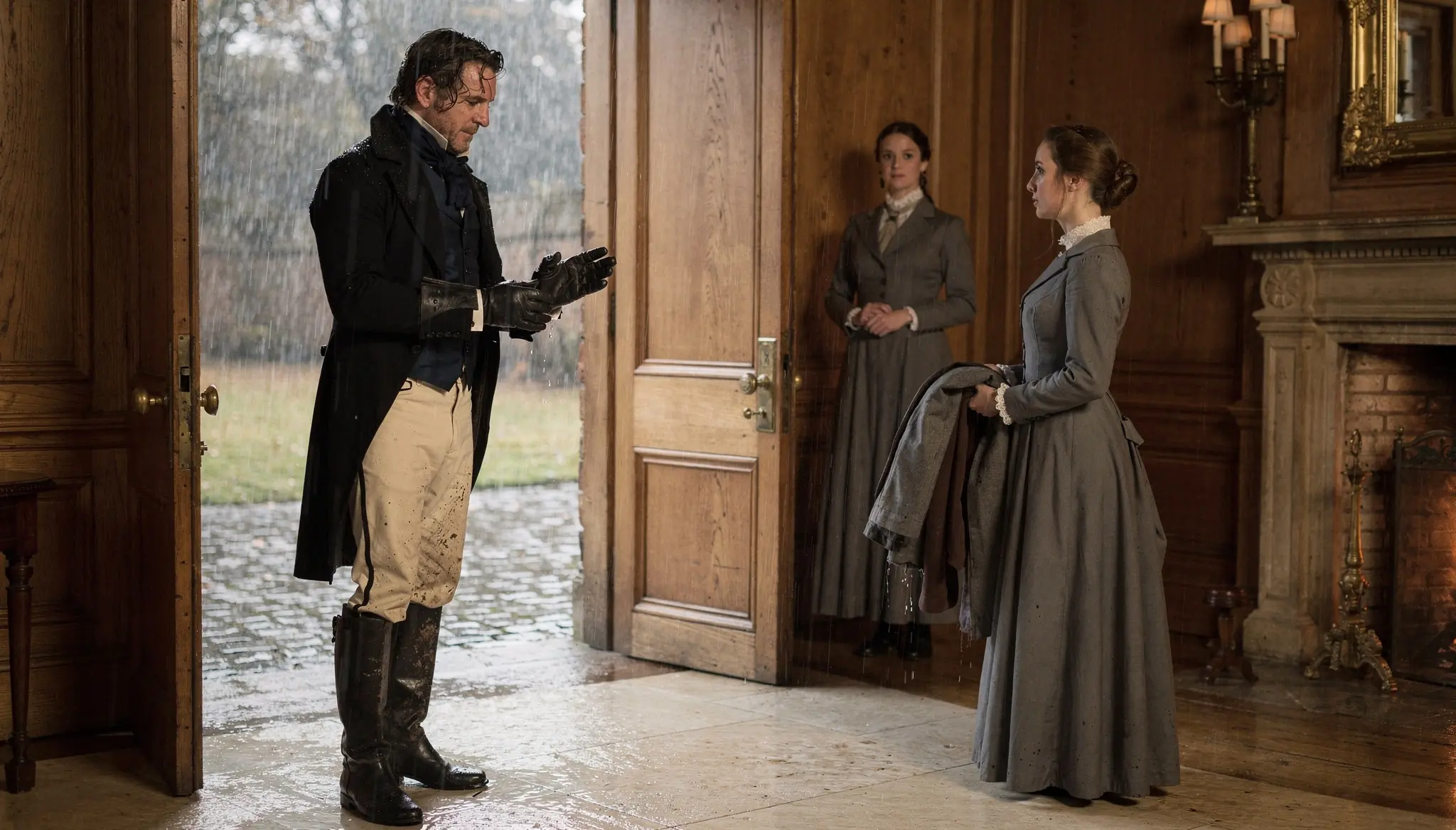
He had come to a house he had never heard of in a county he despised to look at a stud farm he had no intention of buying at the invitation of a proprietor whose name he had not troubled to learn some widow presumably or some cit's daughter with more money than breeding and the drive had been washed out at the ford and his offside leader had thrown a shoe and he had walked the last mile and a half in a downpour so he did not look at the woman who took his coat he looked at the hall and the hall stopped him where he stood. It was not grand. That was the strange thing. Grantmere Abbey had 200 rooms and a marble staircase that had cost £11,000. And Ambrose had never once thought about it.
This hall was perhaps thirty feet square, paneled in old oak polished to the color of dark honey, with a stone floor scrubbed white and a fire of applewood burning at one end, and a great blue and white bowl of late roses on a table by the stairs. There was a smell of beeswax and apples and woodsmoke. Somewhere overhead a clock ticked unhurriedly as though it had all the time in the world. Ambrose Vane, who had been cold for eleven years and did not know it, stood dripping on that scrubbed floor and felt something in the back of his throat that he could not name and did not care for. Well, he said more sharply than he intended.
Your mistress, go and fetch her. The girl, the woman, she was not a girl. She was perhaps eight-and-twenty. She hung his coat over her arm with great care. May I take your gloves, sir?
You may, and be quick. She was not quick. She was unhurried precisely as the clock was unhurried and it maddened him. She took his gloves and set them on the settle to dry. And she looked at his boots, which were ruined, and at his hat, which was worse, and she said, You walked from the ford.
I did. The ford is bad in October. It has been mended twice, and it wants doing properly, but the parish will not, and I have not the leave to do it myself, she said it perfectly evenly. Will you have brandy or tea, sir? I will have my host, said Ambrose, and I will have her within the quarter hour, and if she is not accustomed to keeping dukes standing in wet boots in a hallway, she may begin as she means to go on.
The woman looked at him then. She had a plain gown of gray stuff, a white collar, no jewelry whatever except a small watch pinned at her breast. Her hair was brown and pinned back without a curl in it. Her hands were capable and ink stained at the first finger. She was not a beauty.