They say things like, “At least you can video call,” “You can always visit,” or “They know you love them.” Those words are usually meant to comfort, and sometimes they do. Technology has made connection easier. Airplanes, phones, photographs, and messages allow families to remain involved across states, countries, and time zones in ways previous generations could hardly imagine.
But anyone who has loved a grandchild from far away knows that distance is not solved by a screen.
Long-distance grandparenting is not only about missing birthdays, school programs, holidays, and important milestones. It is also about missing the small, ordinary moments that rarely appear in photographs. It is loving a child whose life keeps unfolding in rooms you cannot enter, neighborhoods you do not know, and routines you hear about only after they have already happened.
It is learning your grandchild’s favorite song through a video instead of hearing them sing it in the back seat of your car. It is seeing photographs of a loose tooth after it has already fallen out. It is discovering that they have learned to tie their shoes, read a book, ride a bicycle, or make their own breakfast without having witnessed the small attempts that came before the achievement.
A long-distance grandmother may know the big facts of her grandchild’s life while still aching for the texture of it.
She knows the name of the school, but she does not always know the route they walk to their classroom. She knows they love soccer, but she has not felt the cold metal of the bleachers beneath her on a Saturday morning. She knows they have a new friend, but she may not recognize that child when looking through photographs.
She receives updates, but she does not always get to live inside the moments.
That difference can be painful.
Many grandmothers carry this pain quietly because they do not want to place guilt on their adult children. They understand why the family moved. Jobs, marriages, housing costs, military service, opportunities, and changing circumstances can place loved ones hundreds or thousands of miles apart.
Grandma may fully support the choices that created the distance and still grieve what the distance costs.
Love and grief can exist together.
She can be proud that her adult child has built a good life in another state and still wish that life were closer. She can be grateful for video calls and still long to feel her grandchild’s arms around her neck. She can understand that everyone is busy and still feel disappointed when another month passes without meaningful contact.
These feelings do not make her demanding, ungrateful, or unable to adapt.
They make her human.
For many grandmothers, family has always been expressed through physical presence. Love meant cooking, showing up, helping, listening, holding, driving, teaching, and sitting together through ordinary afternoons. When miles separate her from her grandchildren, she must learn to express love in new forms.
That adjustment can feel like trying to hug someone through glass.
Yet long-distance love is not meaningless.
A grandmother who keeps showing up through calls, letters, recorded stories, remembered details, packages, prayers, and dependable affection still shapes a child’s life. She may not be present for every ordinary moment, but her consistent love can become part of the child’s emotional foundation.
Distance changes the way love is delivered.
It does not erase the love.
The deepest truth of long-distance grandparenting is that presence is not only measured in miles. Presence is also measured through consistency, attention, emotional safety, memory, and the repeated message, “You matter to me, even when I cannot be in the same room.”
A grandmother’s challenge is learning how to build that presence without pretending the distance does not hurt.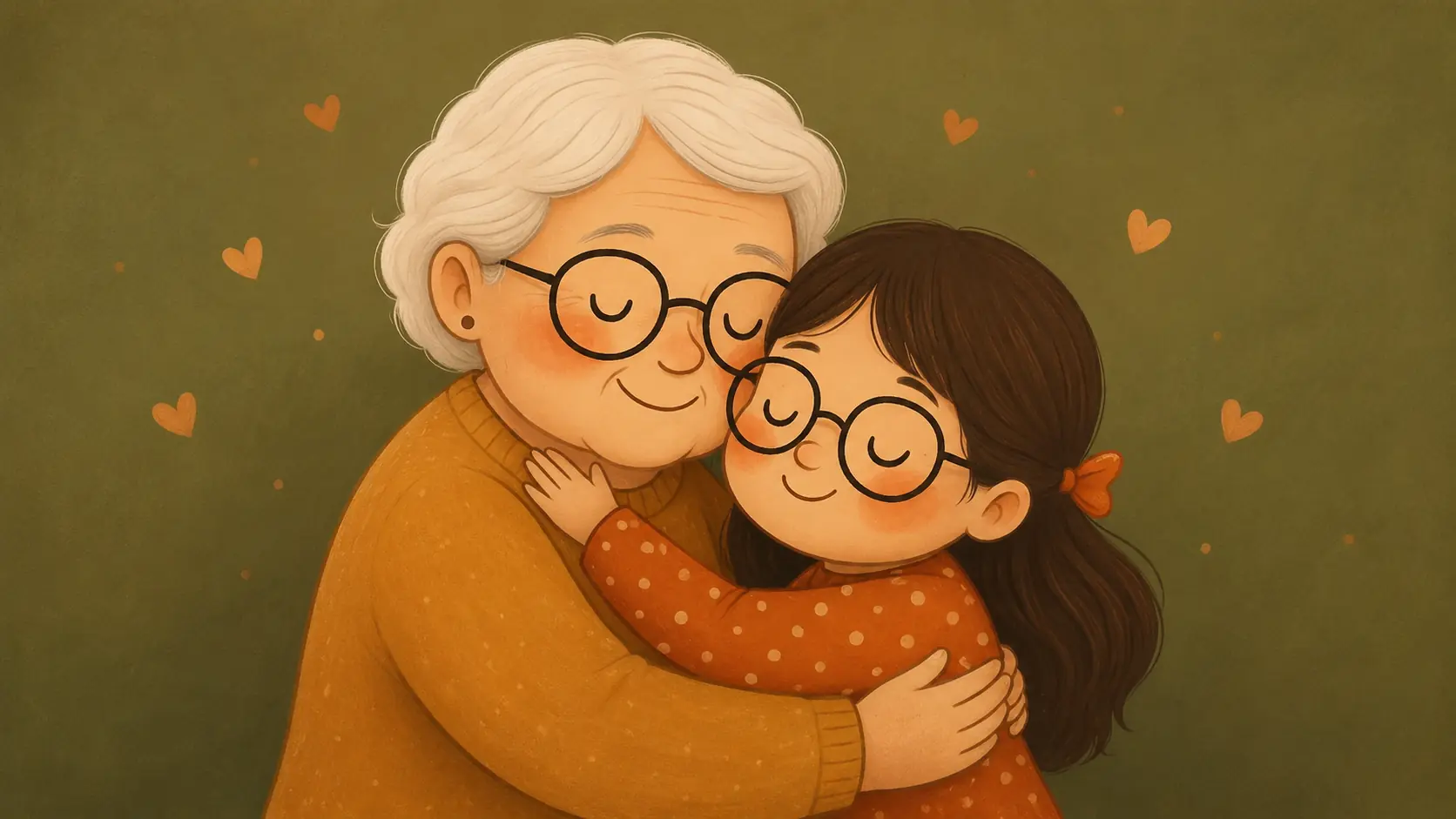
1. It Is Not Just “Hard”—It Can Feel Like Loving Someone From a Life You Cannot Fully Step Into
The word “hard” feels too small for some experiences.
Carrying a heavy box is hard. Learning new technology is hard. Driving through a snowstorm is hard.
Long-distance grandparenting contains practical difficulties, but its deeper challenge is emotional. It can feel like loving someone whose world you can see only through windows opened by other people.
A grandmother may receive a photograph from the playground and study everything in the background. She notices the jacket her grandchild is wearing, the scraped knee, the new haircut, and the unfamiliar park. She wonders who took the picture, what happened five minutes before, and whether the child laughed on the way home.
She wants more than information.
She wants to know the rhythm of the child’s day.
What cereal do they ask for every morning? Which stuffed animal must be in bed at night? Do they talk constantly on the ride to school, or do they become quiet when they are tired? What expression appears on their face when they are trying not to cry? Which joke makes them laugh every time?
These are the details that closeness reveals naturally.
A nearby grandmother learns them without needing an update. She sees the grandchild often enough to notice changes. She understands when a silence means embarrassment and when it means exhaustion. She knows which cup the child chooses, which snack they avoid, and how long it takes them to warm up after a difficult day.
A long-distance grandmother may have to ask.
Even then, the answer may arrive in a short message because the parent is busy, the child is distracted, or the call occurs between dinner and bedtime.
No one has done anything wrong, yet Grandma may finish the conversation feeling that she touched only the surface.
Long-distance grandparenting can create a strange feeling of intimacy and unfamiliarity at the same time.
Grandma loves the child deeply. She may think about them every day, pray for them every night, and carry their photograph in her wallet. Yet when she visits, she may need time to learn the child’s current habits.
The toddler who once ran into her arms may now hide behind a parent because several months have passed. The child who loved dinosaurs during the last visit may now care only about space, baseball, or drawing. A teenager may have changed emotionally and socially in ways that are difficult to understand through occasional calls.
Grandma arrives carrying love that has not changed, but the child she loves is always changing.
That can be disorienting.
She may worry about trying too hard. She does not want to demand affection or make the child feel guilty for needing time to reconnect. She smiles, waits, and allows the relationship to warm again.
Inside, however, she may be grieving the lost familiarity.
The distance also limits how naturally Grandma can help.
A nearby grandmother might pick up a sick child from school, bring dinner when the family is exhausted, attend a game, or watch the grandchildren so the parents can rest. A long-distance grandmother may hear about the crisis only after it has passed.
She wants to help but cannot always place her hands on the problem.
She may offer money, order food, send a package, or stay available by phone. These efforts matter, but they may not satisfy the part of her that has always expressed love through practical care.
She is not only missing the child.
She is missing the role she imagined having in the child’s life.
Many grandmothers pictured grandchildren visiting after school, spending weekends at their home, learning family recipes, or sleeping in a room prepared especially for them. They imagined attending concerts, applauding at graduations, and becoming part of the family’s weekly rhythm.
Then life created another arrangement.
The adult child found work far away. A spouse’s family lived in another region. Housing became unaffordable nearby. Military orders arrived. A relationship changed. The family relocated for safety, opportunity, or necessity.
The grandmother may understand every reason and still mourn the life she imagined.
This grief is difficult because no clear villain exists.
There may be no person to blame and no decision that should be reversed. Everyone may be doing what is best for their own household.
But a good reason for distance does not remove its emotional cost.
Sometimes people tell long-distance grandparents to focus only on gratitude.
“You should be thankful they are healthy.”
“You are lucky to have grandchildren at all.”
“Some grandparents never hear from their families.”
These statements may be factually true, but gratitude does not cancel longing.
A person can be deeply thankful and deeply sad at the same time.
Grandma can celebrate the beautiful life her grandchild is living while wishing she had a larger place inside that life.
The pain may become especially strong when she sees other grandparents nearby. She watches a friend pick up grandchildren from school, attend weekly games, or host Sunday dinner. She may be happy for that friend, but the scene touches the life she wanted.
Jealousy in this context is often grief wearing another expression.
It does not mean she wishes others had less. It means she wishes she could have more of the relationship she treasures.
Holidays can intensify this feeling. Family photographs appear online. Grandchildren sit around another table, open gifts in another living room, and create traditions Grandma can only witness afterward.
She may join through a video call, smiling into a small screen while everyone else moves around the room. The call may be loving, but she remains aware that she is not truly inside the gathering.
She cannot smell the food, straighten the child’s collar, help clean the kitchen, or remain after everyone else has gone home.
When the call ends, her house may feel especially quiet.
The loneliness is not always about being physically alone. It is about feeling separated from a life that matters more to her than almost anything else.
Still, the answer is not to make the family feel guilty for living.
Long-distance grandparenting requires holding two truths carefully: Grandma’s grief deserves recognition, and the younger family deserves room to build its life without carrying constant emotional responsibility for her sadness.
This balance is difficult.
Grandma may choose honest but gentle language.
“I miss you very much, but I am proud of the life you are building.”
“I wish I could be there, and I understand why I cannot.”
“I love seeing the pictures, even though they make me miss you more.”
This honesty allows connection without turning love into pressure.
Adult children can also acknowledge the loss without rushing to fix it.
They may say, “I know this is hard for you,” or “We wish you could be here too.” Recognition matters because invisible pain becomes heavier when everyone pretends it does not exist.
Long-distance grandparenting is more than hard.
It is loving a child intensely while accepting that much of their life will happen beyond your reach. It is learning to remain emotionally close without the easy familiarity that physical closeness provides.
It asks Grandma to build a bridge again and again, trusting that even when she cannot fully step into the child’s world, her love can still reach it.
2. It Is Not Just Missing Milestones—Sometimes You Grieve the Ordinary Things Most
People usually understand why a grandmother would feel sad about missing a birth, first birthday, graduation, school program, championship game, or holiday.
Milestones are visible. They appear on calendars, invitations, and photographs. The family knows they matter.
But long-distance grandparents often grieve what no calendar records.
They miss the ordinary Tuesday afternoon.
They miss the ride home from school when the child suddenly reveals something important. They miss standing in the kitchen while a grandchild complains about homework. They miss the moment a toddler brings over the same book for the fourth time.
These moments may appear unremarkable while they are happening.
Later, they become the fabric of a relationship.
A grandmother may not only want to attend the grandchild’s birthday party. She wants to be present while the child chooses the cake, becomes impatient waiting for the guests, and falls asleep in the car afterward.
She does not only want to see the polished photograph.
She wants the messy edges of the day.
Distance often allows families to share the highlight while losing the surrounding life.
Grandma receives the photograph of the child holding a trophy, but she misses the rainy practices, the nervous drive to the game, and the conversation after a disappointing loss. She sees the first-day-of-school picture but does not witness the child searching for a shoe, refusing breakfast, or asking whether the teacher will be kind.
These ordinary moments help adults understand children.
A child reveals character in the spaces between milestones. Their worries, humor, habits, strengths, and tenderness appear during routine life.
Long-distance grandmothers may feel they know the child’s achievements better than the child’s daily experience.
That gap can hurt.
The ordinary things also create physical memory. A nearby grandmother remembers the weight of a sleeping grandchild carried from the car. She knows the sound of their feet running down the hallway. She has crumbs under the kitchen table and fingerprints on the window.
A long-distance grandmother may keep the house ready without the child regularly entering it.
A toy box sits in the corner. A bed remains neatly made. Cups, books, and games wait between visits.
The quietness of these objects can become emotional.
They represent both welcome and absence.
When the grandchildren finally visit, Grandma may want to fill every minute. She plans activities, favorite meals, photographs, and outings because the time feels precious.
But sometimes she discovers that what she wanted most was not the special event.
She wanted the child to become bored in her house.
She wanted them to open the refrigerator without asking, leave shoes by the door, argue over the remote, or wander into the kitchen looking for a snack.
Boredom can be a sign of belonging.
Children become bored where they feel safe enough to stop performing. They relax into the ordinary rhythm of home.
Long-distance relationships may contain pressure to make every visit memorable. Everyone knows the clock is running. The adults want to create perfect experiences, and the child senses that the visit is important.
But the grandmother may secretly wish for enough time that nothing special has to happen.
She wants unhurried familiarity.
She wants to know the child in pajamas, during a bad mood, or while doing absolutely nothing.
Ordinary time allows love to become less ceremonial.
This is why brief, regular contact can matter more than occasional elaborate connection. A grandmother who speaks with her grandchild only on birthdays may know the major updates but miss the child’s developing inner world.
A grandmother who sends a weekly voice message, reads a story over video, or asks about one small detail can begin to share ordinary life from a distance.
The conversation does not always need to be meaningful.
“What did you eat for lunch?”
“Did anything make you laugh today?”
“What is sitting beside you right now?”
“Show me the drawing on the refrigerator.”
These questions may seem small, but they help Grandma enter the child’s present world.
Children often struggle with broad questions such as, “How is school?” They answer, “Fine,” because the question is too large.
Specific questions open smaller doors.
“Who sat next to you today?”
“What was the hardest part of math?”
“Did you play outside?”
“What book are you reading?”
The grandmother learns the texture of the day.
Ordinary connection can also come through shared routines.
Grandma may read the same bedtime story over video every Thursday. She may send a short recording each morning during an important week. She may watch the same movie as the grandchild and discuss it later.
A shared routine turns distance into structure.
The child begins to expect Grandma’s presence in a particular part of life.
Packages can support ordinary connection when they are not reserved only for holidays. Grandma may send a recipe card, a newspaper clipping, a used book she loved, or a photograph with a short story written on the back.
The object becomes an invitation into her world.
The grandchild can send ordinary things too: a school drawing, a grocery list written in early handwriting, a leaf from a walk, or a photograph of the family dog sleeping.
These items may appear insignificant to others.
To Grandma, they say, “You are included in our everyday life.”
Long-distance grandmothers should also allow themselves to acknowledge what cannot be replaced.
Technology can show a child’s face, but it cannot create physical touch. A recording preserves a voice, but it does not replace sitting nearby. A mailed drawing matters, but Grandma may still wish she had watched the child create it.
Pretending these differences do not matter can make grief feel dishonest.
The goal is not to convince Grandma that virtual connection is equal to physical presence.
It is to use virtual connection meaningfully while honoring the limits of what it can provide.
The ordinary things become especially important as grandchildren grow older.
Young children change quickly, but teenagers change too. Their voice, interests, friendships, and concerns evolve. They may become less enthusiastic about long video calls and more protective of their private life.
Grandma may fear that the relationship is slipping away.
Instead of demanding long conversations, she can remain present through low-pressure contact.
A short message saying, “I was thinking about you today,” may be easier for a teenager to receive than a call filled with questions. Sending an article about an interest, congratulating a small achievement, or remembering an important date can show attention without creating pressure.
The teenager may not respond warmly every time.
Consistency still matters.
Years later, they may remember that Grandma kept reaching out without demanding a performance in return.
Long-distance grandparents sometimes worry that missing ordinary life means they have no real place in the child’s memories.
But ordinary connection can be created in different ways.
A child may remember Grandma’s Sunday phone calls, handwritten cards, funny voice messages, or the way she always asked about a specific friend. They may remember the packages that arrived before exams, the recipes they cooked together over video, or the stories Grandma recorded about her own childhood.
These are not replacements for physical closeness.
They are their own form of closeness.
The ache for ordinary moments may never disappear completely. It reflects how deeply Grandma wants to know the child, not only celebrate them from a distance.
But when she treats small moments as worthy of connection, she begins to build a relationship made not only of rare milestones but of repeated signs of attention.
Love does not need every moment to be important.
Sometimes love becomes powerful because it keeps entering the unimportant moments.
3. The Pain Is Not Always Visible—Many Long-Distance Grandparents Carry the Ache Quietly
Grandmothers often become skilled at hiding their sadness.
They do not want to be seen as demanding. They do not want their adult children to feel judged for moving away, choosing a spouse, building a career, or organizing life differently from the way Grandma imagined.
So they smile.
They say the visit was wonderful, even though goodbye left them crying in the car. They say the video call was enough, even though the empty screen afterward made the room feel colder. They tell friends that everyone is doing well and that they are proud.
All of these statements may be true.
They simply do not tell the whole story.
The hidden ache of long-distance grandparenting often appears in private moments.
It appears when Grandma walks past a room prepared for grandchildren who visit only once or twice a year. It appears when she buys a small gift and realizes the child may outgrow it before the next visit. It appears when another grandparent casually mentions attending a school program that afternoon.
She may congratulate the friend warmly and then sit alone with feelings she considers selfish.
Many long-distance grandparents judge themselves for their grief.
They think, “My grandchildren are healthy. I should not feel sad.”
“They call me. I should be grateful.”
“My adult child is happy. I have no right to complain.”
Gratitude becomes a reason to silence pain rather than a companion to it.
But emotions do not disappear because a person believes they should not have them.
Unspoken grief often becomes loneliness, irritability, withdrawal, or quiet resignation.
A grandmother may stop asking for calls because she fears rejection. She may say, “They are too busy,” before anyone has actually told her that. She may protect herself from disappointment by expecting less.
Over time, this can create the distance she feared.
The family assumes Grandma is comfortable with the arrangement because she never expresses her needs. Grandma assumes the family does not want more connection because they do not offer it.
Everyone may love each other while misunderstanding the silence.
Honest communication can help, but it must avoid turning pain into blame.
Grandma can say, “I know your lives are busy, but regular calls help me feel connected.”
She can ask, “Could we choose one time each week that usually works?”
She can explain, “I do not need a long conversation. I simply want to remain part of the children’s lives.”
These statements express a need without accusing the family of failure.
Adult children can respond with realistic honesty. They may not be able to promise daily calls or frequent travel. But they can help create a pattern that everyone can maintain.
Consistency is more comforting than promises that repeatedly collapse.
A fifteen-minute call every Sunday may build more trust than spontaneous plans that are often forgotten.
The ache can also be intensified by social media.
Grandma may see photographs of outings, celebrations, and visits with other relatives. She may not know the context. Perhaps the nearby relatives helped because they were available. Perhaps the event was arranged at the last minute. Perhaps no exclusion was intended.
Yet the images can still create a sense of being outside.
Social media displays moments without explaining relationships. It can make other people’s closeness appear effortless and complete.
Grandma may need to protect her emotional well-being by remembering that a photograph is not the entire family story.
At the same time, families should understand that public pictures can touch private wounds. A direct message, personal photograph, or short explanation may help Grandma feel included rather than left to observe the family like a stranger.
The hidden pain may also appear around travel.
People sometimes assume retired grandparents can visit whenever they want. Retirement, however, does not guarantee unlimited money, energy, mobility, or health.
Air travel can be physically exhausting. Airports are crowded, walking distances are long, and delays can be stressful. Driving hundreds of miles may no longer feel safe. Hotels, tickets, rental cars, and meals can create financial strain.
Grandma may be embarrassed to admit that travel has become difficult.
She may fear that the family will interpret her absence as lack of interest.
Adult children may assume, “She can come whenever she wants,” while Grandma is quietly waiting for someone to understand that she now needs help planning, paying for, or managing the journey.
Honest discussion can prevent resentment.
Perhaps the family can share costs, choose direct flights, arrange transportation, or visit Grandma more often. Maybe longer, less frequent visits work better than many short trips.
The solution will differ for every family.
The important step is acknowledging that distance creates practical burdens as well as emotional ones.
Long-distance grandparents may also feel that their grief is less legitimate than other forms of loss.
The grandchildren are alive. The relationship still exists. There is hope for another visit.
This type of grief is sometimes called an ambiguous loss because the loved person is present but not physically accessible in daily life. There is no funeral, no public ritual, and no clear permission to mourn.
Yet something real is missing.
Grandma may be mourning the family life she expected, the role she hoped to play, or the years passing without shared ordinary experiences.
Recognizing this grief does not mean surrendering to it.
Naming pain can make it easier to respond constructively.
Grandma may seek friendships with others who understand. She may write privately, join a community group, speak with a counselor, or invest in meaningful routines that give her life purpose beyond waiting for the next call.
Grandchildren are precious, but they cannot carry responsibility for a grandparent’s entire emotional world.
A grandmother deserves relationships, interests, faith, service, and joy that exist alongside her love for the family.
Building a full life is not an admission that the grandchildren matter less.
It helps Grandma love them without placing unbearable weight on every interaction.
When the call becomes the only source of happiness, any missed conversation can feel devastating. When Grandma’s life contains friendship, purpose, and activity, the relationship can breathe more freely.
She can look forward to connection without being emotionally destroyed by a scheduling problem.
This is not easy. Loneliness cannot always be solved by staying busy.
But a broader life can protect the grandmother’s dignity and emotional health.
The hidden ache deserves compassion from the grandmother herself.
She does not have to criticize every tear after goodbye. She does not need to call herself dramatic for missing a child. The pain reflects attachment.
She can say, “This hurts because I love them.”
That sentence allows both truth and tenderness.
Families can support long-distance grandparents by making appreciation explicit.
Tell Grandma that her efforts are noticed.
“Thank you for calling every week.”
“The children love the stories you send.”
“They remembered what you told them.”
“We appreciate how you keep showing up.”
Long-distance love can feel invisible because much of its work happens quietly. The grandmother remembers dates, prepares packages, studies new technology, and adjusts to schedules that revolve around other households.
Recognition tells her that the bridge she keeps building is reaching the other side.
4. Long-Distance Love Is Not Meaningless—The Love That Keeps Showing Up Still Shapes a Child
A grandmother may fear that physical distance has reduced her to a face on a screen.
She may wonder whether the child will remember her, trust her, or feel deeply connected to her. She may compare herself to relatives who live nearby and participate in daily life.
Nearby relationships have real advantages. Physical presence offers opportunities that distance cannot reproduce.
But children are not shaped only by who lives closest.
They are shaped by who pays attention, who remains emotionally safe, who remembers them, and who keeps returning with love.
Consistency can cross distance.
A child notices when Grandma calls regularly. They notice when she remembers the name of a teacher, asks about a test, or follows up on a concern mentioned weeks earlier.
Remembering details tells a child, “I listened to you.”
That message builds emotional security.
Children may not always express appreciation in the moment. A young child may leave the video call to chase the dog. A teenager may answer with one-word responses. The interaction may feel disappointing to Grandma.
Still, repeated contact creates familiarity.
The child learns that Grandma is part of the family structure. Her voice, face, humor, stories, and affection become known.
The relationship may deepen differently than a nearby one, but differently does not mean less meaningful.
Long-distance grandmothers can shape identity by sharing family history.
They can tell children where their family came from, what previous generations endured, which traditions matter, and why certain recipes, songs, sayings, or beliefs continue.
Children need roots as well as freedom.
Grandma can offer those roots.
A recorded story about her childhood may be watched years later with new understanding. A handwritten recipe can connect generations. A family photograph with names and memories written on the back can become an inheritance.
These gifts tell a child, “You belong to a story larger than yourself.”
Grandma can also become a steady source of encouragement.
Parents are responsible for discipline, schedules, homework, and daily limits. Grandparents often have space to offer another kind of attention.
A long-distance grandmother can listen without immediately solving. She can remind the child of strengths, celebrate effort, and offer perspective during difficult seasons.
A child may tell Grandma something they hesitate to say elsewhere because the relationship feels safe and slightly removed from daily pressure.
This position must be handled responsibly. Grandma should not undermine the parents, keep unsafe secrets, or place the child between adults.
But she can become a trustworthy listener.
She can say, “I understand why that hurt.”
“I believe you can handle this.”
“You can always talk to me.”
These words can remain in a child’s memory.
Long-distance love also teaches children that relationships require intention.
Nearby family members may see one another naturally because geography makes it easy. Long-distance relationships survive because people choose to maintain them.
The child learns that love is not only a feeling. Love remembers, plans, calls, writes, travels, apologizes, and tries again.
Grandma models commitment across inconvenience.
She also teaches that older adults remain important. Through regular connection, the child learns that family includes people outside the immediate household and that age does not make someone irrelevant.
Grandma’s stories, questions, and presence expand the child’s understanding of belonging.
Technology can support this influence when it is used creatively.
A video call does not need to consist only of adults asking questions while a restless child tries to escape.
Grandma can read a short book, draw alongside the child, complete a simple craft, sing a song, play a guessing game, or watch the child build something.
Shared activity reduces the pressure to produce conversation.
For older children, Grandma can help with a family history project, exchange book recommendations, watch the same sports event, or learn about the child’s interests.
The goal is not to imitate physical presence perfectly.
It is to create genuine interaction within the medium available.
Voice messages can be especially useful because they do not require matching schedules. Grandma can send a short morning greeting, a joke, a prayer, or encouragement before an important event.
The child can listen when convenient and replay the message later.
Letters also carry unique emotional weight in a digital age. A child can hold Grandma’s handwriting, place the letter in a drawer, and discover it again years later.
A simple message can become a keepsake.
Grandma should avoid making every communication about how much she misses the child.
Missing them is honest, and it is healthy to say so. But if every call begins with sadness, the child may begin to experience contact as emotional responsibility.
Balance longing with curiosity and joy.
“I miss you” can be followed by, “Tell me what made you laugh this week.”
The child should feel loved, not responsible for repairing Grandma’s loneliness.
This balance allows the relationship to remain emotionally safe.
Grandma can also support the parents, because a child’s relationship with a grandparent is influenced by the atmosphere between adults.
Respecting routines, asking before sending large gifts, and avoiding criticism of parenting choices build trust. When parents feel respected, they are more likely to encourage connection.
Conflict between generations can make distance feel even larger.
Grandma may disagree with certain decisions, but not every difference requires confrontation. Families change, and parenting practices evolve. She can offer wisdom without demanding control.
A respectful question often works better than a correction.
“Would it be helpful if I shared what worked for us?”
This approach protects the relationship and keeps the door open.
Long-distance love shapes a child partly through what Grandma represents.
She may represent continuity, unconditional affection, faith, humor, patience, or family resilience. The child may associate her with a particular phrase, recipe, song, holiday tradition, or way of seeing the world.
These associations become internal.
Even when Grandma is not physically present, the child may think, “Grandma would tell me not to give up,” or “Grandma always says everyone deserves kindness.”
Her voice becomes part of the child’s inner guidance.
This is one of the deepest ways grandparents shape grandchildren.
Influence is not always visible at the moment it occurs.
A child may appear distracted during a story and remember it years later. A teenager may respond casually to a letter and keep it. An adult grandchild may finally understand Grandma’s consistency after having children of their own.
Love often plants seeds long before anyone sees what grows.
Grandma should not measure the entire relationship by the enthusiasm of a single call.
Children have moods, short attention spans, and changing developmental needs. A failed conversation does not mean the bond is failing.
Try again.
Send another message.
Ask the parents what type of contact works best now.
Adapt without disappearing.
The love that keeps showing up becomes dependable.
Dependable love shapes children because it tells them that relationships can survive time, change, distraction, and distance.
Building a Relationship That Can Survive the Miles
Long-distance grandparenting needs intention, but it should not become a complicated performance.
The most sustainable connection is usually simple enough to repeat.
Choose consistency over intensity.
A grandmother may feel tempted to compensate for distance with large gifts, expensive trips, or overly planned visits. These efforts can be generous, but material generosity cannot carry the whole relationship.
Children connect through attention more than price.
A postcard mailed regularly may create more familiarity than one enormous birthday present.
Grandma can establish small traditions.
Perhaps she sends a handwritten note on the first day of each month. Perhaps she reads one chapter of a book during every Sunday call. Perhaps she and the grandchild wear matching pajamas on Christmas Eve and speak by video.
Traditions create shared ownership.
They give the child something to anticipate and remember.
The adult children play an important role too. Young children cannot manage long-distance relationships independently. Parents must answer calls, share updates, print photographs, and make space for connection.
This work can feel like another responsibility in an already crowded household.
Grandma can make it easier by being flexible and appreciative. She can ask what time works, keep calls age-appropriate, and avoid taking canceled plans personally when family life becomes unpredictable.
The parents can also recognize that helping the relationship grow is a gift to the child.
Grandparents provide history, additional love, and a sense of continuity. Facilitating contact is not only something done for Grandma.
It enriches the child’s emotional world.
Visits deserve realistic expectations.
Everyone may imagine a perfect reunion, but travel, unfamiliar routines, and emotional pressure can make children dysregulated. A young grandchild may not immediately run into Grandma’s arms. They may need time.
Grandma should avoid interpreting hesitation as rejection.
Familiarity returns through play, patience, and ordinary contact.
During the visit, leave room for rest. Do not schedule every hour. Allow the child to explore Grandma’s home, become bored, and settle into the environment.
The relationship needs ordinary time, not only planned photographs.
After the visit, continue contact soon. A brief message saying, “I loved reading with you,” helps carry the closeness forward.
Goodbyes may remain painful.
Grandma may cry, and children may cry too. There is no need to pretend separation means nothing.
But the goodbye can include reassurance.
“We will talk on Sunday.”
“I will send you the pictures.”
“Our next visit is in October.”
A specific point of future connection makes the distance feel more manageable.
When the Relationship Changes as Grandchildren Grow
Long-distance grandparenting changes with every stage.
Babies connect through familiar voices, faces, and the emotional warmth supported by their parents. Toddlers need brief, active interaction. School-age children can share projects, stories, games, and growing interests.
Teenagers require a different kind of respect.
They may no longer want long calls or repeated questions. Their schedules become crowded, and peers occupy more of their attention.
Grandma may feel rejected when the child who once loved video stories now responds with a few words.
This shift often reflects development, not loss of love.
Remain present without forcing closeness.
Send short messages. Ask about their interests without interrogating them. Respect privacy. Avoid making them feel guilty for growing up.
A message such as, “No need to answer right away. I just wanted you to know I am thinking of you,” creates warmth without pressure.
Remember important events. Follow up afterward.
The teenager may not always show what the attention means.
Young adults may move again, begin careers, or build families of their own. The relationship can deepen as they gain new perspective.
A grandchild who once took Grandma’s calls for granted may become curious about family history, aging, and the sacrifices previous generations made.
The years of consistent love create a foundation for that later closeness.
Conclusion: Distance Changes the Relationship, but It Does Not Cancel Your Place in Their Life
Long-distance grandparenting can feel like loving someone from a life you cannot fully enter.
You may know the major events while missing the routines that surround them. You may watch your grandchildren grow through photographs and screens, always grateful for what you receive and always aware of what cannot be transmitted.
The pain is not only about missing milestones.
You may grieve the ordinary things most: the rides home, the messy kitchen, the repeated bedtime story, the shoes left by the door, and the unremarkable afternoons that make people truly familiar with one another.
Much of this ache may remain invisible.
You may carry it quietly because you do not want to create guilt. You may smile through video calls, wave at airports, and return to a house that feels too still.
Your sadness does not mean you are ungrateful.
It means the relationship matters.
Most importantly, the distance does not make your love meaningless.
Every call you make, story you share, detail you remember, letter you write, and promise you keep tells your grandchild that they are loved beyond convenience.
You are teaching them that family can remain connected across miles.
You are giving them roots, history, encouragement, and the security of knowing that someone continues to hold them in their heart even when they cannot hold them in their arms.
You may not witness every part of their childhood.
You may miss the lost teeth, ordinary breakfasts, playground arguments, and quiet drives home.
But you can still become part of the voice they carry inside.
You can become the grandmother who remembered, who listened, who called, who prayed, who adapted, and who never allowed distance to become disappearance.
Years from now, your grandchild may not remember the exact number of miles between your homes.
They may remember that your cards kept arriving.
They may remember your face appearing on the screen, your voice reading a story, or your message before an important day.
They may remember that you always asked about the small things and that your love never required them to perform.
They may realize that you spent years building a bridge toward them, one ordinary act at a time.
Long-distance grandparenting is not the relationship many grandmothers imagined.
It asks for flexibility, courage, patience, and repeated acceptance of circumstances that may never feel completely fair.
It also reveals something powerful about love.
Love does not stop being real because it must travel.
It learns new routes.
It crosses time zones, enters mailboxes, waits in saved voice messages, and appears on screens. It lives inside family stories and returns through traditions.
It keeps showing up.
And the love that keeps showing up still shapes a child.