The clay at the Coosaw Point Club had to be brushed before the sun got over the marsh, and in the summer of 1984 that meant Delia Pruitt was out of bed at a quarter to five.
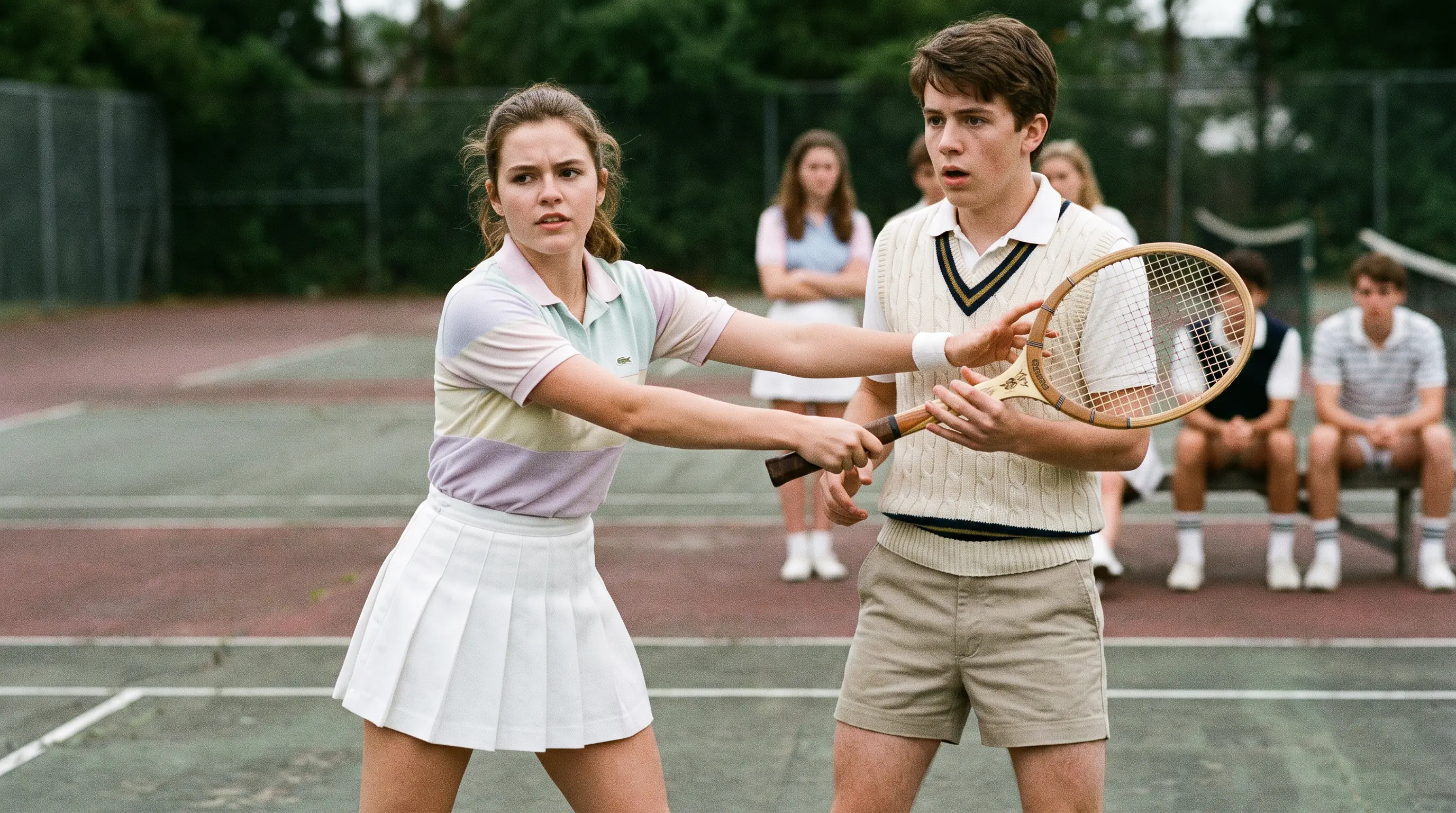
Her father drove the truck down Club Road with the windows open and the headlights still on, the cab full of the smell of cut grass and pluff mud and the coffee he drank black from a thermos lid. He didn't talk before six. Dee didn't mind. She liked the quiet, the frogs going in the ditches, the Spanish moss hanging in the high beams like something left out to dry.
There were eight courts at Coosaw Point, all of them Har-Tru, the green crushed-stone clay that came up from Virginia in fifty-pound bags and got into the cuffs of your jeans and the seams of your shoes and, if you worked it long enough, the lines of your hands. Raymond Pruitt had kept those courts for eleven years. He knew Court Six had a soft spot behind the deuce-side baseline where a sprinkler head had been moved in 1979, and that Court One, the center court, the one with the green canvas windscreen and the little set of bleachers, played faster in the afternoon than it did in the morning, because the sun baked it and the members liked it that way.
"Lines," he said, when they got there. It was the first word of the day.
Dee took the line brush and walked Court One end to end while her father dragged the big drag-mat behind him in slow ovals. The white tapes were nailed into the clay, and the brush whisked the green dust off them so they shone in the dawn like something newly painted. Baseline. Singles sideline. Service line. Center service line. She could have done it with her eyes shut.
By eight, when the first Mercedes turned in at the gate, Dee was gone, back up Club Road on her bicycle to the public courts behind the Washington Street recreation center, where the asphalt was cracked like a map of rivers and the nets were made of chain.
That was where she played. That was where she'd always played.
* * *
But in the late afternoons, when the members had gone in for gin and tonics on the veranda and her father was raking the bunkers on the back nine, Dee hit against the backboard behind the maintenance shed.
Nobody was supposed to know about the backboard. It was an old plywood wall, painted green once and now mostly gray, that some club pro had nailed up in the sixties and then forgotten. The shed hid it from the clubhouse, and a stand of wax myrtle hid it from the parking lot, and the ground in front of it was just packed sand with a strip of old Har-Tru her father had spread there for her when she was eleven. You could hit there for an hour and the only witnesses were the fiddler crabs and an egret who came every day at five and stood in the ditch like a deacon.
She was hitting there the third week of July when Whit Langford came around the side of the shed.
She heard them before she saw them. Three boys, laughing, one of them dribbling a ball on a racket face, tock tock tock. Then they were there: Bryce Hollings with his sunburned neck, Trip Calloway in a Sergio Tacchini shirt with stripes down the sleeves, and in front, a step ahead of them the way he was always a step ahead, Whit.
He was sixteen, a year older than she was. He had the junior club championship two years running and his picture on the wall inside the pro shop, and he had hair the color of a manila envelope that fell over one eye, so that he was always pushing it back with the heel of his hand. He played with a Prince Graphite, the big-headed one, which cost more than her father made in two weeks.
"Well, look at that," Trip said. "It's the help."