Mabel Higgins had learned early that there were two kinds of doors in her parents’ house.
The first kind opened for Clementine.
The second closed behind Mabel.
At twenty-nine, she had become so practiced at noticing the difference that she no longer needed anyone to explain what was happening.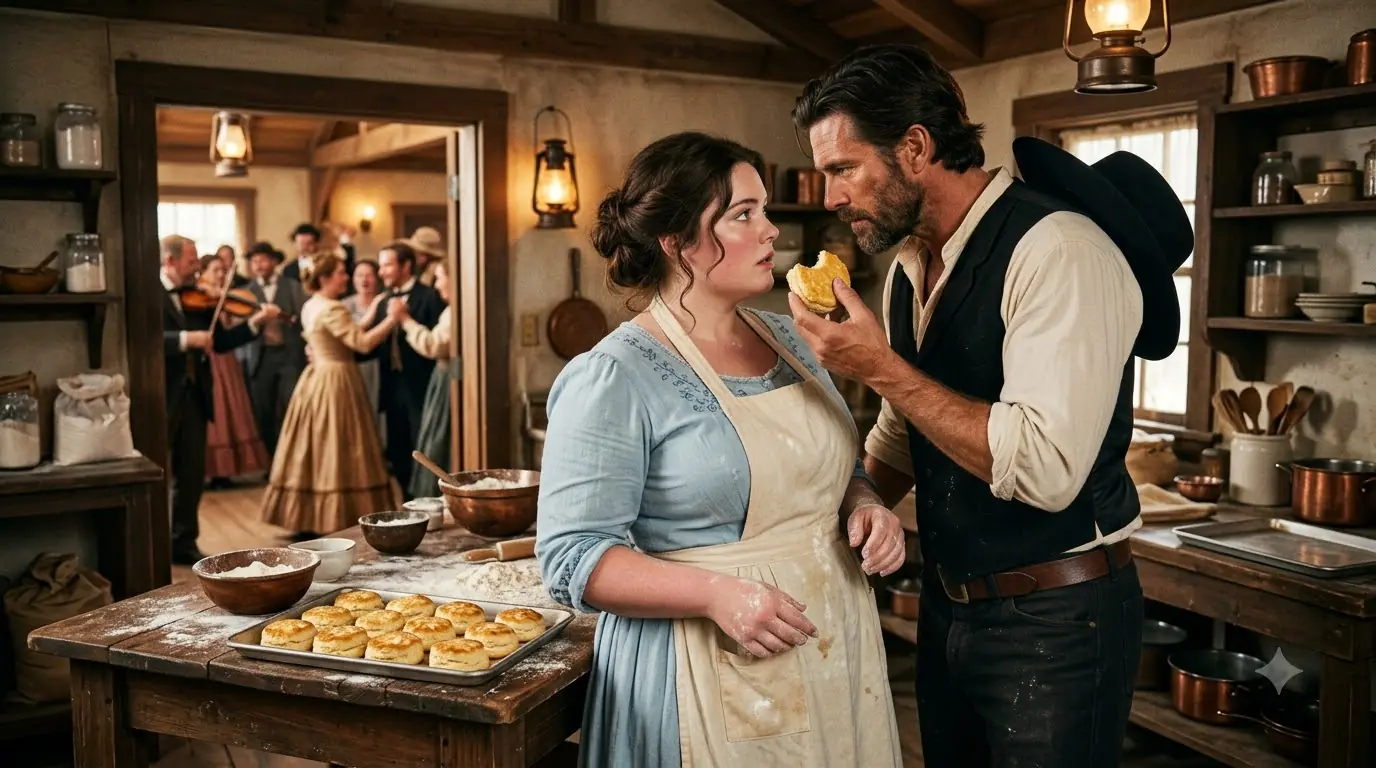
When distinguished visitors came to supper, Clementine entered through the parlor doors wearing silk.
Mabel entered through the kitchen door carrying bread.
When young men arrived after church, Clementine sat beside the piano.
Mabel was told there were potatoes to peel.
When merchants, ranchers, attorneys, or traveling businessmen stopped at the Higgins house, her mother somehow always discovered urgent work requiring Mabel elsewhere.
Nobody ever said the words directly.
That almost made it worse.
Her mother, Martha Higgins, preferred gentler cruelty.
“Mabel, darling, you know Clementine becomes nervous when too many people are underfoot.”
Or:
“You are so much more useful in the kitchen.”
Or:
“You don't enjoy all that foolish attention anyway.”
Mabel had heard variations for fifteen years.
Eventually she stopped correcting them.
The truth was simpler.
Clementine was beautiful in the manner Oak Haven understood immediately.
Golden hair.
Small waist.
Fine hands.
Blue eyes.
Skin that stayed pale despite Wyoming wind.
She moved like someone who had spent childhood being told the room was waiting for her.
Mabel was beautiful in a way the town had never bothered learning how to describe.
She was large.
Very large.
Full through the hips, belly, arms, and chest.
Her hands were broad from kneading dough and carrying pans.
Her dark-brown hair refused the neat arrangements her mother preferred.
Her cheeks flushed whenever she worked near an oven.
She laughed loudly if she forgot to stop herself.
Her dresses required more fabric.
Her appetite was normal enough to scandalize women who believed femininity ought to survive on tea and admiration.
Men had noticed her.
Of course they had.
But they usually looked quickly and then behaved as though they had not.
That was somehow worse than staring.
Mabel had learned not to expect desire.
She had also learned desire was not the only thing a woman could build a life from.
She read.
She kept the household books because her father could not make a column of numbers balance even if the missing dollar sat on top of the ledger waving.
She baked.
Not casually.
Not because women were supposed to.
Mabel understood flour.
She understood fat, heat, yeast, sugar, humidity, altitude, and timing with the same intuitive precision her father once claimed only men possessed for cattle.
She could taste a biscuit and tell whether the cook had overworked the dough.
She knew how long honey should reduce before it became bitter.
She could make four different breads from the same starter depending on temperature.
She could take inexpensive cuts of beef and make wealthy people ask for seconds.
Nobody called this intelligence.
They called it being useful.
Mabel accepted the word because usefulness still had power.
Then Harrison Cole arrived in Oak Haven.
He was thirty-eight years old and already owned more land than many families would see in ten generations.
Longhorn Valley Ranch stretched over thousands of acres east of town.
The Cole name was attached to cattle contracts, freight agreements, water rights, and two warehouses at the rail depot.
Harrison had inherited part of it.
He had built the rest.
That distinction mattered in Oak Haven.
Inherited money inspired envy.
Expanded money inspired respect.
By the second week after his arrival, every unmarried woman within twenty miles knew he had no wife.
By the third week, their mothers knew too.
By the fourth, Oak Haven had decided Harrison would marry Clementine Higgins.
The conclusion seemed obvious.
Clementine was twenty-six.
Harrison was wealthy.
The Higgins family had social standing but little cash.
Everyone got something.
Clementine received a powerful husband.
Harrison received the town’s most admired beauty.
The Higgins family received relief from debts no one discussed in polite company.
Oak Haven received a wedding to talk about for a year.
Mabel received more work.
Her father, Thomas Higgins, had borrowed against their property after two poor cattle seasons and one disastrous land speculation.
Then he borrowed again.
By spring 1884, Mabel knew the exact number.
$7,842.
Enough to destroy them.
Not immediately.
Debt rarely destroyed people immediately.
It sat politely at the table first.
Then it began taking chairs.
The spring jubilee was supposed to solve everything.
At least according to Martha.
“Harrison Cole has accepted the invitation.”
She announced it over breakfast with the reverence usually reserved for religious visions.
Clementine smiled.
Their father looked relieved.
Mabel buttered toast.
Martha continued.
“The committee wants this year’s celebration to be exceptional.”
“Apparently Mr. Cole has donated enough to repair the school roof.”
Thomas nodded.
“Good man.”
Mabel asked:
“How many people?”
Her mother frowned.
“What?”
“For the jubilee.”
“Oh.”
“Perhaps one hundred forty.”
Mabel stopped buttering.
“One hundred forty?”
“Maybe one sixty.”
“And you volunteered us for food?”
Martha smiled.
“You always manage.”
There it was.
You always manage.
The family translation for we will give you impossible work because you have repeatedly survived impossible work.
Mabel looked at Clementine.
“What are you doing?”
Clementine blinked.
“For the jubilee?”
“Yes.”
“I’ll help decorate.”
“Of course.”
Mabel returned to her toast.
Five days before the event, she began cooking.
She slept four hours the first night.
Three the second.
By the fourth day, she had produced trays of honey-glazed biscuits, spice cakes, berry pies, beef pastries, herb rolls, butter cookies, roasted joints, fruit preserves, and six enormous loaves of bread.
The kitchen annex beside Oak Haven’s assembly hall became her kingdom.
No one called it that.
But they obeyed her there.
Even Martha.
“Not those plates.”
Mabel pointed.
“The blue ones are for cold dishes.”
Her mother frowned.
“Nobody will notice.”
“I will.”
Martha switched them.
“Clementine, take those flowers out of here.”
Her sister looked offended.
“They're beautiful.”
“They're shedding pollen onto the pastries.”
“Mabel.”
“Out.”
Clementine left.
One of the hired girls laughed.
Mabel smiled.
The spring jubilee began just before sunset.
Oak Haven transformed itself.
Lanterns hung along the main street.
The assembly hall glowed.
Musicians tuned violins.
Men wore coats they hated.
Women wore dresses they had spent months pretending were not purchased specifically for Harrison Cole to see.
Clementine appeared in gold velvet.
Imported.
Expensive.
Paid for with money the Higgins family absolutely did not have.
Mabel knew because she kept the books.
She said nothing.
Her own dress was light blue.
That had been rebellion.
Martha wanted brown.
“Brown is practical.”
“So is blue.”
“Brown hides flour.”
“I am not planning to roll in it.”
Martha stared.
Mabel won.
The dress was not luxurious.
But it fit properly.
That alone made Mabel feel almost indecent.
Soft blue fabric.
Tiny embroidered flowers.
Cream apron.
Sleeves rolled after the first hour because the kitchen became unbearably hot.
Her hair loosened almost immediately.
By eight, flour dusted one cheek.
By nine, she had forgotten to care.
Harrison Cole arrived at seven-thirty.
Mabel did not see him enter.
She heard it.
The room changed.
Laughter shifted.
Women’s voices became lighter.
Men became louder.
Someone whispered:
“He's here.”
Mabel continued glazing biscuits.
At eight-fifteen, Clementine came into the kitchen.
Her cheeks were pink.
“He asked me to dance.”
Mabel looked at her.
“Congratulations.”
Clementine frowned.
“You don't sound surprised.”
“I’m holding a tray at four hundred degrees.”
“Mabel.”
“Yes?”
“He asked me.”
“I heard.”
Clementine smiled despite herself.
“He dances beautifully.”
“I’m relieved.”
“What does that mean?”
“Nothing.”
Clementine studied her.
Then:
“Mother says perhaps after tonight…”
Mabel set the tray down.
“What?”
“She thinks Mr. Cole may call on Father.”
Mabel stared.
“To ask for you?”
Clementine’s smile returned.
“Wouldn't that be something?”
Mabel thought of $7,842.
She thought of the gold velvet.
Her father's suddenly hopeful face.
Her mother's careful placement of Harrison beside Clementine at every possible moment.
“Yes.”
She said quietly.
“It would be something.”
Clementine touched her arm.
For all their differences, she was not always cruel.
That mattered.
“Don't worry.”
“About?”
“If I marry him, things will be easier.”
“For the family.”
Mabel looked at her sister.
Clementine believed that.
Truly.
Perhaps everyone had turned her beauty into a duty too.
Mabel softened.
“Go dance.”
Clementine smiled.
Then left.
At ten-thirty, Mabel finally escaped the heat.
Not far.
Only into the narrow kitchen annex where a window stood open to the night.
She leaned against the counter.
Closed her eyes.
Silence.
Beautiful silence.
Then a deep male voice said:
“I reckon the woman who made those honey-glazed biscuits deserves something stronger than standing alone in the dark.”
Mabel opened her eyes.
Harrison Cole stood in the doorway.
For one humiliating second, she looked behind herself.
He noticed.
“There another biscuit maker hiding back there?”
Mabel straightened.